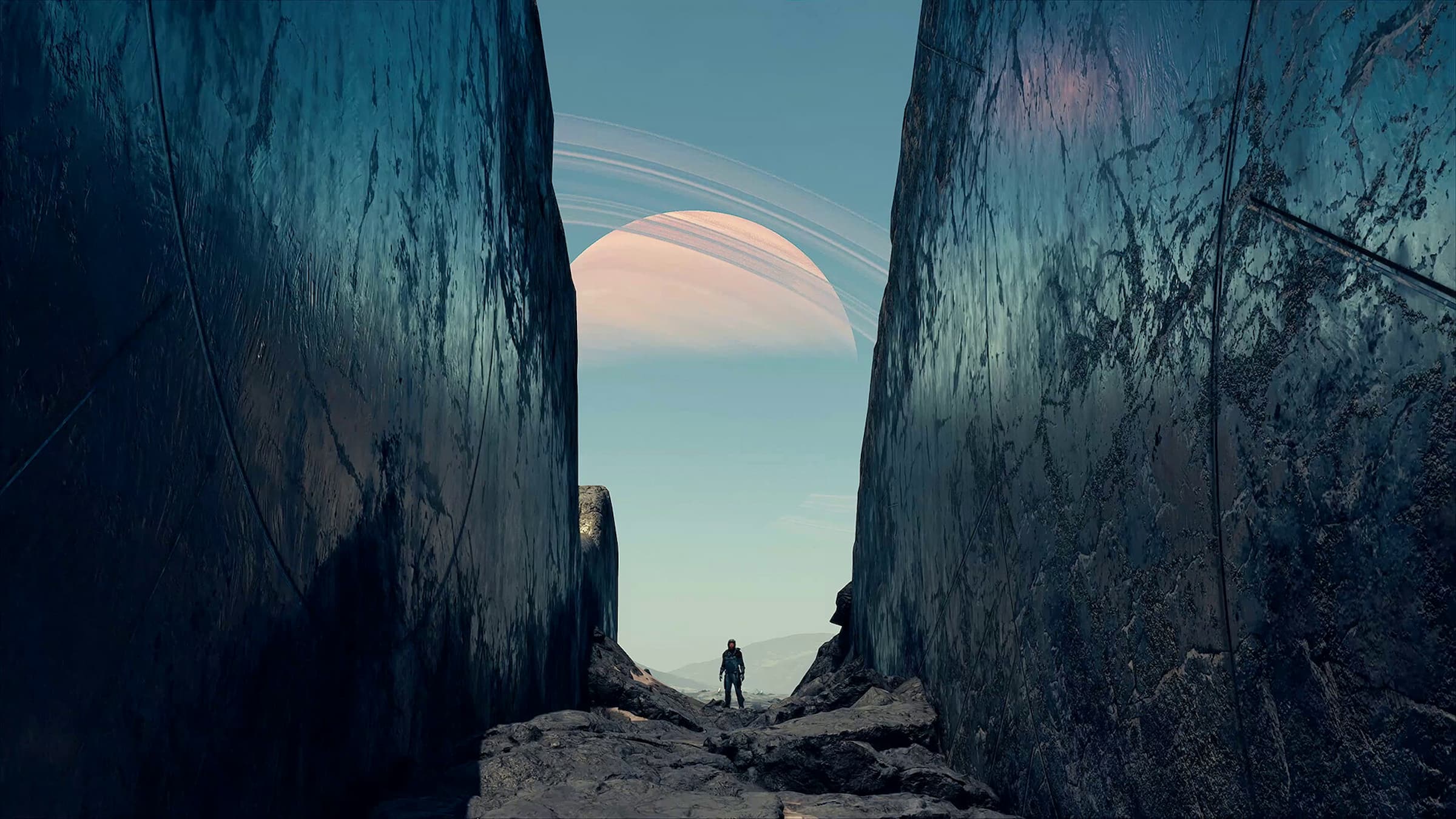
When Starfield was first announced, it promised a revolutionary exploration experience, filled with the excitement of humanity reaching for the stars. The idea was to get completely lost in a vast galaxy where every detail – from notes to ancient ruins – revealed the story of our journey to space. Unfortunately, that vision didn’t quite come to life. Despite the game’s impressive size and visuals, a repetitive pattern quickly becomes apparent. After playing for a while, players will notice that settlements, bunkers, and labs all feel strangely similar.
Bethesda recognized the repetitive nature of their game environments, and attempted to explain it through a backstory called the “Old War Era.” The idea was that a massive industrial age of conflict led to the widespread use of prefabricated buildings and similar layouts. This could have added depth to the game world, suggesting a historical reason for its sometimes mass-produced feel. However, instead of enhancing the experience, the backstory felt like an excuse for the repetition. The “Old War Era” lore is ultimately weak and unconvincing, and its attempt to justify the game’s similarities is far too transparent.
How the Old War Era Was Meant to Explain Repetition
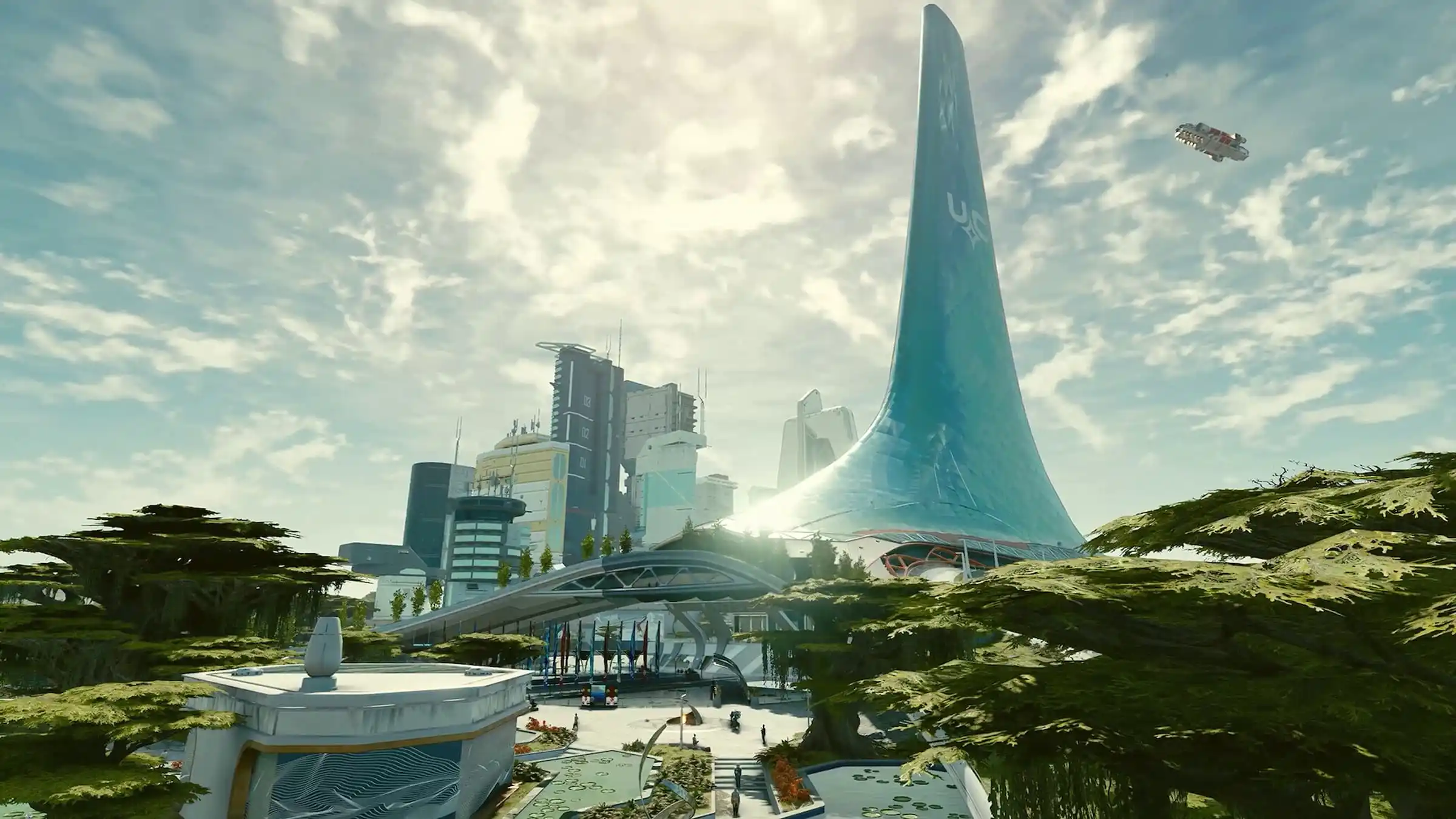
The backstory of the “Old War” in Starfield had the potential to be a really compelling part of the game’s universe. A galactic conflict from the past could have created countless interesting stories – like abandoned battlefields, empty space stations, and lost fleets. Instead, it’s reduced to brief references in computer logs, conversations, and quest descriptions. It doesn’t feel like a fully developed story, but rather a weak attempt to explain repetitive game elements. Every similar research station, mining facility, and bunker is simply labeled as being from this war, acting as a quick fix rather than a meaningful part of the narrative.
The core concept behind the Old War Era in Starfield had potential, but ultimately falls flat. Bethesda has successfully used historical elements to build believable worlds before – think of the Vault-Tec experiments in Fallout or the ancient Dwemer ruins in The Elder Scrolls. These past examples felt real because they weren’t overly explained; their stories were woven into the environment and conveyed through atmosphere and circumstance. You could sense the desperation within the vaults and the arrogance behind the Dwemer technology – it all made sense. However, the Old War Era feels artificial and doesn’t organically integrate into the game world. Instead of shaping the environment, it’s used as a convenient explanation for repetitive design. Bethesda seemed to hope players would overlook the monotony if given a backstory, but the explanation isn’t convincing and only emphasizes the emptiness of the world.
It’s particularly disappointing because the game had a strong starting point. A massive war that reshaped the galaxy should have deeply impacted everything – from the propaganda you see to the people struggling to survive and the companies still benefiting from the conflict. While hints of this war exist, they never truly come together in a meaningful way. The past conflict, known as the “Old War Era,” feels like backstory rather than a lived-in reality. It’s referenced, but rarely felt, aside from repetitive, identical bunkers. There’s no real sense of what was lost, and nothing to make you emotionally invested. Bethesda didn’t fully explore this concept, instead using it to cover up weaknesses in the game’s design rather than crafting a compelling human story.
Why the Narrative Fails to Mask Procedural Generation
The game’s repetitive nature could have felt meaningful if Bethesda had fully embraced the idea of a world shaped by a massive, bygone war. Imagining a universe built from the wreckage of industrial conflict could have been powerfully symbolic, highlighting humanity’s habit of rebuilding from the remnants of its past. However, the game’s story doesn’t really delve into this concept. The historical references feel superficial, the connections are weak, and the backstory seems overly convenient, existing primarily to justify the repeated environments rather than enrich them. The pre-war era is mentioned, but never truly investigated.
The backstory tries to justify the repetitive environments, but it quickly becomes clear that it’s just a way to avoid doing more work. Bethesda used a past war as a convenient excuse, hoping players would create their own stories to fill the gaps in the writing. This is frustrating for those who expect a well-developed narrative. The war could have been a central element, impacting characters, economies, religions, and politics throughout the game world. Instead, it’s only briefly mentioned, leaving a sense of missed opportunity and a world that feels strangely empty despite hinting at a rich history.
This is particularly frustrating for writers. What Bethesda did feels like a talented author repeatedly using the same passage throughout a novel and claiming it’s intentional artistry. Instead of feeling immersed in a vast galaxy, you’re constantly aware that everything is made from a limited set of assets. The game’s story should have explained this repetition, making it seem like a natural part of the world’s history, but it doesn’t. The illusion quickly breaks down, usually within a few hours of playing, which is why so many players were let down. It’s as if the writing is desperately trying to convince you it’s good, while the game itself shows you it isn’t. It doesn’t take long to realize just how weak the story actually is.
The Consequences of Repetition on Player Experience
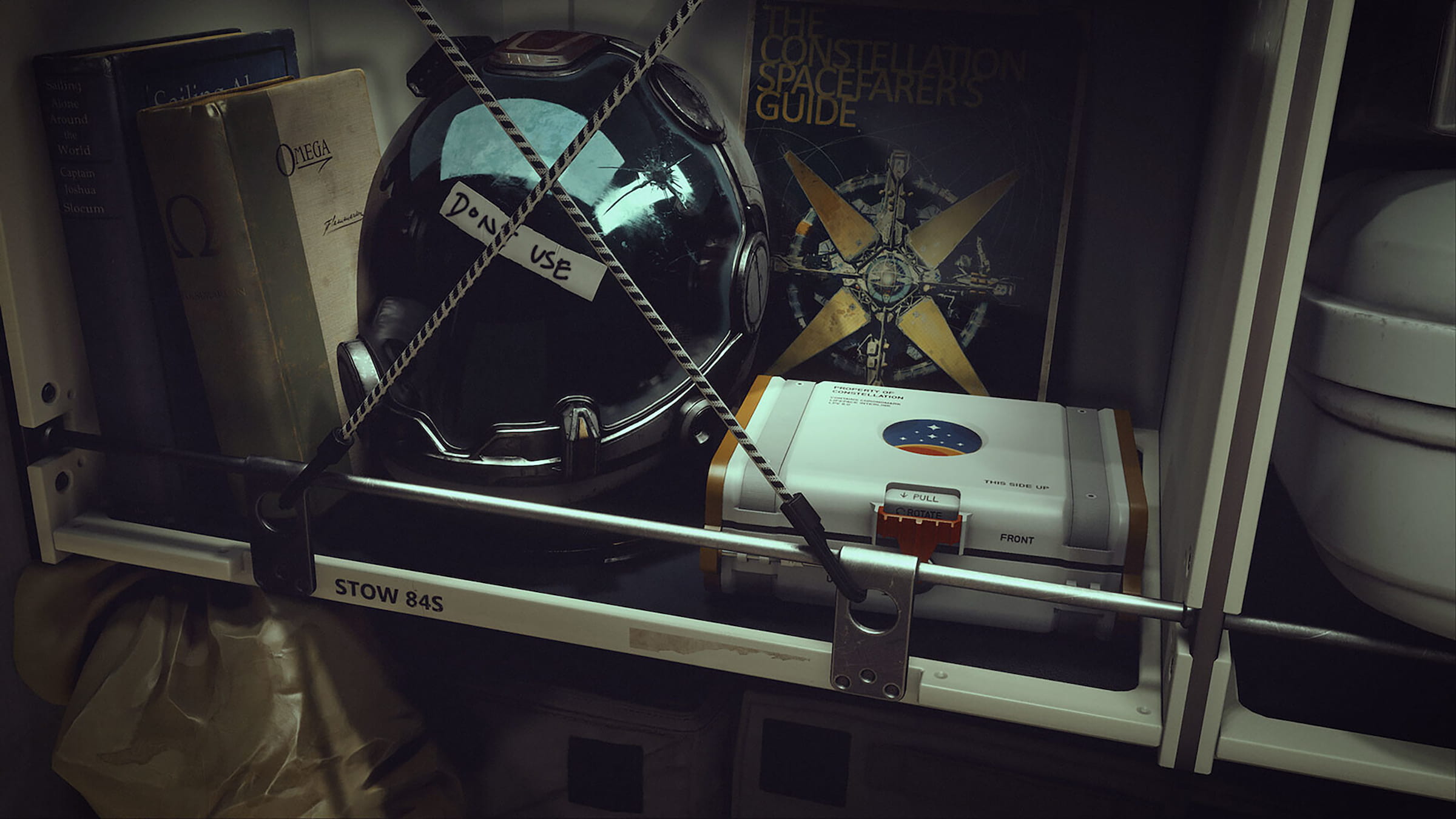
The biggest problem with the “Old War Era” explanation is that it damages player trust. When a game tries to excuse its shortcomings instead of acknowledging them, it quickly ruins the feeling of being truly immersed. Seeing the same structures repeated doesn’t make players imagine a galaxy shaped by ancient battles—it makes them realize the developers didn’t put in the effort, and are trying to hide that. It’s a frustrating lack of respect for player curiosity, and it makes exploration feel empty far more quickly than any technical issue ever could.
The lack of depth in the game’s worldbuilding negatively impacts the overall experience. When a game’s history feels artificial, exploring it becomes pointless. While Starfield’s environments were procedurally generated, the backstory didn’t have to feel that way too. A compelling story about the “Old War” could have been central to Starfield’s identity, similar to how the nuclear wasteland defines Fallout, serving as a poignant reflection on humanity’s resilience and decline. Unfortunately, it feels like an unimportant detail, offering no new insights into the world, its inhabitants, or the war itself. Players are left feeling unfulfilled, as if they’ve been shown a mere facade rather than a living, breathing world.
Starfield attempted to use its backstory to excuse a clear flaw in its design, as if players wouldn’t see through it – and that’s frustrating. The game’s ‘Old War Era’ could have been a clever way to make repeated elements feel meaningful and add emotional depth to the story. Instead, it came across as a flimsy excuse delivered through forgettable computer logs. As storytellers, the biggest disappointment isn’t that Starfield wasn’t flawless, but that it wasn’t truthful about what it was trying to conceal.
What do you think? Leave a comment below and join the conversation now in the ComicBook Forum!
Read More
- What Song Is In The New Supergirl Trailer (& What It Means For The DC Movie)
- Highly Anticipated Strategy RPG Finally Sets Release Date (And It’s Soon)
- Why is Tech Jacket gender-swapped in Invincible season 4 and who voices her?
- TV legend Carol Kirkwood reveals the reasons why she decided to retire after 28 years with BBC
- MOUSE: P.I. For Hire Loops in Caravan Palace for A Catchy New Track Ahead of April 16 Release
- Alan Ritchson’s Reacher Future Looks Hopeful Thanks To Amazon’s 10/10 Action Thriller Series
- 50 Years Ago, Star-Lord Made His Bizarre Debut
- Sydney Sweeney’s The Housemaid 2 Sets Streaming Release Date
- Crimson Desert is a “Cynical Amalgamation of Borrowed Mechanics,” Says Larian’s Publishing Director
- How Blake Lively & Ryan Reynolds’ Kids Pranked Her on April Fool’s Day
2025-10-30 22:47