
Steampunk is a creative take on the Industrial Revolution, blending Victorian-era style with imagined steam-powered technology. It envisions a world where the digital age never happened, and instead, society relies on visible, mechanical devices like gears and steam engines. This genre not only explores ‘what if’ scenarios of the past, but also suggests that 19th-century innovation could have shaped our future. As a result, steampunk stories often portray a society balancing traditional social hierarchies with the possibilities—and challenges—of a highly advanced, yet analog, industrial world.
Steampunk lends itself beautifully to film because designers can create detailed worlds filled with the rich look and feel of materials like copper and wood. While not all steampunk movies include typical elements like airships or clockwork gadgets, they all explore what could have happened if science had developed differently. The best steampunk films use the gritty realism of the 19th century as a backdrop for imaginative stories about innovation and its consequences, bending history to explore the clash between personal desires and the limitations of a society that looks to the future through a vintage lens.
7) Sherlock Holmes

Guy Ritchie’s Sherlock Holmes films move away from the traditional Victorian London, instead presenting a gritty, industrial city filled with the sights and sounds of new technology. London feels like a giant, working machine, mirroring a society rapidly changing due to technological advancements. The films focus on the workshops, docks, and labs where real progress was happening, rather than the refined world of Victorian high society. This setting is ideal for mysteries that seem magical but are actually solved using science – specifically chemistry and early electrical technology. Sherlock Holmes is a standout example of steampunk because it blends the look and feel of the early industrial age with a futuristic reimagining of a classic hero, making his brilliance equal to the mechanical complexity around him.
6) Steamboy
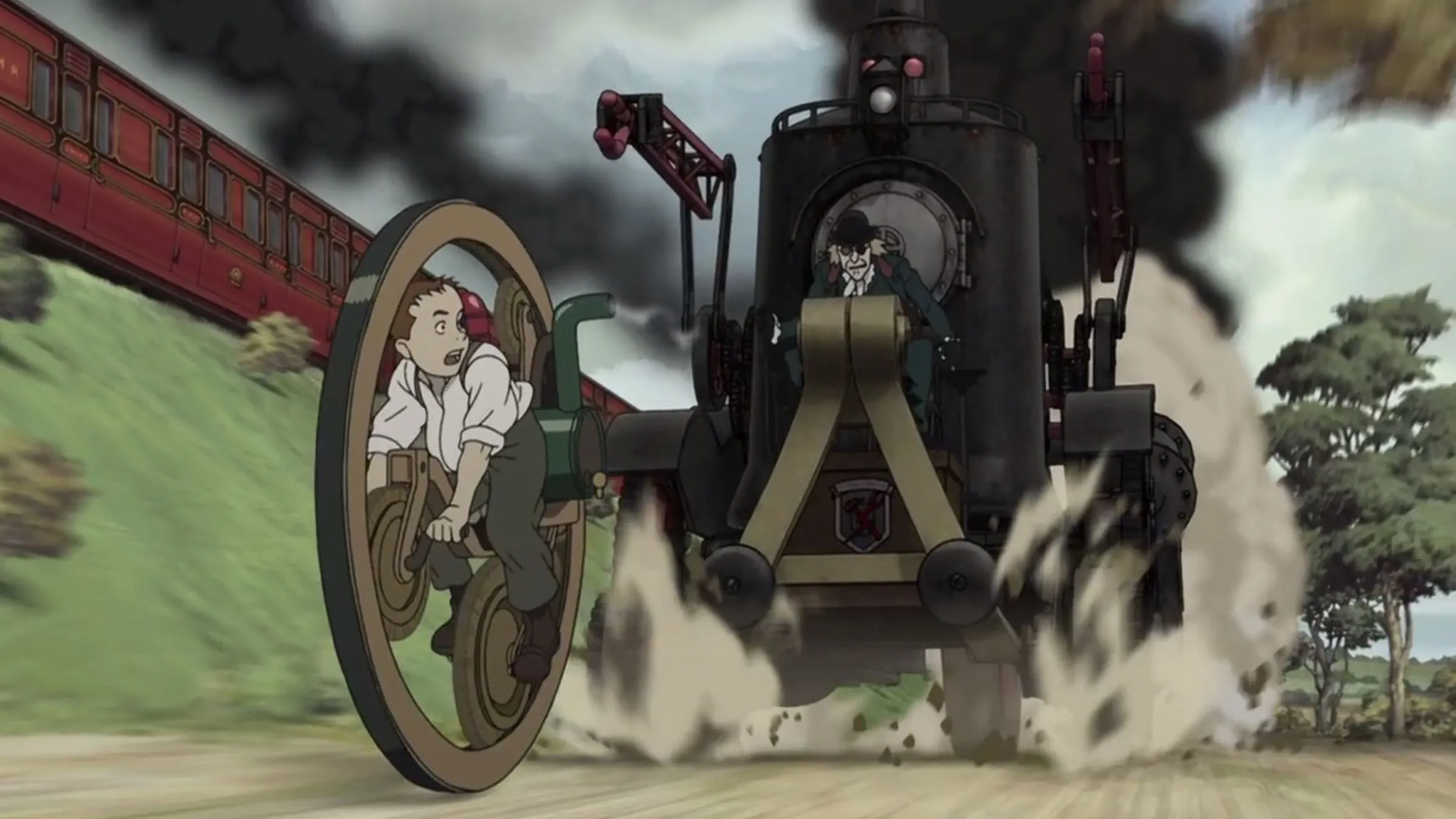
Katsuhiro Otomo’s Steamboy took a decade to create, and that commitment shows in its incredible detail and complex designs. The film centers on Ray Steam, a young inventor (voiced by Anne Suzuki) who gets caught up in a conflict over a powerful, pressurized sphere that could provide endless energy to an alternate version of 1866 England. Instead of just looking steampunk, the animation portrays steam power as a truly powerful and dangerous force that pushes the boundaries of what people can achieve. The story goes beyond just gears and machines, exploring whether technological advancements should benefit everyone or just those in power—specifically a military-industrial complex. This dedication to the realistic mechanics of steam power makes Steamboy a key example of what defines the steampunk genre.
5) The Prestige
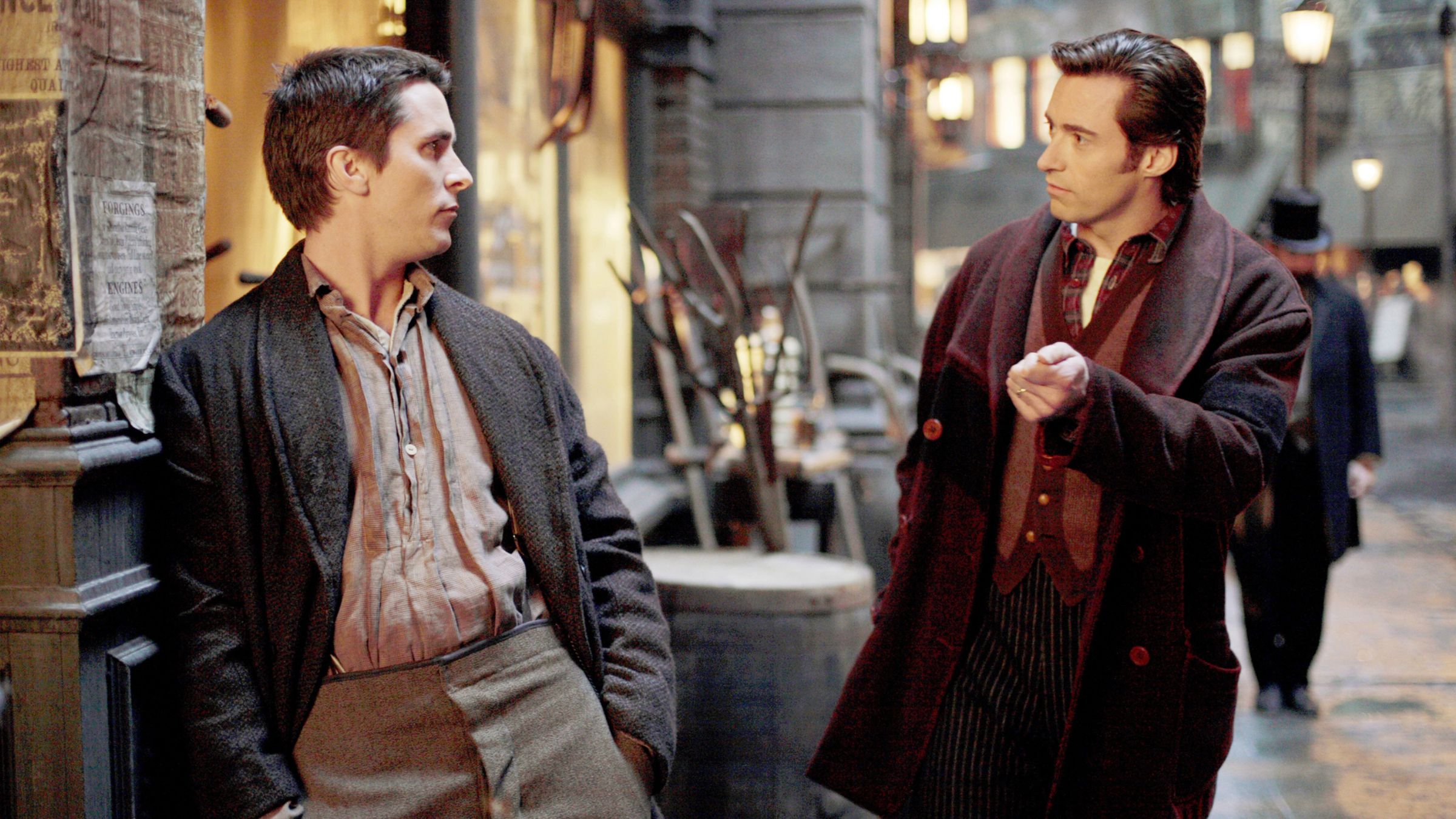
Christopher Nolan’s The Prestige uses the atmosphere of the late 1800s to explore the dangerous side of dedication to science and art. The film centers on a fierce competition between two magicians, Robert Angier and Alfred Borden, which eventually leads them to Nikola Tesla, a reimagined version of the famous inventor who symbolized the shift to electrical power. Though set during a time of moving beyond steam power, the film’s visuals—hidden gadgets and shiny brass labs—create a world where extraordinary feats seem achievable through clever engineering. Tesla’s inventions feel surprisingly real within the film’s Victorian setting, emphasizing the idea that progress often requires terrible personal costs—a common idea in steampunk stories.
4) The City of Lost Children
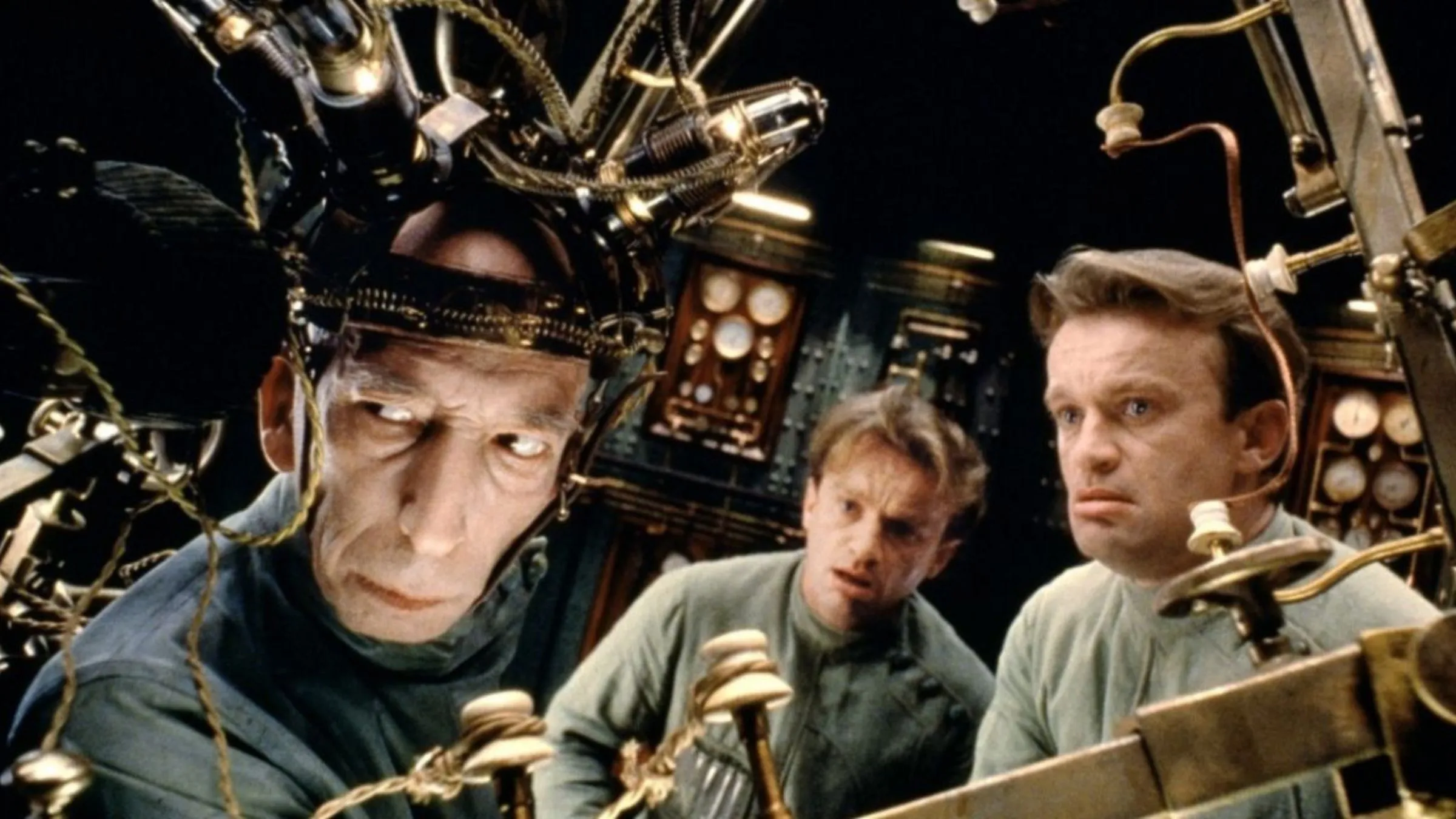
Marc Caro and Jean-Pierre Jeunet crafted a disturbingly beautiful, rusted world in The City of Lost Children, a film deeply rooted in the darker, more elaborate side of steampunk. The story centers on One (Ron Perlman), a strongman who journeys through a strange, mechanical city to save his brother, who has been kidnapped by a scientist who steals people’s dreams. The city itself is a maze of clanging pipes and damp metal, creating a feeling of being trapped by technology. It’s filled with bizarre creations – clones, cyborgs, and even brains in jars – blurring the lines between living beings and machines. Because the film relies heavily on practical effects, the city feels incredibly real, making the fantastical story even more powerful. It’s no surprise that The City of Lost Children remains a visually stunning film, transforming the remnants of the industrial age into a haunting and unforgettable fairytale.
3) Poor Things
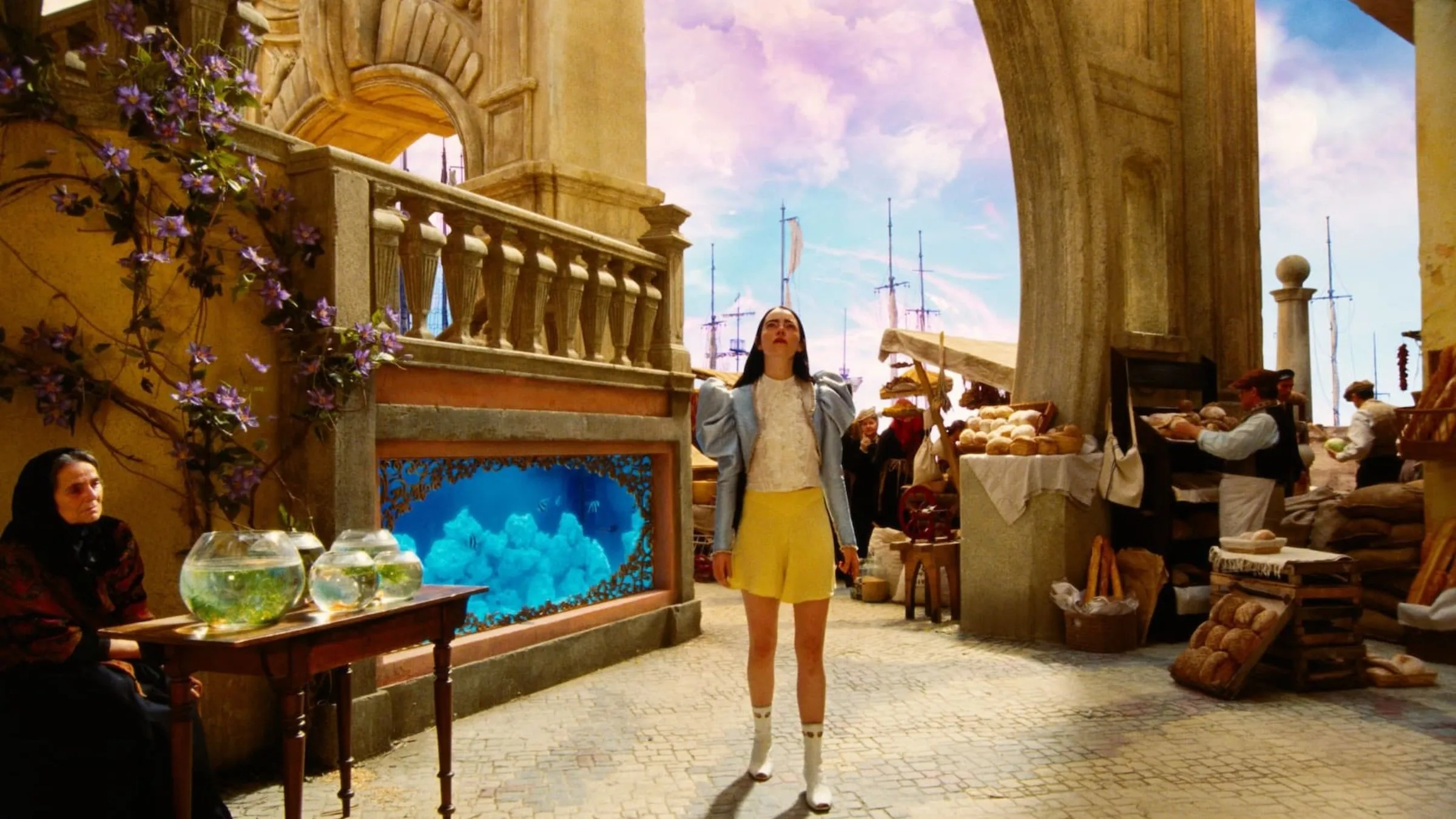
Yorgos Lanthimos’s film, Poor Things, presents a unique take on the Victorian era, using the period’s social norms to tell a story about a woman’s bold journey of self-discovery. The film centers on Bella Baxter (Emma Stone), a woman brought to life through artificial means, who travels through cities inspired by 19th-century design, but also filled with imaginative, steam-powered technology. The production design is remarkable, blending detailed surgical instruments and elaborate mechanical elevators that feel both old-fashioned and cutting-edge, creating a world unbound by traditional history. Though not strictly a steampunk film, Poor Things cleverly reimagines the Frankenstein story to examine themes of female independence and social freedom, asking how science and technology can either uphold old ways of thinking or empower individuals. Willem Dafoe’s character, Godwin Baxter, embodies the spirit of a steampunk inventor – a man whose physical appearance and advanced tools highlight the complex and sometimes risky relationship between humans and scientific progress.
2) Castle in the Sky / Howl’s Moving Castle
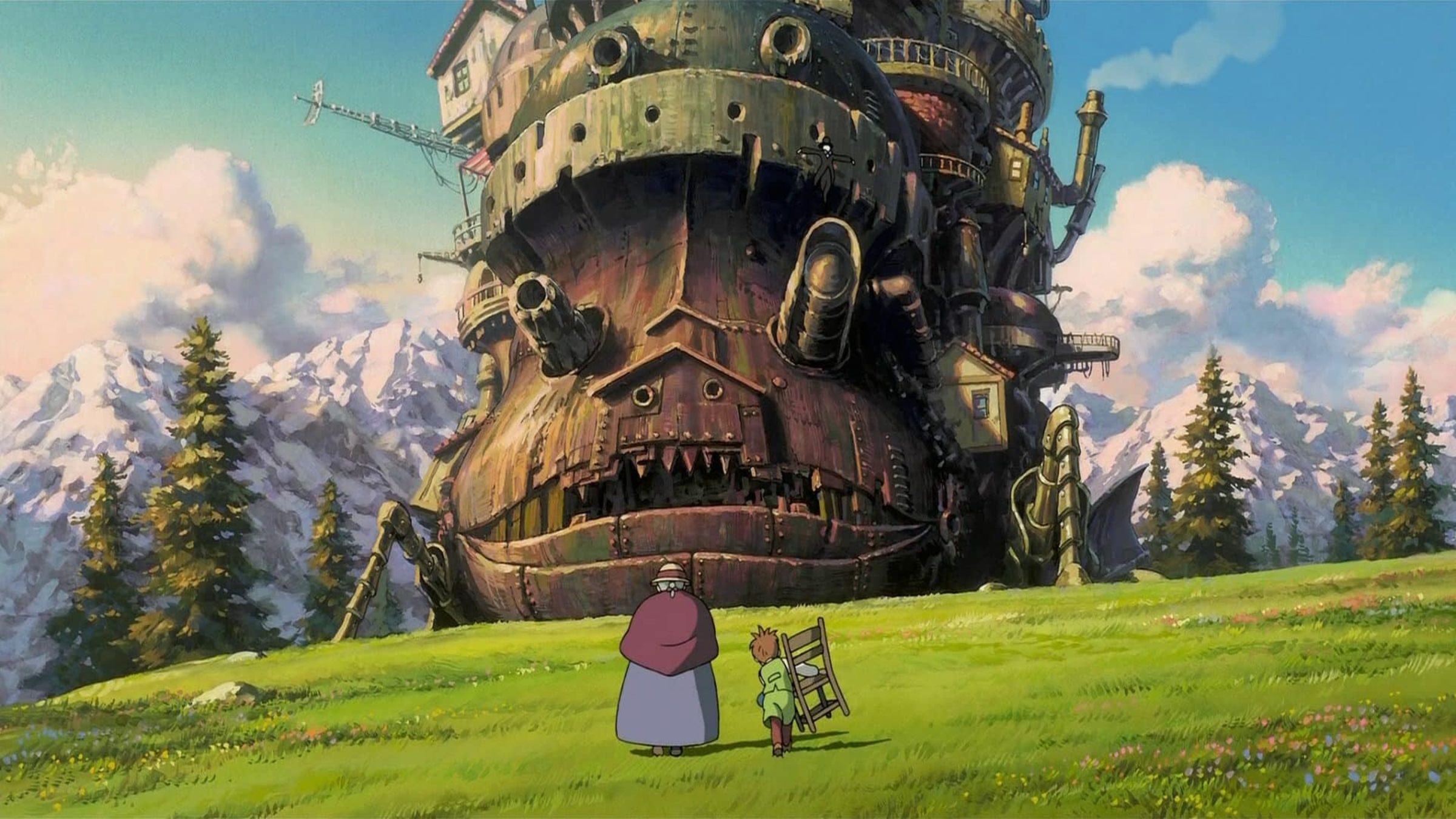
I’m completely captivated by how Studio Ghibli, and especially Hayao Miyazaki, weaves the imagery of older, industrial technology into stories that really make you think about how our desires impact the world around us. I think Castle in the Sky and Howl’s Moving Castle are perfect examples of his incredible talent for designing machines. Castle in the Sky introduces this amazing vision of a floating city, complete with huge airships and ancient robots that feel straight out of a steampunk novel. Then, Howl’s Moving Castle gives us this wonderfully bizarre, steam-powered fortress – it’s like a collection of Victorian homes and war machines all mashed together! What I love about both films is how the technology isn’t just there; it feels like an outward expression of what the characters are going through inside. They beautifully balance the joy of flight with the harsh realities of war. And the fact that everything is hand-drawn – all those intricate boilers, gears, and propellers – gives these movies a warmth and substance that I just don’t often see in computer-animated films. To me, they truly are steampunk masterpieces.
1) 20,000 Leagues Under the Sea (1954)
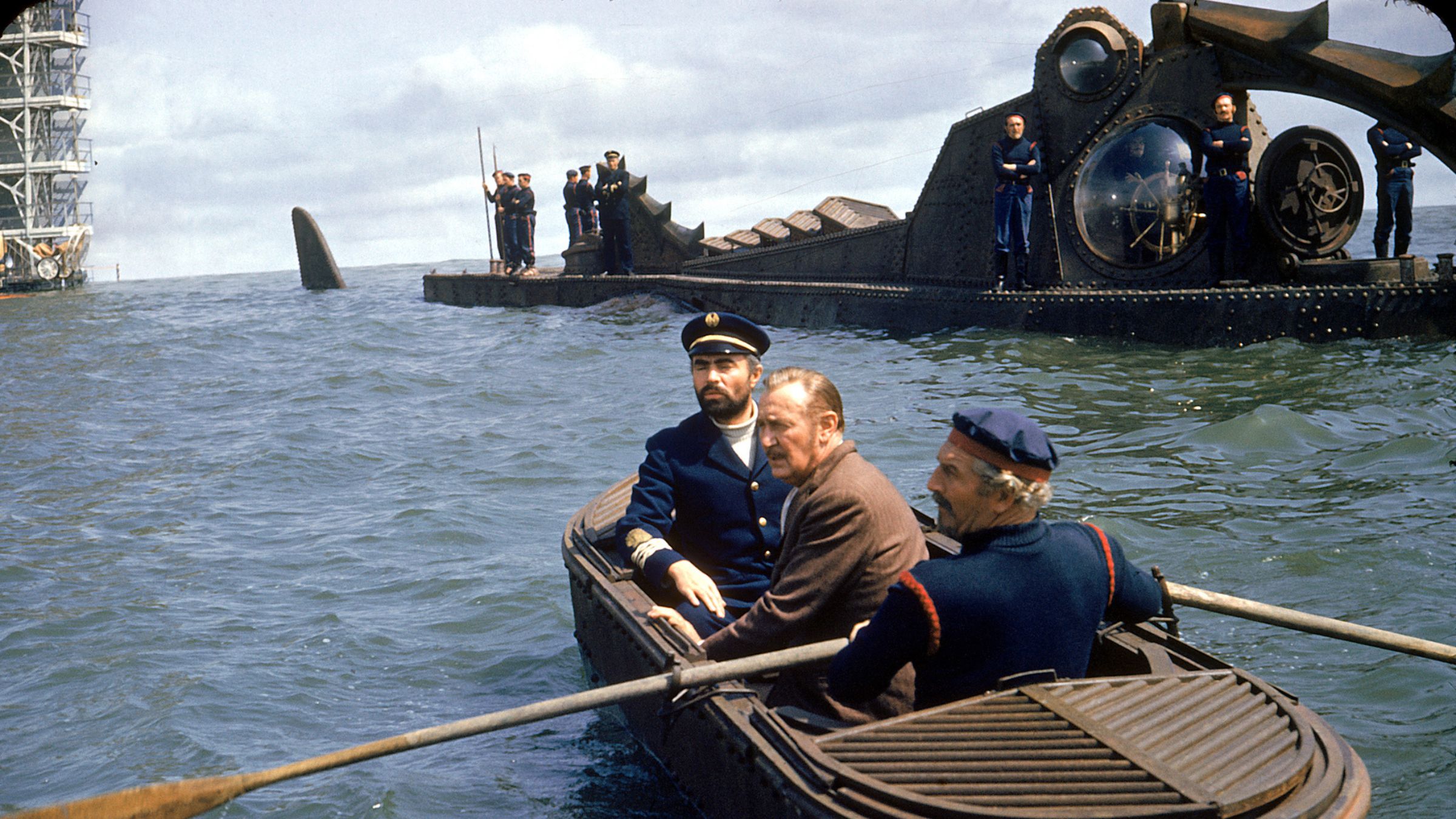
As a huge fan, I truly believe the 1954 version of 20,000 Leagues Under the Sea is where the whole steampunk style really began. The movie centers around Captain Nemo’s incredible submarine, the Nautilus, and it’s just the peak of 19th-century innovation. It perfectly blends fancy Victorian details with wildly imaginative technology – think huge brass windows and luxurious velvet interiors, creating this amazing, self-contained world of advanced tech. Disney really went all out with practical effects to bring Jules Verne’s vision to life, and it set the standard for how steampunk looks for over seventy years. Beyond the visuals, the film also explores some really thought-provoking themes, like the dangers of isolation and the potential downsides of powerful technology. For me, it’s the ultimate steampunk masterpiece, and nothing else quite compares.
What’s the steampunk movie with the most creative and well-developed mechanical world? Share your thoughts in the comments and join the discussion in the ComicBook Forum!
https://comicbook.com/tv-shows/list/7-best-steampunk-tv-shows-of-all-time/embed/#
Read More
- What Song Is In The New Supergirl Trailer (& What It Means For The DC Movie)
- After 13 Years, Someone Earned One of the Hardest Achievement Trophies in Gaming
- Eurogamer Gives ARC Raiders 2/5 Over AI Voices, Dropping Metacritic Score from 94 to 84
- Designing Magnetism with Molecular Architecture
- Crimson Desert – 15 Things I Wish I Knew Before Diving In
- New Pokemon Go Event Gives Players A Shot At 11 Rare Shiny Pokemon (With Boosted Odds)
- The Most Surreal Moments From the O.J. Simpson Murder Trial
- New Open-World “AAAA” Game Coming From Tomb Raider Developer
- TV legend Carol Kirkwood reveals the reasons why she decided to retire after 28 years with BBC
- After Stranger Things’ Conformity Gate Crashed Netflix, Here’s What The Ending SHOULD Have Been
2026-02-01 19:44