
In film, the 1980s aren’t just a period of time – they’re a defining style. You could almost say they’re a genre of their own.
Think about “’80s action” for a moment. For fans of the genre, it’s more than just a time period – it brings a whole set of images to mind. I immediately picture tough guys who don’t exactly see eye-to-eye, constantly trading witty remarks and gunfire with the villains. They’re always sporting sunglasses, and maybe one has a toothpick in his mouth. And, of course, at least one of them is feeling a little past his prime, though he’d never admit it directly.
This immediately brings to mind those over-the-top car chases you see in action movies – the ones with squealing tires, huge jumps, and that always seem to last forever. And of course, lots of explosions! Those big, dramatic explosions where the heroes just barely manage to get away, usually shown in slow motion. You might even hear a faint roar – like a lion or tiger – mixed in with the sound of the blast.
All that from those two words.
Let’s take a look back at the awesome action movies of the 1980s! Today, we’re choosing the very best action film from each year of that decade. Some of our picks are exactly what you’d expect from ’80s action, while others break the mold. But they’re all fantastic movies, and since we may never see a period quite like the ’80s again, let’s celebrate the incredible films it gave us.
The Best Action Movie of Every Year of the 1980s

1980: The Blues Brothers
Most people see The Blues Brothers as a musical, and it definitely has plenty of music. But it’s also an unusually action-packed one, featuring exciting car chases that compare to any action movie from the 1980s—or any era, really. Jake and Elwood’s quest, driven by their ‘mission from God,’ quickly spirals out of control, leading to a massive pursuit by the Chicago police in their iconic black-and-white car. The resulting stunts are still impressive today.

1981: Mad Max 2
Even though it was made with a much smaller budget than Mad Max: Fury Road, The Road Warrior still impresses me with its grand scope. Some of the long shots of the desert landscape seem to show the Earth’s curvature – an effect likely created by the camera lenses George Miller used. One explosion is so huge that the shockwave visibly shakes the camera from far away. The Road Warrior feels like an incredibly large-scale film, almost as if it were the last movie ever made. While Fury Road is now more popular with many viewers, if you haven’t seen The Road Warrior, I highly recommend it – it’s where Max and director George Miller really found their signature style.
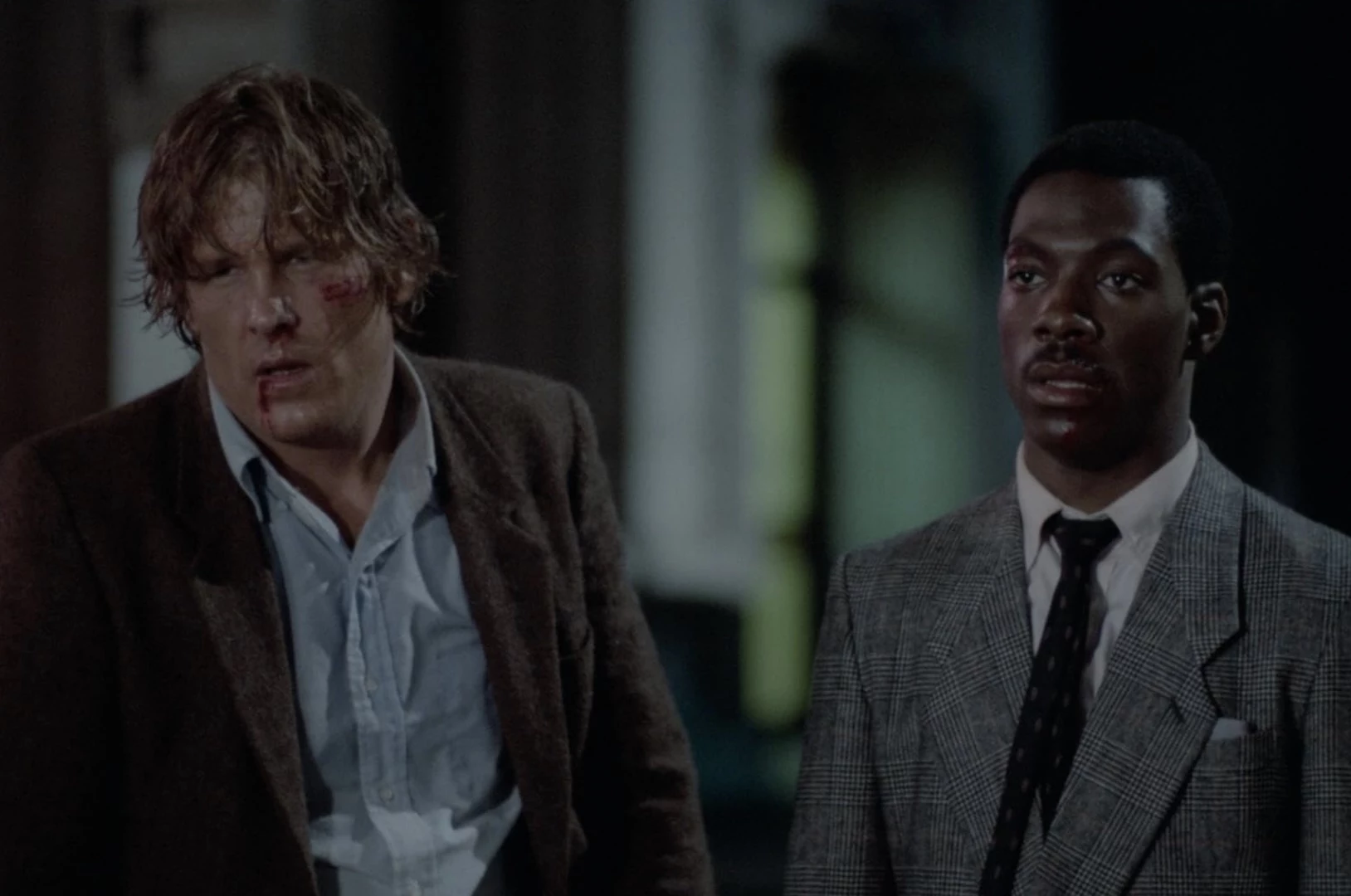
1982: 48 Hrs.
The 1980s saw a huge trend of “buddy cop” movies. These films typically paired up unlikely detective partners – often a tough, rule-bending cop with someone completely different, even a criminal – to solve crimes with plenty of action and explosions. While films like Midnight Run, Lethal Weapon, and Red Heat were popular, the trend really began with Walter Hill’s 48 Hrs., which brilliantly paired Nick Nolte with the up-and-coming Eddie Murphy from Saturday Night Live. This movie perfectly showcased Murphy’s comedic talent and Hill’s dynamic directing style, and it’s been copied many times since. Whether anything has topped it in the 40+ years since is debatable.

1983: Project A
The 1980s are often remembered as an amazing time for action movies, perhaps the best ever. However, 1983 was surprisingly slow for big, explosive films in America. Luckily, Jackie Chan was at the peak of his physical abilities during the early 80s, consistently delivering incredible action films throughout the decade, including 1983’s Project A. This historical adventure is packed with some of Chan’s most impressive action sequences, and features a famous stunt where he falls from a clocktower, landing safely through a series of awnings – a nod to the daring stunts performed by silent film comedian Harold Lloyd.

1984: The Terminator
With The Terminator, James Cameron truly revolutionized science-fiction action films and established himself as a major director. The film’s clever concept – a present-day fight to prevent a future war – allowed Cameron to create a grand story despite a limited budget. He only needed to show brief scenes of the future war to ground the rest of the movie in 1984. He also smartly used Arnold Schwarzenegger’s imposing size to conceal the robotic nature of the villain, which also helped keep costs down. This early work demonstrated Cameron’s ability to come up with ambitious ideas and then skillfully bring them to life. He would later expand on these action-packed visions with much larger budgets.

1985: To Live and Die in LA
To Live and Die in L.A. is a truly exceptional police thriller, feeling like a gritty, drug-fueled take on a classic show like Dragnet. William Petersen plays a detective who’s arguably more morally compromised than the criminals he pursues, who are surprisingly meticulous despite their violent tendencies. The film is famous for its incredible car chase, and deservedly so. However, it’s more than just exciting action; it reveals a lot about the characters involved. While driving the wrong way on a Los Angeles freeway creates a spectacular scene, the way director William Friedkin builds to that moment is masterful. Petersen’s character doesn’t stumble into the situation; he deliberately ignores clear warning signs – “DO NOT ENTER” and “WRONG WAY” – and drives forward anyway. This reckless behavior perfectly encapsulates his personality: he consistently throws himself into danger, always acting impulsively and disregarding rules and safety. He’s constantly pushing boundaries and going where he shouldn’t, ignoring every signal to stop.

1986: Aliens
According to James Cameron, he originally pitched the idea for an Alien sequel to Fox by simply writing the word “alien” and adding an “s” – then transforming it into “ALIEN$” with two lines. Fox approved, Cameron was hired, and he went on to create one of the most acclaimed sequels ever made. While Aliens features significantly more of the creatures than Ridley Scott’s original film, it remains centered on Sigourney Weaver’s character, Ellen Ripley, and continues to explore themes of motherhood and trauma.

1987: RoboCop
Each year, the movie RoboCop feels less like a futuristic fantasy and more like a realistic portrayal of current events. While the specific scenario of a man melting into a mutant from toxic waste is far-fetched, the rest of the film feels increasingly relevant. We’re now living in a world much like the Detroit depicted in the movie – filled with constant advertising and facing the growing influence of artificial intelligence. It’s a shame our reality isn’t as entertaining as Paul Verhoeven’s version.

1988: Die Hard
Often described as a Western disguised as a police thriller, Die Hard is a classic of 1980s action cinema. When New York City cop John McClane (Bruce Willis) travels to Los Angeles to visit his separated wife, Holly (Bonnie Bedelia), he finds himself the only hope during a terrorist takeover at her company’s Christmas party. Suddenly thrust into an impossible situation, McClane rises to become an iconic hero – an ordinary man caught unprepared who simply wants to get home, and may have to tap into some old-fashioned heroics to do it. As he famously quips, “Yippie-ki-yay.”

1989: Batman
Essential Movies on Netflix Every Film Lover Should See

Night of the Living Dead (1968)
While Netflix has a lot of content, it doesn’t have many classic or historically important films. One notable exception is George A. Romero’s Night of the Living Dead, a hugely influential horror movie about a zombie outbreak. Beyond the zombies themselves, the film is important because Romero made it independently, and it went on to become a major success and a landmark achievement in filmmaking.

The Sting (1973)
Often considered even better than Butch Cassidy and the Sundance Kid, The Sting is a captivating and surprisingly sad film about two con artists – a young, eager crook played by Robert Redford, and a seasoned hustler portrayed by Paul Newman. They team up to avenge the murder of Redford’s partner by a ruthless mobster (Robert Shaw). The film features brilliant performances from all three leads and is full of clever twists and turns, balanced with a poignant look at loneliness during the Great Depression. The Sting won the Academy Award for Best Picture in 1973 and remains a classic of 1970s Hollywood.

The Texas Chain Saw Massacre (1974)
The 1974 horror film that started a long-running series was added to the Library of Congress’s collection in 2024 because of its lasting cultural impact. (A documentary about the film, called Chain Reactions, also came out that year.) If you’ve only heard about the series or seen one of the many weaker sequels or remakes, now’s the time to watch the original – it’s a bloody, brutal, and beautifully made film, and you can find it on Netflix.

Pulp Fiction (1994)
While Pulp Fiction may not be the most copied film of the 90s today, it was widely imitated for a time. The poor quality of those imitations actually highlights just how talented Quentin Tarantino is, both back then and now.
Pulp Fiction is a surprising mix of things that shouldn’t really fit together. It’s a grand story about crime in Los Angeles, but also a close look at the people involved. It jumps between extreme, almost unbelievable scenarios – like mysterious briefcases and secret clubs – and very ordinary moments, such as conversations about foot rubs and fast food. It’s expansive and intimate, funny and sad, violent and silly. It’s simply Pulp Fiction.

Titanic (1997)
James Cameron’s most famous films all share a few key ingredients: a love story, large-scale action, exciting chases, and a complex relationship with technology. While Titanic isn’t as action-packed as films like The Terminator or Avatar, it still embodies these themes. It was a massive undertaking—and a huge success—for its time, and it’s clear why. Cameron excels at keeping the story focused on the characters, even when surrounded by spectacular visuals and settings.
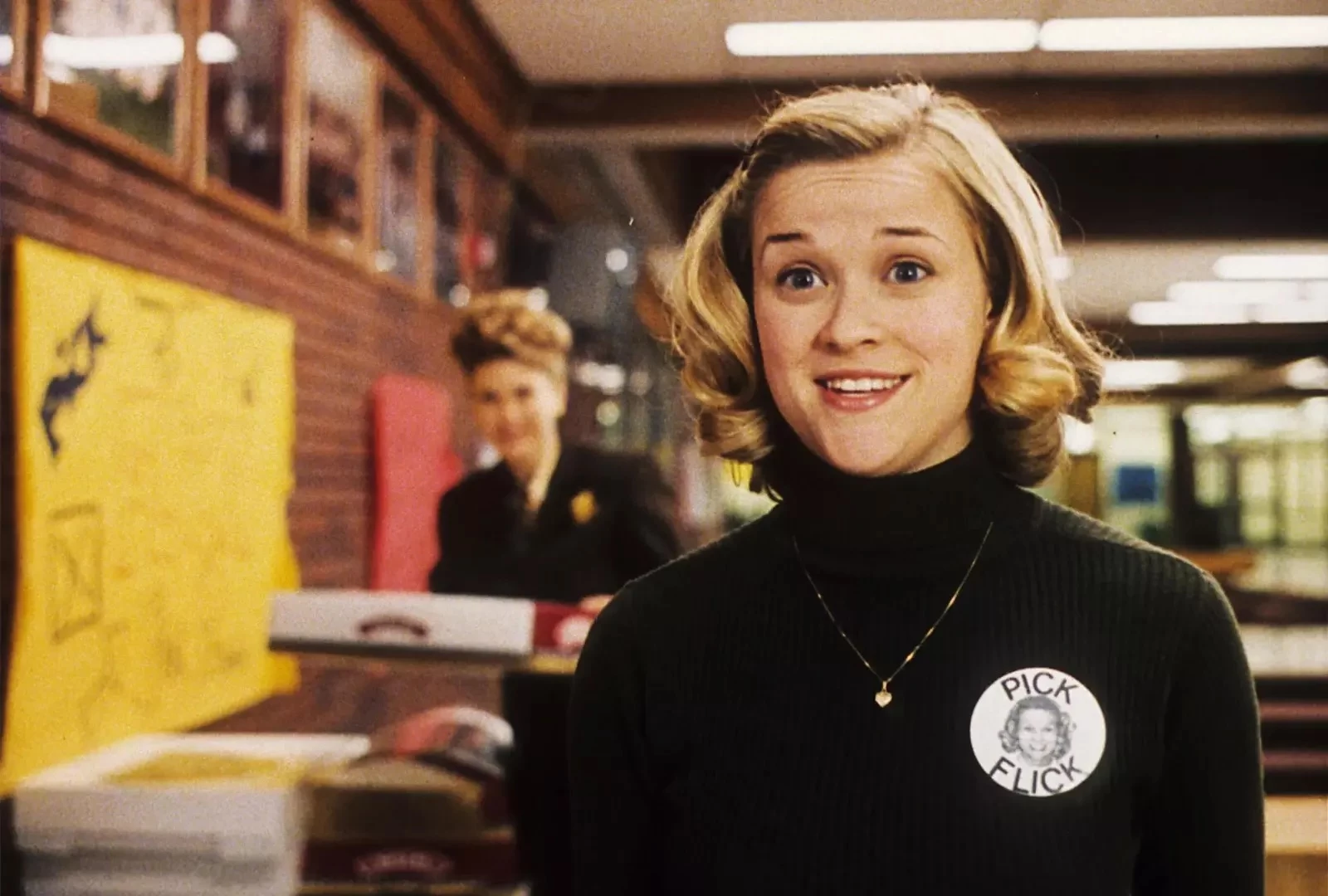
Election (1999)
Reese Witherspoon truly broke through with the 1999 comedy Election, where she plays a driven high school student who clashes with her pessimistic history teacher (Matthew Broderick, playing a character reminiscent of his role in Ferris Bueller’s Day Off). Their conflict sparks a funny rivalry when Witherspoon’s character, Tracy Flick, runs for student council president. Election is a darkly humorous and realistic film that contributes to why 1999 is remembered as a fantastic year for movies. What’s interesting is the title—simply Election, not The Election—because the film is as much about the difficult process of making choices as it is about the outcome of a single school election.

Donnie Darko (2001)
Netflix isn’t the best place to find truly unique or classic cult films, especially if you’re looking for something beyond recent, lower-budget Netflix originals. While they have a good selection of those, options for well-known midnight movie favorites are limited. One standout is Richard Kelly’s Donnie Darko, featuring a young Jake Gyllenhaal as a teenager who survives a near-fatal accident and may be the key to preventing a global catastrophe. With its unsettling visuals, dark mood, and memorable conclusion, the film is considered a gem of early 2000s independent cinema.

The Squid and the Whale (2005)
Noah Baumbach truly established himself as a talented filmmaker with a deeply personal movie about a young man (played by Jesse Eisenberg, who also benefited from the film’s success) navigating his parents’ divorce. The movie received many award nominations and launched Baumbach into a new and ongoing phase of his career, including acclaimed films like Netflix’s Marriage Story and Jay Kelly.

Zodiac (2007)
David Fincher is known for directing films about serial killers, but Zodiac is more than just a crime thriller. It’s a journey through San Francisco’s history, seen through the perspectives of three men obsessed with solving the Zodiac Killer case. We follow a dedicated police inspector (Mark Ruffalo), a crime reporter (Robert Downey Jr.) who became a target of the Zodiac, and an amateur detective named Robert Graysmith (Jake Gyllenhaal) who can’t move on, even when the killings stop. What Zodiac does exceptionally well is show how a single obsession can take over someone’s life. Fincher expertly pulls viewers into the complex investigation using clever camera angles and editing. By the end of the film—which circles back to the very beginning after a tense two and a half hours—you understand exactly what drives Robert Graysmith.

Boyhood (2014)
For twelve years, director Richard Linklater secretly filmed scenes with the same actors – a boy (Ellar Coltrane), his mother (Patricia Arquette), and his sister (Lorelei Linklater) – a few days each year. While some might see this as a clever experiment, the film becomes a powerful snapshot of American life in the early 2000s, and a deeply personal look at one family’s love, struggles, and sacrifices. All movies deal with time, but Boyhood has a truly unique relationship with it. Seeing the actors actually age on screen adds a special tenderness to some moments and a greater emotional weight to others. When Patricia Arquette reflects on her life at the end, it’s informed by twelve years of genuine experiences. As the late Roger Ebert eloquently put it, movies are windows into our world, and Boyhood feels like a film that throws those windows wide open.

Whiplash (2014)
Whiplash is a fantastic film that explores the intense dedication and sacrifices artists make for their craft. The movie follows Miles Teller as a driven young jazz drummer at a top music school, and his relationship with a relentlessly demanding teacher. While pushing him to excel, this instructor’s methods come at a steep personal cost. Director Damien Chazelle subtly suggests the troubling answer to this question, all while maintaining the film’s exciting energy. The movie culminates in a phenomenal final scene – a powerful showdown between student and teacher. Surprisingly, Whiplash also works as a truly terrifying horror film; the chilling effect of the instructor calmly criticizing a mistake is far more frightening than anything in typical horror movies from that decade.

Sing Street (2016)
Let me tell you, Sing Street is something special. It actually made me tear up on a plane – and that says a lot! This film about a couple of Irish teens chasing their musical dreams is genuinely inspiring. It’s packed with witty dialogue, fantastic performances, and honestly, I think the music is even better than La La Land. In a time when we could all use a lift, Sing Street delivers a seriously feel-good experience. Just be warned, it might make you a little emotional at the end. (Don’t judge my tears!)

Spider-Man: Into the Spider-Verse (2018)
While more isn’t always better, Spider-Man: Into the Spider-Verse remains a standout and arguably the best Spider-Man movie. It features a large team of Spider-People, including the new hero Miles Morales, the determined Gwen Stacy, and a downcast Peter B. Parker. The film powerfully emphasizes the selfless heroism championed by Spider-Man creators Stan Lee and Steve Ditko, beautifully illustrating their belief that anyone can be a hero through stunning animation.

Roma (2018)
2018 marked a turning point for Netflix’s original films, with the release of critically acclaimed movies like Alfonso Cuarón’s deeply personal Roma, which tells the story of a Mexican family and their housekeeper, Cleo (Yalitza Aparicio). When it was first released, many people argued that Roma deserved to be seen in a movie theater to fully appreciate its artistic qualities—especially Cuarón’s beautiful black-and-white visuals. However, watching it at home offered the benefit of a more private, and potentially less embarrassing, emotional experience. This highlights one of the key advantages of Netflix’s streaming model.

The Irishman (2019)
The line, “I’m behind you, Jimmy! All the way,” perfectly foreshadows where Frank Sheeran ultimately stands. This careful detail is just one example of the incredible artistry in The Irishman, a remarkable film that feels like a culmination of Martin Scorsese’s career. The most powerful moments arrive near the end, as Robert De Niro’s character, Sheeran, faces the consequences of his life choices. He appears to take pride in his actions, especially his long relationship with Teamsters boss Jimmy Hoffa (played by Al Pacino). However, he also seems to realize, perhaps for the first time, that the status, wealth, and respect his work brought him haven’t prevented him from facing a lonely death in a nursing home. A priest offers forgiveness, but it remains to be seen if it will be enough.

Cats (2019)
Let’s be honest, Cats doesn’t compare to the other films on this list. However, to truly understand something amazing, we need to consider its opposite – and Cats perfectly fills that role. Even years after its release, the movie raises so many bizarre and unanswered questions. Why do the cats have human hands? Where are all the people? What is “hot milk soup”? Why is Jennifer Hudson constantly sniffling? And why does Idris Elba appear half-naked? Plus, why is Taylor Swift wearing heels when everyone else is barefoot? These questions will probably haunt us forever, and that’s a wonderful thing.

The Power of the Dog (2021)
Jane Campion’s The Power of the Dog is a slow-burn Western that demands your full attention; it’s easy to miss key details if you’re distracted. The film offers a compelling exploration of masculinity and follows Phil Burbank (Benedict Cumberbatch), a tough cowboy, as he grapples with change after his brother (Jesse Plemons) introduces his new wife (Kirsten Dunst) and her son, Peter (Kodi Smit-McPhee), to their ranch. Peter doesn’t seem suited to ranch life, and Phil’s assumptions about him—and our assumptions about Phil—lead to a surprising and impactful conclusion. Hopefully, we won’t have to wait another decade for Campion’s next film.

RRR (2022)
This exciting Indian film delivers three hours of non-stop entertainment with its mix of action, romance, and energetic musical numbers. It’s similar to a classic John Woo action movie, but set in South Asia and featuring two powerful men on opposing sides of the law who unexpectedly team up. Those men are Bheem, a warrior from the Gond tribe, and Rama, a soldier in the British army. Bheem travels to Delhi to find a kidnapped girl, while Rama is tasked with tracking down whoever is searching for her.
A chance encounter brings them together as friends, but a sense of underlying tension remains as the audience anticipates the moment they discover each other’s true identities. The film is filled with spectacular scenes – including daring rescues of children from a burning river – and features impressive dance sequences used to defy the prejudiced British rulers. Throughout the film, Bheem is symbolized by water and Rama by fire.

Godzilla Minus One (2023)
It’s rare for a prequel to truly enhance a franchise, but Godzilla Minus One does just that. By setting the story in post-World War II Japan, the film powerfully reimagines Godzilla, returning him to his roots as a frightening symbol of atomic devastation and the psychological scars of war. And this Godzilla is genuinely terrifying – he’s massive, unsettling to look at, and his atomic breath is truly frightening.
But Godzilla Minus One is more than just impressive special effects. It features a compelling, flawed protagonist (Ryunosuke Kamiki) and subtly explores themes related to kamikaze pilots, leading to a deeply emotional climax. One section of the film feels like a classic Howard Hawks adventure, with a crew of tough sailors battling a colossal, nuclear-powered dinosaur – and it’s as amazing as that sounds.

Are You There, God? It’s Me, Margaret. (2023)
While Are You There God? It’s Me, Margaret didn’t make a huge splash in theaters, it feels destined to become a defining movie for today’s young people, much like Ferris Bueller’s Day Off was for my generation. This faithful adaptation of the classic book, written and directed by Kelly Fremon Craig, boasts a fantastic cast including Rachel McAdams, Benny Safdie, and Kathy Bates. Abby Ryder Fortson, who was great in the Ant-Man movies, is also wonderful as Margaret. As a father of two daughters, I’m not looking forward to navigating these same issues with them in a few years, but I’m glad this movie will be here to help them understand it all.
Read More
- Gold Rate Forecast
- Dune 3 Gets the Huge Update Fans Have Been Waiting For
- Jack Osbourne Shares Heartbreaking Tribute to Late Dad Ozzy Osbourne
- Hazbin Hotel Secretly Suggests Vox Helped Create One of the Most Infamous Cults in History
- Arknights: Endfield – Everything You Need to Know Before You Jump In
- Action Comics #1096 is Fun Jumping-On Point for Superman Fans (Review)
- 5 Weakest Akatsuki Members in Naruto, Ranked
- Dungeon Stalkers to end service on June 9
- Antiferromagnetic Oscillators: Unlocking Stable Spin Dynamics
- 22 actors who were almost James Bond – and why they missed out on playing 007
2026-01-22 20:33