Qualcomm is kicking off 2026 with the same momentum it had at the end of 2025, recognizing significant changes happening in the Windows PC market. At CES 2026, they introduced the Snapdragon X2 Plus – the latest addition to the Snapdragon X2 Series. This chip is expected to be more impactful for most consumers than the higher-end X2 Elite or X2 Elite Extreme models revealed last September.
I got a hands-on look at the new X2 Plus laptops at a press event in New York City last December. Qualcomm allowed us to test pre-release versions, and the performance we saw then closely matches the official numbers they’re releasing now, just like with last year’s X Plus model.
Qualcomm is known for providing accurate and reliable performance information, and the X2 Plus follows suit. One major phone manufacturer even told me privately that Qualcomm consistently delivers on its promises and doesn’t exaggerate – a clear jab at Intel’s practices.
This is significant because the chip is designed for mainstream to high-end Windows laptops – the market where most people purchase computers. This includes businesses updating their devices and manufacturers who require consistent performance and power efficiency.
The X2 Plus will be a key test for Qualcomm. It will reveal whether their recent success with Windows machines powered by Arm processors is just a temporary trend or the start of a lasting change in the computer market.
From what I’ve seen so far, it’s the latter.
A “Plus” chip that feels a lot like an Elite
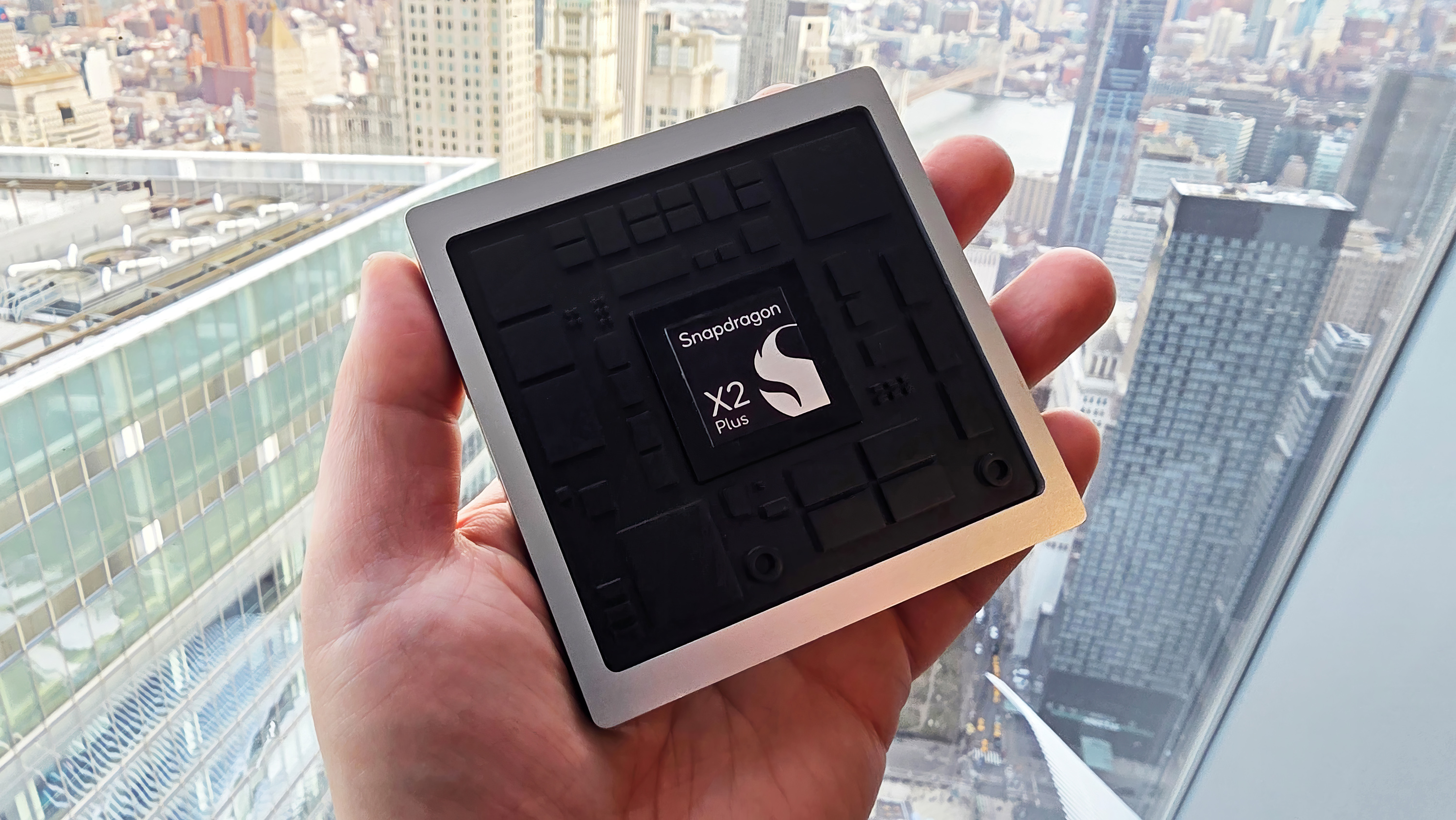
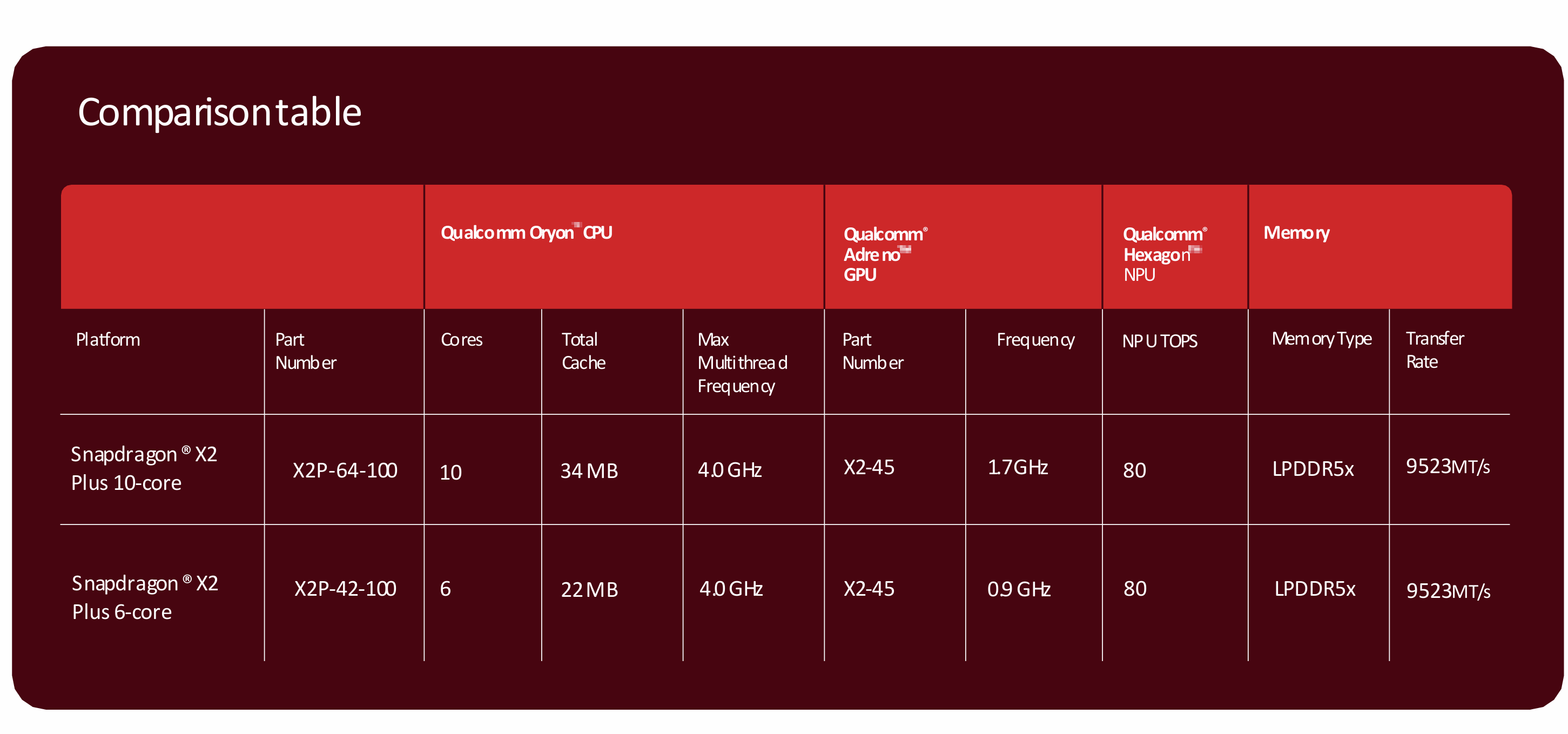
Qualcomm is releasing the X2 Plus in two versions: one with 10 cores and another with 6. Both versions share the same advanced 3nm technology, CPU design, and graphics processing unit as the X2 Elite. Importantly, they also have the same powerful 80 TOPS Hexagon NPU, which gives this chip a surprisingly high-end feel despite its name.
The processor with 10 cores is what you’ll likely find in powerful, thin-and-light laptops and business computers. It can reach speeds of up to 4.0GHz, has 34MB of cache memory, and runs the graphics processor at 1.7GHz. A 6-core version is also available, offering a more affordable price by reducing the amount of cache and slightly lowering the graphics processor speed, while maintaining the same top speed. Both versions can work with up to 128GB of fast LPDDR5x memory, offering bandwidth of 152GB/s – important specifications, especially as artificial intelligence tasks become more demanding.
This isn’t a “lite” chip. It’s a slightly leaner X2 Elite, and in some cases, it behaves like one.
Performance that punches above its weight
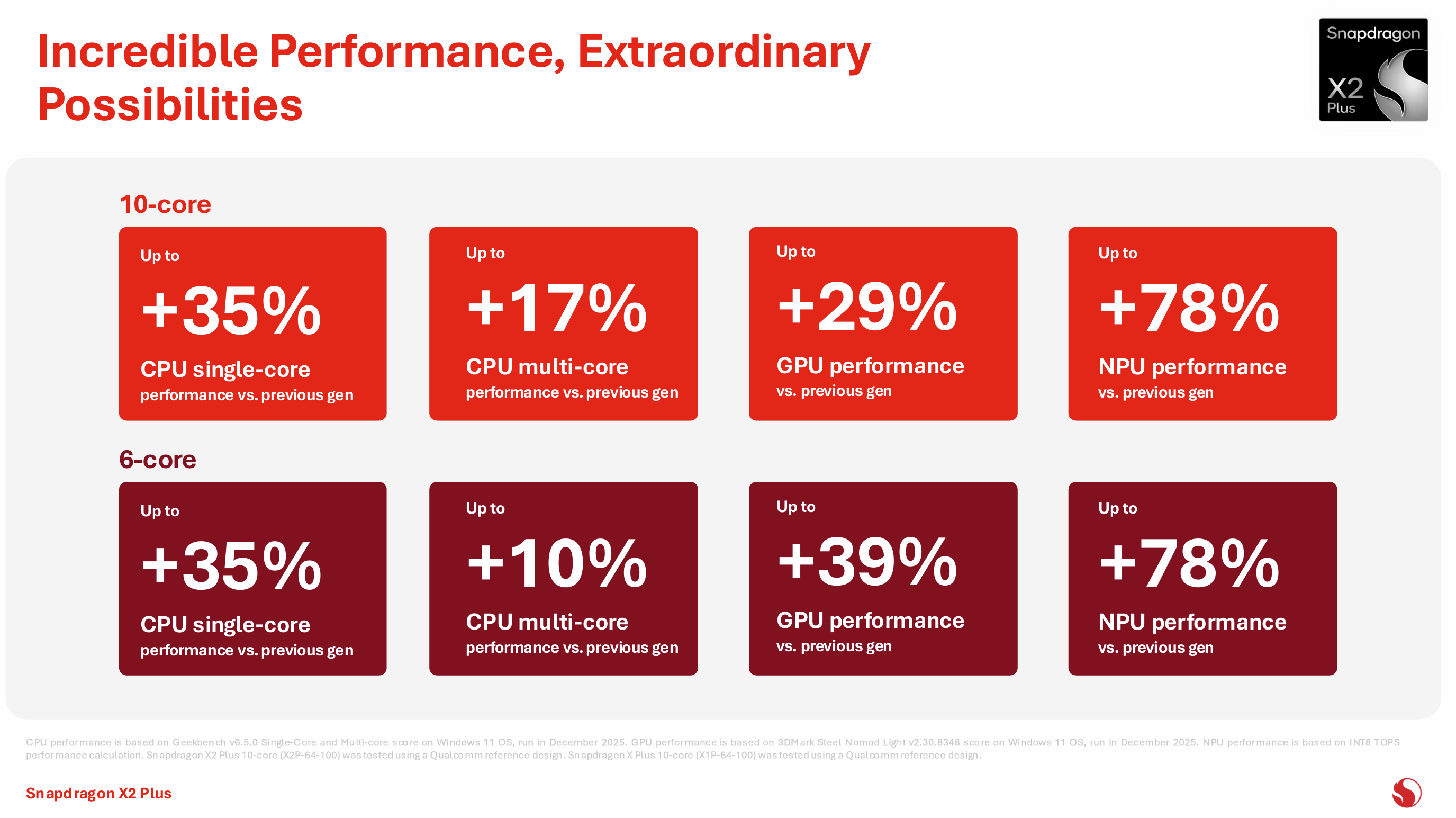
Qualcomm says their new X2 Plus chip is up to 35% faster for tasks using a single core and 17% faster for multi-core tasks compared to the previous Snapdragon X Plus. While that’s a good improvement, it’s even more interesting to see how it performs against other chips on the market.
During a preview in New York City, we tested the 10-core version of the chip using Geekbench 6.5. The results confirmed Qualcomm’s statements: the X2 Plus performed better than Intel’s Core Ultra 7 265U and 256V processors when using the same amount of power, and in some cases, the improvement was significant. According to Qualcomm’s own tests, the X2 Plus offers up to 3.5 times the CPU performance of the Intel Ultra 7 265U and is up to 52% faster in multi-core tasks compared to the Ultra 7 256V. Importantly, the Intel chips required four to 4.6 times more power to achieve their best results.
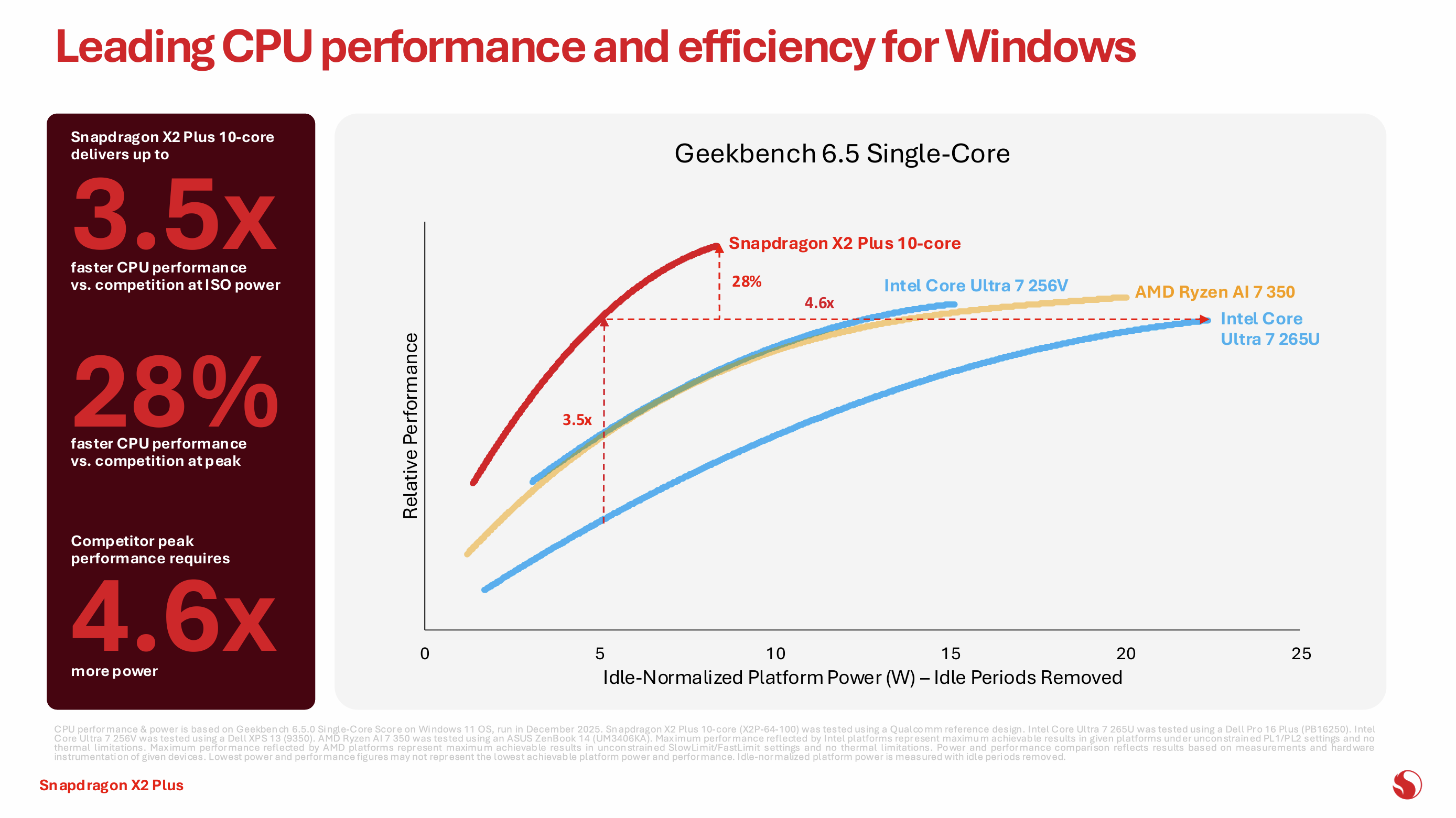
Single-core
Geekbench performance of the new Qualcomm Snapdragon X2 Plus versus current on-market competition.
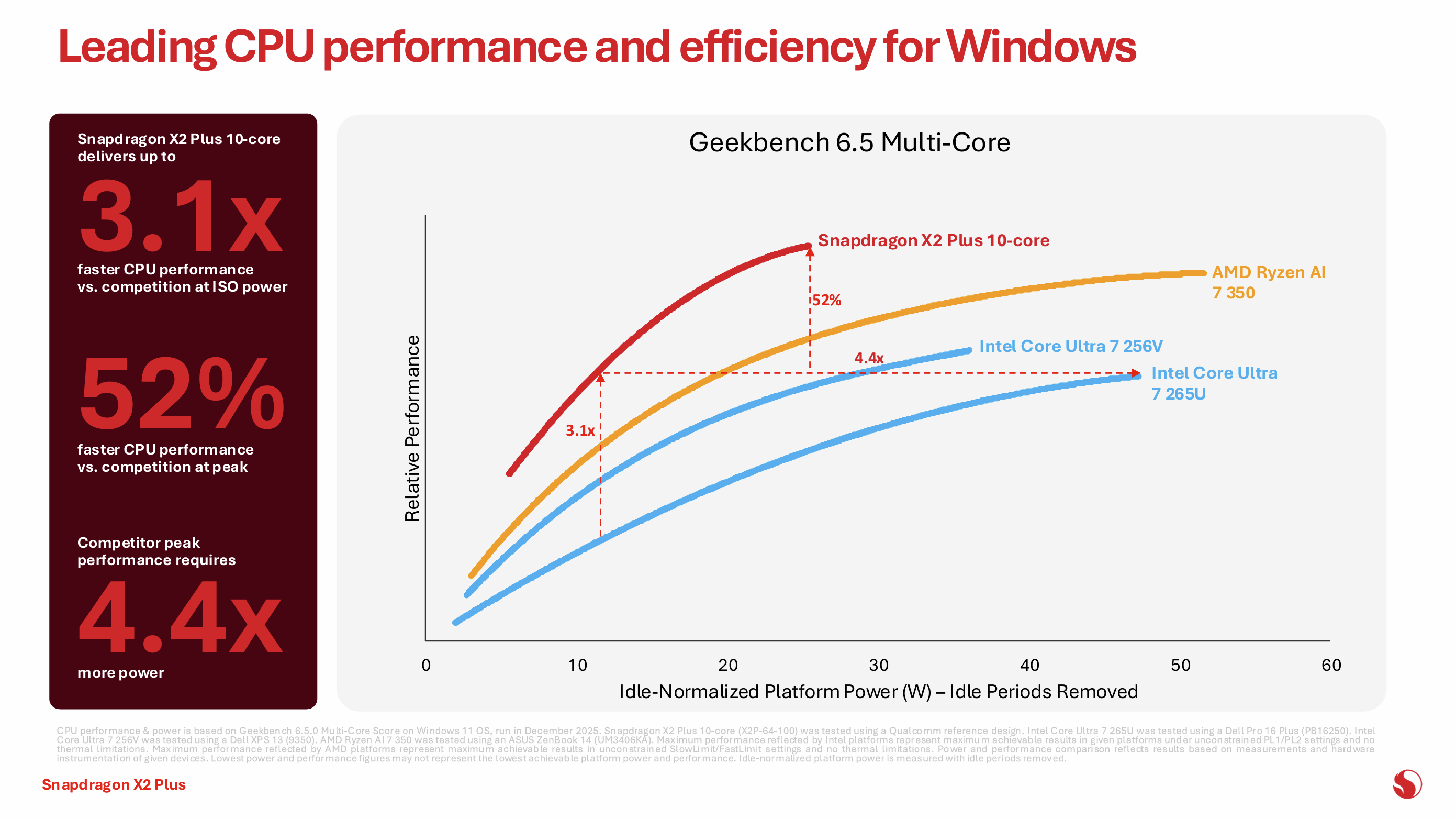
Multi-core
Geekbench performance of the new Qualcomm Snapdragon X2 Plus versus current on-market competition.
However, it’s important to note that Intel is preparing to release its Core Ultra 3 “Panther Lake” processors soon. These new chips are built using an advanced manufacturing process called Intel 18A and include enhanced performance cores, efficiency cores, low-power efficiency cores, a much better graphics processor (Xe3), and a next-generation Neural Processing Unit.
Intel has recently improved how efficiently their processors work and how well they handle graphics, and their new Panther Lake chips promise even bigger advancements. Although the X2 Plus currently outperforms some of Intel’s Core Ultra 2 processors, that’s likely to change soon as laptops with the new Panther Lake chips become available in the next few weeks and months.
Qualcomm still excels at maintaining consistent performance while using battery power, which is a key advantage. During testing, the X2 Plus performed similarly to the X Elite – it didn’t overheat, performance didn’t drop when not plugged in, and it didn’t require the fan to work hard. Intel and AMD continue to face challenges achieving this level of consistency in their slim and lightweight laptops.
AI performance: Qualcomm keeps its lead (for now)
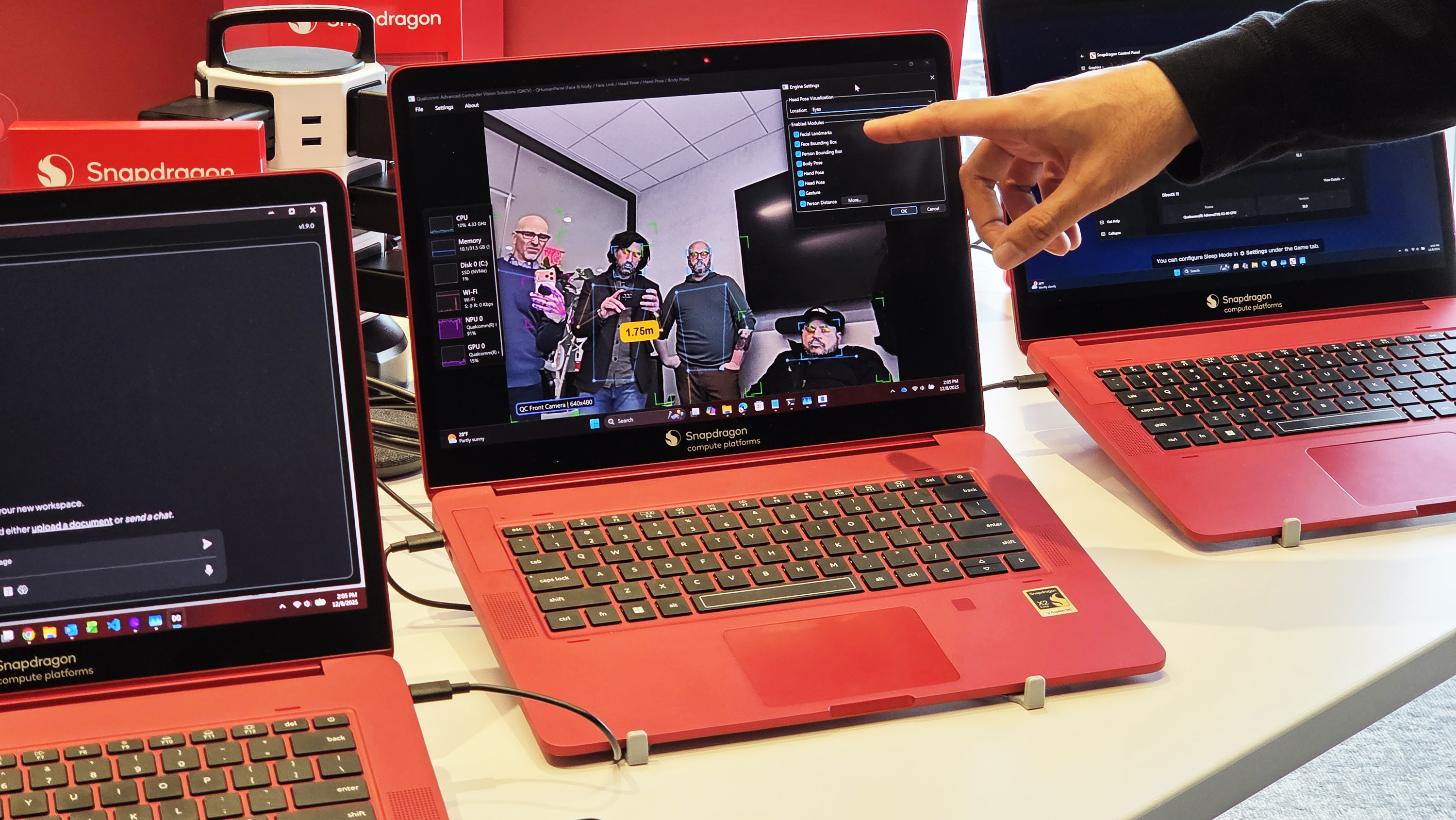
Qualcomm consistently leads the industry in neural processing unit (NPU) technology. The X2 Plus features the same powerful 80 TOPS Hexagon NPU as the X2 Elite, and performance tests confirm its strong capabilities.
The X2 Plus significantly outperformed Intel’s Core Ultra processors in AI performance tests. In UL Procyon’s AI Computer Vision benchmark, it scored 4193, more than double the score of the Intel Core Ultra 7 256V and over six times that of the Ultra 7 265U. Geekbench AI results showed a similar trend, with the X2 Plus achieving a score of 83,624, compared to Intel’s scores of 48,041 and 13,615.
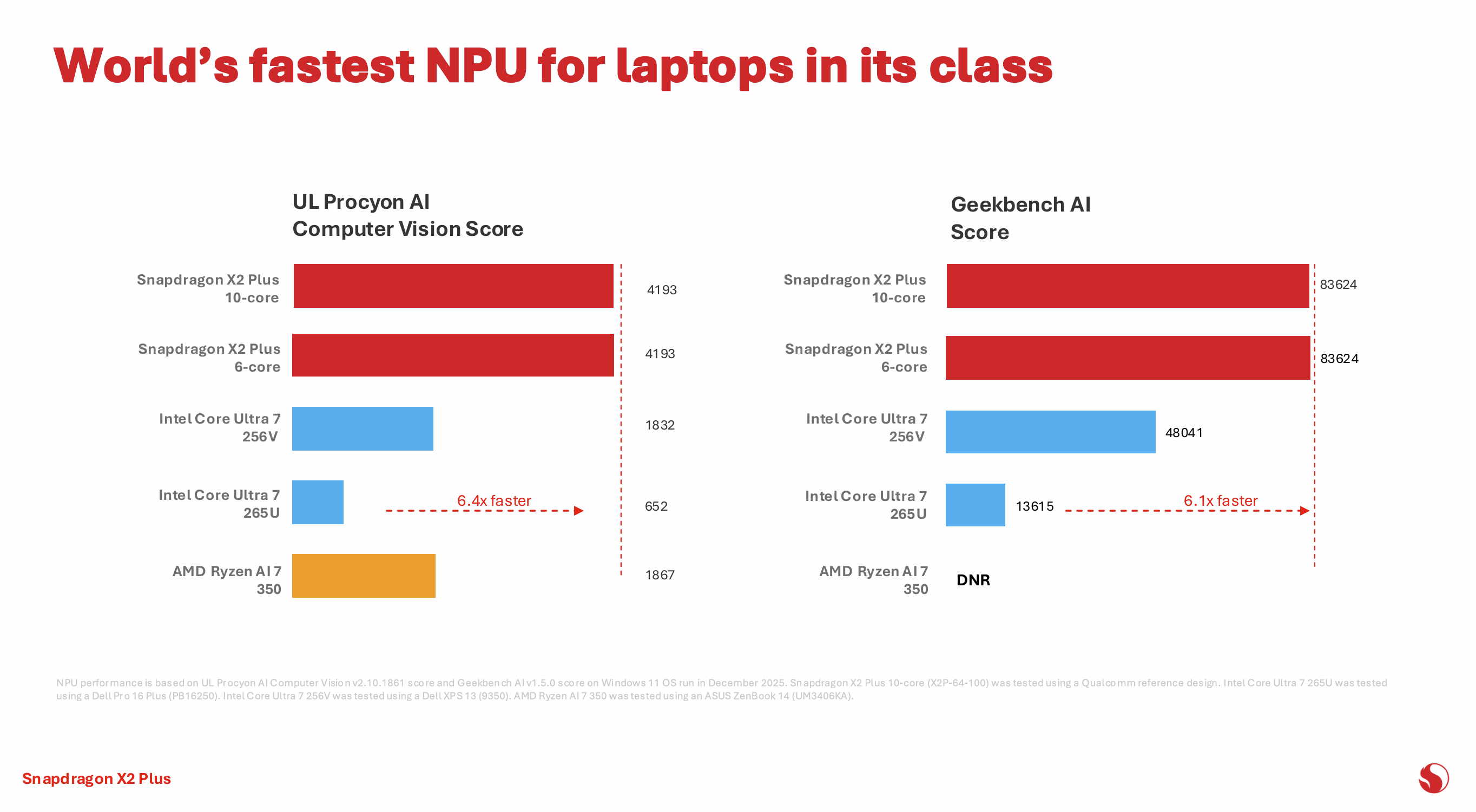
Intel’s next-generation Panther Lake processors (also known as Core Ultra 3) will feature a new Neural Processing Unit (NPU) capable of around 50 TOPS of performance. While this will improve Intel’s AI capabilities, Qualcomm still leads in terms of overall power and efficiency. As Windows 11 increasingly relies on on-device AI—features like Cocreator, Automatic Super Resolution, Studio Effects, and advanced AI assistants—computer manufacturers are looking for NPUs that can handle demanding tasks without significantly increasing power consumption.
For now, Qualcomm is still the company delivering that.
Battery life and real‑world behavior
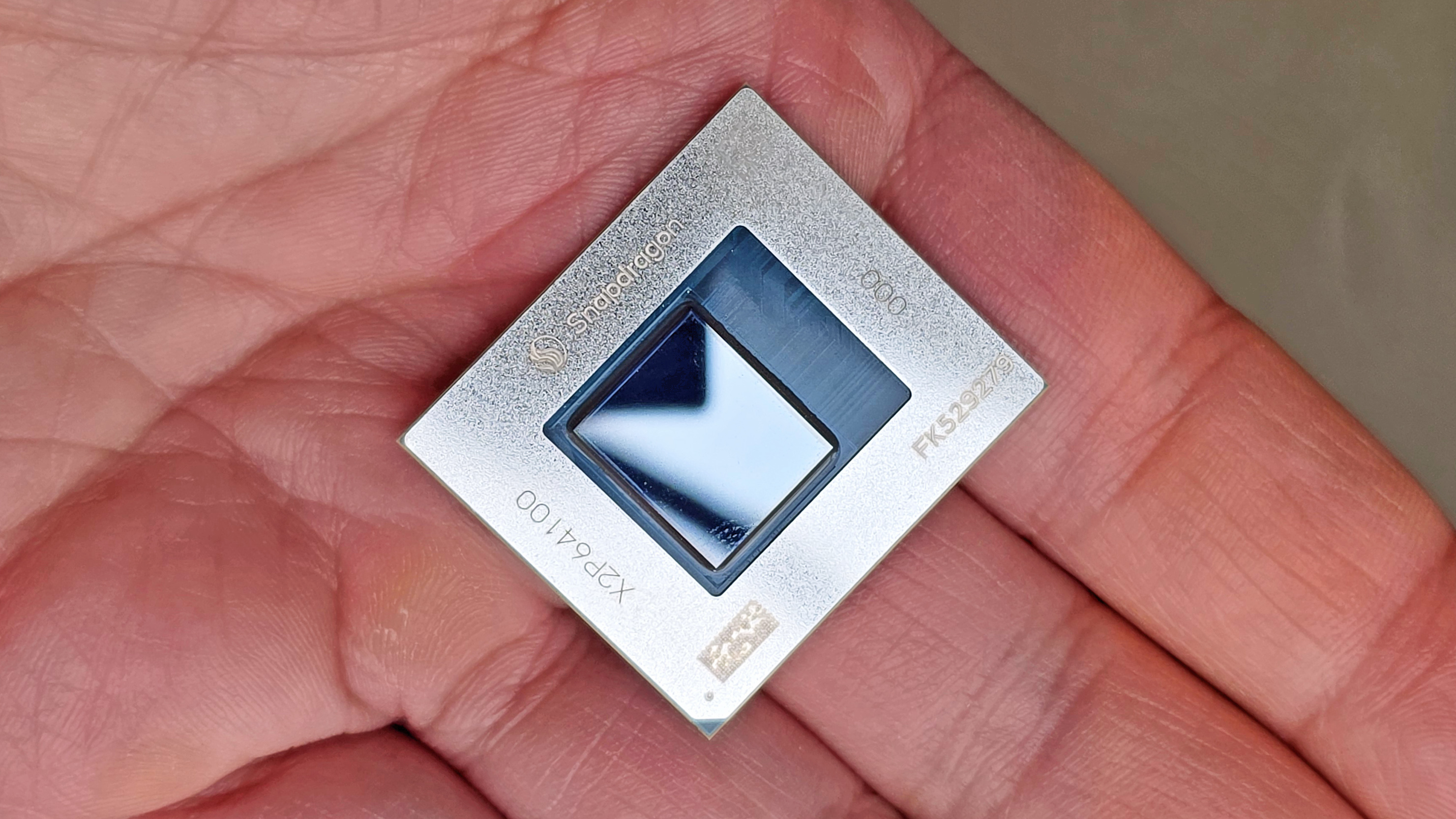
Qualcomm claims their new chips offer battery life that lasts for multiple days, and my testing suggests that’s accurate. The chips ran smoothly and didn’t overheat, even when pushed hard. According to Qualcomm, this new chip uses up to 43% less power than the previous version, while actually improving performance, and initial tests seem to confirm those claims.
This level of efficiency is transforming the laptop experience. It’s also beneficial for manufacturers, allowing them to create slimmer, more lightweight laptops without compromising on power.
Why the X2 Plus matters more than the X2 Elite
While the Snapdragon X2 Elite (and particularly the X2 Elite Extreme) gets all the attention and showcases what’s possible, it’s the X2 Plus that’s likely to significantly change the Windows PC landscape.
Expensive laptops aren’t what most people or businesses buy. The X2 Plus is different – it’s built for the more popular and affordable price range of $799 to $1,299. This is where Qualcomm can really make a difference, just like they did with the successful ASUS Zenbook A14, a top-rated laptop from 2025.
This comes at a time when computer manufacturers are facing increasing costs for parts, particularly with DRAM being scarce and expensive due to high demand from AI data centers. LPDDR5x memory is actually becoming *more* costly, so manufacturers need computer designs that offer great performance without needing complicated or power-hungry cooling systems. The X2 Plus is an ideal solution for this.
This technology also offers remote management features – like updating software, remotely locking or wiping devices, and tracking their location – on standard computers. This is a significant benefit for IT teams, as Intel currently dominates this area with its vPro platform. It eliminates a major obstacle that previously prevented businesses from widely adopting Arm-based computers.
Concerns (and possible criticisms) of the Snapdragon X2 Plus?
I’m trying to be fair, but it’s hard to find many drawbacks with the X2 Plus, at least based on its specifications. Here are a few potential downsides, though.
Windows on Arm has gotten much better, but a few specialized apps, older work programs, and demanding creative tasks might still not run perfectly using emulation. However, this is becoming increasingly uncommon.
Gaming on this device is significantly improved, but anti-cheat software and compatibility with some games still need work, though Qualcomm and Microsoft are actively addressing these issues. Fortnite now runs well. However, because the processor has a less powerful graphics chip and isn’t as strong in multi-tasking, manufacturers might create confusing variations of the device.
The competition is changing quickly. While the X2 Plus is currently better than many of Intel’s Core Ultra 2 chips, Intel’s next-generation Core Ultra 3 processors, nicknamed “Panther Lake,” are expected to be much more efficient, have a faster AI processing unit, and significantly improved graphics capabilities.
Increasing prices and limited availability of LPDDR5x memory, especially looking ahead to 2026, could mean some X2 Plus laptops end up costing more or having less powerful features than customers anticipate. While these issues aren’t major flaws, they are real-world factors that will impact how successful the X2 Plus is when it’s released. It’s also worth noting that these RAM challenges affect both AMD and Intel processors, not just Qualcomm.
Availability and what comes next
Qualcomm expects the first laptops powered by the Snapdragon X2 Plus chip to become available in the first six months of 2026. Several major computer manufacturers, including HP, Lenovo, and ASUS, are expected to announce their new models this week at CES 2026. From what I’ve seen, these laptops will come in a variety of styles, from slim and lightweight designs to 2-in-1s, business-focused ultrabooks, and even some models that don’t use fans.
As a fan, I’m really excited to see Qualcomm now offering a complete lineup of Snapdragon chips! They’ve got the super-powerful X2 Elite Extreme for high-end laptops, the X2 Elite for great ultrabooks, and the X2 Plus for everyday machines. I’m guessing this means we’ll probably see an even more affordable “Snapdragon X2” chip later this year, maybe at Computex 2026. That would give them a really impressive selection of chips at different price points – even more options than the first Snapdragon X series!
Intel’s upcoming Panther Lake processors and AMD’s new Ryzen AI chips are expected to make 2026 an exceptionally competitive year for Windows laptops – potentially the most competitive in ten years.
I’ve been testing the latest chips from Intel, Qualcomm, and AMD, and I’m really impressed with all of them. They offer great performance, especially in graphics, and could give people a more affordable alternative to NVIDIA’s high-priced cards.
Qualcomm has changed its position in the market. It’s no longer the lesser-known competitor, but a strong player, and with the X2 Plus, it’s directly challenging the leading brands.

Will the Snapdragon X2 Plus finally make Arm-powered laptops popular, or are you holding out to see what Intel’s new Panther Lake chips offer? I got a hands-on look at these laptops in New York and was quite impressed. However, their success will depend on how well manufacturers build them and how smoothly Windows runs the latest AI features.
Drop your thoughts below.
Wondering if you’ll consider a Windows laptop powered by an Arm processor in 2026, or if you still prefer traditional x86 processors? If you’ve already tried a laptop with the new Snapdragon X Elite chip, I’d love to hear about your experience and whether it matched up with Qualcomm’s promises. Let’s dive in!
Read More
- What Song Is In The New Supergirl Trailer (& What It Means For The DC Movie)
- TV legend Carol Kirkwood reveals the reasons why she decided to retire after 28 years with BBC
- Dune 3 Gets the Huge Update Fans Have Been Waiting For
- Robinhood’s Tokenized Stock Fiasco: A Tale of Tokens and Tussles
- After 13 Years, Someone Earned One of the Hardest Achievement Trophies in Gaming
- 5 Best Superman-Centric Crossover Events
- New Open-World “AAAA” Game Coming From Tomb Raider Developer
- Crimson Desert is a “Cynical Amalgamation of Borrowed Mechanics,” Says Larian’s Publishing Director
- Jaleco Sports: Bases Loaded II announced for PS5, Switch; now available
- Digimon Is Getting a New RPG in 2026 (And You Probably Missed It)
2026-01-10 20:42