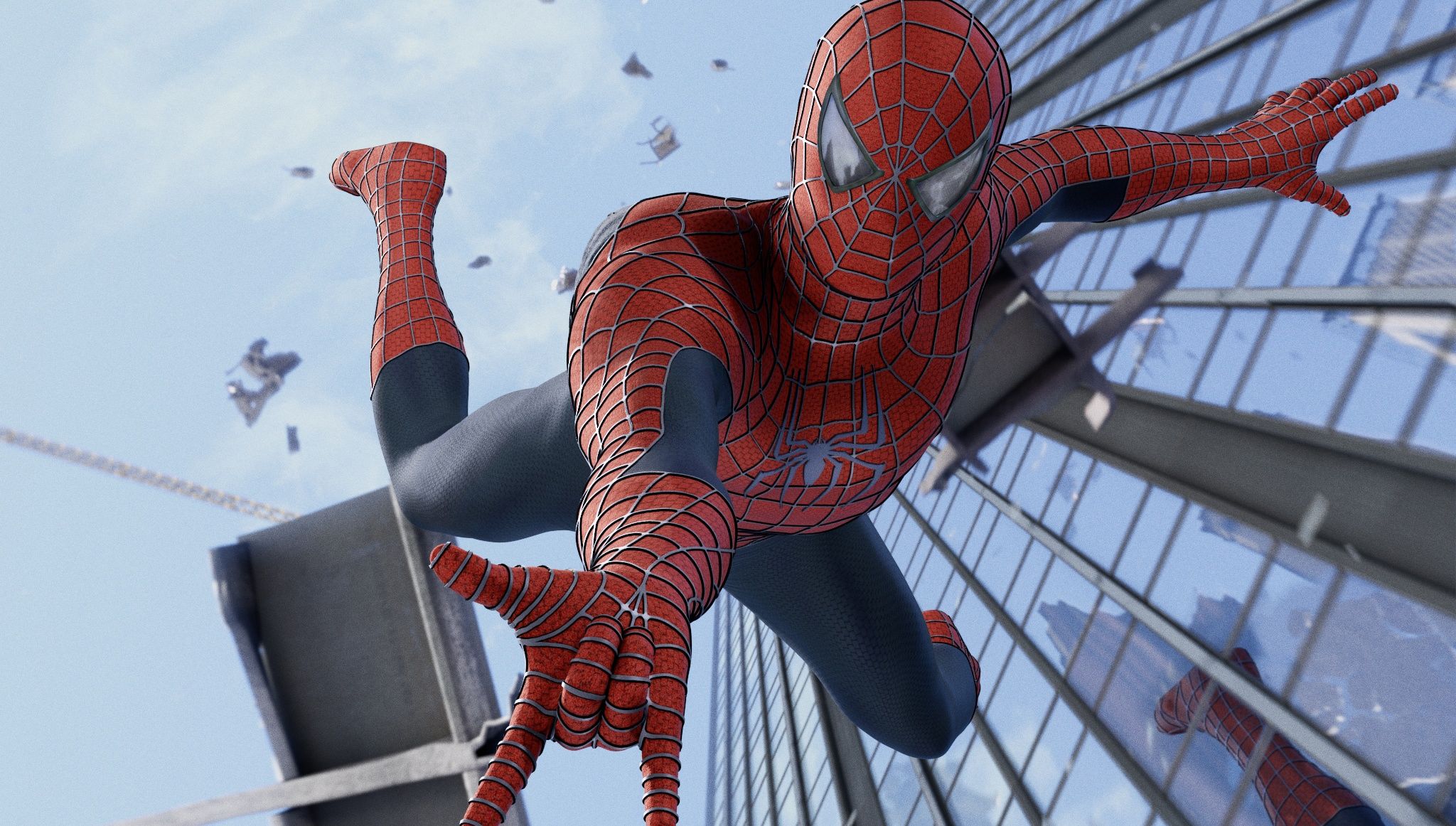
Spider-Man’s portrayal in movies has changed a lot over time. Early live-action versions were colorful and tried to capture the feel of the comics, even if they were a bit strange. Later, especially within the Marvel Cinematic Universe, his movies became more realistic and focused on believable storytelling.
Over the years, each actor who’s played Spider-Man in movies has showcased the filmmaking styles and special effects available at the time. The way Spider-Man looks, how his powers work, and even the overall tone of the movies have changed with each new version. From the classic colorful suit and simple web-shooters to high-tech suits and more dramatic acting, Spider-Man’s appearances on the big screen have actually changed quite a lot.
Nicholas Hammond’s Spider-Man
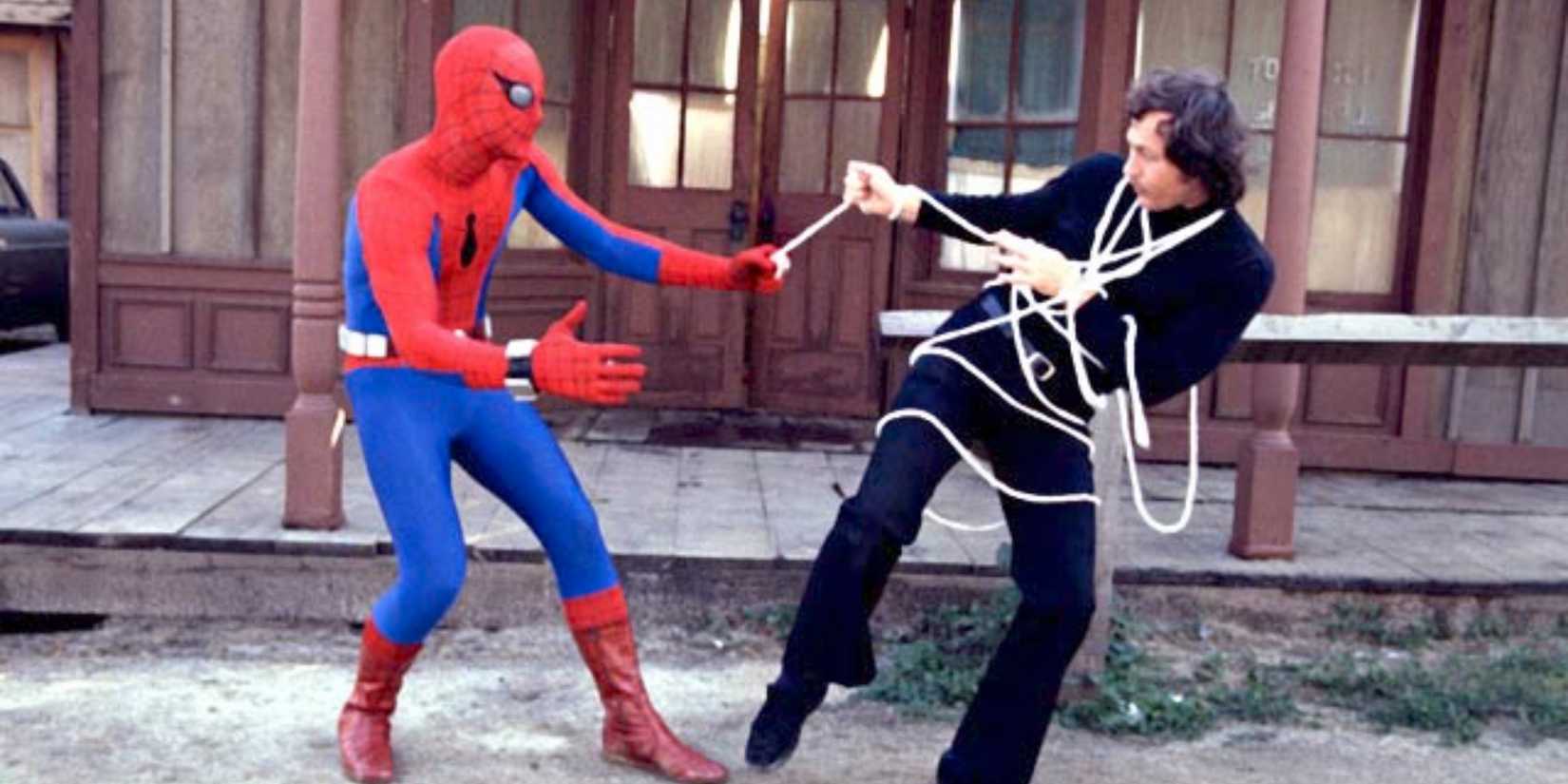
Nicholas Hammond was the first actor to play Spider-Man on screen. He famously starred as the character in the 1977 Amazing Spider-Man television series and three related TV movies. This version of Spider-Man had a unique, highly stylized look, almost as if a comic book had come to life – and it didn’t worry about being realistic at all.
The suit is strikingly colorful, with bright reds and blues that really stand out. It’s covered in black webbing, creating a detailed, insect-like pattern. The Spider-Man logo on the chest is larger and rounder than in later versions, contributing to a more unsettling, spider-like look.
The eyes of the suit are unusually round and clear, letting you see Hammond’s eyes behind them. This choice makes the suit look less sophisticated, but surprisingly relatable. The webbing is just plain white rope – it doesn’t look very impressive by modern standards, but it worked well enough back then.
Hammond’s Spider-Man suit features web-shooters on the outside of the wrists, a departure from the comic books where they were hidden. He also has a large, noticeable utility belt, similar to those seen in comics from that period. The biggest visual problem is the plain red boots, which don’t fit with the rest of the suit. Overall, like the show and its special effects, the suit is a bit rough around the edges, but it’s surprisingly faithful to the comic book look for when it was made.
Takuya Yamashiro’s Spider-Man
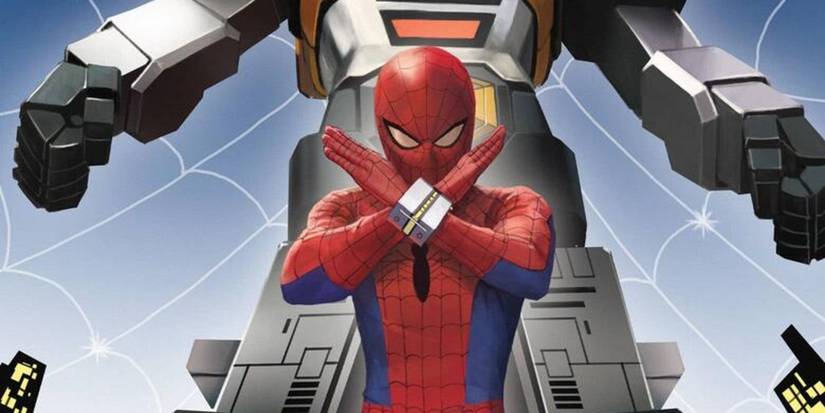
Kōsuke Kayama played Takuya Yamashiro in the 1978-1979 television series Japanese Spider-Man and the related movie. This version of Spider-Man looks a lot like the one played by Nicholas Hammond, but has some small changes that really stand out.
The suit keeps the classic red and blue colors and prominent spider emblem. However, his eyes are now more angular and completely white, creating a more classic heroic appearance. The web pattern is still printed on the suit, preserving the flat, comic book-style look.
This design does away with the traditional utility belt, creating a sleeker look. Spider-Man’s new web-shooter bracelet is much bigger and more advanced. It can open doors with magnetism, identify hidden aliens, and even block laser beams.
Spider-Man’s web-shooting still feels like using a tool rather than being a natural ability. What’s really different in this version is that Takuya actually pilots a huge robot called Leopardon. This turns Spider-Man into a classic Japanese special effects hero and opens up a whole new way to think about his powers.
Tobey Maguire’s Spider-Man
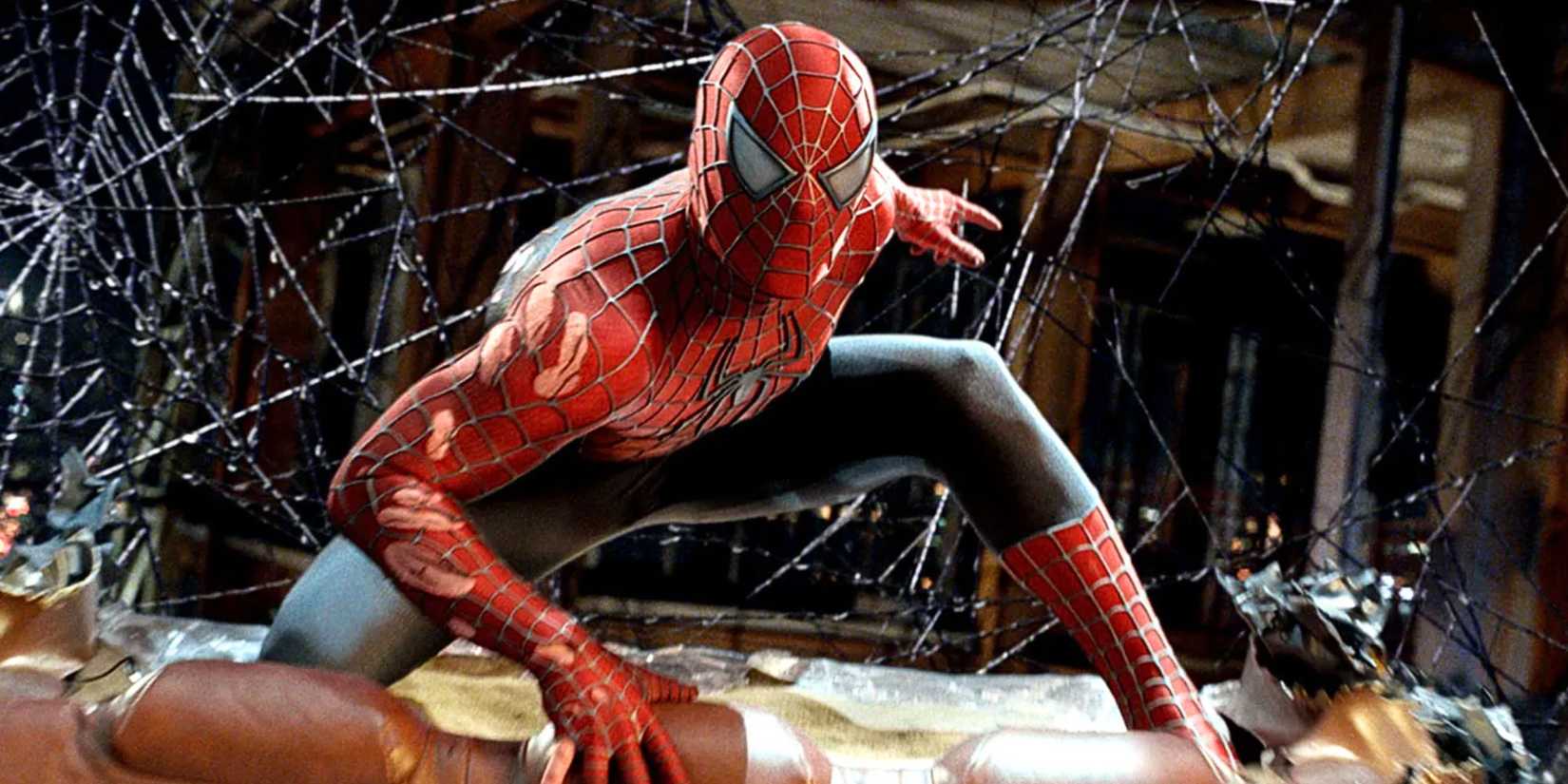
Tobey Maguire’s portrayal of Spider-Man, which first appeared in the 2002 film directed by Sam Raimi, brought a much more realistic feel to the character. The movie used a darker color palette, with richer reds and blues that felt more natural than showy. One of the most memorable changes was the raised webbing on the costume, colored a silvery-black to give it texture, depth, and a hint of real spider silk.
The web design emphasizes that Spider-Man is physically different and not entirely human. His eyes are pointed and completely white, creating a look that’s both expressive and mysterious. Director Sam Raimi also made the webs come directly from Spider-Man’s body, removing the need for mechanical devices and establishing web-shooting as a natural ability.
The new spider logo is more three-dimensional and has a sharper, more geometric design, with a smaller body and longer, pointier legs. The red color still wraps completely around the waist, but it’s no longer covered by a belt. The red area on the chest is also wider, emphasizing the actor’s more athletic build.
The red boots are now a seamless part of the suit, not just separate shoes. Sam Raimi also brilliantly captured the feel of Spider-Man’s web-swinging, creating a benchmark for all future films. This all comes together to create a polished, realistic, and instantly recognizable cinematic style. Just like the movie itself, it fundamentally changed how Spider-Man was portrayed.
Tobey Maguire’s Symbiote Spider-Man
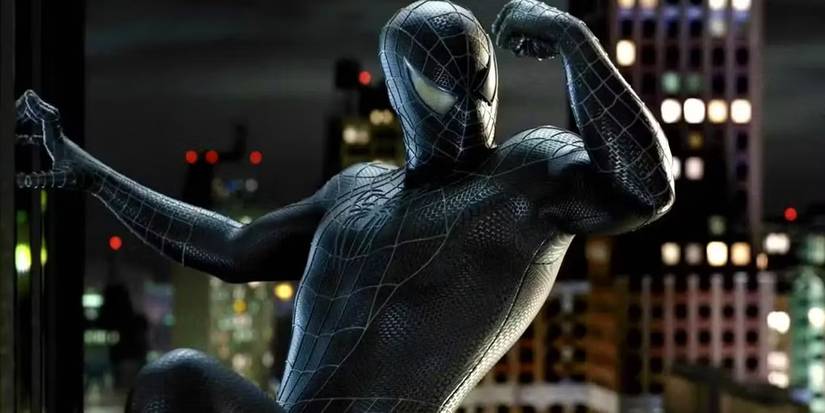
The Spider-Man suit in Sam Raimi’s Spider-Man 3 (2007) builds on the already well-known design, but takes the character into a more troubled and psychological space. The change is immediately noticeable: the suit becomes completely black, ditching the classic red and blue for a sleek, almost fluid darkness. While the raised webbing remains, it now stands out as nearly white against the black background.
This enhances the suit’s detailed texture, making it look tougher and more intimidating. The Spider logo is simplified to a stark black design with wider, more menacing legs, creating a more threatening outline for Spider-Man. This version of Spider-Man feels colder and more self-assured, and the suit’s bolder design reflects that attitude.
Andrew Garfield’s Spider-Man
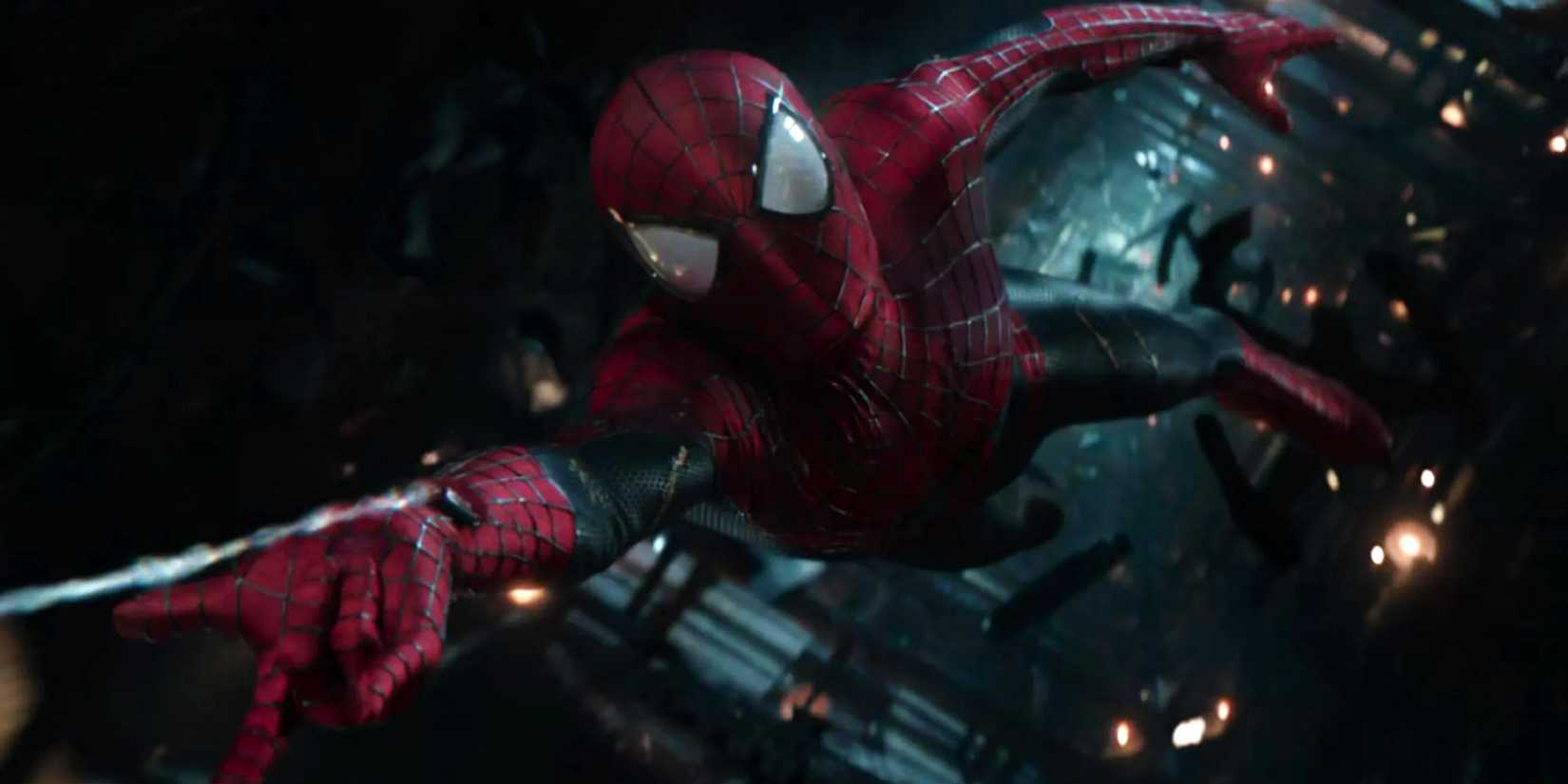
Andrew Garfield first appeared as Spider-Man in The Amazing Spider-Man (2012), and his version of the character was immediately noticeable for its distinctly darker and more atmospheric look. The film uses a lot of muted colors – deep reds and dark blues that appear almost metallic, especially in darker scenes. His Spider-Man suit also has a different design, moving away from the traditional red band around the waist to create a sleeker, more streamlined shape.
The red area on Spider-Man’s chest narrows sharply, making him appear taller and leaner. This design choice also contributed to a more athletic and youthful look for the character, which matched Andrew Garfield’s portrayal. Compared to Tobey Maguire’s Spider-Man, Garfield’s eyes are bigger and rounder, creating a sense of innocence and vulnerability that suits this version of a younger, less confident Peter Parker.
The raised webbing is still visible, but it’s much more subdued and now black instead of silver, helping it blend with the suit. The spider logo is noticeably bigger, with long, thin legs extending down the chest, creating a darker and more intense feel that fit the character’s more realistic and serious portrayal at the time.
Tom Holland’s Spider-Man
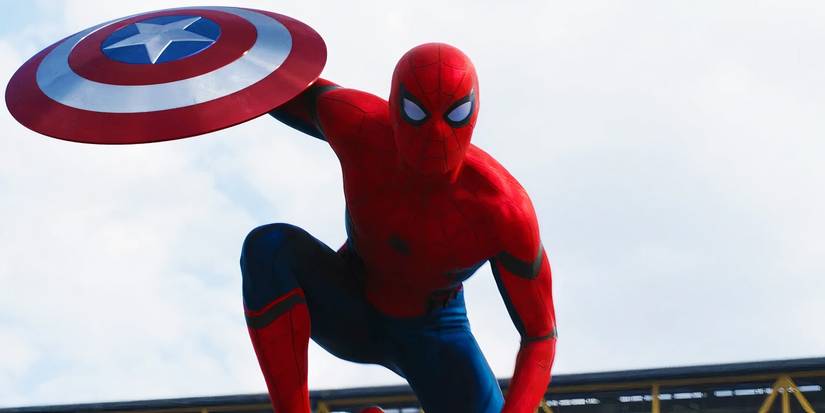
Tom Holland’s Spider-Man has come a long way since he first appeared in Captain America: Civil War. Each of his suits is sleek, up-to-date, and clearly very advanced – they actually enhance his abilities, instead of just looking like a costume. The most famous is the suit from Civil War, which brought back brighter reds and blues and replaced the raised web pattern with a printed design.
The suit has a sleek, streamlined design with noticeably smaller Spider-Man logos on the front and back. Black stripes add visual interest and give it a modern, graphic feel. But the biggest improvement is the eyes – they’re incredibly expressive, using mechanics to show emotion like never before in a live-action Spider-Man film.
Throughout the Spider-Man movies, Peter Parker’s suits are always changing. In Spider-Man: Far From Home, his upgraded suit goes from blue to black, giving it a sleeker appearance and symbolizing his increasing self-reliance. Then, in Spider-Man: No Way Home, the Integrated Suit features a striking gold spider logo on the chest, set against darker reds and blues, which visually combines Stark’s technology with Peter’s own unique style.
The Iron Spider suit takes the idea of Spider-Man and Iron Man merging to the fullest extent, giving him a look with metal armor and robotic parts. However, the end of No Way Home shows Peter Parker creating a classic red-and-blue suit, which is much more like the one from the original comics. This suggests he’s moving away from relying on so much technology and returning to a more basic style.
Nicolas Cage’s Spider-Man
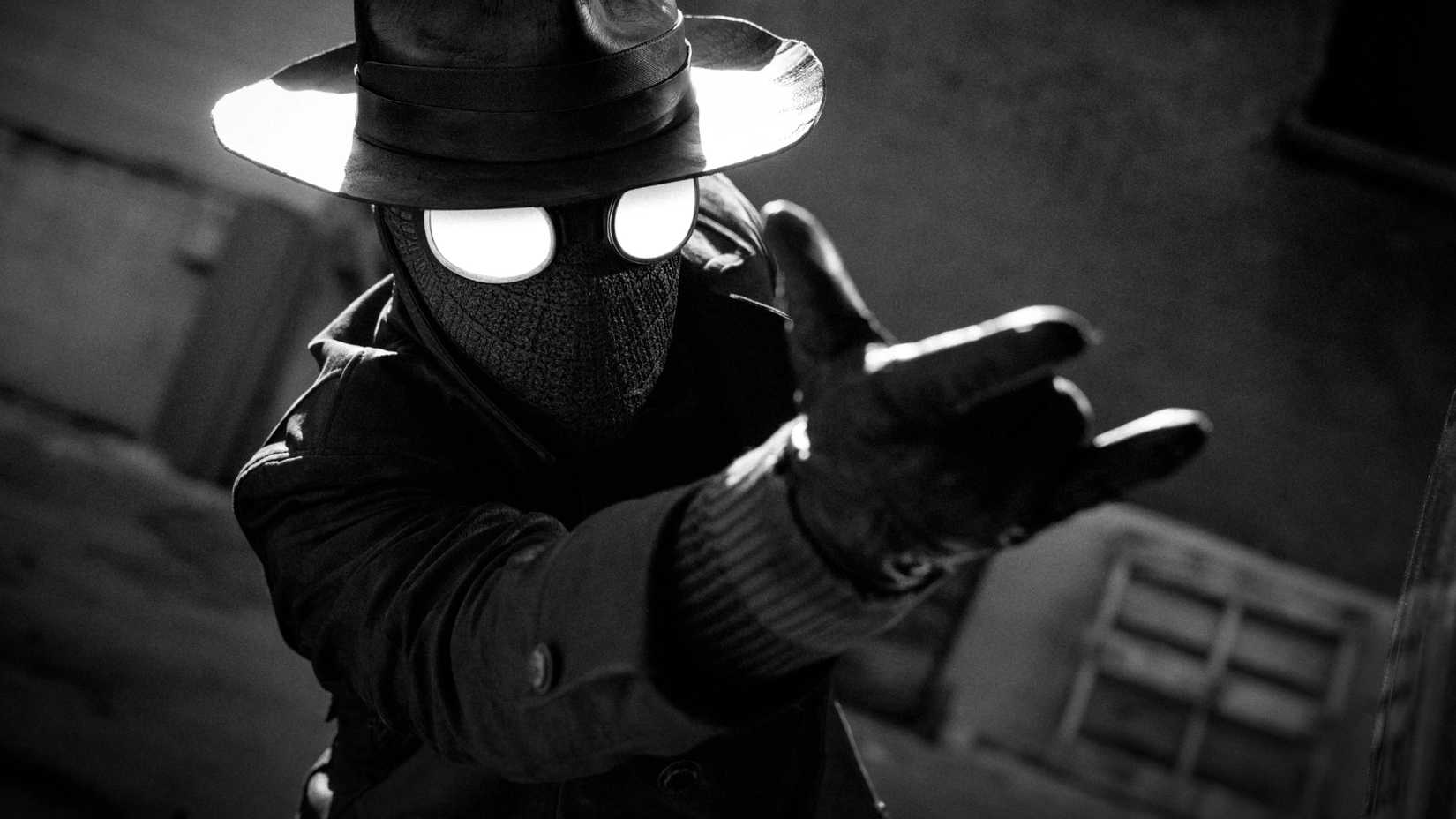
Okay, so I just heard about this and I’m really excited! Nicolas Cage is playing Spider-Man Noir in a movie called Spider-Noir coming out in 2026. Apparently, they’re doing a fantastic job of bringing that cool, animated look of the character to life – it’s practically identical to how he appears in the Spider-Verse films. The suit is mostly black and grey, keeping that classic Noir aesthetic. It’s like they lifted him right out of the animation!
He tops off his costume with a fedora and a worn, long coat, giving off a strong 1930s detective vibe. Black gloves and boots finish the outfit, making him feel less like a typical superhero and more like a classic hardboiled detective. The style is very deliberate and retro, prioritizing atmosphere over realistic detail. This is a significant departure from the traditional Spider-Man appearance.
Read More
- The Super Mario Galaxy Movie: 50 Easter Eggs, References & Major Cameos Explained
- 10 Best Free Games on Steam in 2026, Ranked
- Surprise Isekai Anime Confirms Season 2 With New Crunchyroll Streaming Release
- Sydney Sweeney’s The Housemaid 2 Sets Streaming Release Date
- Preview: Sword Art Online Returns to PS5 as a Darker Open World Action RPG This Summer
- Skate 4 – Manny Go Round Goals Guide | All of the Above Sequence
- Why is Tech Jacket gender-swapped in Invincible season 4 and who voices her?
- Welcome to Demon School! Iruma-kun season 4 release schedule: When are new episodes on Crunchyroll?
- Best coins for today
- Dune 3 Gets the Huge Update Fans Have Been Waiting For
2026-02-07 04:33