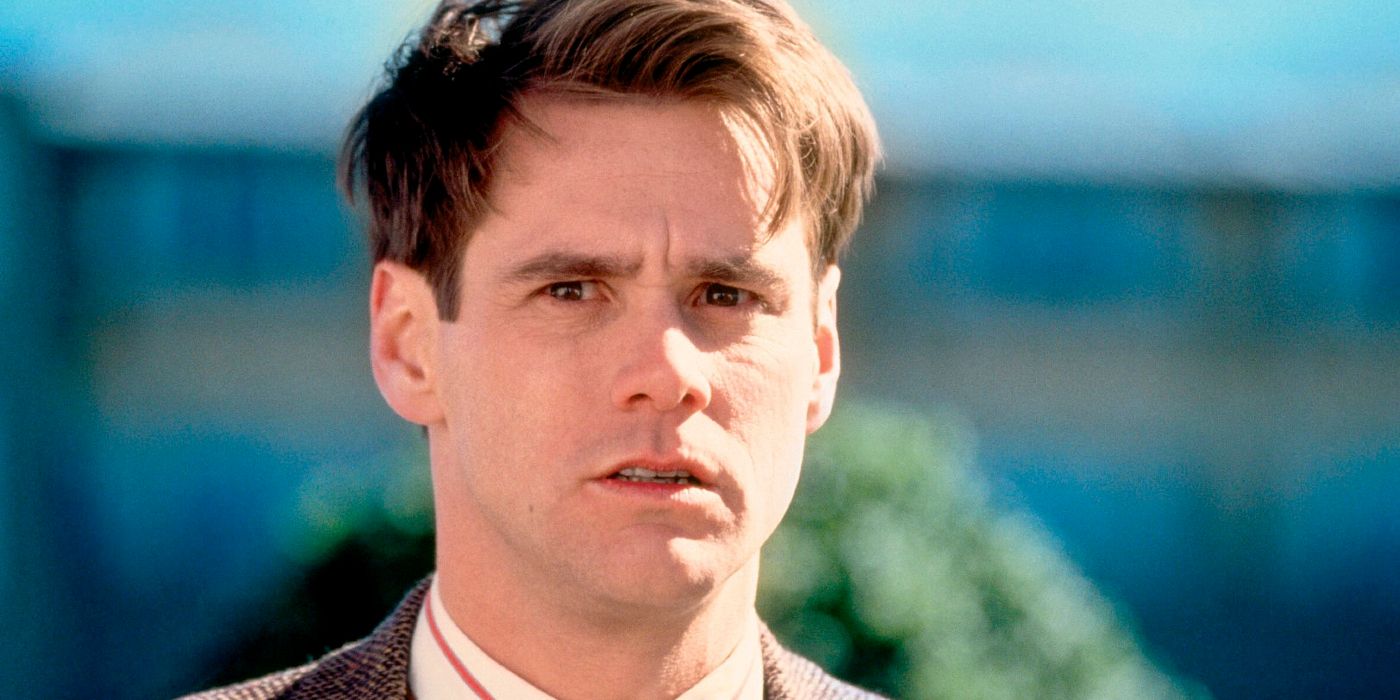
Released in 1998, The Truman Show is often considered one of Jim Carrey’s finest performances. While Carrey was primarily known for comedy at the time, this film demonstrated his ability to handle a more dramatic role with skill. Though it initially seems like a cheerful and funny movie, the story soon reveals a disturbing and unsettling truth.
For nearly 30 years, the ending of The Truman Show has sparked conversation, though it’s not intentionally open to interpretation like many sci-fi films. It provides a clear resolution, leaving little to debate. What’s truly fascinating is the effect this ending has, not just on Truman Burbank (played by Jim Carrey), but on everyone else in his world, and that’s something people still discuss today.
The Truman Show Is a Disturbing Dystopian Sci-Fi Journey
Truman Burbank appears to be a typical man living a normal life in the quiet town of Seahaven Island. However, as viewers watch Truman, they quickly notice something isn’t right. The truth is, Seahaven isn’t a real place – it’s a constructed town built inside a giant studio.
Truman lives his entire life believing everyone around him is a real person, but secretly they are all actors. He’s the unwitting star of a 24/7 reality show called The Truman Show, which is broadcast around the world, allowing viewers to watch his every move at any time.
The creators of The Truman Show legally adopted Truman as an infant. Christof, the show’s producer, orchestrates every aspect of Truman’s life. A fabricated boating accident, arranged by Christof, caused Truman’s fake father to ‘drown,’ leaving Truman with a deep fear of water. This fear effectively prevents him from leaving Seahaven Island – the massive sound stage where the show is filmed – making it seem like Truman is choosing to stay.
As the story progresses, increasingly odd events occur on the set, such as a falling light and Truman unexpectedly spotting the actor who portrayed his father years ago. Truman begins to suspect something isn’t right, even if he doesn’t fully understand what’s happening. He even becomes attracted to Sylvia, a background performer who attempts to reveal the truth about his life, but is quickly fired and removed from the show.
Truman eventually figures out his life isn’t real and courageously sails away from the island, heading towards the edge of his world. Christof tries desperately to stop him, even creating a dangerous storm to try and drown him, but Truman keeps going. Finally, he crashes into the wall of the set and discovers a staircase leading to a door that leads outside.
Just before Truman escapes, Christof reveals the truth about his entire life being a constructed reality. He tries to persuade Truman to stay, arguing that the studio offers a safe and secure existence, while the outside world is full of hardship and danger. Christof insists that the real world isn’t necessarily more genuine, and that leaving won’t actually lead Truman to any greater truth.
I’ve been thinking a lot about Truman’s decision, and it really hit me when he finally walked off the sound stage. It wasn’t just about escaping; it was a powerful statement. Before he did, he delivered that iconic line – “In case I don’t see ya, good afternoon, good evening, and good night.” – and it felt like a true goodbye to everything he’d known. Then, seeing Sylvia break free and run to meet him… that was a hopeful moment. It suggested that maybe, just maybe, they could actually build a life together outside of that manufactured reality, and that’s a beautiful thought.
This Ending Seems Like a Happy Resolution
A central theme of the film is the idea of free will and our culture’s fascination with celebrities. A group of activists, called “Free Truman,” believes it’s wrong and a violation of basic human rights for the studio to control Truman’s life. Truman isn’t aware that he lacks freedom, privacy, or even the knowledge that these things are being denied to him.
Most people around the world aren’t concerned with how Truman is treated. Whether they watch the show or not, they generally don’t see a problem with it and don’t have strong feelings about what happens behind the scenes. They view it simply as entertainment that should be easily accessible, and that’s all. This highlights a broader issue with how we view entertainment and public figures.
Many viewers see the ending of The Truman Show as a positive one. Truman finally escapes a lifetime of being controlled and gets to experience true freedom. His journey resonated with people globally, inspiring a massive movement to support his success and allow him to live his own life. Ultimately, he also gets the chance to be with the woman he loves.
While clearly unethical, Christof did create a comfortable existence for Truman. He provided safety, companionship, and freedom from the hardships many face – things like financial worries or difficult careers. This leads to interesting questions: even though Truman was being manipulated, was his life, in some ways, better than ours? It sparks debate about whether we truly have free will, what constitutes a fulfilling life, and what it even means to be genuinely ‘real’.
The Truman Show’s Ending Is Complex
As a film buff, I’ve always been fascinated by how movies can make us question what’s real and whether we’re even getting what we want from the media we consume. I recently read an interesting paper by Ronald Bishop in the Journal of Communication Inquiry that really hit home – it argues that The Truman Show is a powerful exploration of media’s influence over us. Watching Truman fight for his freedom is incredibly inspiring, and it made me think about how the film itself impacts us as viewers, almost mirroring the show-within-a-show concept!
Other critics also point out that the movie mirrors the artificiality of reality television. Shows like Survivor, Big Brother, and The Real Housewives are all heavily edited and constructed for entertainment. This leads to the idea that the film aims to reveal the deception behind these programs and encourage viewers to question what they’re watching. It makes you wonder if this kind of content is genuinely enjoyable, or just something studios aggressively promote.
Many people have drawn comparisons between The Truman Show and coming-of-age stories, noting that Truman lives his entire life on a giant set, much like a child. He doesn’t realize he’s being watched or that his world isn’t real, and his journey can be seen as him ‘growing up’ as he discovers the truth about Seahaven Island. Some critics even argue that the film explores what it truly means to be a man.
This film is surprisingly unsettling and full of hidden layers of meaning. Although it clearly shows Truman leaving the artificial world of his show, people still debate what the ending truly means. Some see Truman’s escape into a “real” life as a hopeful resolution, while others believe it’s a commentary on the broader impact of his life on those around him.
Some people believe the real message of The Truman Show is that we don’t have as much control over our lives as we think. Since so much happens beyond our influence, it’s hard to know what’s genuinely real. Just like Christof controls Truman’s world, powerful forces often make decisions for us, suggesting we’re not so different from Truman after all.
Found an error? Send it so it can be corrected.
Read More
- Gold Rate Forecast
- Looks Like SEGA Is Reheating PS5, PS4 Fan Favourite Sonic Frontiers in Definitive Edition
- Hazbin Hotel Secretly Suggests Vox Helped Create One of the Most Infamous Cults in History
- Arknights: Endfield – Everything You Need to Know Before You Jump In
- Dune 3 Gets the Huge Update Fans Have Been Waiting For
- Jack Osbourne Shares Heartbreaking Tribute to Late Dad Ozzy Osbourne
- 5 Weakest Akatsuki Members in Naruto, Ranked
- Action Comics #1096 is Fun Jumping-On Point for Superman Fans (Review)
- 22 actors who were almost James Bond – and why they missed out on playing 007
- Dungeon Stalkers to end service on June 9
2026-01-22 20:19