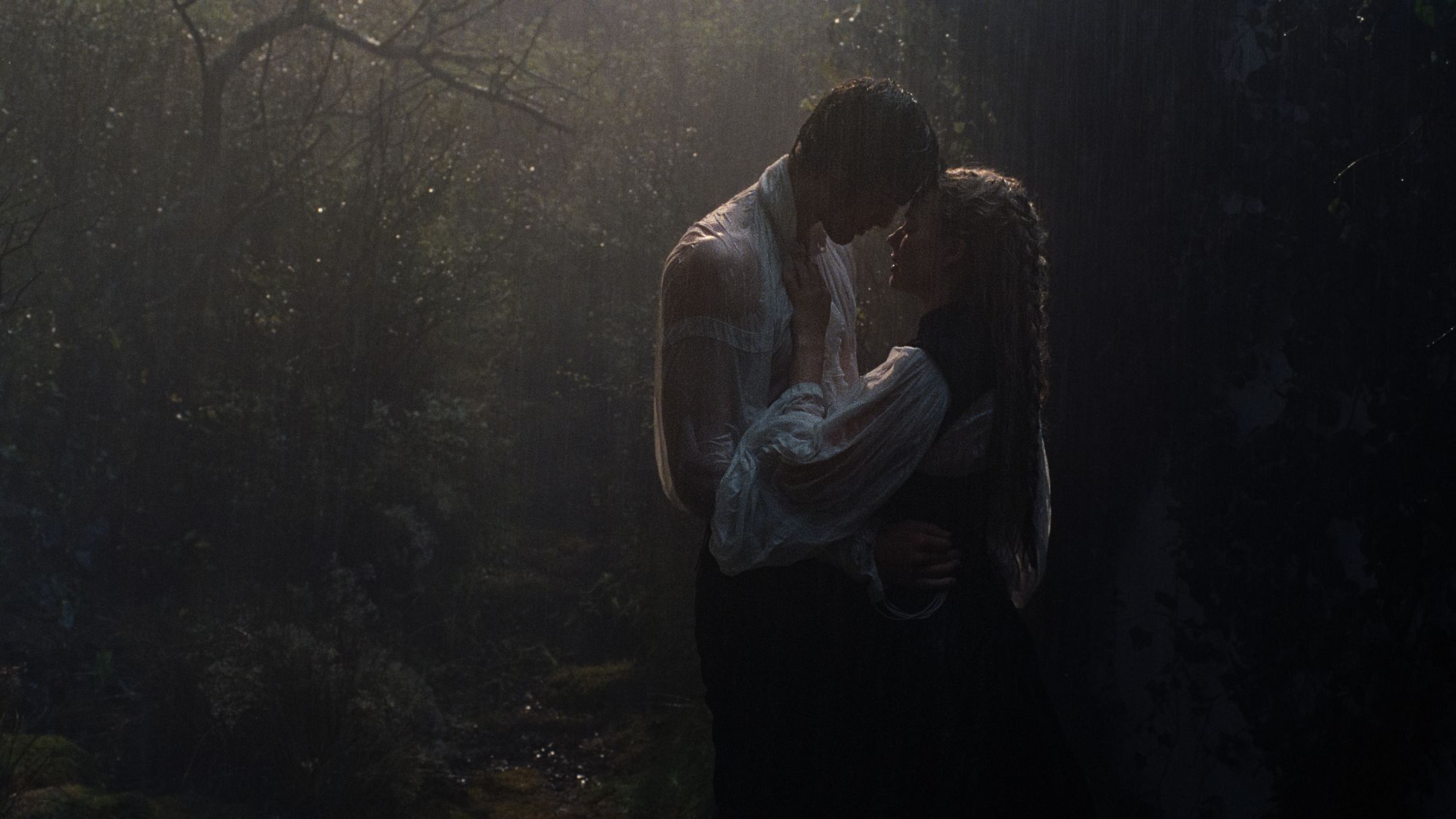
When Emerald Fennell revealed the cast for her upcoming film, it sparked immediate controversy within the literary community. This wasn’t the first adaptation of Emily Brontë’s classic novel, Wuthering Heights, but critics felt it repeated past errors. A major point of contention was the casting of Heathcliff, the story’s antagonist. The novel clearly establishes Heathcliff as a Romani man with dark skin from the beginning, and his ethnicity remains a significant part of his character and the plot.
Emily Brontë’s Wuthering Heights explores issues of race and social class, but only Andrea Arnold’s 2011 film version cast Heathcliff as a person of color. Emerald Fennell’s adaptation, like many others, focused solely on the first half of the novel, missing the crucial theme of how trauma repeats across generations. These challenges were well-known before the 2026 adaptation was released, yet Fennell’s version somehow fell even short of previous attempts.
Wuthering Heights Was Marketed as a Steamy Boddice-Ripper
Most literary critics agree that Wuthering Heights isn’t a traditional romance novel. Although it involves a love story, it actually works against the typical romantic themes. The relationship between Heathcliff and Catherine is destructive and centers on control and possession, rather than genuine love. Despite being called “the greatest love story of all time,” the book offers a deeply unromantic portrayal of passion.
Emerald Fennell embraced the idea of putting her own spin on Wuthering Heights, and instead of a traditional adaptation, she crafted a passionate, modern romance geared towards online audiences. By framing the film’s title in quotation marks, she signaled that this would be her unique interpretation, leaving no expectation of a faithful retelling. Even knowing this, and anticipating a sweeping love story, one still…
The film, inspired by Emily Brontë’s novel, presented a romance that felt surprisingly unromantic. The director, Fennell, made it clear she was drawing parallels to Romeo and Juliet. Early in the film, the character Isabella excitedly recounts the plot of Shakespeare’s play, particularly focusing on its tragic elements and the characters’ inability to connect with each other.
The tragedy unfolded because Romeo never learned Juliet wasn’t actually dead. Finding her seemingly lifeless body, he believed she had died and took his own life. The author attempted to create a similarly devastating romance with Cathy and Heathcliff, but this plot point didn’t quite fit within the larger story.
The childhood connection between the characters in Wuthering Heights showed promise, but the story lost its impact once they grew up. While their early bond was clearly formed through shared trauma and mistreatment by Mr. Earnshaw, this wasn’t enough to make the audience truly care about their tragic love story.
The intense connection between Catherine and Heathcliff felt unearned and was made even more disturbing by their cruel actions, all supposedly done for love. They consistently mistreated each other, fueling a cycle of revenge. Instead of being a compelling romance, the film portrayed them as deeply flawed characters with no chance of redemption. It felt like a different, more hopeful version of this story could have been told.
The recent adaptation of Wuthering Heights struggled to balance the passionate and disturbing aspects of the story. Other series, like Gossip Girl, have successfully navigated this line, presenting drama that is flawed but not purely malicious. The problem with this version of Wuthering Heights is that it presented a romance without acknowledging the deeper social issues that motivated Heathcliff’s harsh behavior. While Jacob Elordi delivered a compelling performance, the film didn’t clearly explain the roots of his character’s cruelty, especially after removing the commentary on Heathcliff’s race.
As the movie ended, with Heathcliff rushing to Cathy’s side, their connection felt completely lost. Their problems were entirely self-inflicted, and unlike the tragedy of Romeo and Juliet, the events of Wuthering Heights could have been prevented altogether. Even though Nelly destroyed Heathcliff’s letters to Cathy, their situation stemmed from their own flawed characters. Rather than a beautiful love story, Wuthering Heights ultimately felt disappointing and left a negative impression.
Wuthering Heights Works Except When it Doesn’t
The biggest problem with Wuthering Heights wasn’t a lack of talent, but a failure to fully realize its potential. The film’s visuals, music, and costumes all showed a clear, unified artistic direction that deserved a bolder approach. It had the potential to be a truly remarkable film if it had been more daring. Sadly, a series of flawed choices ultimately led to a confusing and inconsistent tone.
A major point of discussion surrounding the film was the choice to cast . While minor details like hair color often go unnoticed, the film notably portrayed Cathy with blonde hair, a departure from her established brunette appearance in the original story. Additionally, the film aged up the character of Cathy, who was 17 when she married Edgar in the book.
While not fatal flaws, certain choices didn’t quite work for the movie. Margot Robbie is usually a fantastic actor, but this role wasn’t the best match for her talents. Her performance softened Cathy’s rougher traits, and occasionally felt like an exaggerated impression. The film often played scenes with Cathy for comedic effect, which created jarring shifts in tone when the story turned serious.
Robbie’s acting was inconsistent – some choices seemed like direction, while others fell flat. A particularly impactful scene, like Mr. Earnshaw’s death, felt unintentionally silly rather than tragic. The image of Cathy discovering his body next to an exaggerated pile of alcohol bottles was a major misstep and, ultimately, ruined the adaptation of Wuthering Heights.
I was really disappointed with the film, and it reminded me a lot of the director’s previous work. It felt like it was trying to shock people without having much substance. Honestly, the biggest letdown was what everyone was expecting – we all went hoping for a truly intense, boundary-pushing thriller, and the marketing definitely led us to believe that’s what we’d get. But the sex scenes weren’t shocking at all, they just felt… added in to look edgy, without actually being that impactful.
The film featured unnecessarily graphic images – like raw eggs and snails sliding across glass – seemingly just to shock viewers, without contributing to any deeper meaning. Even the intimate scenes felt flat, ultimately sealing the film’s failure. It had the potential to be a bold and passionate romance, but instead, it prioritized flashy visuals over a compelling story, which was its biggest weakness.
Read More
- Gold Rate Forecast
- Dune 3 Gets the Huge Update Fans Have Been Waiting For
- Looks Like SEGA Is Reheating PS5, PS4 Fan Favourite Sonic Frontiers in Definitive Edition
- Pluribus Star Rhea Seehorn Weighs In On That First Kiss
- Kelly Osbourne Slams “Disgusting” Comments on Her Appearance
- Arknights: Endfield – Everything You Need to Know Before You Jump In
- Antiferromagnetic Oscillators: Unlocking Stable Spin Dynamics
- Tomodachi Life: Living the Dream ‘Welcome Version’ demo now available
- Million Depth launches November 12
- Action Comics #1096 is Fun Jumping-On Point for Superman Fans (Review)
2026-02-16 18:42