Author: Denis Avetisyan
A new wave of research suggests that breaking time-reversal symmetry could be key to understanding a fragile class of low-temperature superconductors.
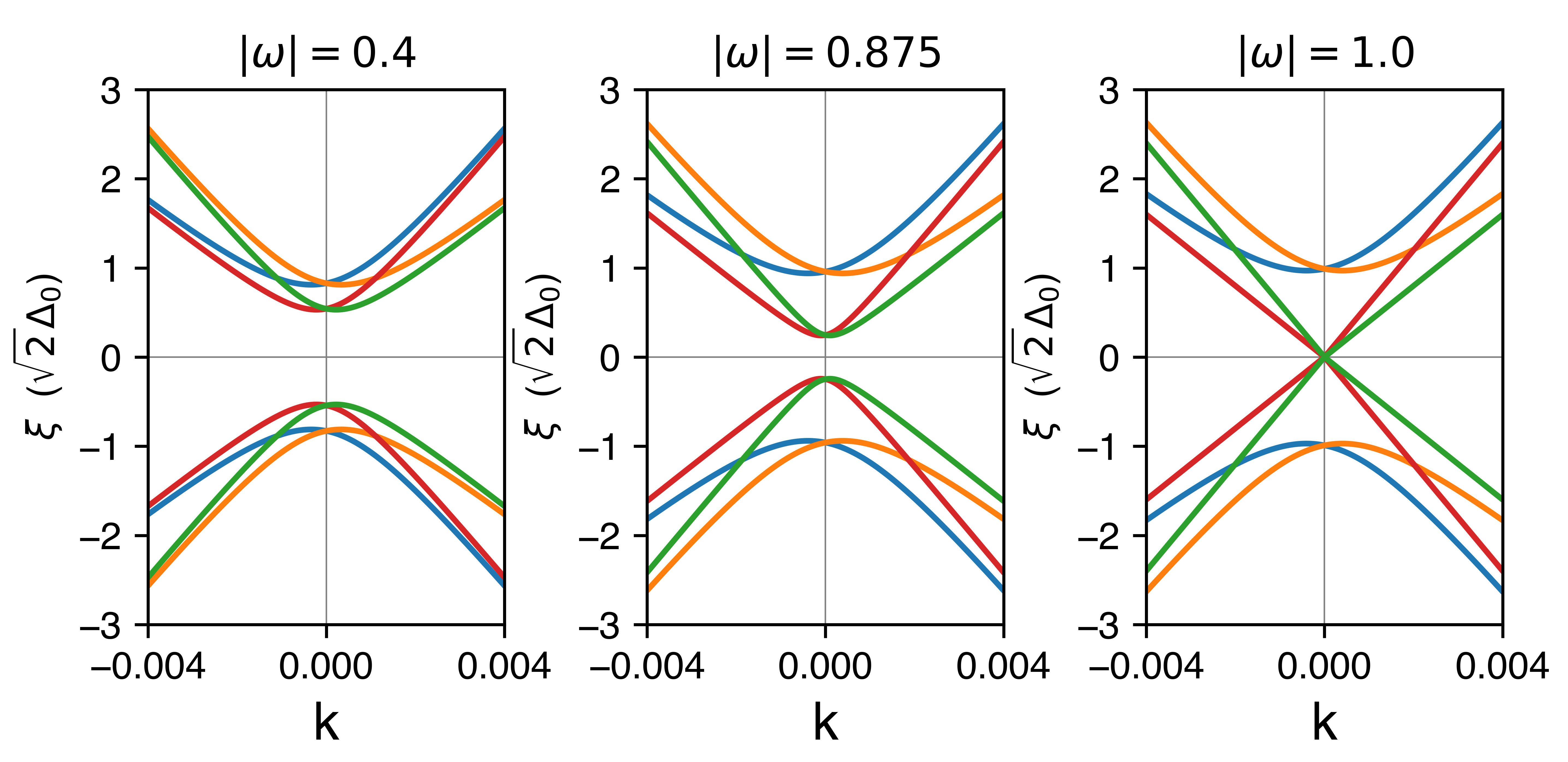
This review examines experimental evidence for time-reversal symmetry breaking in superconductors and explores its implications for pairing mechanisms and material properties.
The recent emergence of potential time-reversal symmetry breaking (TRSB) in seemingly conventional superconductors presents a challenge to established paradigms of superconductivity. This paper, ‘Time Reversal Symmetry Breaking and {\it Fragile Magnetic Superconductors}’, reviews approximately twenty reports of TRSB detected via muon spin relaxation (μSR) in low critical temperature superconductors, materials now termed ‘fragile magnetic superconductors’. These findings suggest a possible triplet pairing state, yet the inferred magnetic fields are often near the detection limit, raising questions about the interpretation of μSR data and the impact of the measurement process itself. Could these weak signals reflect intrinsic properties of the superconducting state, or do they stem from subtle experimental artifacts requiring further scrutiny and alternative theoretical models, such as those explored for the topological superconductor LaNiGa$_2$?
The Foundation: Unveiling the Limits of Conventional Superconductivity
The prevailing theory of superconductivity, known as BCS theory, posits that these remarkable materials achieve zero electrical resistance through the formation of Cooper pairs – bound states of electrons facilitated by interactions with lattice vibrations, or phonons. This interaction, delicately balanced at low temperatures, overcomes the natural electrostatic repulsion between electrons, allowing them to condense into a single quantum state and flow without energy loss. The strength of this electron-phonon coupling is crucial; it dictates the critical temperature below which superconductivity emerges, and variations in this coupling can be observed through the isotope effect – a change in the critical temperature when different isotopes of the same element are used in the superconducting material. While exceptionally successful in explaining the behavior of many conventional superconductors, this framework relies on specific conditions and ultimately falls short when applied to newly discovered materials exhibiting more complex pairing mechanisms.
Confirmation of the BCS theory’s reliance on phonon-mediated pairing arrived through meticulous experimental observation, most notably the isotope effect. This phenomenon demonstrates that the superconducting transition temperature T_c is inversely proportional to the square root of the isotopic mass of the constituent atoms. Researchers observed that substituting isotopes within a superconducting material-effectively changing the atomic mass without altering the electronic structure-directly impacted T_c, supporting the premise that lattice vibrations, or phonons, are crucial to binding electrons into Cooper pairs. This predictable relationship, consistently observed across numerous conventional, low-temperature superconductors, solidified the understanding that electron-phonon interactions are the fundamental mechanism driving superconductivity in these materials and provided a powerful validation of the BCS framework.
The established BCS theory, while remarkably successful in describing conventional superconductivity, encounters significant challenges when applied to newly discovered superconducting materials. These emerging superconductors often exhibit pairing mechanisms distinct from the electron-phonon interactions central to BCS theory, demanding exploration beyond the conventional paradigm. A key characteristic differentiating these unconventional superconductors is the breaking of time-reversal symmetry – a fundamental principle stating that the laws of physics remain constant through time reversal. This symmetry breaking manifests in various ways, such as spontaneous magnetization or the emergence of exotic quantum states, and is increasingly recognized as a crucial factor enabling superconductivity in materials where phonon-mediated pairing is insufficient to explain the observed phenomena. Consequently, research has intensified on materials displaying these properties, seeking to unravel the intricate interplay between broken symmetry and the emergence of superconductivity and potentially paving the way for higher-temperature superconducting technologies.
Fragile Symmetry: Introducing Superconductors with Delicate Magnetic States
Fragile magnetic superconductors are characterized by a subtle violation of time-reversal symmetry, meaning the physical laws are not identical under the reversal of time. This symmetry breaking is not robust, manifesting as weak signals detectable through techniques sensitive to magnetic order. Unlike conventional superconductors which strictly adhere to time-reversal symmetry, these materials exhibit a delicate balance where even small perturbations can disrupt the symmetry. The weakness of the observed breaking indicates that the underlying superconducting state is easily influenced by external factors or internal inhomogeneities, presenting a significant challenge for both experimental characterization and theoretical modeling. This fragility necessitates highly sensitive measurement techniques to confirm the symmetry breaking and accurately assess its impact on the superconducting properties.
The coexistence of singlet and triplet pairing in fragile magnetic superconductors introduces significant challenges to theoretical modeling. Conventional superconductivity is typically described by singlet pairing, where electrons with opposite spins form Cooper pairs. However, the presence of magnetic impurities or inherent magnetic fluctuations in these materials can induce triplet pairing, characterized by parallel spins. Distinguishing between these pairing states is difficult as both can yield similar superconducting properties, and many-body calculations must account for the possibility of a mixed state or spatial variations in pairing symmetry. This ambiguity necessitates advanced theoretical approaches, such as resonant valence bond theory or spin-fluctuation mediated pairing, to accurately describe the superconducting mechanism and predict material behavior.
Yu-Shiba-Rusinov (YSR) states arise in superconductors due to the presence of non-magnetic impurities or magnetic moments, manifesting as localized, in-gap bound states. In fragile magnetic superconductors, these states are particularly sensitive to the muon vector potential, indicating a strong coupling between the superconducting condensate and localized magnetic moments. The observation of spontaneous magnetic fields, typically ranging from 0.1 to 1 Gauss, alongside YSR states, suggests that these localized moments are not fully compensated and contribute to a net internal magnetic field. This interplay complicates the superconducting order parameter and requires careful consideration when determining the pairing symmetry-whether singlet or triplet-within these materials.
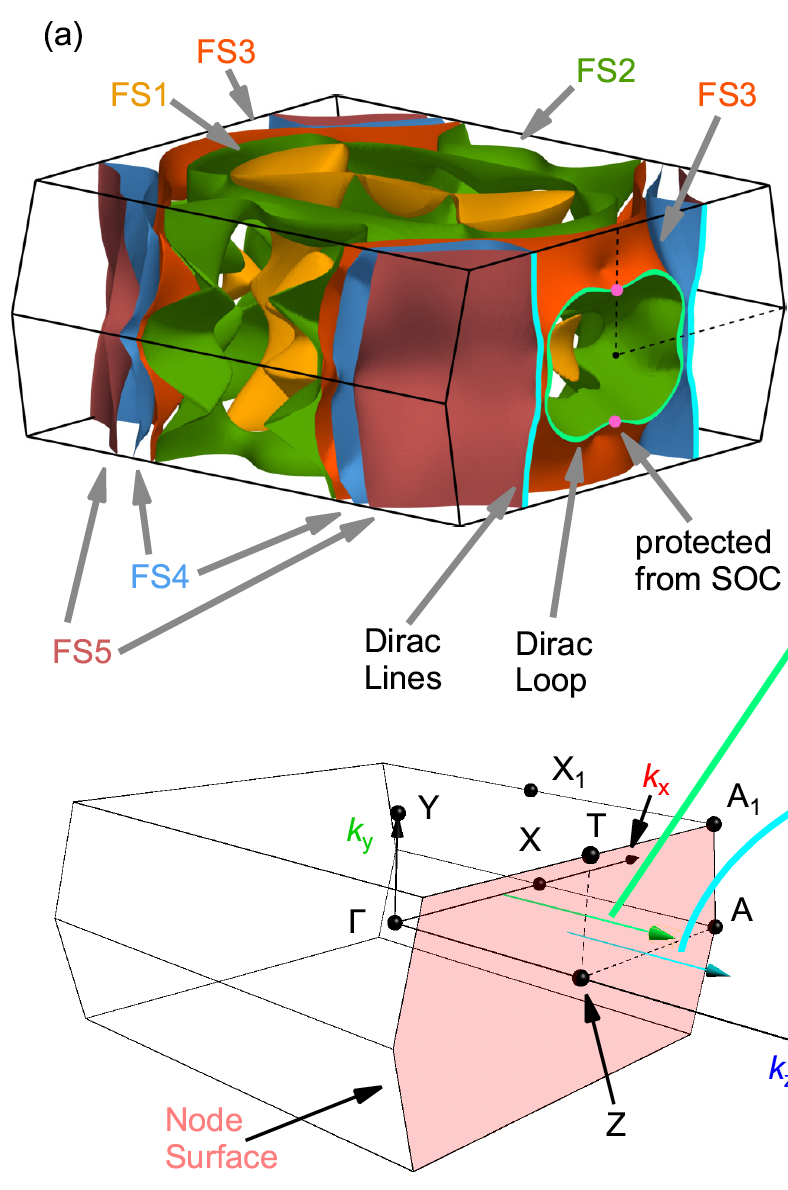
Probing the Invisible: Muon Spectroscopy and the Detection of Broken Symmetry
Muon Spin Rotation Spectroscopy (MuSR) leverages the sensitivity of implanted polarized muons to magnetic fields within a material. Positive muons, with a magnetic dipole moment, act as local probes; their spin precesses at a frequency – the muon precession frequency – directly proportional to the local magnetic field. Deviations from expected precession patterns indicate the presence of static magnetic fields, or more subtly, time-reversal symmetry breaking. This symmetry breaking manifests as an asymmetry in the muon spin evolution, detectable through analysis of the decay positrons emitted from the muons. The technique is sensitive to both homogeneous and inhomogeneous magnetic fields, and can detect fields originating from static magnetism, internal fields in superconductors, or magnetic ordering in complex materials.
Zero-Field Muon Spin Rotation (MuSR) spectroscopy exhibits a high sensitivity to symmetry breaking in superconducting materials due to the technique’s ability to detect extremely small internal magnetic fields. This sensitivity stems from the measurement of the precession frequency of implanted muon spins, which are affected by any local magnetic field. Observed spontaneous magnetic fields indicating symmetry breaking are typically on the order of 0.1 to 1 Gauss (G), a magnitude that would be difficult to detect with many other techniques. This allows for the identification of subtle magnetic order or the presence of static magnetic moments, even in materials considered non-magnetic by other means.
The combination of Muon Spin Rotation (MuSR) spectroscopy with the Polar Kerr Effect provides complementary data for a comprehensive analysis of magnetic states. MuSR is sensitive to the magnitude and distribution of internal magnetic fields, including those arising from spontaneous symmetry breaking, while the Polar Kerr Effect directly probes the magnetization component parallel to the sample surface. By correlating MuSR measurements of static magnetic field distributions with Kerr Effect data on the overall magnetization, researchers can distinguish between different magnetic phases, identify the origin of magnetic order (e.g., static versus dynamic), and characterize complex magnetic textures within materials, especially in unconventional superconductors and correlated electron systems.
Beyond Conventional Wisdom: New Pathways in Superconducting Materials
Recent investigations suggest that orbital magnetism plays a crucial role in breaking time-reversal symmetry within certain superconducting materials. This symmetry breaking arises not from conventional spin-based magnetism, but from the organized motion of electrons within their orbitals, effectively creating a magnetic-like order without relying on intrinsic spin. The implications are significant, as this orbital magnetism can coexist with superconductivity, potentially explaining unusual magnetic properties observed in these materials and offering a pathway to induce or control magnetism without suppressing the superconducting state. This challenges traditional understandings of magnetism and superconductivity, suggesting a more nuanced interplay between these phenomena and opening possibilities for designing novel materials where both properties are enhanced and finely tuned.
The Kondo effect, a quantum mechanical phenomenon, presents a compelling, alternative contribution to the intricacies of these superconducting materials. This effect arises when magnetic impurities are introduced into a non-magnetic metallic host, leading to a scattering of conduction electrons and a resultant resistance minimum at low temperatures. The interaction between localized magnetic moments of the impurities and the conduction electrons can effectively screen the magnetic moment, creating a many-body entangled state. While typically associated with increased resistivity, in specific scenarios, the Kondo effect can subtly influence the pairing mechanisms responsible for superconductivity, potentially modifying the critical temperature and superconducting gap structure. Investigating the precise interplay between the Kondo effect and superconductivity is crucial for a comprehensive understanding of these materials, as it could reveal previously unconsidered pathways for manipulating and enhancing their superconducting properties.
A deeper comprehension of the interplay between orbital magnetism, the Kondo effect, and electron-phonon interactions promises a new era in materials design, specifically for superconductors. Researchers anticipate leveraging these insights to engineer materials exhibiting precisely tailored superconducting properties – characteristics like critical current and magnetic field tolerance – by manipulating the underlying electronic structure. While many current high-temperature superconductors remain enigmatic, a significant portion of these engineered materials are expected to demonstrate relatively low critical temperatures T_c, aligning with theories of weak-coupling phonon-mediated superconductivity where electron pairing arises from vibrations within the crystal lattice. This suggests a pathway towards creating practical superconducting devices, even if achieving room-temperature superconductivity remains a considerable challenge, by focusing on optimizing material parameters within established theoretical frameworks.
The investigation into time-reversal symmetry breaking within fragile magnetic superconductors demands a rigorous paring away of assumptions. The study highlights the difficulty in definitively establishing such a break, given the subtle signals and potential for misinterpretation. This echoes John Dewey’s assertion that “Education is not preparation for life; education is life itself.” The pursuit of understanding-in this case, the fundamental properties of these materials-is not a means to a distant end, but a process of continuous refinement. The careful examination of experimental data, such as that obtained through muon spin rotation, exemplifies this iterative process, stripping away ambiguity to reveal underlying truths about the order parameter and pairing mechanisms at play.
The Road Ahead
The persistence of questions surrounding time-reversal symmetry breaking in these so-called fragile superconductors suggests a fundamental miscalculation. The experimental techniques – muon spin rotation prominent among them – provide suggestive, not conclusive, evidence. The signal, however intriguing, remains susceptible to interpretations invoking mundane causes, or artifacts of measurement. A reliance on increasingly complex order parameters, invoking exotic pairing states, feels less like progress and more like a displacement of ignorance.
Future investigations must prioritize simplicity. The field would benefit less from attempts to find complexity, and more from rigorous attempts to eliminate conventional explanations. This requires not merely more data, but more austere theoretical frameworks. The current inclination towards many-body effects and emergent phenomena risks obscuring the possibility that a simple, well-understood mechanism is at play, masked by experimental noise or flawed assumptions.
Ultimately, the true test will not be the accumulation of corroborating evidence, but the demonstration of predictive power. A successful theory will not merely explain the observed anomalies, but will anticipate them, and – crucially – will delineate the precise conditions under which these fragile states do not appear. Only then can the field move beyond description, and towards genuine understanding.
Original article: https://arxiv.org/pdf/2602.12514.pdf
Contact the author: https://www.linkedin.com/in/avetisyan/
See also:
- Looks Like SEGA Is Reheating PS5, PS4 Fan Favourite Sonic Frontiers in Definitive Edition
- Pluribus Star Rhea Seehorn Weighs In On That First Kiss
- Dune 3 Gets the Huge Update Fans Have Been Waiting For
- Gold Rate Forecast
- Kelly Osbourne Slams “Disgusting” Comments on Her Appearance
- Arknights: Endfield – Everything You Need to Know Before You Jump In
- Tomodachi Life: Living the Dream ‘Welcome Version’ demo now available
- ‘If You Found It Boring, This Won’t Change That’: Starfield’s PS5 Port to Be Revealed Soon, But Don’t Expect Major Reinvention
- Death Proof Review: Quentin Tarantino’s Messiest Movie Is Still a Blast
- Why Eriksholm: The Stolen Dream Could Be 2025’s Standout Stealth Experience
2026-02-16 18:21