Author: Denis Avetisyan
New research explores the fundamental forces binding quarks together under extreme conditions, shedding light on the behavior of matter in heavy ion collisions.
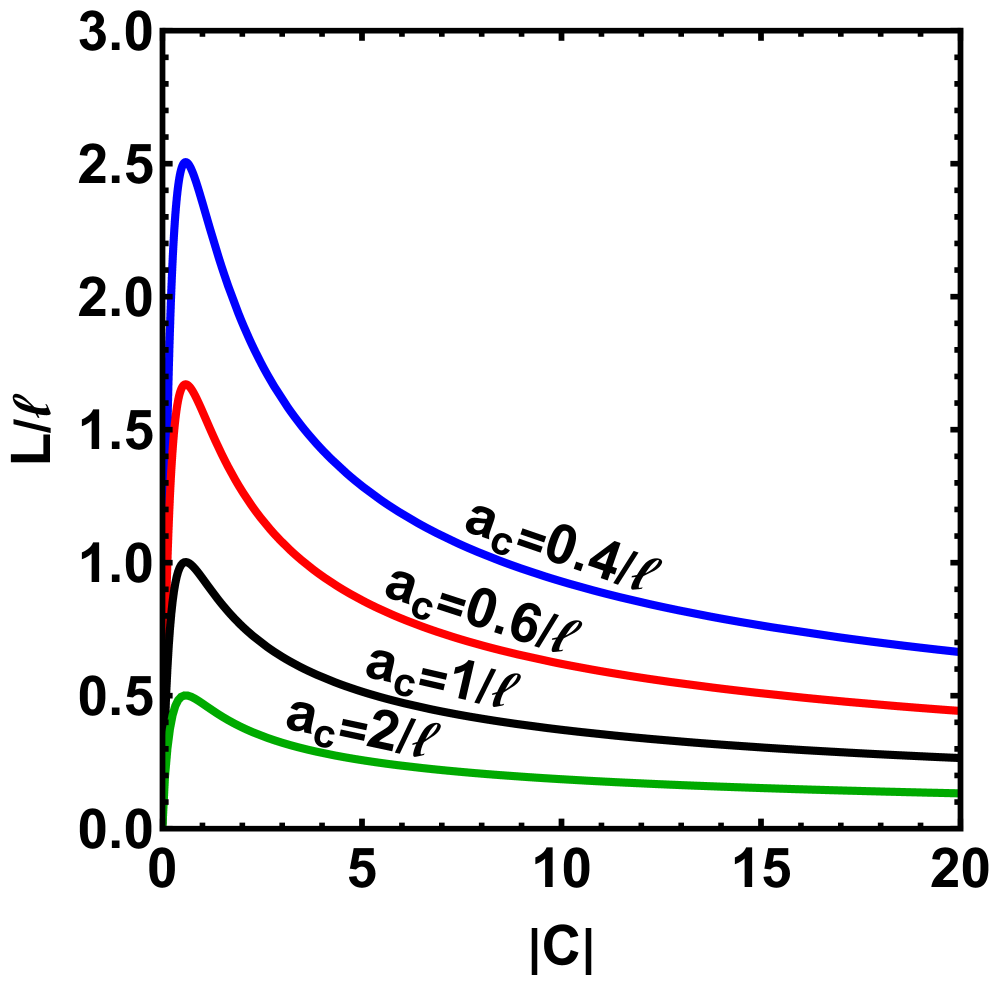
This review establishes analytic expressions for the static heavy quark-antiquark potential within string theory in arbitrary stationary backgrounds, including those with strong acceleration and rotation.
Understanding the strong force that binds quarks remains a central challenge in quantum chromodynamics, particularly under extreme conditions. This is addressed in ‘The Static Heavy Quark-Antiquark Potential within String Theory in Arbitrary Stationary Backgrounds’, which explores the interquark potential using string theory in diverse, stationary spacetime backgrounds. We demonstrate that asymmetry in string configurations can signal parity violation in quark-antiquark interactions, while also identifying scenarios where a linear potential emerges even in non-diagonal backgrounds, and further reveal that acceleration increases both interquark potential and the deconfinement temperature of quark-gluon plasma. Could these findings offer new insights into the behavior of matter at the highest energy densities, such as those created in heavy-ion collisions or within neutron stars?
The Unfolding of Confinement: A Dance with the Strong Force
At the heart of Quantum Chromodynamics (QCD) lies the study of quarks – fundamental particles that constitute protons, neutrons, and a host of other hadrons. Despite being the foundational building blocks, quarks are never observed in isolation; they are perpetually confined within these composite particles due to the nature of the strong force. This confinement presents a profound challenge to physicists, as traditional methods used to describe fundamental forces falter when applied to the extreme energy scales governing quark interactions. The strong force, mediated by gluons, behaves fundamentally differently at these scales, increasing with distance rather than decreasing – a phenomenon that effectively prevents quarks from existing as free particles. Understanding the precise mechanisms responsible for this confinement remains one of the most significant unsolved problems in modern physics, demanding innovative theoretical and computational approaches to unravel the complexities of the strong interaction.
The strong force, governed by Quantum Chromodynamics, presents a unique challenge to physicists due to the limitations of traditional perturbative methods. These methods, successful in describing electromagnetic and weak interactions, rely on approximating solutions based on small deviations from simpler cases. However, at the energy scales where quarks are confined within hadrons – protons, neutrons, and other composite particles – and where matter transitions to a deconfined state like the quark-gluon plasma, the strong force becomes, well, strong. This intensity renders the approximations invalid; the deviations are no longer small, and higher-order corrections become infinitely large. Consequently, calculations based on these perturbative techniques fail to accurately predict observed phenomena, necessitating the development of non-perturbative approaches – sophisticated computational methods and theoretical models – to unravel the complexities of hadron structure, and ultimately, understand how matter is fundamentally structured.
The inadequacy of standard perturbative techniques in describing the strong nuclear force at low energies has spurred a significant shift towards non-perturbative methods. These approaches, unlike their perturbative counterparts, do not rely on approximating interactions as small deviations from free behavior, but instead attempt to directly address the full complexity of quark interactions. Lattice Quantum Chromodynamics (LQCD), for example, discretizes spacetime, allowing researchers to numerically simulate the strong force and observe phenomena like quark confinement. Other techniques, such as Dyson-Schwinger equations and functional renormalization group methods, offer complementary analytical and computational tools. These innovative theoretical frameworks are crucial for unraveling the intricacies of hadron structure, understanding the transition between confined and deconfined matter, and ultimately, gaining a deeper understanding of the fundamental forces governing the universe at its most basic level.
A Holographic Mirror: Reimagining Quantum Chromodynamics
The Anti-de Sitter/Conformal Field Theory (AdS/CFT) correspondence is a conjectured duality positing an equivalence between gravitational theories defined in a (d+1)-dimensional Anti-de Sitter (AdS) spacetime and conformal field theories (CFTs) defined on the d-dimensional boundary of that spacetime. This relationship suggests that the strongly coupled regime of a CFT, such as Quantum Chromodynamics (QCD), can be mapped to a weakly coupled gravitational description in AdS space, and vice-versa. The “holographic” aspect arises because the d-dimensional CFT effectively encodes all information about the (d+1)-dimensional gravitational theory, similar to how a hologram encodes a 3D image on a 2D surface. This duality provides a non-perturbative tool for studying strongly coupled systems where traditional perturbative methods in QCD fail, offering a new framework to calculate observables and understand phenomena like confinement and chiral symmetry breaking.
String theory provides the mathematical tools necessary to realize the AdS/CFT correspondence and subsequently study strongly coupled quantum chromodynamics (QCD). Specifically, the type IIB superstring theory on AdS_5 \times S^5 is dual to N=4 supersymmetric Yang-Mills theory, a conformal field theory. This framework allows for the calculation of observables in the strong coupling regime of QCD, such as the quark-gluon plasma viscosity to entropy density ratio, which are analytically intractable using perturbative QCD methods. Calculations are performed on the gravitational side-the AdS_5 space-where weak coupling simplifies computations, and the results are then mapped back to the strongly coupled gauge theory. The string theory formalism allows for the introduction of finite temperature and density, enabling the study of QCD under extreme conditions.
The holographic approach, rooted in the AdS/CFT correspondence, provides a method for studying Quantum Chromodynamics (QCD) in the strong coupling limit by establishing a duality with a gravitational theory. This mapping transforms strongly interacting QCD dynamics into a weakly coupled gravitational description, typically in Anti-de Sitter space. Consequently, calculations that are intractable using perturbative QCD techniques become feasible through calculations in the dual gravitational theory. This simplification allows for the investigation of phenomena like confinement, chiral symmetry breaking, and the quark-gluon plasma with tools from classical gravity, offering new analytical and numerical insights into the non-perturbative regime of QCD. The strength of the interaction in the QCD theory directly corresponds to the curvature of the gravitational background; a strongly coupled QCD system is thus described by a weakly curved spacetime, facilitating calculations.
Tracing Confinement: From String Dynamics to Potential Landscapes
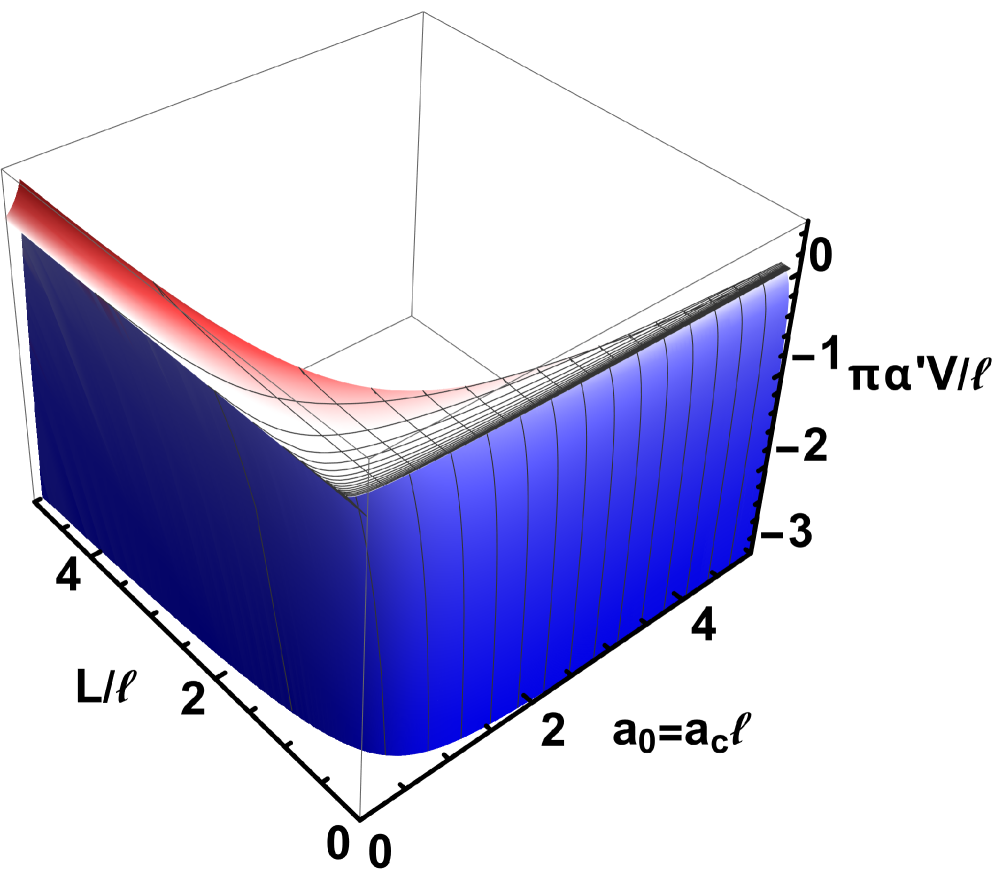
The static quark-antiquark potential, a fundamental parameter in the study of quark confinement, is calculable via the application of String Theory within the Anti-de Sitter/Conformal Field Theory (AdS/CFT) correspondence. This approach leverages the duality between a gravitational theory in a higher-dimensional AdS space and a conformal field theory residing on its boundary. Specifically, the potential arises from calculating the minimal surface area of a string connecting a quark and an antiquark within the AdS geometry. This geometric calculation effectively maps the strong interaction potential in the quantum field theory to a classical gravity problem, allowing for analytical and numerical determination of the potential’s form and behavior as a function of the quark-antiquark separation. The resulting potential provides insights into the mechanism responsible for confining quarks within hadrons.
The dynamics of strings connecting quarks in calculations of the static quark-antiquark potential are formalized using the Nambu-Goto and Worldsheet Actions. The Nambu-Goto Action, S = -T \in t d^2 \sigma \sqrt{det(h_{ab})} , where T is the string tension and h_{ab} is the induced metric on the worldsheet, describes the area of the string as the fundamental quantity. The Worldsheet Action expands upon this by including terms for the string’s intrinsic curvature and dynamics, effectively describing the propagation of the string in the dual gravitational background. Both actions are essential for determining the string’s classical trajectory and, consequently, calculating the potential energy between the confined quarks.
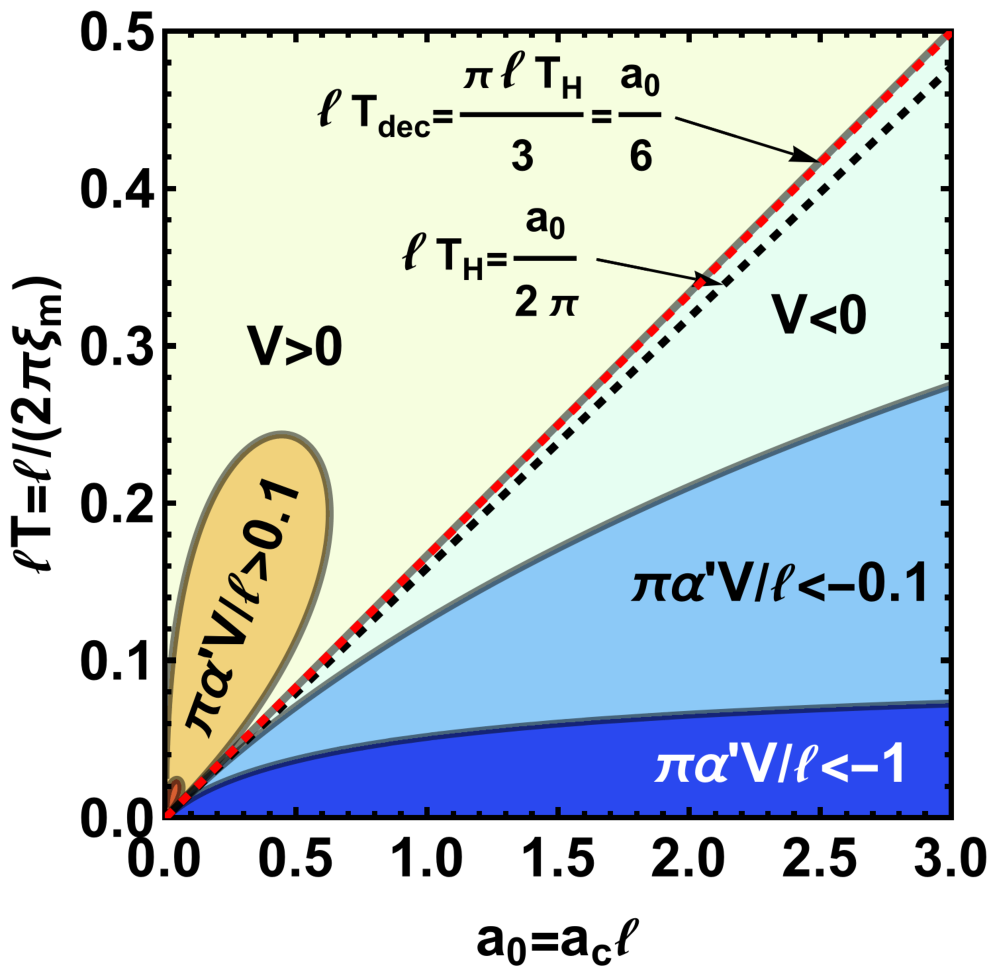
Calculating the static quark-antiquark potential within the AdS/CFT correspondence necessitates solving equations that frequently involve elliptic integrals, indicative of the inherent mathematical complexity of the problem. This analytical calculation reveals a direct proportionality between the deconfinement temperature and acceleration. Specifically, the research identifies a critical acceleration value of a_{ca} = 1/ \mathcal{R} , where \mathcal{R} represents a characteristic radius, establishing a threshold below which observable horizon and temperature effects are not predicted to emerge.
Calculations within the AdS/CFT correspondence identify a critical acceleration, denoted as a_{ca} = 1/ \ , which represents a threshold for the manifestation of horizon and temperature effects. Below this acceleration, these effects remain unobservable within the model. This critical acceleration is not merely a mathematical artifact; it defines a fundamental limit on the sensitivity of measurements related to confinement and deconfinement transitions. Specifically, the existence of an observable horizon and associated temperature are contingent upon acceleration values exceeding 1/ \ , establishing a direct link between acceleration and the emergence of thermodynamic properties in the strongly coupled system.

Probing the Extreme: Heavy Ions and the Echoes of Creation
Heavy-ion collisions, such as those performed at the Relativistic Heavy Ion Collider (RHIC) and the Large Hadron Collider (LHC), recreate conditions reminiscent of the very early universe – temperatures exceeding trillions of degrees Celsius and energy densities far surpassing those found in atomic nuclei. These extreme conditions don’t simply melt nuclei; they liberate the constituent quarks and gluons, normally confined within protons and neutrons, creating a state of matter known as the Quark-Gluon Plasma (QGP). This plasma, a ‘perfect fluid’ exhibiting remarkably low viscosity, allows scientists to investigate the fundamental strong force that governs interactions between quarks and gluons. By meticulously analyzing the particles emerging from these collisions, researchers can probe the properties of the QGP, seeking to understand the nature of confinement, the dynamics of chiral symmetry breaking, and ultimately, the forces that shaped the matter around us moments after the Big Bang.
The intensely hot and dense Quark-Gluon Plasma, created in heavy-ion collisions, isn’t simply a featureless soup; it exhibits surprising emergent phenomena driven by fundamental asymmetries. Strong electromagnetic fields, coupled with an imbalance between left- and right-handed quarks – known as chiral asymmetry – give rise to the Chiral Magnetic Effect, where a magnetic field induces an electric current along the field lines. Conversely, Inverse Magnetic Catalysis demonstrates that strong magnetic fields can reduce chiral symmetry breaking within the plasma, altering the expected mass spectrum of particles. These effects, predicted by theoretical extensions of Quantum Chromodynamics, are not merely academic curiosities; they provide crucial insights into the behavior of matter under extreme conditions and have implications for understanding the early universe and the properties of neutron stars, revealing a complex interplay between electromagnetism and quantum field theory.
Recent heavy-ion collision experiments reveal a compelling link between the spin polarization of created particles and the thermal vorticity of the quark-gluon plasma. Thermal vorticity, a measure of the average swirling motion within the plasma, acts as a crucial driver of this polarization, aligning the spins of the particles produced. This observation isn’t merely empirical; it provides significant validation for theoretical frameworks, particularly those stemming from the holographic principle-a concept borrowed from string theory that posits a duality between gravitational systems and quantum field theories. Specifically, predictions derived from holographic calculations concerning the influence of vorticity on spin polarization are now demonstrably supported by experimental data, solidifying the understanding of this exotic state of matter and providing a powerful connection between seemingly disparate areas of physics-relativity, quantum mechanics, and the study of strongly coupled plasmas.
Recent investigations into the Quark-Gluon Plasma, created through heavy-ion collisions, have revealed a surprising property: the calculated potential governing particle interactions remains consistent regardless of the acceleration applied, provided the system is appropriately scaled. This independence from acceleration strongly suggests the presence of scale invariance within the plasma. Scale invariance implies that the fundamental physics governing the system are the same across different energy scales, a concept with profound implications for understanding the strong nuclear force and the nature of matter at extreme densities. The observation bolsters theoretical frameworks, like the holographic principle, which predict this behavior and provides crucial experimental validation for models attempting to describe the plasma’s complex dynamics.
Accelerated Horizons: A Window into Thermal Reality
Investigations into the AdS/CFT correspondence within accelerated frames, specifically utilizing Rindler-AdS space, demonstrate a compelling link to thermal behavior. This arises because an observer in a uniformly accelerating frame perceives a horizon – the Rindler horizon – akin to that found in black hole physics. Consequently, this accelerated observer experiences a thermal spectrum of quantum fields, mirroring the Hawking radiation emitted by a black hole. The temperature of this spectrum is directly proportional to the acceleration, establishing a quantifiable relationship between acceleration and thermal energy. This surprising connection isn’t merely an analogy; it suggests that the holographic duality, which relates gravity in the bulk of AdS space to a conformal field theory on its boundary, can be leveraged to study thermal phenomena in strongly coupled systems, potentially offering insights into everything from high-temperature superconductors to the early universe. The framework allows researchers to map problems involving thermal effects in the field theory to equivalent gravitational problems in the higher-dimensional space.
The surprising link between accelerated frames in AdS/CFT and thermal behavior isn’t merely a mathematical curiosity; it hints at a profoundly deeper understanding of holographic duality itself. This connection allows physicists to model strongly coupled systems – those notoriously difficult to analyze with traditional methods – by relating them to gravitational dynamics in a higher-dimensional space. Consequently, insights gained from studying black holes and spacetime curvature can be directly applied to problems in condensed matter physics, potentially unlocking the secrets of high-temperature superconductivity or novel quantum materials. Furthermore, the framework offers a powerful new lens through which to investigate cosmological phenomena, such as the early universe and the nature of dark energy, by providing a holographic description of spacetime and its evolution. AdS/CFT is therefore proving to be more than a theoretical tool, but a bridge connecting seemingly disparate fields of physics.
Investigations into accelerated frames and the Rindler horizon, facilitated by the AdS/CFT correspondence, are poised to yield significant advancements in theoretical physics. By examining the relationship between gravity in Anti-de Sitter space and conformal field theories in accelerated frames, researchers anticipate gaining crucial insights into the elusive nature of quantum gravity – a theory that seeks to reconcile general relativity with quantum mechanics. Moreover, this research extends beyond pure gravity, offering a novel framework for understanding strongly coupled systems – those where traditional perturbative methods fail – with potential implications for condensed matter physics, the study of black holes, and even early universe cosmology. The continued exploration of these connections promises to unlock a deeper understanding of fundamental physical laws and the behavior of matter under extreme conditions, potentially revolutionizing current theoretical models.
The exploration of static heavy quark-antiquark potentials within complex backgrounds necessitates an acceptance of provisional frameworks. This study, much like any attempt to model extreme conditions-such as those found in heavy ion collisions and quark-gluon plasma-operates within a defined, yet ultimately temporary, paradigm. As Thomas Kuhn observed, “The more revolutionary the paradigm change, the more resistant it will be.” The analytic expressions derived for the potential, while providing valuable insight, are themselves subject to refinement as theoretical understanding evolves. Every abstraction carries the weight of the past, and the longevity of these models will be measured by their capacity to integrate new observations and maintain relevance within a shifting scientific landscape. The resilience of the approach lies not in permanence, but in the capacity for slow, iterative change.
The Long View
The pursuit of the static interquark potential, even within the rigorously defined, yet inherently dynamic, framework of string theory, reveals a subtle truth: stillness is an illusion. This work establishes analytic footholds in increasingly complex backgrounds-rotating, accelerating universes mimicked in miniature by heavy ion collisions-but each solution merely sharpens the questions. The decay of any analytical approximation, its eventual divergence from the true, unobserved reality, is not a failure of method, but an acknowledgement of temporal progression. Every simplification is a debt accrued, to be repaid in future refinements.
The exploration of non-inertial effects, while yielding valuable insight into the quark-gluon plasma, hints at a deeper challenge. The very notion of a “static” potential in a system defined by relativistic motion and quantum fluctuations feels increasingly provisional. Future investigations must confront the limitations of this static approximation, venturing toward genuinely dynamical potentials and, perhaps, embracing the inherent uncertainty as a fundamental property of the system.
The real progress lies not in achieving perfect descriptions, but in precisely mapping the boundaries of our approximations. This work is a momentary stabilization in a sea of change, a carefully constructed point of reference before the inevitable drift. The timeline continues, and with it, the evolution of understanding.
Original article: https://arxiv.org/pdf/2601.10668.pdf
Contact the author: https://www.linkedin.com/in/avetisyan/
See also:
- The Super Mario Galaxy Movie: 50 Easter Eggs, References & Major Cameos Explained
- 10 Best Free Games on Steam in 2026, Ranked
- Surprise Isekai Anime Confirms Season 2 With New Crunchyroll Streaming Release
- Sydney Sweeney’s The Housemaid 2 Sets Streaming Release Date
- Preview: Sword Art Online Returns to PS5 as a Darker Open World Action RPG This Summer
- Welcome to Demon School! Iruma-kun season 4 release schedule: When are new episodes on Crunchyroll?
- Skate 4 – Manny Go Round Goals Guide | All of the Above Sequence
- Why is Tech Jacket gender-swapped in Invincible season 4 and who voices her?
- PS5’s Ace Combat 8 Will Be the Most Ambitious Game in the Series Yet, and We Can’t Wait
- The Super Mario Galaxy Movie Is An Amusing Sequel (And an Improvement) [Review]
2026-01-17 16:06