Author: Denis Avetisyan
New theoretical work predicts the emergence of fractional quantum vortices, tied to individual sublattices, within chiral d+id superconductors on the kagome lattice.
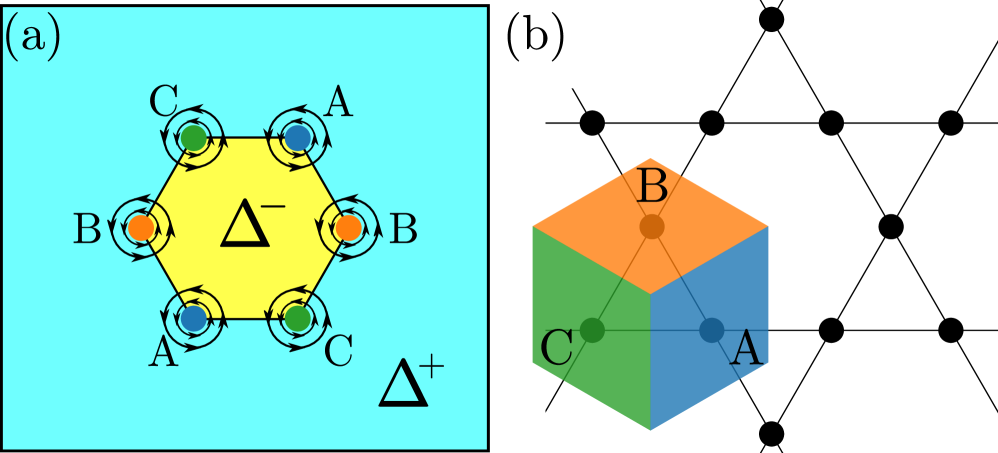
The study reveals distinct vortex states arising from the material’s unique electronic structure and sublattice interference effects.
Conventional theories of superconductivity predict integer quantized vortices, yet recent experiments on kagome materials suggest more exotic possibilities. This work, titled ‘Fractional $1/3$ quantum vortices in chiral $d+id$ kagome superconductors’, investigates the emergence of fractionalized vortices carrying one-third of the superconducting flux quantum within chiral superconducting states on the kagome lattice. Through self-consistent calculations incorporating the unique band structure of these materials, we demonstrate that these fractional vortices are linked to specific sublattice degrees of freedom and distinct from conventional Abrikosov vortices. Could these unusual vortex states explain the observed signatures of time-reversal symmetry breaking and unconventional magnetic properties in kagome superconductors?
Unveiling a Novel State: Chiral dd-Wave Superconductivity
For over a century, the phenomenon of superconductivity – the lossless flow of electrical current – has largely been understood through the Bardeen-Cooper-Schrieffer (BCS) theory, which posits that electrons form Cooper pairs mediated by lattice vibrations, or phonons. However, a growing body of experimental evidence demonstrates that this conventional mechanism fails to fully account for superconductivity observed in numerous materials, particularly high-temperature superconductors and those with complex crystal structures. These materials exhibit behaviors inconsistent with BCS theory, suggesting the presence of alternative pairing mechanisms – perhaps involving magnetic interactions, electron correlations, or novel electronic band structures. The inability of established theory to explain these observations has driven significant research into unconventional superconductivity, seeking to uncover the underlying principles governing these complex states of matter and potentially unlocking even more extraordinary superconducting properties.
Recent investigations reveal a fascinating superconducting state arising within Kagome lattices, termed chiral dd-wave superconductivity. This unconventional form of superconductivity diverges from the traditional s-wave pairing mechanism, instead exhibiting a more complex pairing symmetry characterized by nodes and a chiral component. The resulting Cooper pairs possess unique angular momentum and spin configurations, leading to an emergent chiral order. This exotic pairing isn’t simply a variation on existing superconductivity; it fundamentally alters the material’s electronic properties, potentially enabling new functionalities and opening avenues for exploring topological superconductivity, where conducting surface states are protected from scattering and offer robust quantum information carriers.
The emergence of chiral dd-wave superconductivity isn’t merely a fascinating state of matter, but a potential stepping stone towards realizing topological superconductivity – a realm where electron behavior is governed by the laws of topology, promising robust quantum states protected from external disturbances. This protection is crucial for building stable and reliable quantum devices, as it minimizes decoherence – the loss of quantum information. Researchers envision leveraging these topologically protected states to create novel components for quantum computing, including robust qubits and fault-tolerant quantum circuits. Furthermore, the unique properties of this chiral superconducting state could enable the development of entirely new types of quantum sensors with unprecedented sensitivity and precision, potentially revolutionizing fields ranging from materials science to medical diagnostics. The pursuit of these technological applications is actively driving research into understanding and manipulating this exotic state of matter.
Electronic Structure and the Role of Van Hove Singularities
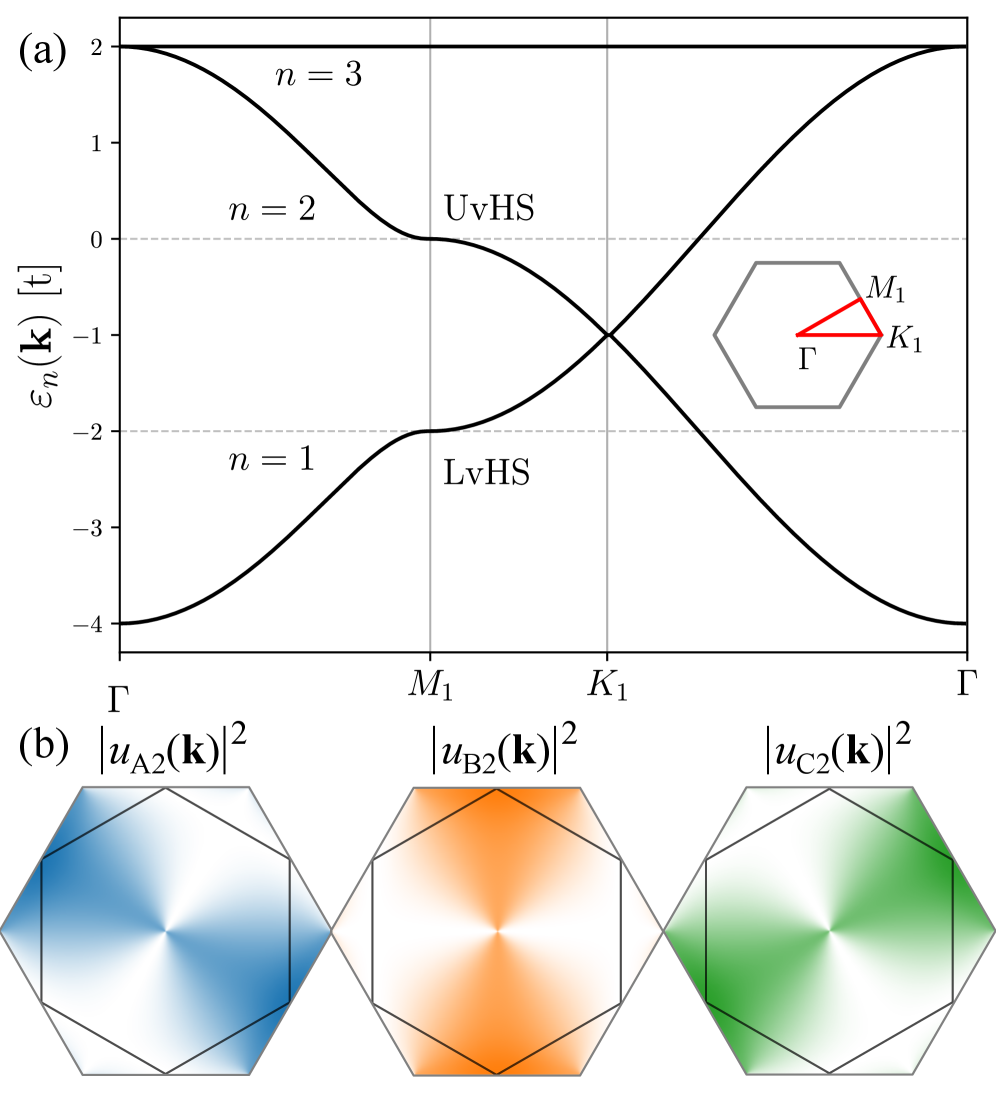
Van Hove singularities (VHS) are points in the electronic band structure of a solid where the density of states (DOS) exhibits a divergence or a sharp peak. In Kagome lattices, these singularities arise due to the specific geometry of the lattice and the resulting band flattening near certain energies. The increased DOS at the VHS enhances the susceptibility to electron-electron interactions, influencing various physical properties, most notably superconductivity. Specifically, a higher DOS at the Fermi level – often coinciding with VHS – promotes Cooper pairing and can lead to enhanced superconducting transition temperatures T_c. The energies at which VHS occur are determined by the band structure and can be tuned by varying lattice parameters or applying external pressure, thereby offering a pathway to control superconducting properties.
Analysis of the electronic band structure reveals that both upper and lower Van Hove singularities (VHS) play a critical role in establishing the chiral dd-wave pairing observed in the Kagome lattice. Specifically, the upper VHS, located at an energy of -0.02t, and the lower VHS at -1.98t, contribute to the enhancement of the density of states near the Fermi level. This increased density of states at these specific energy points facilitates the formation of Cooper pairs with a chiral dd-wave symmetry, influencing the superconducting properties of the material. The contribution from both VHS indicates a complex pairing mechanism dependent on electronic states across a significant energy range within the band structure, rather than being solely governed by states close to the Fermi level.
The Kagome lattice exhibits sublattice interference due to its distinct arrangement of corner-sharing triangles. This interference directly modulates the electronic band structure, creating localized states and altering the density of states near the Fermi level. Specifically, the constructive and destructive interference patterns between electron wavefunctions on different sublattices lead to variations in the superconducting gap magnitude. These variations are not uniform across the Fermi surface; instead, the gap is enhanced in regions where sublattice interference is constructive, and suppressed where it is destructive, resulting in an anisotropic superconducting gap function. This modulation of the gap is a key factor in determining the superconducting properties and pairing symmetry observed in Kagome materials.
Unraveling the Nature of Vortices and Topological Charge
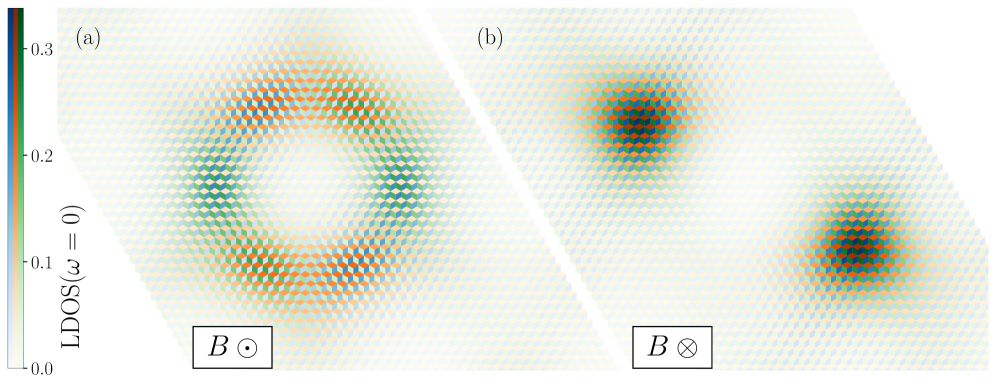
The application of a magnetic field to certain superconducting materials induces the formation of fractional vortices. These vortices are categorized as topological defects, meaning their existence and properties are determined by the global topology of the superconducting state rather than local fluctuations. Unlike conventional vortices which carry a single quantum of magnetic flux \Phi_0 , fractional vortices carry a fraction of this quantum. The emergence of these defects is directly linked to the material’s electronic structure and the specific symmetry of the superconducting order parameter, creating localized regions of quantized magnetic flux that deviate from the standard \Phi_0 unit.
Calculations indicate the presence of fractional vortices within the chiral dd-wave superconducting state. These vortices carry a quantized magnetic flux of h/3e, representing one-third of the superconducting flux quantum. This fractionalization occurs within a magnetic unit cell experiencing a total magnetic flux of 2\Phi_0, where \Phi_0 denotes the flux quantum. The constraint of 2\Phi_0 through the unit cell allows for the stable existence of these fractional vortices, differing from conventional vortices that carry a full flux quantum.
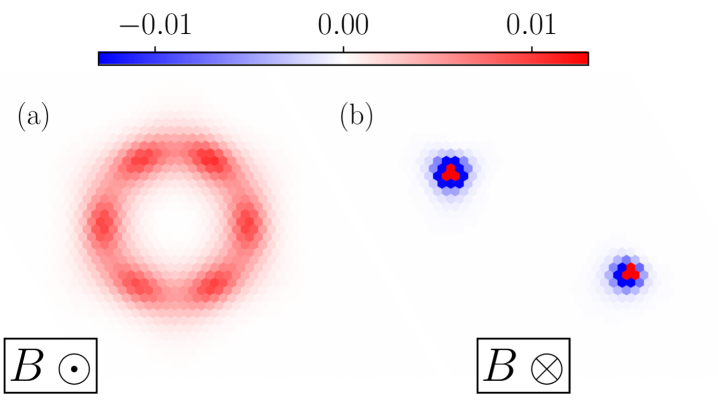
Calculations of the topological charge density within the chiral dd-wave superconducting state confirm the non-trivial topology of the observed fractional vortices. This non-triviality arises from the specific spatial distribution of the superconducting order parameter around the vortex core, resulting in a non-zero winding number. Importantly, this topological characteristic makes these vortices potential hosts for Majorana modes – quasiparticles predicted to exist as their own antiparticles. The existence of Majorana modes is directly linked to the topological protection offered by these vortices, potentially enabling their utilization in fault-tolerant quantum computation. Specifically, the calculated charge density demonstrates a characteristic profile consistent with the formation of zero-energy states localized at the vortex core, a key signature of Majorana modes.
Implications and the Path Forward
The recent observation of chiral dd-wave superconductivity, a novel form where Cooper pairs form with a unique directional ‘spin’, marks a considerable advancement in the pursuit of stable quantum states. This unconventional superconductivity gives rise to topological defects – essentially, localized disruptions in the material’s quantum properties – that are inherently protected from environmental noise. Unlike conventional quantum systems susceptible to decoherence, these defects exhibit robustness due to their topological nature, meaning their properties are determined by the overall shape of the system rather than local imperfections. This discovery opens exciting possibilities for creating quantum bits, or qubits, that maintain coherence for extended periods, a critical requirement for practical quantum computing, and represents a fundamental step towards harnessing the power of quantum mechanics for advanced technologies.
The recently discovered chiral superconducting state harbors unusual vortex structures with the potential to revolutionize quantum computing. These vortices, unlike those in conventional superconductors, possess a unique chirality and are remarkably stable due to their topological protection. This inherent robustness shields quantum information from decoherence-a major obstacle in building practical quantum computers-by encoding it not in localized particles, but in the global topology of the vortex configuration. Researchers theorize that these vortices can serve as topologically protected qubits, the fundamental building blocks of a quantum computer, where information is encoded in the presence or absence of a vortex, or its chiral direction. Manipulating and braiding these vortices-effectively swapping their positions-could then implement quantum gates, the operations needed for computation, with significantly reduced error rates, paving the way for fault-tolerant quantum computation and potentially unlocking computational capabilities far beyond those of classical computers.
Investigations are now shifting towards the precise control and manipulation of these chiral superconducting vortices, with researchers exploring techniques to guide, assemble, and dynamically reconfigure them within novel device architectures. This includes efforts to create artificial pinning landscapes that stabilize vortex configurations, and to exploit their unique properties for building advanced superconducting circuits. The ultimate goal is to harness these topological features for practical applications, such as highly sensitive detectors, efficient energy storage systems, and, crucially, the realization of robust and scalable quantum computing platforms where the vortices themselves function as topologically protected qubits, offering inherent resistance to decoherence and computational errors.
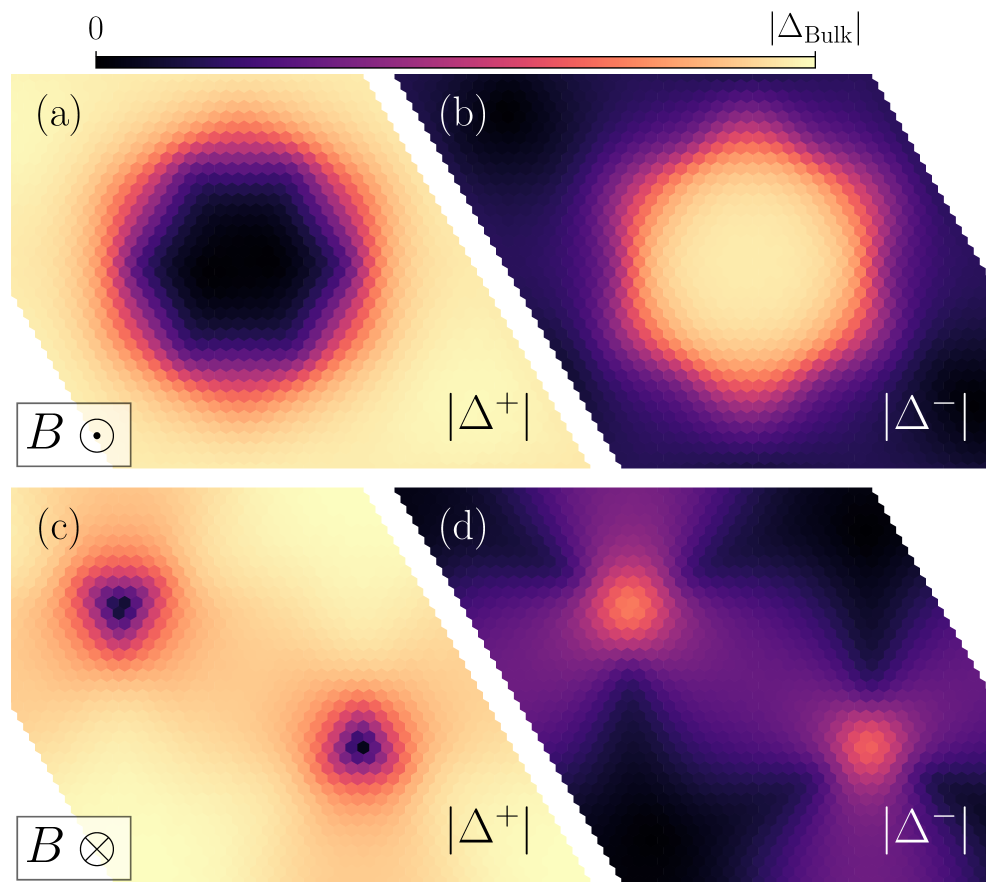
The study of fractional vortices within chiral $d+id$ kagome superconductors reveals a system where localized states are intrinsically linked to the overall topological properties. These vortices, unlike their conventional counterparts, emerge as a consequence of the kagome lattice’s unique electronic structure and sublattice interference. This echoes Francis Bacon’s observation that “knowledge is power,” as a deep understanding of the material’s fundamental structure-its lattice geometry and electronic band topology-allows for the prediction and potential manipulation of these exotic quantum states. The research demonstrates how subtle changes at the microstructural level, such as the emergence of fractional vortices, can dramatically influence the macroscopic behavior of the superconducting material, highlighting the interconnectedness of the system.
Where Do We Go From Here?
The prediction of fractional vortices, intrinsically tied to sublattice degrees of freedom, shifts the focus beyond simple vortex counting. Systems break along invisible boundaries-if one cannot see the interplay between topology and sublattice interference, pain is coming. The present work highlights that conventional wisdom regarding vortex behavior, developed for systems with full translational symmetry, may not apply to the kagome lattice. Anticipating weaknesses requires a deeper understanding of how these fractional states interact, not just with each other, but with defects and boundaries within the material itself.
A crucial next step involves exploring the dynamical consequences of these exotic vortices. How do they respond to external stimuli – current, magnetic field, or temperature gradients? Do they contribute to dissipation, or can they be harnessed for novel device applications? The role of the Van Hove singularity, clearly implicated in stabilizing this chiral superconducting state, also warrants further scrutiny. Subtle shifts in Fermi level position could dramatically alter the vortex landscape, potentially inducing phase transitions between different vortex configurations.
Ultimately, the true test lies in experimental verification. Distinguishing fractional vortices from conventional Abrikosov vortices will be challenging, requiring techniques sensitive to the local electronic structure and capable of resolving the sublattice degrees of freedom. Success will not merely confirm a theoretical prediction, but open a path toward manipulating topological states of matter in fundamentally new ways, revealing the structure that dictates behavior.
Original article: https://arxiv.org/pdf/2602.17399.pdf
Contact the author: https://www.linkedin.com/in/avetisyan/
See also:
- What Song Is In The New Supergirl Trailer (& What It Means For The DC Movie)
- TV legend Carol Kirkwood reveals the reasons why she decided to retire after 28 years with BBC
- Highly Anticipated Strategy RPG Finally Sets Release Date (And It’s Soon)
- Dune 3 Gets the Huge Update Fans Have Been Waiting For
- 10 New Spring 2026 Anime Sequels to Watch This April (Ranked By Hype Level)
- Unforgotten legend Nicola Walker stars in first look at all-new “outrageously witty” comedy drama series
- The Most Surreal Moments From the O.J. Simpson Murder Trial
- The Super Mario Galaxy Movie: 50 Easter Eggs, References & Major Cameos Explained
- Crimson Desert – 15 Things I Wish I Knew Before Diving In
- New Pokemon Go Event Gives Players A Shot At 11 Rare Shiny Pokemon (With Boosted Odds)
2026-02-23 01:41