Today, Valve revealed the Steam Machine, a new desktop gaming PC, along with the Steam Frame VR headset and a redesigned Steam Controller. Building on the popularity of the Steam Deck, Valve is continuing its effort to blend the simplicity of consoles with the power of PC gaming.
The Steam Machine is a small PC designed for gaming, running on SteamOS and featuring custom components, but at its core it’s powered by AMD. Since it’s expected to release in Spring 2026, I decided to create a couple of similar, compact PC builds that you can purchase and build yourself right now.
What hardware does the Steam Machine include?
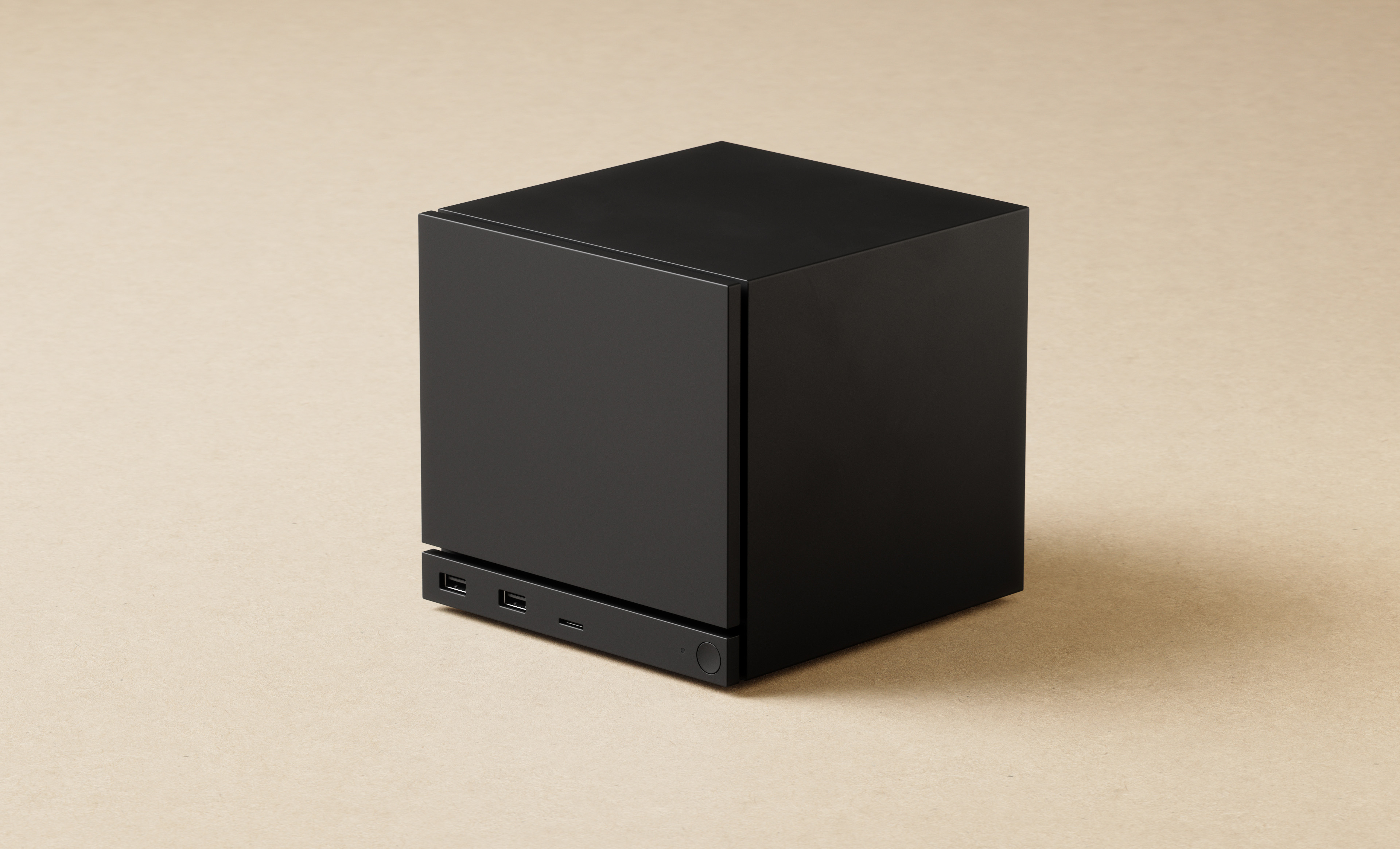
Valve’s latest Steam Machine is powered by a powerful AMD processor – a six-core Zen 4 – and a custom AMD graphics card based on the RDNA 3 architecture. The graphics card has 28 Compute Units and 8GB of dedicated video memory (GDDR6 VRAM).
It features ray tracing, and Valve says it can handle games at 4K resolution with 60 frames per second by utilizing AMD’s FidelityFX Super Resolution (FSR). FSR is a technology that works like NVIDIA’s DLSS to improve performance.
This device comes with 16GB of fast DDR5 RAM and offers storage options of either 512GB or 2TB. It includes built-in power, supports the latest Wi-Fi 6E, and has a variety of ports like DisplayPort 1.4, HDMI 2.0, 1Gbps Ethernet, USB-C, and USB-A.
Here’s a closer look at the Steam Machine’s specs.
| Feature | Specifications |
|---|---|
| Models | 512GB model and 2TB model. Can ship bundled with or without a Steam Controller. |
| CPU | Semi-custom AMD Zen 4, 6C / 12T, up to 4.8 GHz, 30W TDP |
| GPU | Semi-Custom AMD RDNA3, 28 CUs; 2.45GHz max sustained clock, 110W TDP; Supports 4K gaming @ 60 FPS with FSR; Ray tracing supported; Over 6x more powerful than Steam Deck. |
| Memory | 16GB DDR5 + 8GB GDDR6 VRAM |
| Storage | 512GB & 2TB SSD models; microSD card slot for expanded storage / portable catalog. |
| Power | Internal PSU, AC 110–240V |
| DisplayPort 1.4 | Up to 4K @ 240Hz or 8K @ 60Hz; HDR, FreeSync, daisy-chaining |
| HDMI 2.0 | Up to 4K @ 120Hz; HDR, FreeSync, CEC |
| Networking | Ethernet 1 Gbps; Wi-Fi 6E (2×2); dedicated BT antenna |
| USB | USB-C 10 Gbps (3.2 Gen 2); 4× USB-A ports (2× USB 3 front, 2× USB 2 rear) |
| Controller Radio | Integrated Steam Controller 2.4GHz radio |
| Compatibility | Works with other controllers, accessories, and PC peripherals |
| Wake Function | Wake with Steam Controller |
| OS | SteamOS (like Steam Deck); Gaming-first UX; Fast suspend/resume; Steam Cloud saves + full Steam features. |
| LED Bar | Customizable colors & animation; Reflects system status (downloads, booting, updating) |
| Price | Unknown |
| Launch Date | Spring 2026 |
How to build your own Steam Machine before it officially launches
While official performance tests for the Steam Machine aren’t available yet, you can easily build your own similar gaming PC in a smaller case.
I created two possible computer builds. One uses a separate graphics card, and the other uses an AMD processor with built-in graphics, which makes it even more affordable.
I didn’t include an operating system because you can easily install SteamOS on a regular computer, or use a free gaming-focused Linux distribution like Bazzite.
How to build a Steam Machine competitor using an AMD APU
Let’s start with the more affordable version using an APU first.
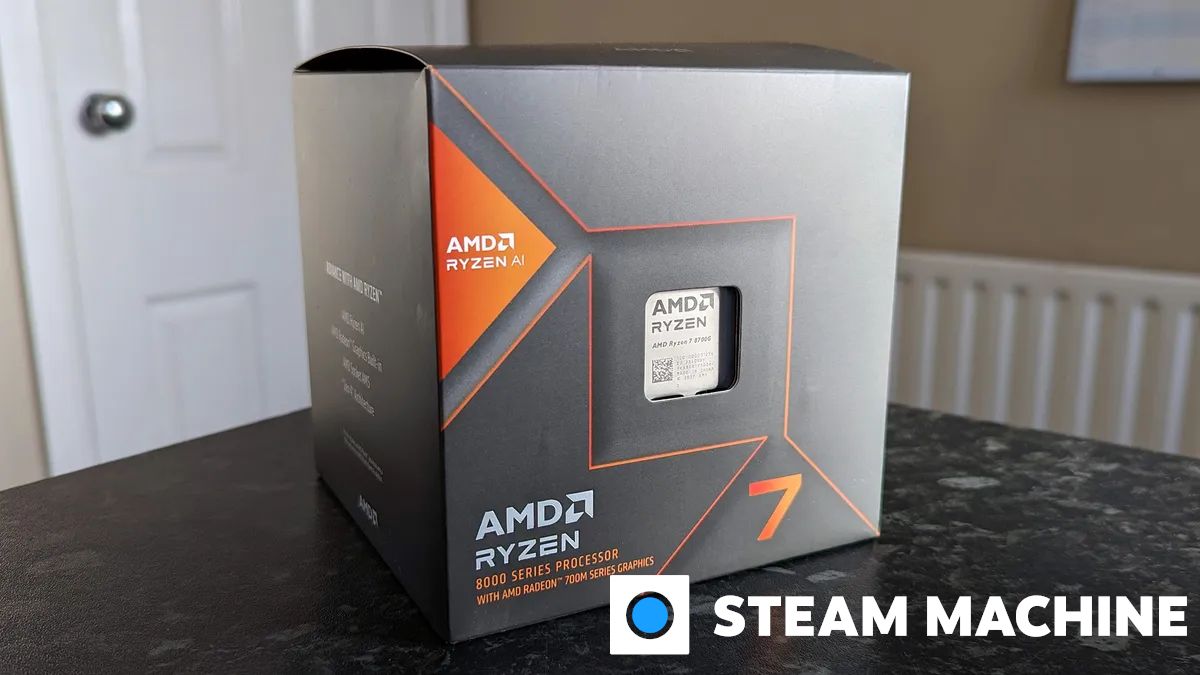
- APU: AMD Ryzen 7 8700G — $259 at Newegg
- GPU: Not required (included with the CPU)
- Motherboard: ASRock B650I Lightning Wifi — $160 at Newegg
- Memory: Kingston FURY Beast RGB (2 x 8GB) DDR5 — $92 at Amazon
- Storage: Kingston NV2 500GB M.2 PCIe 4.0 — $50 at Amazon
- Case: Thermaltake Core V1 Mini ITX — $50 at Amazon
- PSU: Thermaltake Smart 500W 80+ — $40 at Newegg
- Total: ~$650 USD
Even though this $650 computer isn’t as powerful as one with a dedicated graphics card, it still performs comparably to a Steam Machine.
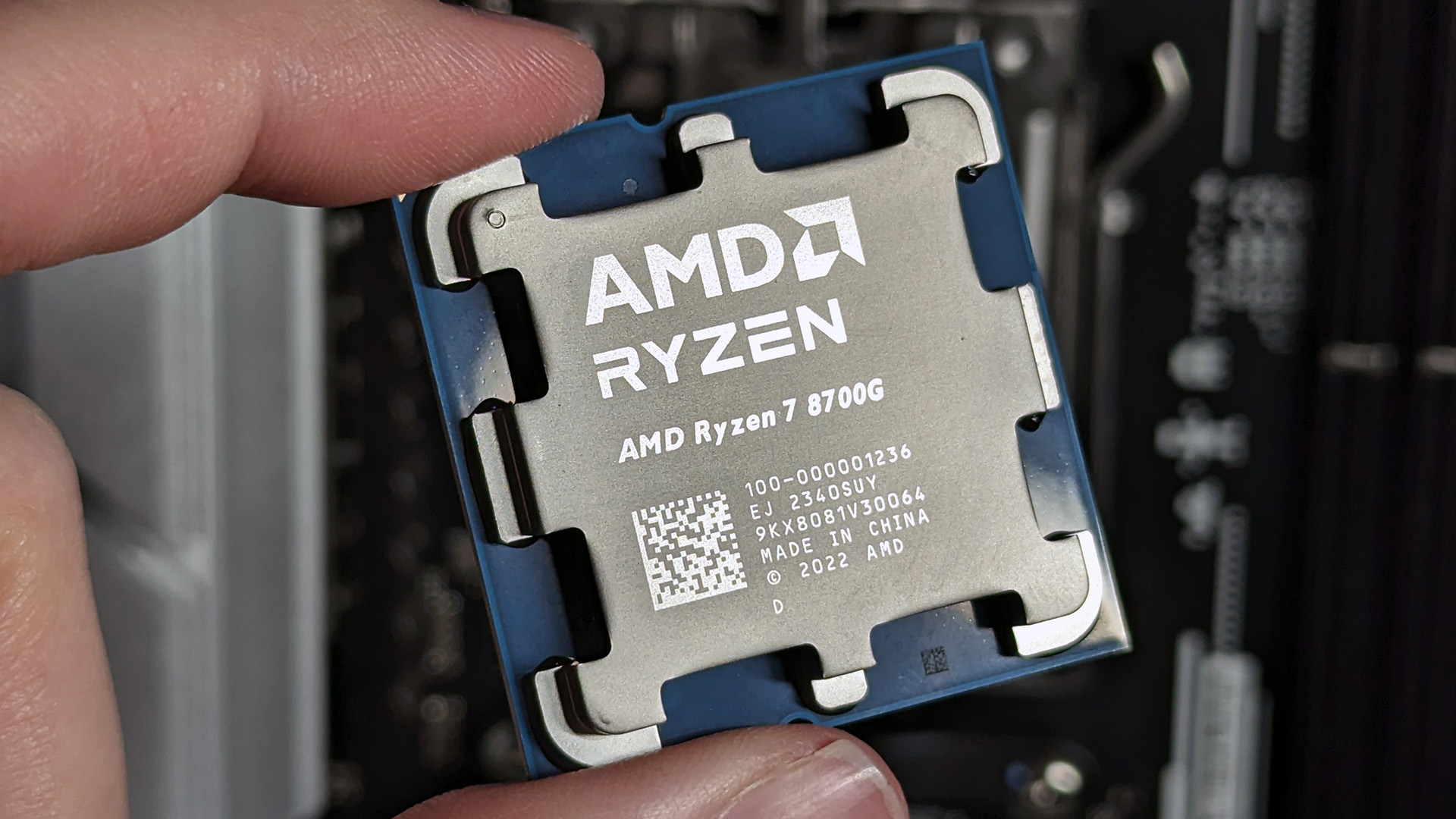
The Ryzen 7 8700G processor features eight powerful Zen 4 cores and 16 threads, along with capable Radeon 780M integrated graphics. It includes a CPU cooler, but you can upgrade to a more powerful one if needed.
This device includes a fast 500GB solid-state drive and 16GB of high-speed DDR5 RAM, similar to the Steam Machine, and it’s all packed into a small, Mini ITX computer case.
I’ve been wondering if the Ryzen 7 8700G can handle 4K gaming at a smooth 60 frames per second, like Valve is aiming for with the Steam Deck. And honestly, it’s a mixed bag. Some games run great at that setting, but others really struggle. It seems like the Steam Deck’s custom graphics card, with its 8GB of dedicated memory, is going to give you a more consistently good experience overall.
How to build a Steam Machine competitor using a discrete NVIDIA GPU
The computer I built with the AMD Ryzen 7 8700G is focused on being affordable, so you’ll need to accept that it won’t deliver the highest frame rates in games.
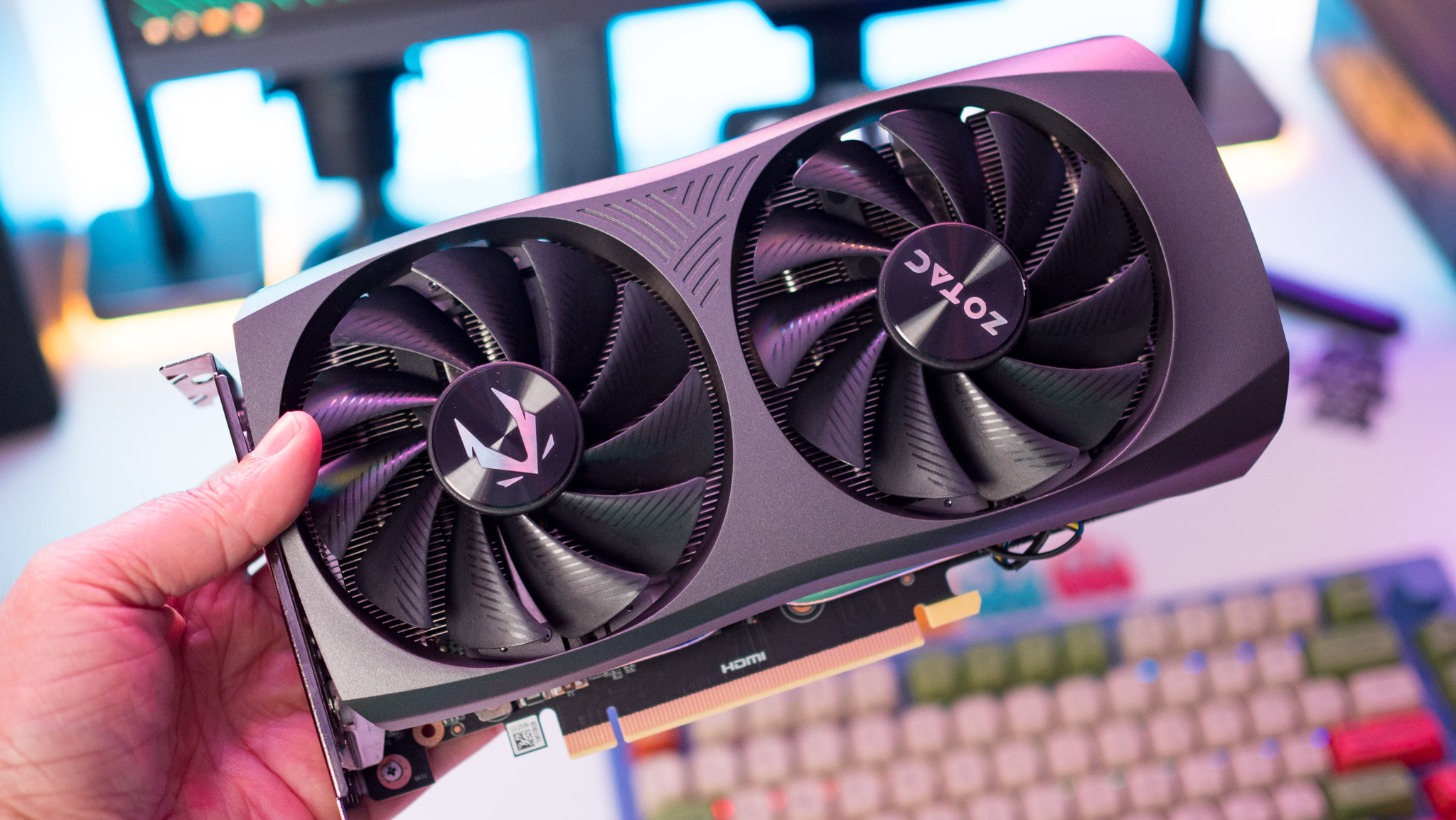
If you want a significant performance boost and want to take advantage of NVIDIA’s newest DLSS 4 features, like Multi Frame Generation, then upgrading to a graphics card such as the RTX 5050 or RTX 5060 would be a better choice.
Each of these graphics cards has 8GB of GDDR6 video memory, similar to the Steam Machine. They can both handle gaming at 4K resolution with a smooth 60 frames per second, though you might need to use DLSS and adjust settings for particularly demanding games.
Here’s a look at a build I put together.
- CPU: AMD Ryzen 5 7600X — $176 at Amazon
- GPU (Option 1): Zotac Gaming Solo RTX 5050 — $250 at Amazon
- GPU (Option 2): MSI Ventus 2X RTX 5060 8GB — $310 at Best Buy
- Motherboard: ASRock B650I Lightning Wifi — $160 at Newegg
- Memory: Kingston FURY Beast RGB (2 x 8GB) DDR5 — $92 at Amazon
- Storage: Kingston NV2 500GB M.2 PCIe 4.0 — $50 at Amazon
- Case: Thermaltake Core V1 Mini ITX — $50 at Amazon
- PSU: Thermaltake Smart 500W 80+ — $40 at Newegg
- Total: ~$818 (RTX 5050) or $878 (RTX 5060) USD
While SteamOS can sometimes be tricky with NVIDIA graphics cards, the Bazzite operating system, being open-source, generally works well. If you prefer, Windows 11 offers full hardware compatibility without any issues.
Would you rather build your own Steam Machine?
Valve is aiming to recreate the success of the Steam Deck, which revolutionized PC gaming when it was released in 2022.
Unlike the Steam Machine, building your own similar system is fairly straightforward if you’re familiar with how PCs work.
Valve hasn’t revealed how much the Steam Machine will cost, but I think it will likely be priced between $650 and $750. However, with Black Friday and Cyber Monday sales coming up in November, the price of building your own custom PC could fall significantly, potentially making the Steam Machine less appealing.
Thinking about the Steam Machine? How much would you be willing to spend on one? Or would you prefer to build your own gaming PC instead? Share your thoughts in the comments!
Read More
- The Super Mario Galaxy Movie: 50 Easter Eggs, References & Major Cameos Explained
- Surprise Isekai Anime Confirms Season 2 With New Crunchyroll Streaming Release
- 10 Best Free Games on Steam in 2026, Ranked
- ‘Project Hail Mary’: The Biggest Differences From the Book, Explained
- Sydney Sweeney’s The Housemaid 2 Sets Streaming Release Date
- Skate 4 – Manny Go Round Goals Guide | All of the Above Sequence
- Preview: Sword Art Online Returns to PS5 as a Darker Open World Action RPG This Summer
- Why is Tech Jacket gender-swapped in Invincible season 4 and who voices her?
- Forza Horizon 6 ‘Prologue’ gameplay
- Joel Kinnaman Claims ‘Peacemaker’ Was His Last Time as Rick Flag Jr. in the DCU
2025-11-12 21:42