Author: Denis Avetisyan
Researchers have demonstrated precise control over matter-wave four-wave mixing in a potassium Bose-Einstein condensate, paving the way for advanced quantum technologies.
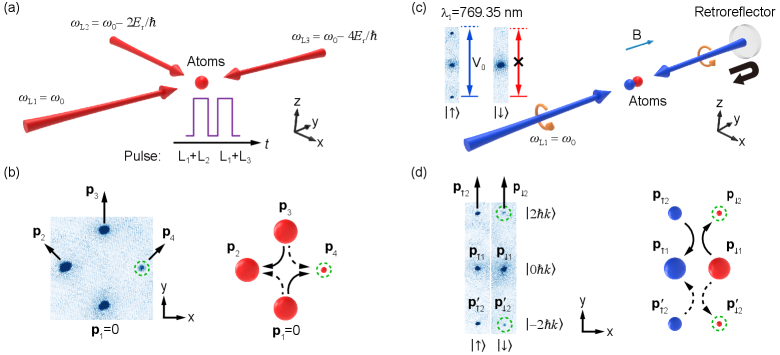
Tunable interactions via Feshbach resonance significantly influence matter-wave four-wave mixing yield in $^{39}$K Bose-Einstein condensates, with implications for quantum information and precision measurement.
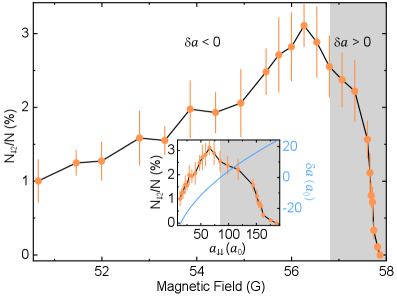
Exploiting nonlinear interactions with matter waves remains a challenge in quantum technologies. This is addressed in ‘Experimental study of matter-wave four-wave mixing in $^{39}$K Bose-Einstein condensates with tunable interaction’, which investigates four-wave mixing (FWM) in a ^{39}K Bose-Einstein condensate, demonstrating that FWM yield is strongly influenced by interatomic interactions tuned via Feshbach resonances and maximized near the gas-to-droplet phase transition. These findings suggest pathways for optimizing matter-wave amplification and entangled atom pair generation-but how can these principles be extended to more complex quantum systems and applications in precision sensing?
Unveiling the Quantum Landscape: Foundations of Matter-Wave Control
The ability to manipulate quantum matter with extreme precision is rapidly becoming a cornerstone of both foundational scientific inquiry and the development of next-generation technologies. Unlike classical systems governed by predictable trajectories, quantum systems exist in a realm of superposition and entanglement, demanding exquisitely controlled environments to observe and utilize their unique properties. This control extends beyond simply cooling atoms; it requires precise manipulation of external fields – magnetic, optical, and radiofrequency – to sculpt the quantum landscape and isolate specific states. Such mastery unlocks the potential to test the limits of quantum mechanics, explore novel materials with unprecedented characteristics, and build devices like quantum sensors, secure communication networks, and ultimately, powerful quantum computers. The pursuit of this control isn’t merely academic; it’s a driving force behind advancements poised to revolutionize fields ranging from materials science and medicine to computation and cryptography.
Bose-Einstein Condensates (BECs) represent a remarkable state of matter achieved by cooling atoms to temperatures near absolute zero, where quantum effects become dramatically visible on a macroscopic scale. Unlike everyday materials where atoms move independently, a BEC sees a large fraction of atoms occupying the lowest quantum state, behaving as a single, coherent entity governed by wave-like properties. This collective behavior allows scientists to investigate fundamental quantum phenomena-such as superfluidity, where the condensate flows without viscosity, and the formation of matter-wave solitons-with unprecedented clarity. Because interactions between atoms in a BEC are highly controllable through external magnetic fields, these condensates serve as analog quantum simulators, enabling researchers to model and explore complex quantum systems relevant to condensed matter physics, nuclear physics, and even cosmology. The ability to manipulate and observe these quantum systems offers a pathway towards advanced technologies like precision sensors and quantum computing.
The pursuit of Bose-Einstein Condensates (BECs) relies heavily on selecting atomic species with characteristics conducive to achieving ultracold temperatures and maintaining condensate stability, and Potassium-39 proves particularly well-suited for this endeavor. Unlike some alkali metals, ^{39}K possesses a moderate mass, striking a balance between maximizing the de Broglie wavelength – crucial for observing quantum behavior – and minimizing the demands on cooling power. Furthermore, its relatively weak van der Waals interactions between atoms reduce the tendency for rapid thermalization, allowing for longer condensate lifetimes. Importantly, Potassium-39 exhibits a readily accessible Feshbach resonance, a unique quantum phenomenon that allows researchers to finely tune the interactions between atoms using external magnetic fields – a vital tool for controlling and manipulating the condensate’s properties and exploring diverse quantum phases of matter. This combination of favorable attributes, alongside established experimental techniques for laser cooling and trapping, has cemented Potassium-39 as a cornerstone for BEC research and a key element in advancing the field of ultracold quantum gases.
Exploring Collective Excitations: Matter-Wave Four-Wave Mixing
Four-Wave Mixing (FWM) is a nonlinear process commonly investigated using photons, where the interaction of three optical frequencies generates a fourth frequency. Extending this concept to matter waves utilizes Bose-Einstein Condensates (BECs) as the medium. In these experiments, three momentum wave packets comprising the BEC interact, resulting in the creation of a fourth wave packet with a different momentum. This adaptation allows for the study of interatomic interactions and the creation of novel atom wave packets, offering a distinct approach compared to traditional optical FWM and opening opportunities to investigate many-body physics with controlled atomic systems. The underlying principle remains analogous – a nonlinear response of the medium to the combined input wavepackets – but is manifested through the collective behavior of atoms in the condensate.
Matter-wave Four-Wave Mixing (FWM) enables the generation of new wave packets through the non-linear interaction of atomic matter waves within a Bose-Einstein condensate (BEC). Specifically, FWM utilizes the superposition of multiple input waves to create output waves at different momenta, effectively synthesizing new atomic wave packets. The efficiency of this process is directly related to the strength and nature of the atom-atom interactions within the BEC; by analyzing the characteristics of the generated wave packets – such as their amplitude and momentum distribution – researchers can precisely map the many-body interactions and probe the equation of state of the atomic gas. This technique offers a method for studying correlated many-body physics beyond the mean-field approximation, complementing traditional spectroscopic and scattering experiments.
Initial investigations into matter-wave Four-Wave Mixing (FWM) have been conducted using single-component Bose-Einstein Condensates (BECs). These experiments demonstrate the feasibility of generating new wave packets through atom-atom interactions within the condensate. Reported results indicate a maximum FWM yield of 5.5% is achievable under specific conditions, notably when the scattering length is tuned to approximately 118 a_0 (where a_0 represents the Bohr radius). This scattering length corresponds to an interaction strength where the condensate’s response is optimized for the FWM process, providing a benchmark for future experiments with more complex BEC configurations.
Optical dipole traps are crucial for both creating and controlling the atomic cloud used in matter-wave Four-Wave Mixing (FWM) experiments. These traps utilize the gradient force exerted by a focused laser beam – typically operating at wavelengths around 850 nm or 1064 nm – to confine neutral atoms. The trap potential is proportional to the intensity gradient of the laser, allowing for precise spatial control and the creation of localized, low-temperature atomic samples necessary for Bose-Einstein Condensation (BEC). During FWM, the optical dipole trap maintains the atomic density required for efficient interaction and allows for the manipulation of the input and output wave packets. The trap parameters, including depth and geometry, are carefully tuned to optimize the FWM signal and minimize atomic losses during the experiment, often employing a quasi-isotropic trapping potential to minimize anisotropy effects on the generated matter waves.
![By interrupting the four-wave mixing (FWM) process with a third pulse after initial momentum preparation and free-space evolution, the growth of FWM-modeled by a sigmoidal function <span class="katex-eq" data-katex-display="false">f(T) = A / \{1 + \exp[-K(T - T_c)]\} </span> with fitted half-maximum times of approximately 0.11-0.12 ms-can be controlled, as demonstrated by the observed growth curves and standard deviation measurements.](https://arxiv.org/html/2602.10873v1/x3.png)
Expanding the Palette: Two-Component BECs and FWM Complexity
Two-component Bose-Einstein condensates (BECs) extend the capabilities of Four-Wave Mixing (FWM) beyond single-component systems by utilizing two distinct internal spin states of the atoms. This configuration allows for the creation of more complex quantum states and manipulation of atomic interactions. Unlike single-component BECs where interactions are largely fixed, two-component systems introduce inter-component interactions alongside the usual intra-component interactions. These interactions, governed by parameters like the interspin and intraspin scattering lengths, provide additional degrees of freedom for controlling the FWM process and tailoring the resulting atomic momentum distributions. The use of two spin states effectively creates a two-level system within the condensate, enabling the exploration of novel FWM configurations and increased control over the generated atomic waves.
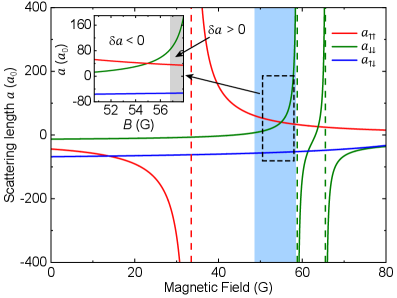
Feshbach resonance allows for the precise manipulation of interatomic interactions within a two-component Bose-Einstein condensate (BEC), thereby controlling the Four-Wave Mixing (FWM) process. This technique utilizes external magnetic fields to tune the scattering length between the two spin states comprising the BEC. By varying the magnetic field near a resonance, the strength of the interactions can be continuously adjusted from repulsive to attractive. This control directly influences the phase matching conditions and efficiency of FWM, enabling researchers to optimize the process for specific outcomes and explore novel FWM-based phenomena. The scattering length, denoted as a, is a critical parameter, and specific values, such as δa = -6 a_0, have been identified as yielding maximum FWM signal.
The strength of interactions in two-component Bose-Einstein Condensates (BECs) is fundamentally governed by the interspin and intraspin scattering lengths, a_{ss} and a_{ii} respectively. These parameters quantify the effective range of the short-range interaction potential between atoms in the same spin state (a_{ii}) and between atoms in different spin states (a_{ss}). A positive scattering length indicates a repulsive interaction, while a negative value signifies attraction. The difference between these lengths, denoted as \delta a = a_{ss} - a_{ii}, is particularly important as it dictates the overall interaction strength and can be tuned using Feshbach resonance to control the four-wave mixing (FWM) process. Precise control of a_{ss} and a_{ii} allows manipulation of the condensate’s properties and optimization of FWM efficiency.
Optimal four-wave mixing (FWM) efficiency in two-component Bose-Einstein condensates has been experimentally determined to occur within the droplet parameter regime, specifically when the difference in scattering lengths, δa, is approximately -6 a_0, where a_0 represents the Bohr radius. Characterization of the resulting atomic momentum distributions, and thus verification of FWM yield, is achieved through the implementation of time-of-flight imaging and Stern-Gerlach gradient techniques. These methods allow for precise measurement of the spatial separation and relative populations of the generated momentum components, confirming the enhanced FWM signal under these specific interaction conditions.
Beyond Condensates: Emergent Quantum Droplets and a New Frontier
Recent investigations reveal that ultracold atomic gases, specifically two-component Bose-Einstein condensates (BECs), exhibit a surprising tendency to self-assemble into quantum droplets – distinct from conventional BECs. This phenomenon arises when the attractive interactions between atoms in different components are delicately balanced against repulsive interactions within each component, creating a stable, self-bound state. Unlike traditional BECs which rely on mean-field interactions for their coherence, these quantum droplets are governed by quantum fluctuations and exhibit long-range interactions due to the emergent nature of the binding. By precisely tuning the strength of these inter- and intra-component interactions, researchers can effectively ‘sculpt’ these exotic states of matter, paving the way for investigations into novel quantum phenomena and potential applications in areas like quantum simulation and information processing.
Unlike conventional Bose-Einstein condensates (BECs), where interactions are typically short-ranged and quantum fluctuations are minimized, emergent quantum droplets display a fundamentally different character. These droplets arise from the delicate balance of attractive and repulsive interactions within a two-component BEC, leading to extended, long-range correlations between the constituent atoms. This long-range behavior, coupled with the inherent quantum nature of the system, amplifies quantum fluctuations significantly, causing the droplet’s shape and size to constantly evolve. Consequently, the droplets aren’t static, well-defined objects like many other quantum systems, but rather dynamic, fluctuating entities exhibiting a surprising degree of stability despite these internal disturbances. This interplay between long-range interactions and strong quantum fluctuations dictates the unique properties of these droplets and distinguishes them as a novel state of quantum matter, promising opportunities to explore exotic quantum phenomena and potentially harness them for advanced technologies.
Kolitz-Dirac scattering presents a powerful technique for both probing and controlling the delicate balance within quantum droplets. This method, leveraging precisely tuned interactions between atoms, allows researchers to effectively ‘kick’ the droplet and observe its subsequent oscillations, revealing crucial information about its internal structure and binding energy. Unlike traditional scattering techniques, Kolitz-Dirac scattering is exquisitely sensitive to the long-range, many-body interactions that define these exotic quantum states, providing a means to map out their complex potential energy landscapes. Furthermore, by manipulating the scattering parameters – such as laser intensity and pulse duration – it becomes possible to actively reshape and even split individual droplets, offering a pathway to create arrays of these quantum objects for potential applications in quantum simulation and information processing. The technique effectively moves beyond simply observing these droplets to actively sculpting and understanding their fundamental properties, promising deeper insights into the realm of emergent quantum matter.
The creation of quantum droplets represents a significant step towards engineering entirely new states of matter, holding promise for advancements in quantum technologies. Researchers have demonstrated that carefully tuned interactions within two-component Bose-Einstein condensates can give rise to these self-bound droplets, distinct from conventional condensates due to their long-range interactions and inherent quantum fluctuations. This controlled formation isn’t merely a scientific curiosity; it establishes a pathway for manipulating quantum systems at a fundamental level. The ability to create and control these exotic quantum states opens doors to potential applications in areas like quantum computing and simulation, where stable and controllable quantum systems are paramount. Further research leveraging techniques like Kolitz-Dirac scattering is anticipated to refine control over droplet properties, potentially leading to the development of robust quantum bits or novel quantum sensors.
The study’s successful demonstration of tunable matter-wave four-wave mixing (FWM) in a Bose-Einstein condensate highlights the critical role of interaction control in quantum systems. This ability to manipulate atomic interactions-and thus the FWM yield-echoes Immanuel Kant’s assertion, “Begin from what everyone already knows.” The researchers didn’t merely observe a phenomenon; they systematically explored the underlying conditions-specifically, the tunable interactions via Feshbach resonance-to understand how the system behaves. This approach, prioritizing understanding the mechanisms governing the condensate’s response, allows for potential advancements in quantum information processing, mirroring a Kantian focus on establishing foundational principles before applying them to novel applications.
Beyond the Mixing
The demonstrated control over matter-wave four-wave mixing (FWM) in $^{39}$K Bose-Einstein condensates opens avenues, yet simultaneously highlights the inherent opacity of complex quantum systems. While tunable interactions provide a degree of manipulation, the precise characterization of many-body effects remains a considerable challenge. The observed FWM yield, even under optimized conditions, suggests that losses – both known and, crucially, unknown – significantly limit the efficiency of this process. What portion of the ‘missing’ coherence stems from condensate instability, and what from undetected interactions within the dense atomic gas? This distinction is not merely academic; it impacts the feasibility of scaling these techniques towards more complex quantum information schemes.
Future work must confront the limitations imposed by condensate lifetime and sample size. Extending these experiments to larger condensates, or towards continuous operation, will demand innovative trapping and cooling strategies. Moreover, a more thorough investigation of the roles of higher-order correlations is needed. The current study focuses on a relatively simple interaction regime; exploring the behavior of FWM in the vicinity of resonance, where interactions are strongest, may reveal emergent phenomena – or simply expose the breakdown of current theoretical models.
Ultimately, the pursuit of robust and efficient matter-wave FWM is not solely about maximizing signal strength. It’s about discerning the subtle interplay between control and chaos, and acknowledging that even the most meticulously crafted experiment operates within a landscape of incomplete knowledge. The true potential of this field may lie not in what is observed, but in the careful cataloging of what remains hidden.
Original article: https://arxiv.org/pdf/2602.10873.pdf
Contact the author: https://www.linkedin.com/in/avetisyan/
See also:
- Gold Rate Forecast
- Dune 3 Gets the Huge Update Fans Have Been Waiting For
- Looks Like SEGA Is Reheating PS5, PS4 Fan Favourite Sonic Frontiers in Definitive Edition
- Arknights: Endfield – Everything You Need to Know Before You Jump In
- Jack Osbourne Shares Heartbreaking Tribute to Late Dad Ozzy Osbourne
- Disney Promotes Thomas Mazloum To Lead Parks and Experiences Division As Josh D’Amaro Prepares To Become CEO
- Hazbin Hotel Secretly Suggests Vox Helped Create One of the Most Infamous Cults in History
- Antiferromagnetic Oscillators: Unlocking Stable Spin Dynamics
- Dungeon Stalkers to end service on June 9
- 22 actors who were almost James Bond – and why they missed out on playing 007
2026-02-12 20:02