Wi-Fi is a technology that’s constantly improving, allowing our devices to connect to the internet without wires. Whether it’s a router, laptop, smartphone, or smart home device, if it connects to the internet wirelessly, it relies on a Wi-Fi standard.
Currently, as of early 2026, the majority of our devices still connect using either Wi-Fi 5 (introduced in 2013) or Wi-Fi 6 (introduced in 2021).
Wi-Fi 7 officially launched in 2024 with the 802.11be standard, but it hasn’t become widespread yet. While many new devices, like those shown at CES 2026, now include Wi-Fi 7, most devices are still using older Wi-Fi standards.
As a researcher following wireless technology, it’s interesting to see how quickly things are moving. Even though Wi-Fi 7 is still being implemented, the Wi-Fi Alliance – the group that manages Wi-Fi standards and certification – is already hinting at what comes next.
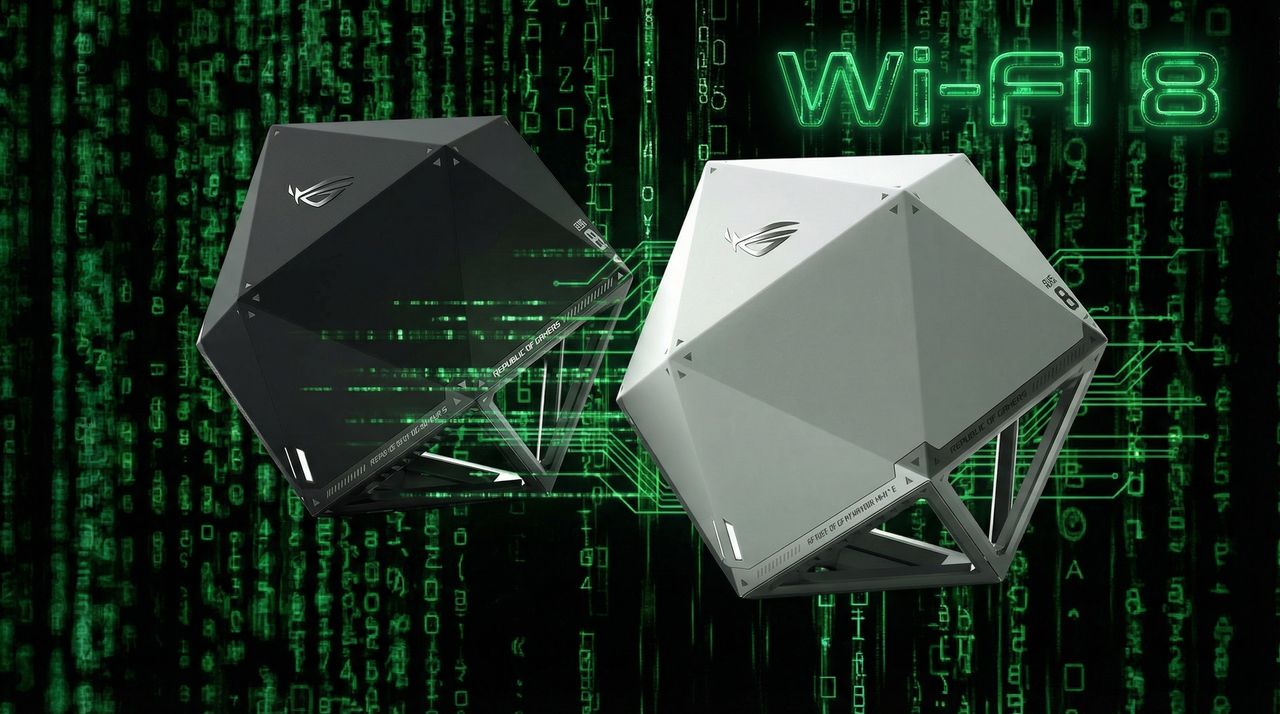
I have to admit, I only recently learned about Wi-Fi 8 at CES 2026. ASUS first caught my attention with their ROG WiFi 8 concept router. This router, called the ROG NeoCore, is expected to be available in 2026, even before the official Wi-Fi 8 standard is completed.
Setting the ASUS concept aside, let’s dig into Wi-Fi 8 and what we can expect when it arrives.
What is Wi-Fi 8? Specs and jargon explained

Wi-Fi 8 is the upcoming standard for wireless networking, officially called IEEE 802.11bn. It’s also being called Ultra High Reliability, a name that reflects its key improvements – providing a much more stable and dependable connection.
Instead of focusing on making Wi-Fi faster, the Wi-Fi Alliance is working to make it more dependable. This is particularly important now that Wi-Fi is available almost everywhere.
These improvements in how dependable wireless connections are particularly important for applications needing incredibly fast response times. This includes things like augmented, virtual, and mixed reality experiences, online gaming, healthcare applications, business and public networks, and the Internet of Things.
Wi-Fi 8 introduces several important improvements over older Wi-Fi technologies.
New Modulation and Coding Schemes (MCS) values
Wi-Fi 8 introduces improvements that minimize speed reductions when your Wi-Fi signal gets weaker. Ever notice how your internet gets slower as you move away from your router? Wi-Fi 8 will make those slowdowns less noticeable.
Multi-AP coordination
Wi-Fi 8 will significantly reduce interference in networks that use multiple access points. This should result in more consistent and reliable speeds, especially in environments where access points overlap, such as with mesh networks.
Seamless Roaming improvements
When you move around a home or office with multiple Wi-Fi access points, your devices often switch between them, causing brief disconnects and reconnects. Wi-Fi 8 is designed to fix this by allowing for smooth transitions between access points without interruption.
Non-Primary Channel Access (NPCA) and Dynamic Sub-Channel Operation (DSO)
DSO intelligently assigns network resources to different connections, prioritizing those that need more bandwidth. NPCA then allows devices to actually utilize these assigned resources when they’re needed.
Enhanced Long Range (ELR)
This one is straightforward — ELR allows for stronger signals further from your router.
Distributed-tone resource units (DRU)
DRU improves the reliability of your device’s connection to the router by boosting the strength and capacity of the data it sends back.
In-Device Coexistence (IDC)
IDC is working to ensure Wi-Fi 8 works seamlessly with other wireless technologies, such as Bluetooth. Since most devices use both Wi-Fi and Bluetooth, this improvement will likely be noticeable for many people.
High-Priority Enhanced Distributed Channel Access (HIP EDCA) & TXOP Preemption
These technologies combine to create a faster, more responsive experience, which is particularly beneficial for gamers and people who frequently video conference.
When does Wi-Fi 8 officially arrive?
In 2021, the Wi-Fi Alliance started exploring what would become Wi-Fi 8. Development of the new standard began in 2022, with drafts expected from 2025 and the process anticipated to last until 2027.
Currently, the Wi-Fi Alliance is targeting a September 2028 date for the final standard’s approval.
Even though the Wi-Fi 8 standard isn’t complete yet, we’ll likely see devices using it soon. The recent Wi-Fi 8 router concept from ASUS at CES 2026 proves this. New Wi-Fi tech usually appears before the official standard is finished because standards don’t typically change drastically, and companies want to be the first to sell these products.
Wi-Fi 7 vs. Wi-Fi 8: How much of an upgrade?
For the average internet user, the differences between Wi-Fi 7 and Wi-Fi 8 won’t really be noticed.
From my analysis, mesh and multi-access point networks appear to gain the most from this technology. I’m seeing more consistent connections and smoother transitions as you move around. A big plus is improved signal strength, especially further away from the router. I anticipate gamers will be particularly pleased – lower latency and a more stable connection can really enhance their experience.
Should you immediately buy a Wi-Fi 8 router when they come out? Not really. It will take a while for Wi-Fi 8 to become common in devices, and for most people, the expense probably won’t be worth it.
If we put aside those improvements for now, you’ll notice that Wi-Fi 8 and Wi-Fi 7 are quite similar when you just look at the basic specifications.
| Wi-Fi 8 | Wi-Fi 7 | |
|---|---|---|
| IEEE standard | 802.11bn | 802.11be |
| Max channel bandwidth | 320MHz | 320MHz |
| Modulation | 4,096 QAM | 4,096 QAM |
| Max speed | 23Gbps | 23Gbps |
| Bands | 2.5GHz, 5GHz, 6GHz | 2.5GHz, 5GHz, 6GHz |
Wi-Fi 8: FAQ
Do I need to buy a new router to use Wi-Fi 8?
To use Wi-Fi 8, you’ll need to purchase a new router. Plus, your devices will also need to be compatible with Wi-Fi 8 to take full advantage of its benefits.
My Wi-Fi seems fast enough. Do I need to upgrade to Wi-Fi 8?
If your Wi-Fi is working well for you now, you probably don’t need to upgrade to Wi-Fi 8. It focuses on making Wi-Fi 7 even more dependable, rather than significantly increasing speed.
When does Wi-Fi 8 launch?
Although the final Wi-Fi 8 standard isn’t due until September 2028, we anticipate seeing Wi-Fi 8-enabled devices available for purchase well before that date.
Are there any current devices that can use Wi-Fi 8?
Currently, only one Wi-Fi 8 product has been announced: the ASUS ROG NeoCore concept router. It’s anticipated to be available around 2026.
Will my older devices without Wi-Fi 8 benefit from a new Wi-Fi 8 router?
Even though your older devices will still use their original Wi-Fi technology, connecting them to a Wi-Fi 8 router can make your connection more reliable and extend the range of your network because of improvements in the new standard.
Read More
- The Super Mario Galaxy Movie: 50 Easter Eggs, References & Major Cameos Explained
- Sydney Sweeney’s The Housemaid 2 Sets Streaming Release Date
- 10 Best Free Games on Steam in 2026, Ranked
- Welcome to Demon School! Iruma-kun season 4 release schedule: When are new episodes on Crunchyroll?
- All 13 Smash Bros. Characters in the Super Mario Galaxy Movie
- Forza Horizon 6 ‘Prologue’ gameplay
- WTH?! Twitter Drops Fake Daredevil: Born Again Season 2 Spoilers as Character Return Confirmed
- Dune 3 Gets the Huge Update Fans Have Been Waiting For
- Highly Anticipated Strategy RPG Finally Sets Release Date (And It’s Soon)
- Why is Tech Jacket gender-swapped in Invincible season 4 and who voices her?
2026-01-14 17:12