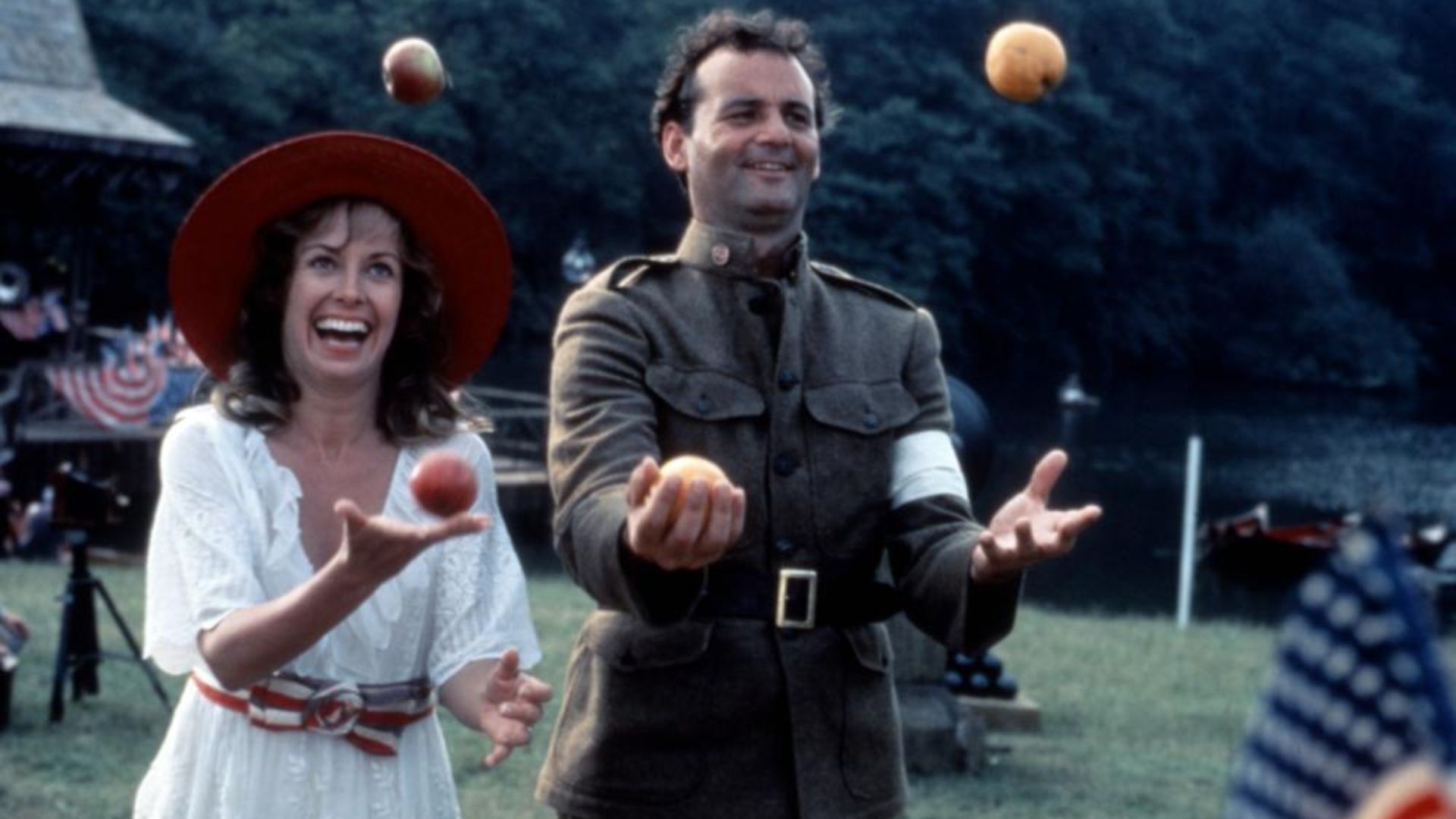
Before Bill Murray became known for dramatic roles in films like Lost in Translation, he attempted a serious historical drama that didn’t impress critic Roger Ebert. He hoped the remake of The Razor’s Edge – a story about a young man’s quest for meaning while traveling the world – would change how Hollywood saw his acting abilities. It was a project he was very passionate about.
The failure of the film unfortunately derailed Bill Murray’s efforts to be recognized as a serious dramatic actor. Despite Roger Ebert generally liking the movie more than other critics, Murray criticized Ebert after misunderstanding his review. Interestingly, Murray wouldn’t have made Ghostbusters in the same year if he hadn’t strongly insisted on starring in The Razor’s Edge.
‘The Razor’s Edge’ Was a Critical and Commercial Flop
Columbia Pictures
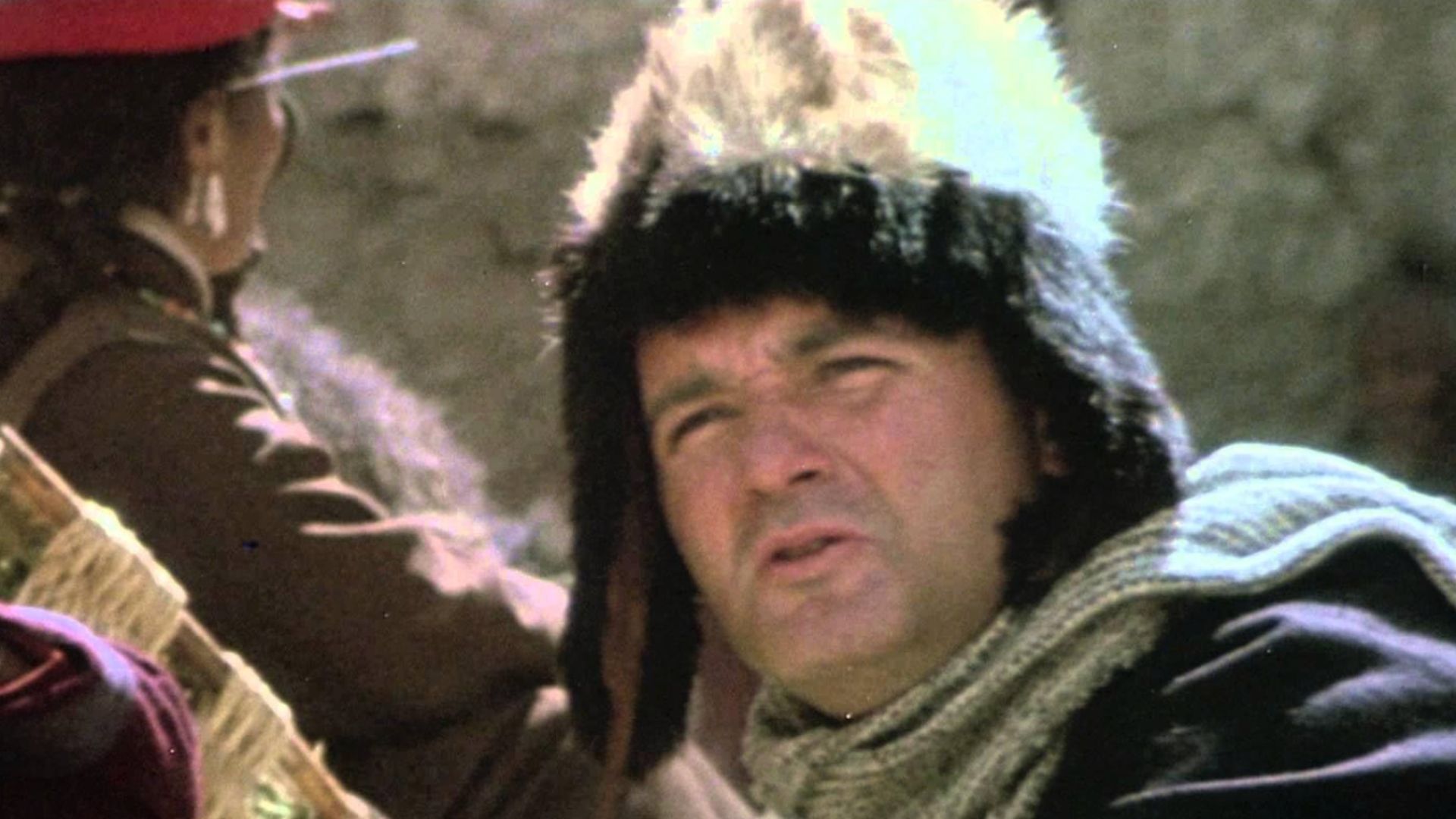
This film, The Razor’s Edge, is based on the famous 1944 novel by W. Somerset Maugham. It’s the second movie adaptation, following the well-regarded 1947 version with Tyrone Power. Bill Murray worked on the script with director John Byrum for a year and a half, and they often wrote while traveling across the country, as Murray wanted to be seen as a serious actor, not just a comedian.
Murray poured his heart and soul into playing Larry Darrell, a World War I veteran deeply affected by his experiences in combat. The character embarks on a journey to discover purpose and meaning in life, taking him from Paris to the Himalayas. He lives by the Hindu belief that finding enlightenment is a challenging and difficult path.
Bill Murray insisted on having a starring role in a film to showcase his dramatic abilities, and he wouldn’t agree to be in Ghostbusters unless Columbia Pictures first released The Razor’s Edge. His Ghostbusters co-star, Dan Aykroyd, proposed this arrangement, and the studio eventually accepted. Ghostbusters became the biggest movie of 1984 when it was released in June, solidifying Murray’s reputation as a leading comedic actor. However, The Razor’s Edge, released four months later, was a box office failure. Despite this, Ghostbusters might never have happened without the deal Murray made regarding The Razor’s Edge.
The movie wasn’t a financial success, earning only $6.6 million at the box office despite costing $12 million to make. It also received very negative reviews, with a Metascore of 47 and a 47% rating on Rotten Tomatoes. Surprisingly, Bill Murray disagreed with Roger Ebert’s review, even though Ebert was one of the few critics who had a positive opinion of the film.
Roger Ebert’s Criticism of ‘The Razor’s Edge’, Explained
Columbia Pictures
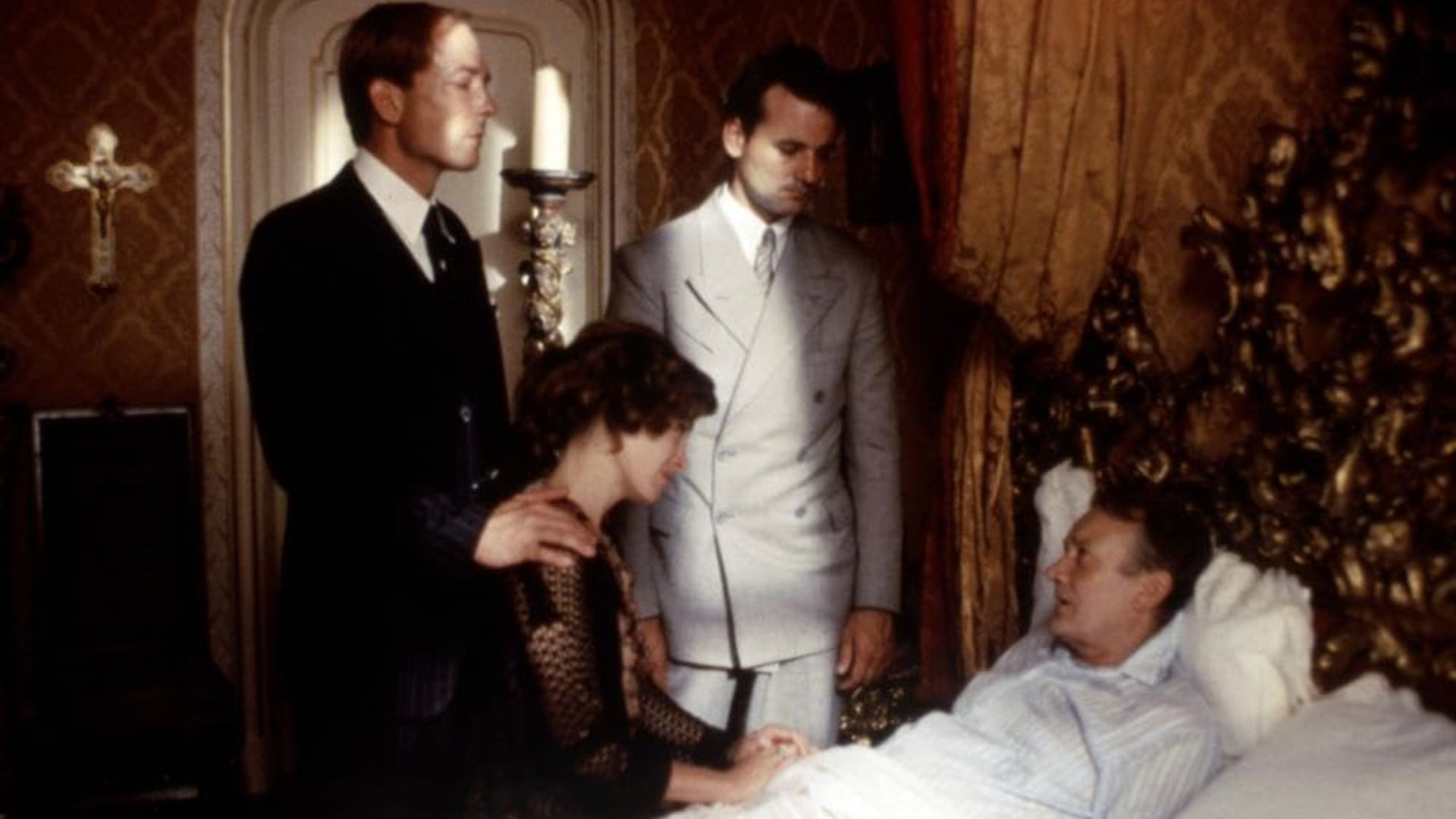
In his review of The Razor’s Edge, Ebert gave the film a mixed rating, pointing out that it felt more like a 1960s drama about self-discovery than a story true to its source material. He felt the story wouldn’t be as impactful because it didn’t quite fit the time period. However, his main criticism was Bill Murray’s portrayal of the main character, Larry. Ebert wrote that Murray played Larry as too reserved, ironic, and inactive, making it difficult to connect with his journey. He believed Murray acted as if life was a joke and he was simply observing it, rather than actively pursuing his quest.
In a more nuanced critique, Ebert added:
Murray is typically a fantastic actor, but his performance here feels off. While the rest of the cast and the audience connect emotionally, Murray remains distant. At times, he seems stubbornly unyielding, presenting a stiff posture, an impassive expression, and a closed-off gaze that prevents any real connection with the viewer.
He might have tried too hard to distance himself from his usual comedic roles. It’s interesting, then, that he occasionally lets his funny side show in the film – but it doesn’t feel natural or motivated by the story.
Soon after Roger Ebert’s review came out, Bill Murray heard about the negative feedback, misunderstood it, and eventually approached Ebert to discuss it directly.
Billy Murray’s Response to Ebert’s View of ‘The Razor’s Edge’
Columbia Pictures
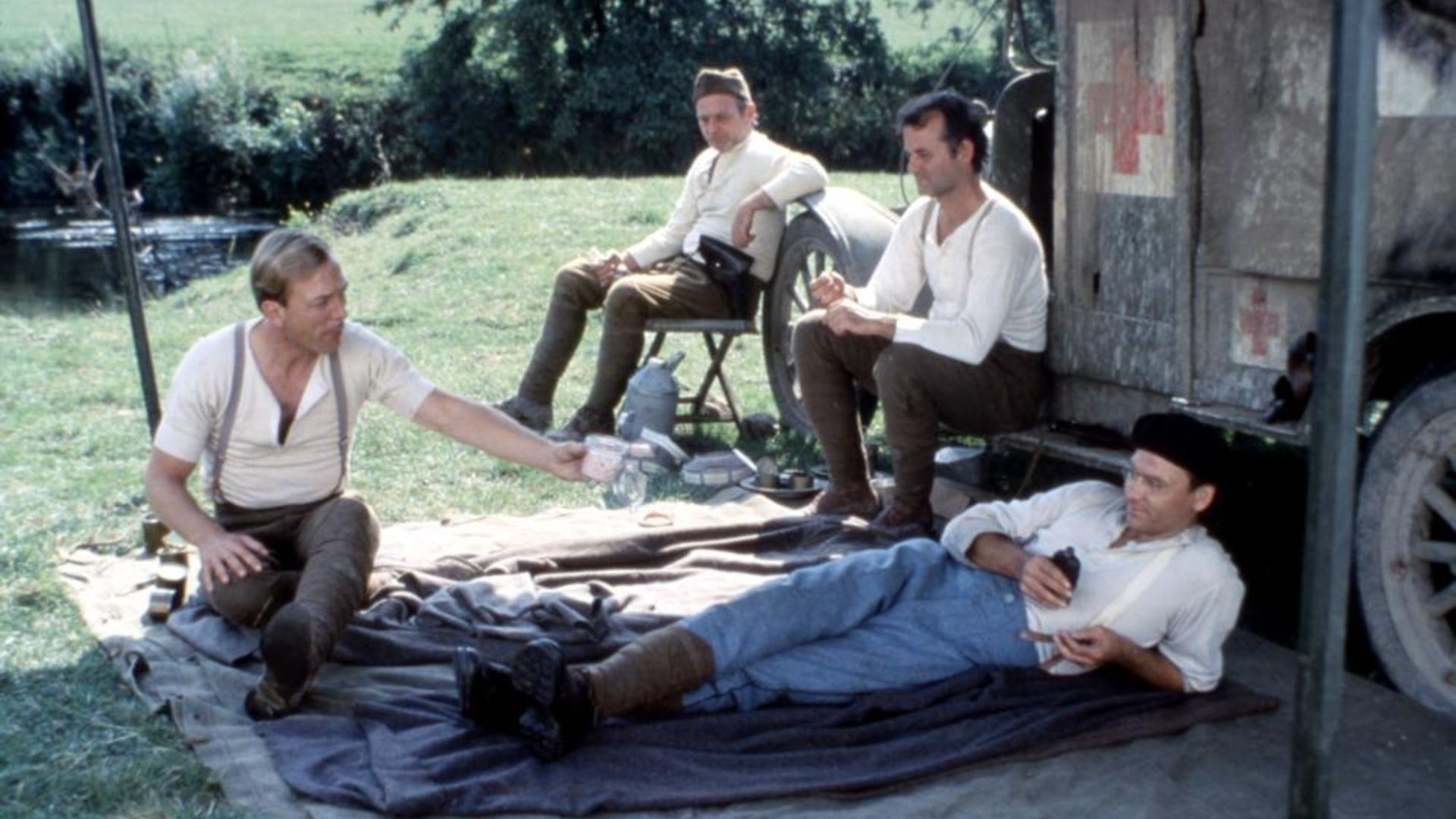
Bill Murray showed that holding onto resentment can be difficult when he discussed a past issue with NJ magazine in 2010. He explained what happened with The Razor’s Edge, saying:
A lot of effort can go unnoticed, but experiencing that is part of having a career. It’s just something you deal with. For example, when the movie Razor’s Edge came out, film critic Roger Ebert joked that Bill Murray should only be allowed to star in comedies.
While Roger Ebert criticized Bill Murray for portraying Larry Darrell with comedic timing instead of a more serious approach, he didn’t suggest Murray should be banned from dramatic roles. In 1993, Murray told Entertainment Weekly he realized he’d misjudged the audience’s interest in a historical film, when the studio preferred a modern setting. Despite this, Murray later confronted Ebert directly, stating:
I ran into Roger earlier. I playfully teased him, saying something like, ‘Oh, Roger, is that really you?’ We both come from Chicago, so I felt comfortable joking around with him.
Although it was more of a lighthearted jab at their mutual roots than a serious attack, Murray still faced criticism from Ebert later on. In his review of the beloved Christmas film Scrooged, where he gave it only a quarter of a star, Ebert wrote:
Bill Murray plays Frank Cross as a truly unpleasant and unhappy man. Usually, even when Murray plays grumpy characters, there’s a sense he’s just having fun with the role. Here, that playful side is missing, and he seems genuinely bitter.
Murray also confronted Ebert over his view of Scrooged with the retort on Rogerebert.com
Someone asked how I could give the movie Scrooged only one star. I didn’t think it was that terrible – it actually had some good parts. If you watch it, you’ll probably agree. I was just wondering if maybe I’d missed something, like if there was drama on set that I didn’t know about.
Although film critic Roger Ebert misjudged Scrooged but accurately praised The Razor’s Edge, Bill Murray has ultimately proven himself a gifted dramatic actor. His performances in films like Ed Wood, Rushmore, Lost in Translation, The Royal Tenenbaums, Broken Flowers, Get Low, Hyde Park on Hudson, and On the Rocks have stood the test of time. Perhaps acknowledging this, consider what Ebert himself said about Lost in Translation.
Both performances are excellent. Bill Murray delivers a career-best performance, not by playing a version of himself or a typical movie star, but by completely embodying Bob Harris – a man who is both content and melancholic, feeling trapped yet accepting of his situation.
Walking along the razor’s edge indeed…
MovieWeb Report: Subscribe and never miss what matters
Immerse yourself in the cinematic universe with the latest movie news, reviews, and exclusive content from MovieWeb.
Sources: NJ.com, EW.com, Rogerebert.com

Found an error? Send it info@movieweb.com so it can be corrected.
Read More
- Looks Like SEGA Is Reheating PS5, PS4 Fan Favourite Sonic Frontiers in Definitive Edition
- Gold Rate Forecast
- Dune 3 Gets the Huge Update Fans Have Been Waiting For
- Pluribus Star Rhea Seehorn Weighs In On That First Kiss
- Jack Osbourne Shares Heartbreaking Tribute to Late Dad Ozzy Osbourne
- Action Comics #1096 is Fun Jumping-On Point for Superman Fans (Review)
- Every Upcoming Transformers Movie: Release Dates, Details, & Everything We Know
- 22 actors who were almost James Bond – and why they missed out on playing 007
- Dungeon Stalkers to end service on June 9
- Antiferromagnetic Oscillators: Unlocking Stable Spin Dynamics
2026-02-13 17:06