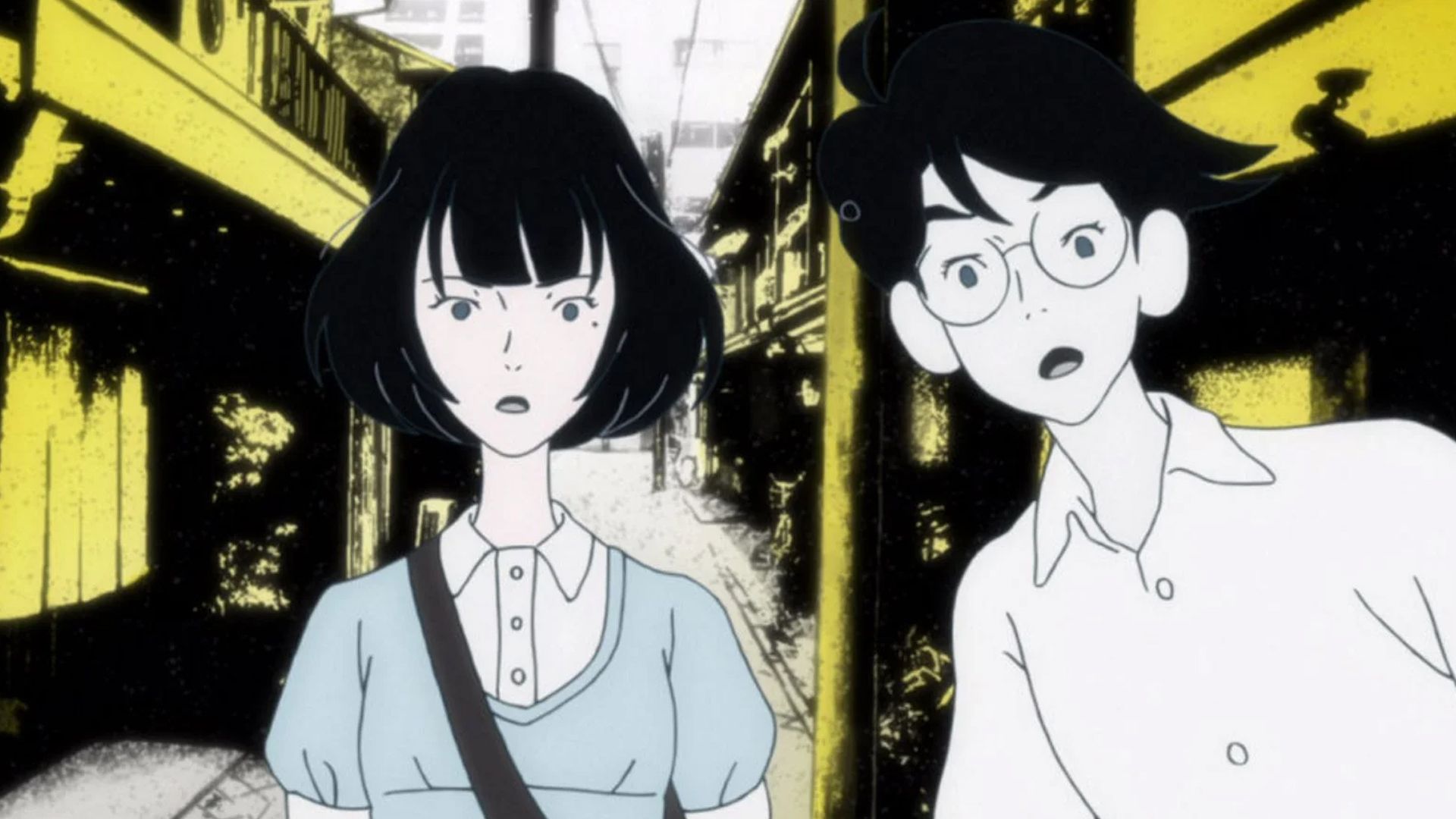
Stories that use unreliable narrators do more than simply show events; they make viewers actively doubt what’s happening. Anime such as Monogatari and The Tatami Galaxy demonstrate that narration isn’t objective—it’s a personal perspective influenced by prejudice, recollections, and a desire to protect one’s feelings.
What seems like straightforward dialogue, a consistent sequence of events, or even a character thinking aloud is frequently an unreliable account. People often change or reshape their memories and stories to shield themselves or to find meaning in confusing situations. Because of this, shows like Serial Experiments Lain and Paranoia Agent require viewers to actively engage with the story, paying close attention to inconsistencies and questioning everything they see.
Monogatari Hands the Narration to Someone Who is Definitely Lying
I’m completely fascinated by how Monogatari is told! Every episode starts with this cool disclaimer that everything we’re seeing is through Koyomi Araragi’s head – so it’s all colored by his own quirks and how he perceives things. We never get a truly objective view. It’s brilliant because Koyomi is totally aware he’s telling the story, and he’ll even talk to us, the audience, but you quickly realize he’s not exactly being straight with us, subtly bending the truth in his internal monologues. It’s like he’s quietly lying, even to himself!
Viewers discover Koyomi is a teenager who often acts like a hero, believing he needs to save others. He frequently prides himself on being truthful, but it’s not that he’s dishonest about what happened, but rather about how he interprets events, his own involvement, his reasons for acting, and his true emotions.
The Tatami Galaxy Traps the Narrator Inside His Own Self-Justifications
The core idea behind The Tatami Galaxy is a character repeatedly making the same errors across ten episodes, though the settings change. Director Masaki Yuasa and studio Madhouse fully embrace this repetitive structure. The main character consistently blames outside factors – like his college clubs or friends – for his problems, rather than looking inward at his own behavior.
The unique visual style of The Tatami Galaxy powerfully enhances the storytelling. It uses distorted spaces, blurred features, and jerky time jumps to reflect the main character’s confused state and inability to understand how his choices affect his life. By the fifth episode, the audience begins to anticipate the narrator’s mistakes before he does, creating a sense that he’s desperately trying to justify himself to a judgmental crowd.
Serial Experiments Lain Has a Protagonist Who May Not Exist in Any Stable Case
By the ninth episode of Lain, the show makes you question everything that happened before, even suggesting that the character we met at the beginning might not be who she seems.
I’m completely fascinated by how Serial Experiments Lain nailed the look of early internet days – those bulky computers, the green screens, and the way it pictured the internet’s physical infrastructure almost like a living nervous system. It’s such a smart move because it really anchors all the show’s big philosophical ideas. Honestly, rewatching it now, after the internet has become so deeply ingrained in how we think and live, it hits so differently. It’s like the show predicted our reality!
Higurashi When They Cry Doesn’t Have a Single Trusted Character
The 2006 anime adaptation of Ryukishi07’s visual novel by Studio Deen cleverly uses its repeating storyline to create a disturbing and unsettling experience. The horror relies on the fact that each story arc reveals a different perpetrator.
Keiichi’s extreme suspicion seems like insanity at times, but perfectly reasonable at others, depending on the situation. The story avoids having a trustworthy character, and the author, Ryukishi07, has created a mystery where the truth only appears when you piece together conflicting information. The series challenges viewers to solve the puzzle themselves, rather than offering easy answers.
Sonny Boy Turns Interpretation Itself Into the Only Thing Resembling Reality
Shingo Natsume made a deliberate choice for the anime Sonny Boy: characters don’t explain their feelings. Instead, the story relies entirely on animation and actions to show what they’re thinking and feeling. This means the show doesn’t offer any narration, explanations, or even basic introductions – right from the beginning, viewers are left to figure things out for themselves by watching the characters and their world.
Once the tenth episode airs and a long-standing character admits her abilities have been a facade all along, everything we’ve seen with her changes. Suddenly, every scene she was in, every expression she made, and every intimate moment takes on a new meaning, revealing a hidden layer we didn’t notice before.
Paranoia Agent’s Real Target is the People Watching It
The show Paranoia Agent was designed as an episodic series to explore how shared illusions develop and spread. Each episode presents a different, often conflicting, viewpoint on the Lil’ Slugger phenomenon, forcing viewers to consider multiple, and sometimes impossible, interpretations as the city succumbs to mass hysteria. This accumulation of perspectives is crucial to understanding the show’s themes.
You know, by the time you’re halfway through Paranoia Agent, I think a lot of us just want things to make sense, so we start building our own explanations. It’s easy to fall into the trap of connecting dots that the show never actually intended for us to connect. But what really struck me is that Satoshi Kon wasn’t really trying to tell a story about these characters – he was talking directly to us, the audience, messing with our perceptions and expectations.
Boogiepop Phantom’s Sepia Filter Itself is an Unreliable Narrative Loop
The use of a sepia filter evokes a sense of faded, personal memory. The film Madhouse tells its story out of order, using flashbacks within flashbacks and switching narrators frequently. Each character feels untrustworthy due to past experiences, current struggles, or simply the imperfections of being human in an urban environment.
Watching Boogiepop Phantom without knowing the original story is actually how it was meant to be experienced – a deliberately fragmented and incomplete puzzle. Its structure, telling interconnected stories about different characters that slowly build to a psychological climax, is similar to the style used in Satoshi Kon’s Paranoia Agent, which came out four years later.
Welcome to the NHK Uses Delusion and Denial as the Protagonist’s Primary Narrative Lens
Gonzo’s 2006 anime adaptation of Welcome to the NHK handles the source novel with compassion, inviting visuals, and a strong understanding of the main character, Satou. This allows viewers to fully immerse themselves in his world before things start to feel unsettling. The story isn’t unreliable in terms of what happens, but rather in how Satou understands those events. The series takes its time, slowly revealing the growing difference between his perspective and the truth.
Sataou’s beliefs are unfounded, and NHK isn’t deliberately isolating him. How viewers perceive the pyramid scheme, online gaming, and support group depends entirely on whether they question Sataou’s viewpoint or accept it as truth, making it a matter of personal interpretation.
Flip Flappers Hides Every Answer in Plain Sight But Doesn’t Tell Where to Look
Director Kiyotaka Oshiyama’s Flip Flappers draws inspiration from the work of Jakob von Uexkull, specifically his concept of ‘umwelt’ – the idea that every creature experiences the world uniquely, and each experience is valid. The show’s illusions and alternate dimensions are built on the subconscious of different characters, but it intentionally keeps viewers guessing which world belongs to whom.
Flip Flappers is a 14-episode adventure where characters travel between dimensions, and the journey also reveals their inner selves. What makes it special is that each time you watch, the story changes as you begin to understand the characters and see the scenes in a new light.
Texhnolyze Withholds Context Deeply and Lets a Dying City Speak for Itself
The first episode of Texhnolyze relies heavily on visuals, featuring long stretches without dialogue. The main character, Ichise, is largely silent and doesn’t offer much explanation. Instead, the episode immerses viewers in Lux, a gritty underground city depicted in muted greys and browns. Its stark, brutalist architecture feels integrated into the very structure of the environment, and the color choices serve a purpose beyond just looking good.
In the anime Texhnolyze, the story isn’t told by a person, but by the world itself. Some fans believe Kano is right when he says Lux only exists in his imagination, but the show never confirms this. Every detail, from religious imagery to Ichise’s fate in the ruined city, has a deeper meaning, and it’s up to each viewer to interpret what that meaning is.
Found an error? Send it so it can be corrected.
Read More
- Gold Rate Forecast
- 10 Most Powerful Versions of Superman, Ranked
- GBP CNY PREDICTION
- 007 First Light: Release Date, Story, Gameplay, Cast, Editions, and Platforms
- Superman’s 7 Best Power-Ups, Ranked
- 10 Best Free Games on Steam in 2026, Ranked
- 10 Greatest Wii U Games of All Time, Ranked
- Forza Horizon 6 Car List So Far: Confirmed Highlights, Cover Cars, DLC, and Rewards
- DOGE PREDICTION. DOGE cryptocurrency
- What happened to Soldier Boy in The Boys?
2026-05-09 07:12