
Many movies face problems during production – things like delays, cast changes, script revisions, disagreements between filmmakers, studio interference, accidents, or even getting stuck before they can be made. But only a few films experience so many of these issues that they seem truly cursed, and there are several famous Hollywood productions that definitely qualify.
Some films are made under incredibly difficult and tragic circumstances, leading cast, crew, and eventually viewers to suspect something more than bad luck is at play. This is particularly common in horror movies, which often deal with unsettling topics like possessions and hauntings, making people more open to the idea of a curse. While superstition often explains unusual events, sometimes the accidents on set are so bizarre or terrible that a curse seems like the only reasonable explanation.
We aren’t claiming these movie sets were actually cursed, but many believe they were. Strange and unfortunate things happened to the people who worked on these films – things like accidents, sickness, technical problems, even deaths. There were also unusual weather events and reports of ghostly sightings. It all adds up to a feeling of something sinister… or just incredibly bad luck.
10 Movies That People Believe Might Be Cursed

The Wizard of Oz (1939)
Though not a horror film, The Wizard of Oz is famous for having one of the most troubled productions in Hollywood history. Numerous problems occurred during filming: Buddy Ebsen, the first actor to play the Tin Man, and Margaret Hamilton, who played the Wicked Witch, both became ill from their makeup. Several stunt performers were injured – flying monkey actors fell due to broken wires, and the Wicked Witch’s double was hurt when her broom exploded. There was even an incident where someone stepped on the dog playing Toto.
While many stories from the set are likely exaggerations, the challenging environment led to rumors of a curse. However, most of these issues were probably due to the film’s groundbreaking special effects and techniques – it was attempting things that had never been done before, so some chaos was inevitable.
Rosemary’s Baby (1968)
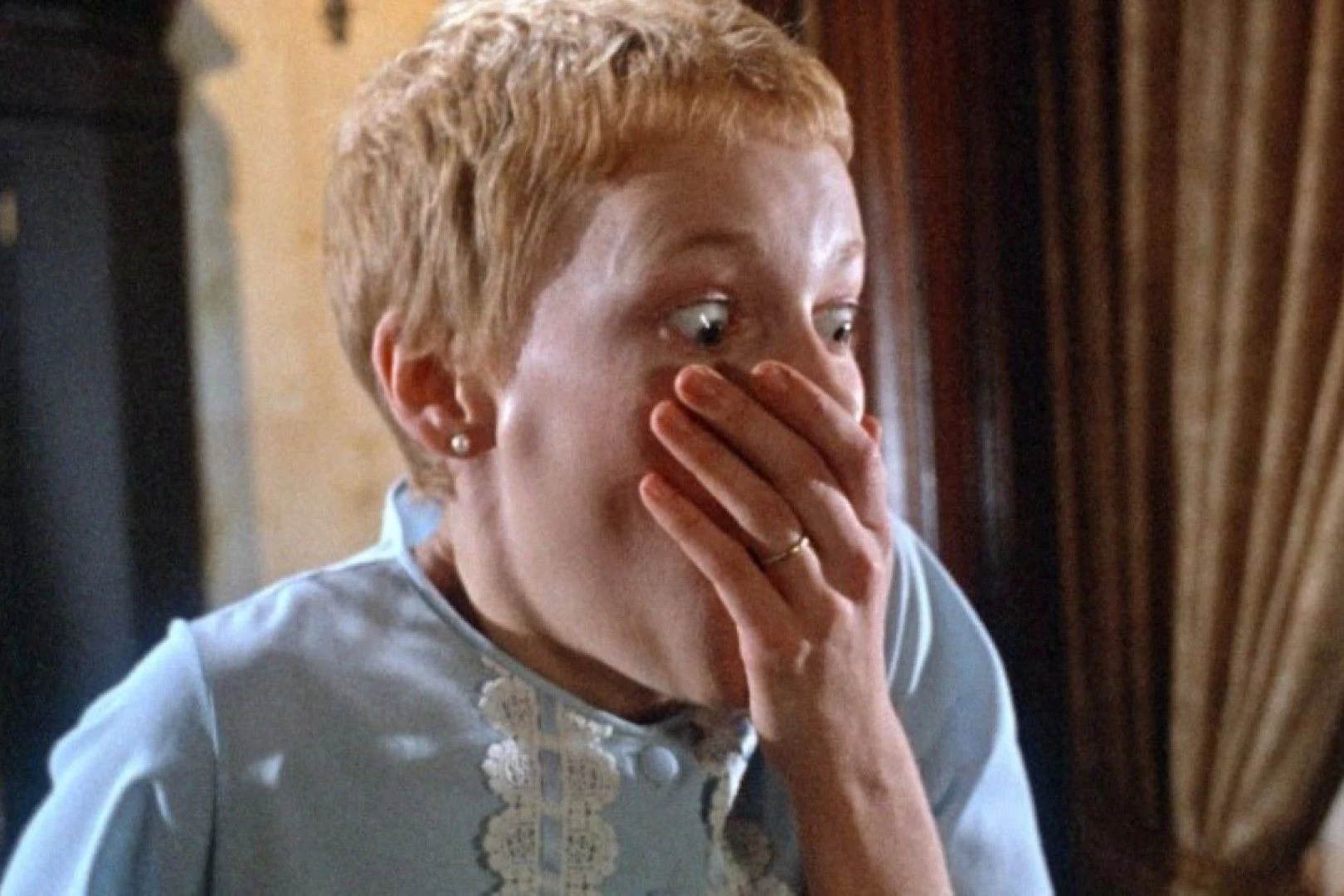
It feels like a trope to call a movie about the devil’s child “cursed,” but many believe something sinister plagued the making of Rosemary’s Baby. The novel’s author, Ira Levin, suffered a mental breakdown after facing intense criticism from religious groups and going through a divorce following the film’s release. Producer William Castle was hospitalized with kidney stones due to the overwhelming hate mail he received. Another producer was convicted of drug trafficking and almost implicated in a murder. Composer Krzysztof Komeda tragically died in an accident, falling into a coma from which he never woke – a fate mirroring a murder method in the film. Roman Polanski’s wife, Sharon Tate, was murdered by the Manson Family a year after the movie came out. Polanski himself now lives as a fugitive, facing accusations of assault. Even John Lennon’s murder, which occurred near the Dakota hotel where the film was shot, was linked by some to the movie’s unsettling atmosphere.

The Exorcist (1973)
The film The Exorcist is famous for being one of the most troubled productions in movie history. While filming, the crew faced typical challenges like lost props and a set fire, and some even got sick while shooting in Iraq. But the difficulties went much further, with stars Linda Blair and Ellen Burstyn both suffering back injuries during demanding stunts. Mercedes McCambridge, who provided the voice of the demon, damaged her voice by drinking alcohol after years of sobriety. Sadly, a shadow of tragedy followed the film’s completion, with several actors and crew members, as well as their families, passing away soon after. There were even claims that William Peter Blatty attempted to contact his deceased mother during production, as both he and William Friedkin had recently lost their mothers. The film’s release sparked widespread panic, with reports of viewers fainting, vomiting, and fleeing the theaters.

The Omen (1976)
When people talk about movies with a spooky history, The Omen always comes up. It’s become famous for a string of strange and unsettling incidents that have happened around its production. Several people connected to the film narrowly escaped disaster – Gregory Peck was almost struck by lightning, and the plane Peck was supposed to be on crashed, killing everyone aboard. Producer and director Richard Donner survived IRA bombings by chance. A zookeeper was killed by a big cat shortly after filming at the zoo. Perhaps most disturbingly, special effects designer Liz Moore died in a car accident that mirrored a death scene from the movie itself. Even documentaries about the film and its 2006 remake have been plagued by unexplained events, adding to the movie’s eerie reputation.

Superman (1978)
While not necessarily a curse on the person, playing Superman seems to bring bad luck to those involved in the films. This idea, often called the “Superman curse,” started with Kirk Alyn, the first on-screen Superman, whose career declined after his early serials, forcing him to take on less prominent work. George Reeves, who played Superman in the 1950s, faced similar struggles and his death led to speculation of foul play. Christopher Reeve, known for his four Superman films, dealt with being typecast and later suffered a paralyzing accident. Numerous other people connected to Superman movies and shows have also experienced misfortune, leading many to believe in this alleged curse.

Poltergeist (1982)
The movie Poltergeist became linked to a supposed curse due to two tragic events. Dominique Dunne, who played the oldest daughter in the first film, was tragically killed by her ex-boyfriend just months after the movie’s release. Then, in 1988, Heather O’Rourke, the young actress who played Carol Anne in all three Poltergeist films, died unexpectedly at age 12, only four months before the release of Poltergeist III. While some believe these deaths were caused by a curse – a theory explored in an E! True Hollywood Story episode – others suggest they highlight the pressures and dangers faced by young actors who achieve early fame.

Maximum Overdrive (1986)
Laura Harrington, who starred in Stephen King’s only directed film, the horror movie Maximum Overdrive, once described the set as feeling dangerous, like someone was going to get hurt. Several factors contributed to the film’s troubled production. King struggled as a director, finding it difficult to communicate his vision to the cast and crew. His admitted struggles with substance abuse also played a role. Creative disagreements with producer Dino De Laurentiis – King wanted Bruce Springsteen in the lead role, but De Laurentiis cast Emilio Estevez – added to the problems. A dangerous accident involving a lawnmower injured the cinematographer, and a hurricane caused further delays. Whether it was a genuine curse or simply a difficult production with a first-time director remains a question, but the film was certainly plagued by issues.

The Crow (1994)
I’ve always been fascinated by the story behind The Crow. It’s more than just the tragic death of its star, Brandon Lee, that makes it feel…cursed. Even before that, things were really strange. The filmmakers received a creepy voicemail warning them not to make the movie, and then a series of accidents started happening. An electrician suffered terrible burns, and a hurricane actually destroyed part of the set! Then, of course, the unthinkable happened with Brandon Lee, which completely changed safety protocols on film sets. It was awful, and they had to rewrite and re-edit the movie at the last minute. What’s really eerie is how much the bad luck during filming mirrored the dark themes of the movie itself. For me, The Crow will always be a film where the on-screen drama is tragically linked to everything that happened behind the scenes.

The Passion of the Christ (2004)
As a movie buff, I always hear stories about tough shoots, but the making of The Passion of the Christ was on another level! It’s almost unbelievable how many things went wrong. Poor Jim Caviezel, who played Jesus, actually dislocated his shoulder while filming the cross scene, got accidentally whipped, suffered from hypothermia, and unbelievably, was struck by lightning during the Sermon on the Mount! Honestly, you’d think they’d have stopped right there. And get this – the assistant director, Jan Michelini, was hit by lightning twice! The film ended up being a huge hit, though, so maybe all that hardship was… well, you could say what goes around comes around. It’s a bit like the saying, the Lord giveth, and the Lord taketh away.

Annabelle (2014)
Strange occurrences were reported during the filming of several Conjuring films and related movies, and it’s hard to say if they were caused by actual hauntings, curses, or simply the power of suggestion on a spooky movie set. The filming of Annabelle was especially unsettling. Director John R. Leonetti says he repeatedly found three fingerprints in the dust, as if the doll itself had been moving things around. And on the first day of filming, an actor playing a demon was hit on the head by a falling light fixture. Thankfully, the doll never actually came to life – that would have been enough to make anyone believe in curses!
10 Movie Productions So Terrible They Made Documentaries About Them

The Abyss/Under Pressure: The Making of The Abyss
When people discuss challenging movie productions, The Abyss is often the first example cited. The shoot was incredibly difficult – James Cameron even said he never wanted to repeat the experience. Safety issues caused delays during the flooded set pieces, and actors spent long hours in wetsuits enduring repeated dunkings. Ed Harris remembers being so stressed he cried on his way home from set one day. A making-of documentary, Under Pressure: The Making of The Abyss, details many of these problems. One particularly memorable incident involved Mary Elizabeth Mastrantonio, who became upset when a camera malfunctioned during a demanding scene where she lay topless on the ground while being physically stimulated and yelled at, and she famously protested, “We are not animals!” While the production was clearly grueling, the resulting film is considered a success.

Alien 3/Wreckage and Rage
The making of David Fincher’s Alien 3 was famously troubled. Creating a big-budget film with realistic special effects is always challenging, but studio interference also significantly hampered the project, ultimately leading to a disappointing result. The documentary Wreckage and Rage: Making Alien 3 details the difficult production, but the original cut notably left out footage of Fincher voicing his frustrations with the studio’s involvement—a decision made at the studio’s request. These missing scenes have been restored in the Alien Anthology Blu-ray set, including a clip of Fincher becoming so exasperated with the constant studio presence that he angrily stabbed a knife into his desk.

Apocalypse Now/Hearts of Darkness
Besides Titanic, Apocalypse Now is often cited as a film with an incredibly difficult production, and with good reason. The making of the movie almost ruined director Francis Ford Coppola’s life and career, and star Martin Sheen even suffered a near-fatal heart attack during filming. The production was plagued by problems: Coppola and his team were stuck in the jungle for months, the budget spiraled out of control, actors left the project, a typhoon wrecked the sets, and Marlon Brando arrived unprepared, requiring script revisions. The documentary Hearts of Darkness: A Filmmaker’s Apocalypse vividly details these struggles, becoming as famous for its behind-the-scenes look as Apocalypse Now is as a war film.

The Boondock Saints/Overnight
“Overnight” is a fascinating documentary that leaves you amazed the movie “The Boondock Saints” ever got finished. Instead of focusing on the making of the film itself, it centers on Troy Duffy, the writer and director, and how sudden success completely changed his life. The film shows Duffy receiving a large investment from Harvey Weinstein, but then behaving badly – insulting actors and producers, pushing away his team and agency, and ultimately damaging his career. We also see his band break up. It’s a powerful illustration of how quickly success can lead to self-destruction.

Dune/Jodorowsky’s Dune
Let’s not forget about movies that were planned but never filmed! Many consider Alejandro Jodorowsky’s attempt to adapt Frank Herbert’s Dune to be the greatest movie never made. It was an ambitious space epic, and most likely more impressive as an idea than it could have been on screen. The documentary Jodorowsky’s Dune shows just how much planning went into the project before the film rights expired. Imagine a soundtrack by Pink Floyd, designs by H.R. Giger and Moebius, and a cast including Orson Welles, Mick Jagger, Gloria Swanson, and Salvador Dalí – it sounded amazing! Unfortunately, Jodorowsky’s incredibly long script and trouble finding funding killed the project. Later, Dino De Laurentiis hired David Lynch to make his own version of Dune instead.

The Emperor’s New Groove/The Sweatbox
When Sting was asked to write songs for an early draft of Disney’s The Emperor’s New Groove (originally called Kingdom of the Sun), his wife, Trudie Styler, was given access to the production to film a documentary. That documentary, The Sweatbox, captures the chaotic process of making the original version, its eventual cancellation (including Sting’s songs), and the complete overhaul that followed. It also shows the stress and frustration experienced by the writers and animators. The film gets its name from the hot, stuffy Burbank screening room where their work was reviewed. Because it portrays making a Disney movie as incredibly difficult, The Sweatbox has never been released to the public.

The Fantastic Four/Doomed!: The Untold Story of Roger Corman’s The Fantastic Four
Movie studios often go through complicated negotiations to maintain the rights to certain stories, and this frequently leads to the creation of unnecessary or low-quality films—simply to avoid losing those rights. A prime example is Roger Corman’s unreleased The Fantastic Four, reportedly made solely to allow Constantin Film to retain the Marvel Comics characters. Though never shown to the public, the strange story behind the production has been documented in Doomed!: The Untold Story of Roger Corman’s The Fantastic Four, a film that uses interviews with those involved to reveal the chaotic making of a movie that almost doesn’t exist.

Fitzcarraldo/Burden of Dreams
If you’re familiar with Werner Herzog’s famous description of the Amazon rainforest as “full of obscenity,” you’ll understand the essence of Burden of Dreams. This documentary about the making of his film Fitzcarraldo is arguably even more intense than the movie itself. In fact, Herzog actually made his crew physically haul a large boat over a hill in the Amazon jungle – just like the character in his film. As you might expect, it was a disaster, and the documentary Burden of Dreams reveals it was even worse than imagined. Even filming the documentary proved challenging, as director Les Blank once wrote he was exhausted and didn’t care if the boat moved or the film was ever finished.

The Man Who Killed Don Quixote/Lost in La Mancha
Director Terry Gilliam was so sure he could eventually finish The Man Who Killed Don Quixote that he allowed a documentary crew to film the making of the movie during his first attempt. That initial film never came to fruition, and the documentary, titled Lost in La Mancha, was released on its own. It became a well-known, but ultimately sad, look at a film project that fell apart due to budget problems and an actor’s injury. Gilliam finally completed and released his version of The Man Who Killed Don Quixote in 2018, but it remains a famous example of a movie stuck in development for years.

Star Wars: Episode I — The Phantom Menace/The Beginning: Making Star Wars: Episode I
A memorable early moment in the documentary The Beginning: Making Star Wars: Episode I shows George Lucas using colored highlighters on a storyboard. He’s demonstrating to the special effects team and producers which scenes of The Phantom Menace could be filmed practically, and which would require computer-generated imagery. As the storyboard becomes covered in yellow – the color representing special effects – the people at the table grow increasingly concerned about the scope of the project. Despite showing the challenges, The Beginning is a remarkably insightful behind-the-scenes look at Lucas’s ambitious vision and the growing realization among his team of just how complex the movie would become.
Read More
- The Super Mario Galaxy Movie: 50 Easter Eggs, References & Major Cameos Explained
- Surprise Isekai Anime Confirms Season 2 With New Crunchyroll Streaming Release
- 10 Best Free Games on Steam in 2026, Ranked
- Sydney Sweeney’s The Housemaid 2 Sets Streaming Release Date
- Skate 4 – Manny Go Round Goals Guide | All of the Above Sequence
- Why is Tech Jacket gender-swapped in Invincible season 4 and who voices her?
- Preview: Sword Art Online Returns to PS5 as a Darker Open World Action RPG This Summer
- Welcome to Demon School! Iruma-kun season 4 release schedule: When are new episodes on Crunchyroll?
- Overwatch 2 G.I. Joe Crossover Launches July 1: Join the Battle Between Heroes and Villains
- Shonen Jump Officially Cancels Yet Another Major Series in 2026 (& Fans Saw It Coming)
2026-04-10 17:29