Superhero movies and shows often connect with each other now, and fans actually expect it! Seeing characters jump between projects hints at a shared universe and bigger story. A great example is the show Peacemaker. After James Gunn’s Superman movie did well, viewers were excited to see characters like Maxwell Lord, Hawkgirl, Guy Gardner, and Lex Luthor appear, and now they’re even more eager to find out how Peacemaker fits into the wider DC Universe.
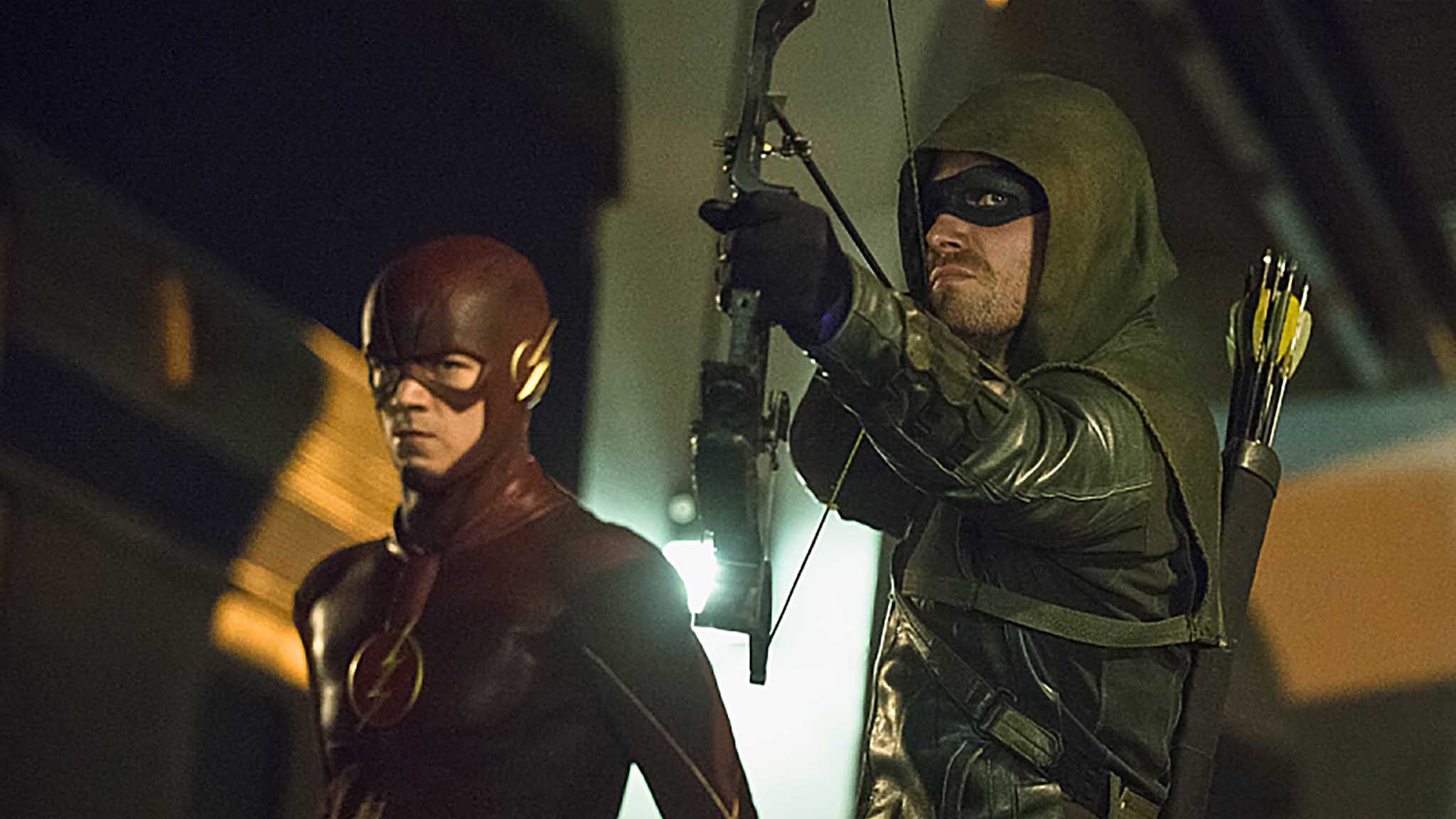
Superhero TV shows didn’t always share universes like they do today. A turning point for DC came with a specific crossover event – “Flash vs. Arrow.” This episode, which brought together the characters from Arrow and The Flash eleven years ago, demonstrated that separate superhero shows could successfully connect, tell a larger, shared story, and even open the door for expanded storytelling within their worlds. It fundamentally changed how superhero TV was made.
What Was “Flash vs. Arrow”?
In December 2014, The CW aired a two-part crossover event between The Flash and Arrow. It began with The Flash episode “Flash vs. Arrow” on December 2nd and continued with the Arrow episode “The Brave and the Bold” the following night. The Flash episode introduced Roy Bivolo, a new villain with the power to make people uncontrollably angry, who was using this ability to rob banks. Simultaneously, Oliver Queen (Green Arrow) contacted Barry to inform him his team was tracking a killer using deadly boomerangs. The heroes decided to team up to catch each other’s targets. However, when Barry pursued Bivolo alone, Bivolo’s powers unexpectedly affected Barry for an extended period, leading to problems – including a fight between Barry and Oliver. The enraged Flash even attacked Eddie Thawne, prompting the police to create a metahuman task force. Ultimately, the heroes were able to capture Bivolo.
The eighth episode of Arrow‘s third season, “The Brave and The Bold,” follows Oliver and his team as they hunt Digger Harkness, a villain who fights with boomerangs. When Digger attempts to harm Lyla Michaels, Oliver and Barry Allen intervene. It’s revealed Digger was previously part of A.R.G.U.S.’s Suicide Squad, and Barry observes Oliver’s harsh interrogation techniques, leading him to worry about Oliver’s emotional state – mirroring Oliver’s earlier concerns about Barry’s readiness to be a hero. Ultimately, Oliver captures Digger, and Team Flash and Team Arrow work together to disarm bombs planted throughout the city, successfully saving the day. Through this experience, Barry and Oliver solidify their friendship and alliance, concluding the episode with a playful fight.
Why Does “Flash vs. Arrow” Matter?
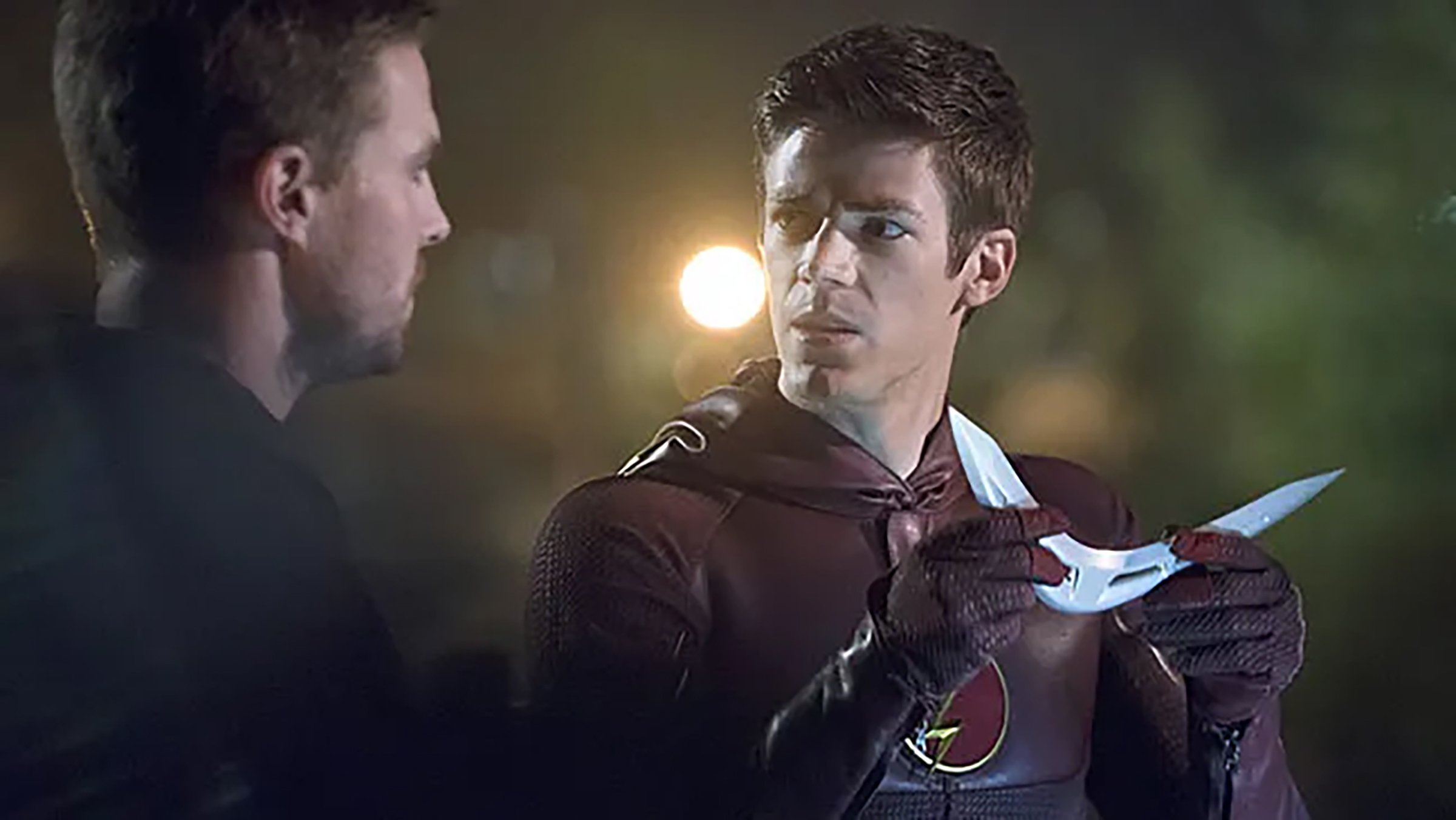
The crossover event featuring “The Flash” and “Arrow” was a turning point for what would become the Arrowverse. While fans already knew the shows shared a universe – Barry Allen (Grant Gustin) first appeared in season two of “Arrow” and that’s how his own series began – the crossover wasn’t about creating that connection. Earlier episodes of “Arrow”, specifically “The Scientist” and “Three Ghosts”, had already shown the two heroes working together. Instead, the crossover demonstrated that even though “Arrow” was much grittier than “The Flash”, and the shows had different ongoing storylines, they could still tell compelling shared stories that benefited both series and both heroes.
Expanding the Arrowverse allowed for bigger, more complex storylines, as some threats are simply too large for a single hero – a common trope in comics that often requires team-ups. While comics can easily showcase these collaborations due to their established history, it’s more challenging to achieve on television. The “Flash vs. Arrow” crossover proved it was not only possible, but could be done successfully. It was a hit with both viewers and critics, praised for its compelling story and its ability to stay true to the individual heroes and shows while also creating something fresh. This success led The CW to repeat the formula with numerous other crossovers as the universe grew. In fact, the second Arrowverse crossover, “Heroes Join Forces,” again featured The Flash and Arrow, but also introduced characters who would later star in the spin-off series DC’s Legends of Tomorrow. The crossover essentially served as a sneak preview and pilot for that new show.
The annual “Arrowverse Crossovers” quickly became a highly anticipated event for fans, growing in scope and complexity each year. The third, “Invasion!”, expanded to include DC’s Legends of Tomorrow and Supergirl, drawing inspiration from a 1989 comic book series and achieving record-breaking viewership. The following year’s “Crisis on Earth-X” even incorporated characters from the animated web series Freedom Fighters: The Ray. The fifth crossover, “Elseworlds,” raised the stakes further by introducing Batwoman and Lois Lane (played by Elizabeth Tulloch), ultimately paving the way for the massive “Crisis on Infinite Earths.” That crossover remains a remarkably ambitious live-action adaptation – unlike anything seen before, and possibly ever again. It all began eleven years ago with the initial “Flash vs. Arrow” event.
What do you think? Leave a comment below and join the conversation now in the ComicBook Forum!
https://comicbook.com/tv-shows/list/7-great-hbo-max-shows-to-binge-this-weekend/embed/#
Read More
- The Super Mario Galaxy Movie: 50 Easter Eggs, References & Major Cameos Explained
- 10 Best Free Games on Steam in 2026, Ranked
- All 13 Smash Bros. Characters in the Super Mario Galaxy Movie
- Sydney Sweeney’s The Housemaid 2 Sets Streaming Release Date
- Why is Tech Jacket gender-swapped in Invincible season 4 and who voices her?
- Welcome to Demon School! Iruma-kun season 4 release schedule: When are new episodes on Crunchyroll?
- WTH?! Twitter Drops Fake Daredevil: Born Again Season 2 Spoilers as Character Return Confirmed
- Highly Anticipated Strategy RPG Finally Sets Release Date (And It’s Soon)
- Dune 3 Gets the Huge Update Fans Have Been Waiting For
- Fleetwood Mac’s Lindsey Buckingham Attacked With Unknown Substance
2025-12-02 17:16