History can be truly captivating, and these historical drama TV series prove it. They cover a wide range of eras – from Viking adventures and World War II to the time of the Anglo-Saxons and the reign of Queen Elizabeth II – and bring the past to life with beautiful sets and costumes.
Even if historical TV shows aren’t always 100% factually correct, they can still be incredibly insightful, especially when they help us understand what life was like in the past or why people acted the way they did. While many historical dramas focus on England or the United States, captivating stories can come from anywhere, as the recent Emmy win for Shōgun in 2024 clearly demonstrates.
If you’re a history buff, here are some of the best historical TV shows you can stream right now, organized by when the events they depict happened. They all do a great job of being historically accurate while still telling a captivating and human story.
Rome
(Late Roman Republic, Approx. Years: 1st Century BC, Italy)

I’m completely hooked on Rome! It takes you right back to the really chaotic end of the Roman Republic. You follow these two soldiers, Lucius Vorenus and Titus Pullo, and their lives end up connected to everything that’s happening – like, everything. You witness Caesar’s climb to power and his shocking death, and you really get a feel for how the Republic crumbled and the Empire began. It’s amazing to watch history unfold through their eyes.
The show boasts a large cast of characters inspired by historical figures and combines their personal stories with grand political schemes. A collaboration between the US, UK, and Italy, it was primarily filmed at Rome’s Cinecittà Studios, which helped create remarkably realistic sets, costumes, and dialogue – reflecting both Roman and Egyptian cultures.
The HBO and BBC series Rome received widespread praise for its realistic depiction of history, engaging plot, and impressive visuals, leading to several Emmy Awards and strong ratings. Despite its success, the show was cancelled after just two seasons because it was very expensive to produce.
Vikings
(Late 700s–900s CE, Scandinavia, England, & North Atlantic)

Vikings is a six-season historical drama created by Michael Hirst, known for his epic historical storytelling. The series tells the dramatic life story of Ragnar Lothbrok, a man who goes from being a simple farmer to a famous warrior and king. While based on historical accounts and Norse sagas, the show creatively mixes real events with legendary tales, making Ragnar’s adventures both believable and mythical.
Many people consider Vikings a brilliant show because of its captivating stories, well-developed characters, and realistic portrayal of Viking life. The show’s impressive sets, costumes, and action scenes truly bring the Norse world to life. It also expertly weaves together themes of family, politics, and religion, keeping viewers hooked.
The show gained impact by honestly portraying both the harshness and the splendor of the Viking age. After six seasons, Vikings ended not because of cancellation, but because the creators wanted to finish the story at its natural conclusion, giving it a satisfying ending instead of continuing it unnecessarily.
The Last Kingdom
(Anglo-Saxon England / Viking Invasions, 866-920, England)
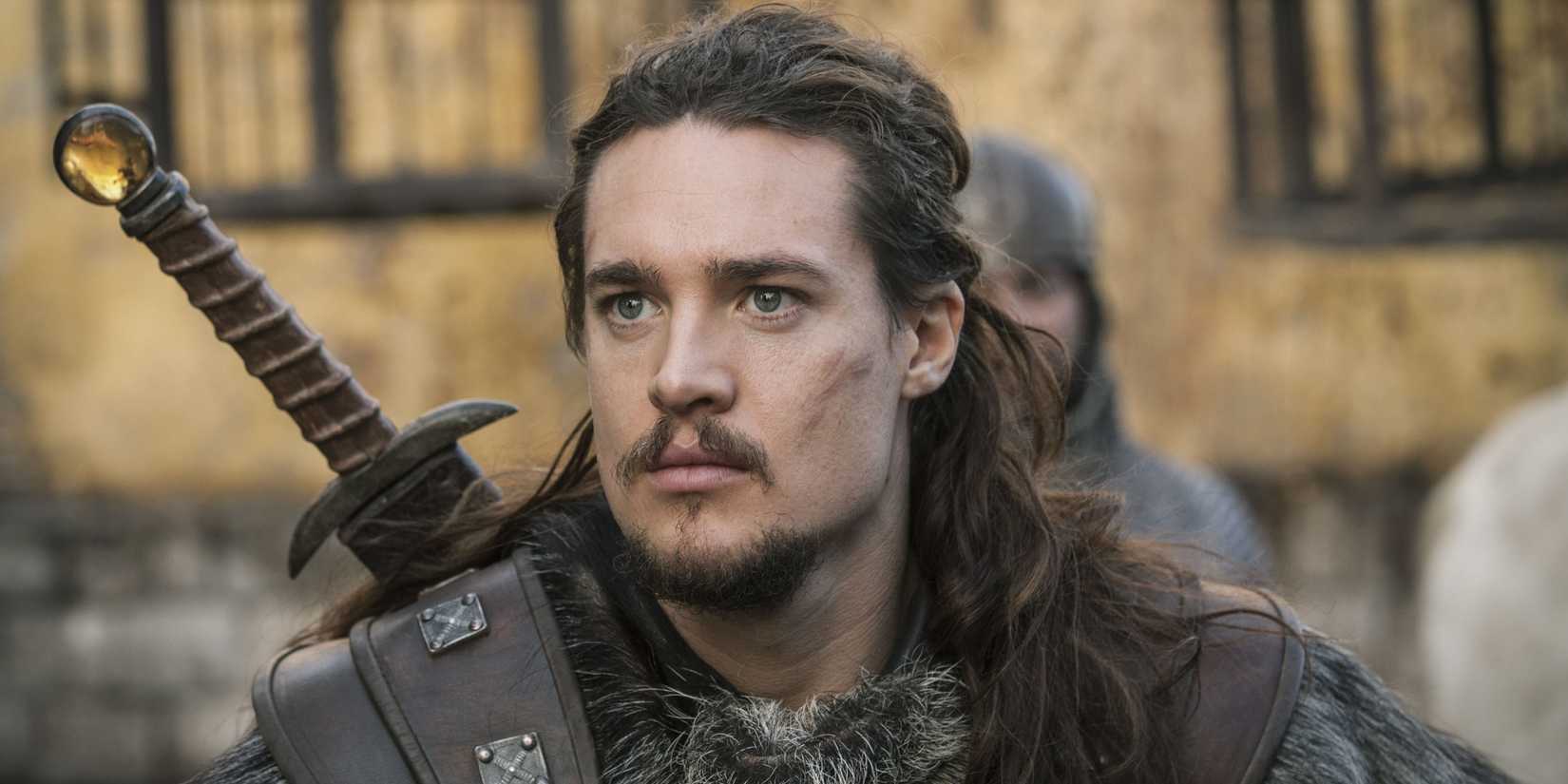
The Last Kingdom is a sweeping historical drama centered on Uhtred, a nobleman born Saxon but raised by Danes. This creates a conflict within him as he’s torn between two cultures during a time of war in England. The show depicts important events from the late 9th and early 10th centuries, such as the reign of King Alfred the Great, the invasions by the Danes, and the eventual uniting of the various English kingdoms.
Unlike shows like Vikings or Game of Thrones, The Last Kingdom feels more focused and realistic. It prioritizes strong characters and a well-developed plot. Many viewers found themselves captivated by the central character, Uhtred of Bebbanburg, and his internal conflict, which drives much of the drama.
Though set in the same time period and dealing with similar events as Vikings, this show offers a different viewpoint. Rather than focusing on the Viking raiders, it tells the story from the perspective of the Saxons who are battling to protect their land and freedom.
Marco Polo
(Yuan Dynasty, Approx. Years: 1270s–1290s, China & Mongolia)

Marco Polo is a historical drama series that tells the story of the famous explorer’s time as a young man in the court of Kublai Khan, the leader of the Mongol Empire and the founder of China’s Yuan dynasty. It was one of Netflix’s first big-budget shows, debuting in 2014 with a reported $200 million spent over two seasons, and that investment is clearly reflected in its production value.
The show’s stunning visuals, detailed sets, and massive battle scenes truly brought the Mongol empire to life. Because Western television rarely explores this period, viewers were especially drawn to its focus on the empire’s politics, customs, and immense scale.
The series Marco Polo is notable for its exciting fight scenes and memorable characters, such as Hundred Eyes. Though it takes some dramatic liberties, the show stands out for its careful attention to cultural details and the political landscape of the time, making it feel historically believable.
The Borgias
(Italian Renaissance, Approx. Years: 1492–1507, Italy)

Set in Renaissance Italy, The Borgias tells the dramatic story of the Borgia family and their controversial climb to power within the Catholic Church. The show was popular because it combined beautiful, high-quality production values – like stunning costumes and sets – with a thrilling and often shocking plot filled with betrayal, romance, poison, and political maneuvering.
The historical thriller The Borgias truly shone thanks to Jeremy Irons’ portrayal of Pope Alexander VI. His captivating and shrewd performance was the heart of the show, and many viewers watched specifically for him as much as the plot itself.
The show’s setting was a welcome change. Rather than the usual castles and palaces of England or France, The Borgias focused on the intense political maneuvering within the Vatican, revealing the corruption, ruthless ambition, and complex morality of Renaissance Italy. This approach made it stand out from other historical dramas.
Wolf Hall
(Tudor Era, Approx. Years: 1529–1536, England)

Wolf Hall tells the story of Thomas Cromwell’s quick ascent to power in the court of Henry VIII, starting with the execution of Sir Thomas More and culminating in the beheading of Anne Boleyn. Unlike the more dramatic series The Tudors, this story is told from Cromwell’s point of view.
Instead of focusing on the lives of royalty, Wolf Hall highlights the strategic maneuvering of those behind the scenes. Mark Rylance’s nuanced and sharp performance as Cromwell, alongside Damian Lewis’ powerful depiction of Henry VIII, received widespread praise.
The show feels real and authentic thanks to its subtle colors, dimly lit scenes, and historically accurate clothing. It’s a refined and thoughtful series, not one focused on spectacle, and is best enjoyed by those who appreciate well-researched historical dramas. Wolf Hall is praised for its accuracy in portraying the politics and relationships of Tudor England.
Shōgun
(Early Edo Period, Starts In 1600, Japan)

FX’s Shōgun was a huge success, proving a risky investment worthwhile. It won Emmys in 2024 for acting, directing, and as the year’s best drama series. The show brilliantly transports viewers to Japan in the early 1600s, featuring a largely Japanese cast performing primarily in Japanese with subtitles, and boasting incredibly detailed and authentic sets, costumes, and portrayals of samurai life.
Viewers were completely drawn in by the show’s epic scope, beautiful visuals, intense fight scenes, and complex political storylines. Despite being initially planned as a single season, Shōgun has been renewed for a second season due to its massive success. This next season will go beyond the source material and continue the narrative, even after the deaths of significant characters.
Versailles
(Starts In 1666, France)

The series Versailles starts in 1666, when King Louis XIV begins building the lavish Palace of Versailles from a simple hunting lodge. He requires the French nobility to live at Versailles, bringing them under his control. The show explores the complex web of politics, personal conflicts, and dangerous secrets that develop as the king strengthens his absolute power over France.
The TV series Versailles was a major international production, created jointly by France, Canada, the UK, and the US. It quickly became one of the most costly French television dramas ever produced and gained a large and dedicated audience worldwide. The show’s beautiful sets, detailed costumes, and dramatic storylines captivated viewers. Versailles is also notable for focusing on a period of French history that isn’t often depicted on screen.
Black Sails
(Golden Age Of Piracy, Early 1700s, Caribbean)

Black Sails was a high-quality pirate drama on Starz that creatively combined the story of Treasure Island with the lives of actual pirates from the 18th century, like Charles Vane, Anne Bonny, and Jack Rackham. The show appealed to viewers because it wasn’t a typical, lighthearted pirate adventure; instead, it was a complex and realistic story exploring themes of power, who people are, colonialism, and simply trying to survive.
Audiences loved the show’s well-developed characters, gradually unfolding plot, and powerful acting. Black Sails wasn’t a lighthearted pirate adventure; it was a serious, dramatic series with a dark and mature tone. While not entirely historically accurate, it felt more realistic than most pirate stories, portraying believable colonial struggles, the pirate republic of Nassau, changing loyalties, and naval battles. Throughout its four seasons, the show blended historical inspiration with creative storytelling.
John Adams
(American Revolution & Early Republic, Approx. Years: 1765–1826, United States)

HBO’s John Adams offered a personal and realistic portrayal of America’s Founding Fathers and the nation’s early years. The series delved into the struggles – including personal health issues, family difficulties, and political fatigue – faced by John Adams, the second U.S. president. It wasn’t a glorification of history, but a mature and nuanced story about the complexities of being human.
Paul Giamatti and Laura Linney gave powerful performances as John and Abigail Adams, portraying their relationship as complex, loving, and incredibly realistic – a fitting tribute to this remarkable historical couple. The series presented early American politics with serious artistic integrity, avoiding sensationalism or anachronistic humor.
Unlike many historical dramas, John Adams was created as a limited series. This allowed it to carefully and accurately portray Adams’ life without needing to extend the story over multiple seasons. This focused approach resulted in a highly regarded and critically acclaimed HBO production, often considered one of the best historical series, comparable to Franklin on Apple TV.
Read More
- Gold Rate Forecast
- Dune 3 Gets the Huge Update Fans Have Been Waiting For
- 22 actors who were almost James Bond – and why they missed out on playing 007
- Every Creepy Clown in American Horror Story Ranked
- Hazbin Hotel Secretly Suggests Vox Helped Create One of the Most Infamous Cults in History
- Jack Osbourne Shares Heartbreaking Tribute to Late Dad Ozzy Osbourne
- Kingdom Come: Deliverance 2 – Legacy of the Forge DLC Review – Cozy Crafting
- Everything We Know About Gen V Season 3 (& Why It’ll Be a Very Different Show)
- Jason Statham’s Hit Creature Feature Is Heading to Streaming for Free
- As Dougal and friends turn 60, Radio Times explores the magic behind The Magic Roundabout
2025-12-11 23:02