Between 1998’s Blade and 2008’s Iron Man, superhero movies were still evolving and figuring out what they wanted to be. Some films, like The Specials by Craig Mazin and James Gunn, playfully explored the themes of comic books, poking fun at the genre. Meanwhile, Christopher Nolan’s Batman Begins aimed for a more realistic and serious tone, trying to present its characters as believable and down-to-earth.
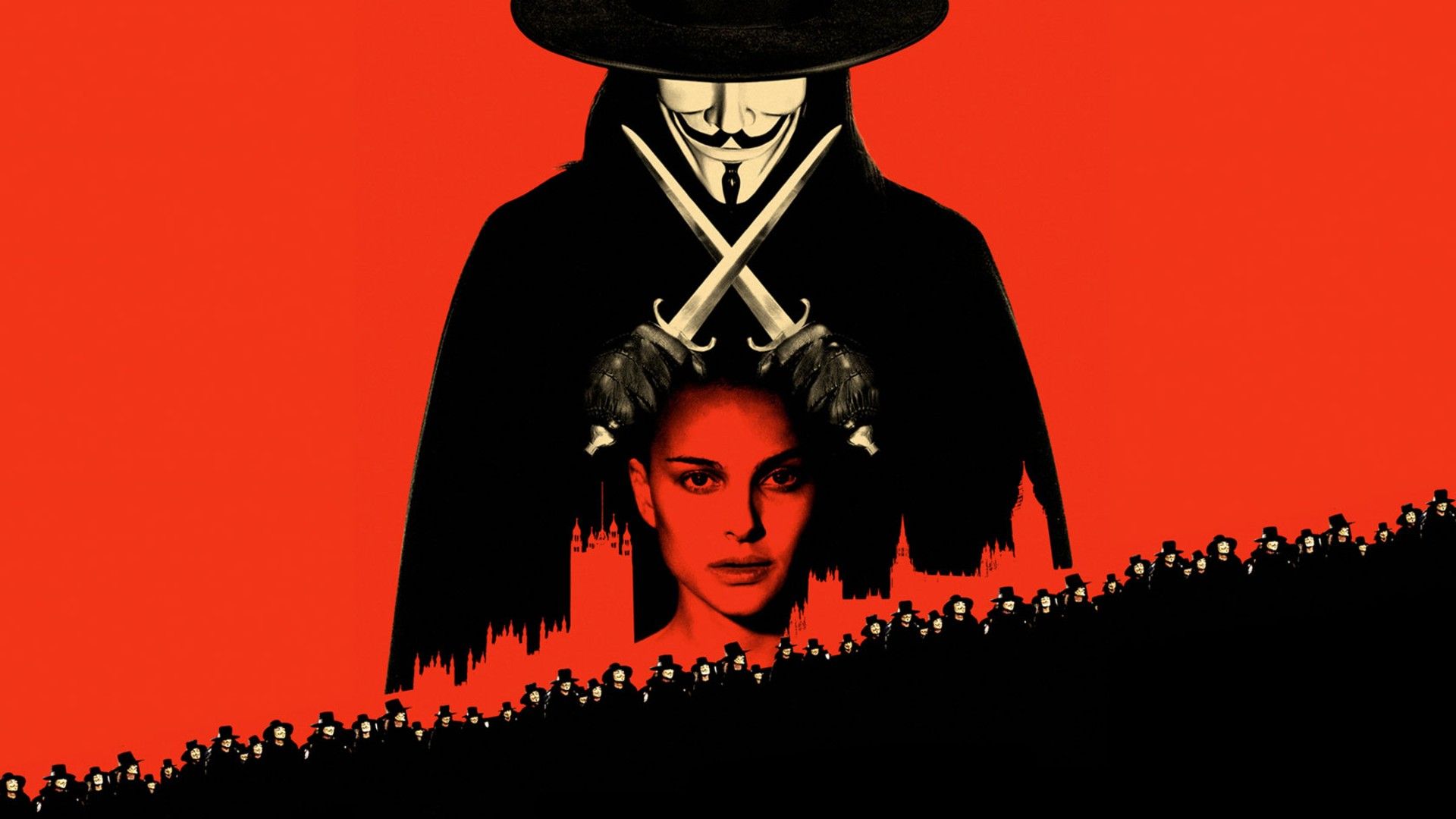
In 2006, audiences saw a comic book movie that felt completely different from anything they’d seen before. V for Vendetta, adapted from the work of Alan Moore and David Lloyd, used the familiar elements of a superhero story to explore a dark, fascist future. Surprisingly, it also went on to inspire a major online movement.
Bringing the graphic novel V for Vendetta to life as a movie was a team effort. Lana and Lilly Wachowski, known for The Matrix trilogy, teamed up with James McTiegue, an experienced assistant director who’d worked on films like Dark City and The Matrix, making him a great fit to direct.
James McTeigue Knows Why V For Vendetta Made A Lasting Mark

Two decades after its release, James McTeigue reflected on his film V for Vendetta in an interview with DC.com, explaining its enduring appeal. He noted that, like Christopher Nolan’s approach to Batman, the intention was to create a faithful and serious adaptation of the source material.
We aimed for a faithful, serious adaptation, much like Christopher Nolan did later. The source material had strong themes and complex characters, and we wanted to capture that essence. It’s a deconstruction of the superhero genre, and our goal was to be authentic to the original story without simply recreating the graphic novel panel by panel.
McTeigue points out that the visual style of V for Vendetta is similar to The Matrix. However, he emphasizes that the story and the characters’ sometimes questionable choices needed to feel realistic. Ultimately, the film’s success, like what made audiences believe in Superman, depended on its believability.
The question of whether terrorism can ever be justified is a long-standing debate. It makes us ask what defines a terrorist – are they simply criminals, or can they be seen as fighting for freedom against a government? This is particularly relevant when considering a character like V, whose actions, while morally wrong in the eyes of many, ultimately ignite a popular revolt. People may condemn his methods, but they often understand the reasons behind his goals.
The film’s lasting success is due to how well audiences connected with it. People truly understood the story and the complex character, even with all his dramatic actions and wild plans. Many viewers also related to the film through Evey, and Natalie Portman’s wonderfully empathetic portrayal of her.
The film tackles a topic that remains important and thought-provoking. It was a key issue when the original story was written, when I directed the film, and it still resonates with audiences today.
Movies like V for Vendetta demonstrate that superhero films – or, as some directors prefer to call them, ‘anti-superhero’ films – can offer fresh perspectives. What those perspectives are will vary from person to person, but it’s clear that, similar to classic fiction, many superhero movies are now using fantastical scenarios to examine real-world issues, encouraging viewers to consider new ideas and possibilities.
V For Vendetta Took 18 Years To Get To The Screen
 ©Warner Bros./Courtesy Everett Collection
Alan Moore and David Lloyd spent nearly the entire 1980s creating V for Vendetta. They began the story in 1982 as part of the British comic anthology Warrior, which published the first 26 installments. When Warrior stopped publishing in 1985, Moore and Lloyd considered offers from several companies before choosing DC Comics to complete the series.
Let me tell you, as someone who’s been following comics for decades, V for Vendetta is truly special. Back in 1988, DC collected the first 26 parts, plus two that hadn’t seen the light of day, and released them as a seven-issue series. Alan Moore and David Lloyd then finished the story with three more issues, cementing its status as a comic book masterpiece. Interestingly, even before the final issue hit stands, producer Joel Silver was already eyeing a film adaptation – and you can see why! It had all the makings of a blockbuster.
The producer famous for hits like Lethal Weapon, Predator, and Die Hard bought the rights to turn the comic book into a movie. He hired Hilary Henkin, who wrote Road House, to write a screenplay, but her version wasn’t quite right. As a result, the project was put on hold for many years.
Before creating The Matrix, the Wachowskis had already written a script for V for Vendetta. While working on the Matrix sequels, they revisited this script, intending to produce it themselves with James McTeigue as the director.
With Silver’s approval and Natalie Portman and Hugo Weaving cast as Evey and V (after Weaving replaced James Purefoy), the movie production began smoothly.
Released in March 2006, V for Vendetta was well-received by both critics and viewers. However, its most enduring legacy is arguably the Guy Fawkes mask worn by the character V, which became a symbol adopted by the hacktivist group Anonymous. The film’s impact on popular culture – and even world events – wouldn’t have been possible if it hadn’t been a compelling movie to begin with.

Found an error? Send it info@screenrant.com so it can be corrected.
Read More
- The Super Mario Galaxy Movie: 50 Easter Eggs, References & Major Cameos Explained
- 10 Best Free Games on Steam in 2026, Ranked
- Surprise Isekai Anime Confirms Season 2 With New Crunchyroll Streaming Release
- Why is Tech Jacket gender-swapped in Invincible season 4 and who voices her?
- ‘Project Hail Mary’: The Biggest Differences From the Book, Explained
- Skate 4 – Manny Go Round Goals Guide | All of the Above Sequence
- Preview: Sword Art Online Returns to PS5 as a Darker Open World Action RPG This Summer
- Sydney Sweeney’s The Housemaid 2 Sets Streaming Release Date
- Every Real Housewives Series Ranked: Worst to Best
- Overwatch 2 G.I. Joe Crossover Launches July 1: Join the Battle Between Heroes and Villains
2026-03-21 16:12