It’s typical for popular franchises to attract criticism from those outside their fanbase. The Pokémon brand has been experiencing this for three decades, across its many different forms. This is especially noticeable in the…
To maintain a fair game and continue the success of the Pokémon franchise, The Pokémon Company sometimes removes or changes certain cards. This happens either because a card gives players an unfair edge, or because the artwork is considered inappropriate. However, these bans and edits often backfire with popular franchises like Pokémon, as fans rush to collect the rare, unusable cards.
Shaymin EX Let Players Stack Their Hands
The Pokémon Trading Card Game’s Roaring Skies expansion, part of the XY series, featured a remarkably strong card called “Shaymin EX.” This card quickly became a top competitor due to its potent ability and remained popular for several years. Eventually, in November 2020, it was removed from the Expanded format because of a new Item card that changed the game.
Shaymin EX was a strong card when played on the bench because its “Set Up” Ability let players draw cards until they had six in their hand. This became even more powerful when combined with the “Scoop Up Net” card from the 2020 Rebel Clash set, allowing players to repeatedly draw cards and maintain a full hand early in the game. Even after “Scoop Up Net” was banned, Shaymin EX remained on the list of prohibited cards due to its effectiveness.
Lusamine Heavily Encouraged Recycling Valuable Cards
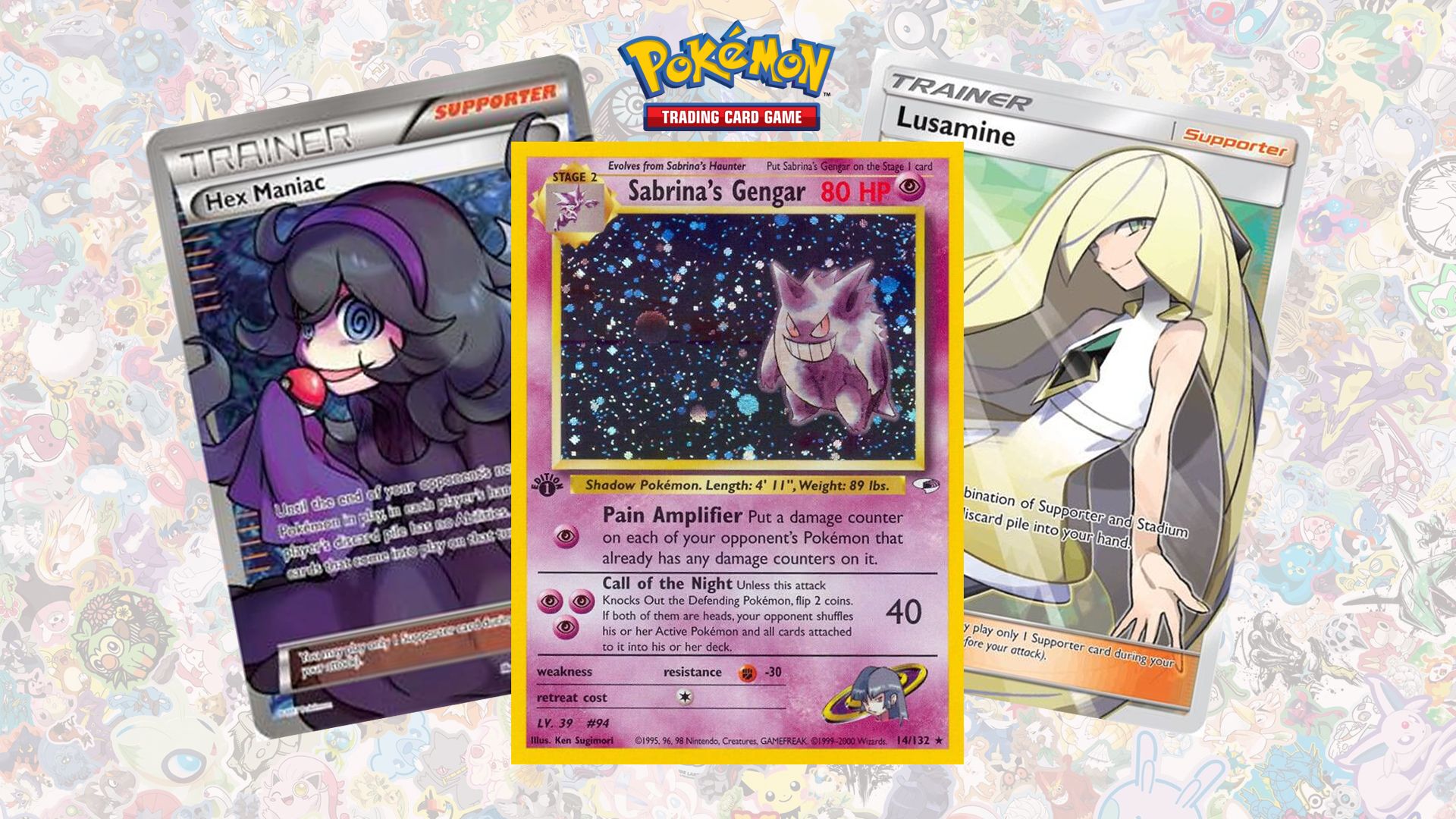
The “Lusamine” Supporter card, originally from the Crimson Invasion expansion of the Sun & Moon series, has been removed from competitive Pokémon play due to its strength. It was banned in the Expanded format in February 2019 because it could significantly slow down matches. When played, Lusamine allowed players to retrieve any two Supporter or Stadium cards from their discard pile and add them to their hand.
The biggest problem stemmed from a flaw with the “Lusamine” card: using two of them in a deck allowed players to repeatedly recycle discarded cards endlessly, often resulting in drawn games. While this didn’t align with how Pokémon TCG was meant to be played, the Lusamine card was surprisingly allowed back into play in March 2021, unlike some other problematic cards.
Sableye & Oranguru Were a Broken Combination
Sableye and Oranguru are Pokémon cards that have been banned from competitive play because they were too powerful when used together. Sableye first appeared in the Black & White series’ Dark Explorers expansion, while Oranguru debuted in the Sun & Moon’s Ultra Prism set. Sableye was a strong competitor for several years, but its ability, Junk Hunt, created unfair matchups when combined with Oranguru’s Resource Management ability.
These Pokémon cards could work together to create a powerful loop of repeatedly using the discard pile. Sableye’s abilities, like ‘Junk Hunt’ which let you retrieve cards from the discard pile, and ‘Resource Management’ which rearranged cards in your deck, made this possible. This strong combination often led players to intentionally slow down the game to try and win.
Jessie & James Was a Culmination of Hand Disruption Tactics
Jessie and James are well-known characters, often portrayed as hilariously bad villains in the Pokémon anime. However, their card from the Pokémon Trading Card Game’s Hidden Fates set (part of the Sun & Moon series) proved surprisingly powerful. The “Jessie & James” card from Hidden Fates allows a player to make their opponent discard two cards, while also discarding two of their own.
This card was incredibly strong, but what really made it problematic was how quickly it could win games – often within the first few turns. Like other banned cards such as “Delinquent” and “Red Card,” “Jessie & James” allowed players to use certain strategies to make their opponents discard almost all of their cards before they even had a chance to play. It was a devastating tactic that was very difficult to counter.
Unown Nearly Guaranteed Wins
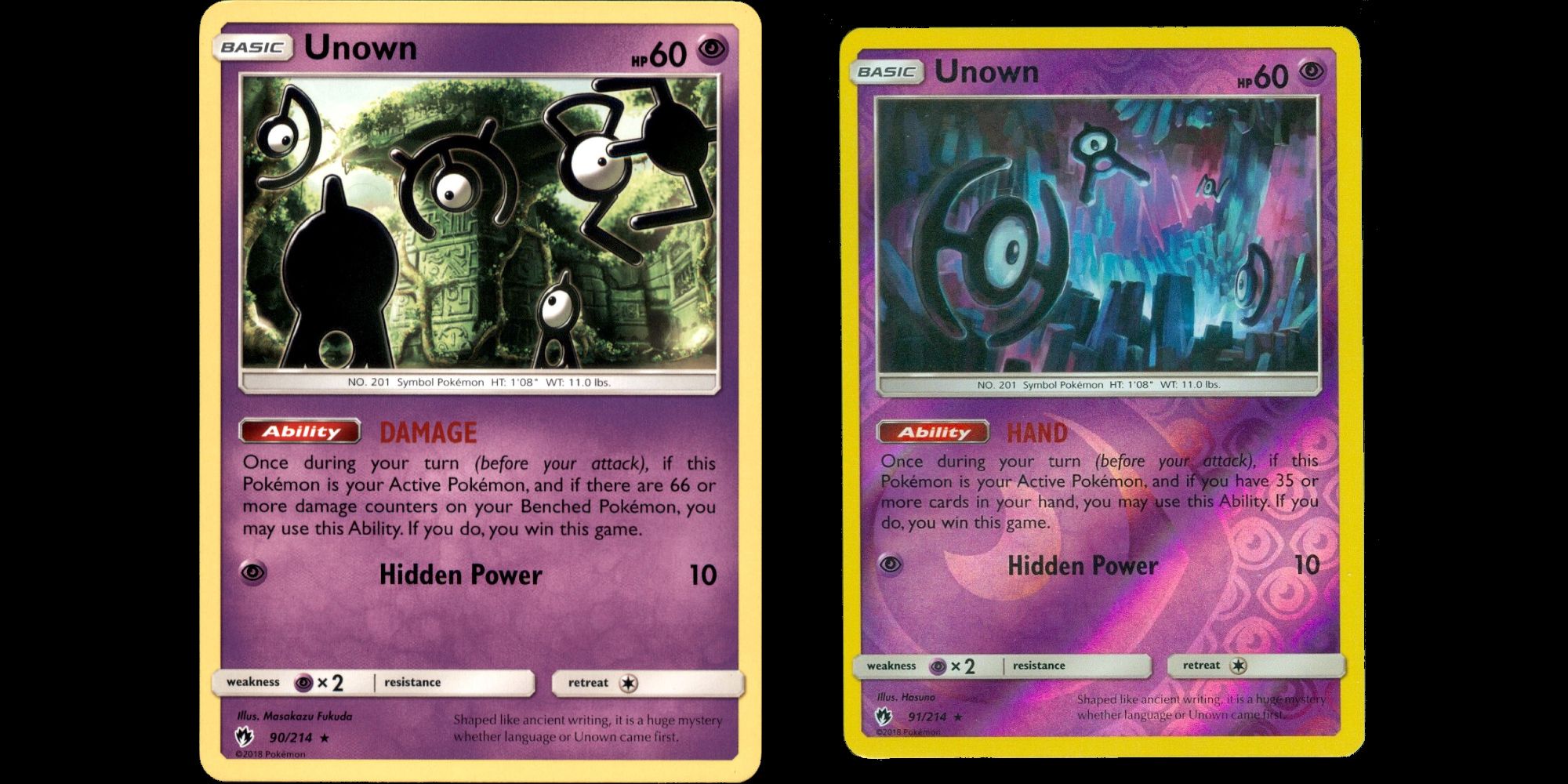
Cards are most often banned in the Pokémon Trading Card Game because their abilities are too strong. This happened with two Unown cards from the Lost Thunder expansion during the Sun & Moon era. While their attacks weren’t particularly powerful, their abilities proved to be game-breaking.
Okay, so there were these Pokémon cards, the “Unown,” that were super broken. They had abilities – one did a ton of damage, and the other messed with your hand – and if you got them going, you basically auto-won. Everyone was worried they’d become too common and ruin the game, so they got banned in 2019. There was even a card, “Reset Stamp,” that could stop those Unown abilities, but it was so good at countering them that it got banned too. It was a whole thing!
Flabébé Could Trigger a Quick Evolution to Disrupt Hands
The 2018 Pokémon TCG card, Flabébé, from the Forbidden Light expansion (part of the Sun & Moon series), proved to be surprisingly effective despite its simple appearance. While the card and its ability, “Evolutionary Advantage,” weren’t overwhelmingly powerful on their own, things shifted with the release of Floette—Flabébé’s evolved form—in the 2019 Cosmic Eclipse expansion.
The original Flabébé had a unique ability called “Evolutionary Advantage” that allowed it to evolve right away if the opponent went first. This quickly led to a powerful evolved form, Floette, which could immediately disrupt the opponent’s strategy by forcing them to discard a card. Because this combination was so strong, even allowing for disruption as early as the first turn, Flabébé has been banned from competitive play since 2019.
Hex Maniac Heavily Neutralized Abilities
It’s incredibly frustrating for players to lose in a trading card game without even getting a turn. That’s why cards that have a strong impact right from the start are frequently restricted or banned. A good example of this is the “Hex Maniac” Supporter card from the Pokémon TCG XY: Ancient Origins expansion.
The Pokémon card “Hex Maniac” stops all Pokémon abilities from working until the end of your opponent’s next turn. This gives the first player a significant advantage. Because of cards like “Hex Maniac,” players are no longer allowed to play Supporter cards on their first turn.
Marshadow Made Opponents Watch Their Cards Evaporate
As a longtime Pokémon TCG player, I’ve always noticed how going first could really give you an edge, and Supporter cards were a big part of that. But “Marshadow” from the Shining Legends set in Sun & Moon was just brutal! It could completely ruin your opponent’s strategy if you played it right. Basically, you could put Marshadow on your Bench and force them to discard their whole hand and draw a new one – talk about a setback!
This Pokémon automatically gives the opponent the first turn and puts you at a disadvantage. Combined with other cards, it often meant players starting their first turn with no cards in hand – a severely unbalanced situation. This ultimately led to the development of frustrating strategies focused on controlling opponents’ hands.
Maxie’s Hidden Ball Trick Inflicted High Damage in Record Time
Like the card “Unown,” “Maxie’s Hidden Ball Trick” from the Pokémon XY expansion Primal Clash was banned before its release because it was expected to create overpowered strategies with future cards. The card let players immediately put a Fighting-type Pokémon into play if their hand was empty, and this caused problems when used with “Archeops” cards.
The Pokémon Trading Card Game also identified a problem with two cards, Omastar and Kabutops, from the Team Up set. These cards allowed players who went first to gain an unfair advantage. Specifically, when Omastar or Kabutops were in play, the player going second couldn’t play important Item or Supporter cards.
Blaine’s Quiz Show Was Destined to Create Confusion
A card called “Blaine’s Quiz Show” from the Pokémon Trading Card Game’s Unified Minds set was not allowed in a World Championship tournament due to its unusual effect. The card works like this: one player secretly chooses a Pokémon and places it face down. Their opponent then tries to guess which attack that Pokémon has. A correct guess earns the guessing player four cards, while a wrong guess gives four cards to the player who set the Pokémon.
The issue with using “Blaine’s Quiz Show” at the World Championships was that the competition involves many languages. Organizers worried that communication difficulties and problems with translating the cards would create too much confusion, so they decided to cancel it before it even started.
Read More
- USD HKD PREDICTION
- SUI PREDICTION. SUI cryptocurrency
- USD TRY PREDICTION
- Gold Rate Forecast
- USD BRL PREDICTION
- USD CHF PREDICTION
- EUR CNY PREDICTION
- Aster’s June 9 Unlock: Will It Be a Smooth Sail or a Hot Mess?
- LEGO’s New 12,060-Piece Set Smashes a 5 Year Old Record (& It’ll Cost You $800)
- UNI PREDICTION. UNI cryptocurrency
2026-06-08 22:37