It’s a big commitment for readers to stick with a story that has more than 100 chapters. Those who do are truly dedicated fans, and when a lot of people make that effort, it means the series is clearly resonating with them.
Long-running manga often have a special quality that keeps readers coming back for more. This could be the unique artwork, the story’s pacing, or a compelling main character. Even during slower parts, the most successful series manage to truly entertain their audience, not just fill pages, and thankfully, this consistent quality can be found in many different types of manga.
Fullmetal Alchemist’s Equivalent Exchange Is a Lesson in Consequence
Hiromu Arakawa’s Fullmetal Alchemist is a tightly-paced story spanning 108 chapters, with every moment contributing to the plot. It centers on brothers Edward and Alphonse Elric, who try to bring their mother back to life through a dangerous and forbidden ritual. This act comes at a terrible cost, launching the main storyline and establishing a core principle: everything has a price, and to gain something, you must lose something of equal value.
The idea that everything has a price is central to the entire story, influencing both how magic works and the ethical choices characters face. The characters are well-developed, with heroes who struggle with lasting consequences, allies burdened by past horrors, and villains with understandable motivations. Fullmetal Alchemist skillfully balances dark and hopeful themes, which is likely why it remains so popular even years after its initial release.
Death Note Is The Ultimate Intellectual Cat-And-Mouse Game
With 108 chapters—a number potentially alluding to the Buddhist idea of 108 earthly sins—Death Note presents a gripping and intense psychological thriller. The story begins when high school student Light Yagami finds a mysterious notebook that can kill anyone whose name is written within its pages. Initially driven by good intentions, Light quickly descends into darkness. Death Note centers on the battle of wits between Light and the brilliant detective L, a conflict resolved through cunning strategies and logical deduction rather than physical force.
One of the things that makes Death Note so compelling throughout the series is that it avoids simple good versus evil. We initially sympathize with Light, but he rapidly transforms into the story’s villain. The dark and detailed artwork by Takeshi Obata also enhances every scene, and the introduction of new enemies keeps the plot fresh and unpredictable.
One Piece Proves That Length In the Hands Of The Right Writer Is a Superpower
Eiichiro Oda’s One Piece is an incredibly popular manga series with over 1,100 chapters—it’s actually the best-selling of all time! While the story seems simple at first – Monkey D. Luffy and his crew, the Straw Hat Pirates, are searching for the legendary treasure One Piece and hoping to become Pirate King – Oda has created a much more complex world underneath that basic premise. The series features a detailed and realistic geopolitical landscape where islands are impacted by power struggles, hidden histories, and widespread corruption.
The story, spanning over 1,100 chapters, is filled with carefully placed details. This creates a lot of foreshadowing that pays off over time. Characters introduced briefly at the beginning reappear much later with significant roles, and a long-lost century of history is slowly revealed as a central mystery, keeping readers engaged throughout the entire narrative.
Berserk Set the Standard for Dark Fantasy That No Series Has Matched
I’m absolutely hooked on Berserk! It’s a massive series – over 380 chapters in and still going strong – and it throws you right into this incredibly brutal world called Midland. The main character, Guts, is just…wow. He’s been through so much tragedy and betrayal, but he keeps fighting with unbelievable determination. And the art? Seriously stunning! Kentaro Miura (who sadly passed away) poured so much detail into every single panel; they’re practically like looking at paintings. It’s a masterpiece.
War leaves lasting wounds, both on the body and the mind. The main villain, Griffith, is so complex and his actions make sense – even when they’re terrible – that readers can still sympathize with him. When Guts finally stops wandering alone and creates a supportive group of friends, it’s incredibly meaningful because we’ve seen all the hardship he endured to reach that point.
My Hero Academia Managed To Keep Everyone Hooked Throughout Its 10-Year Run
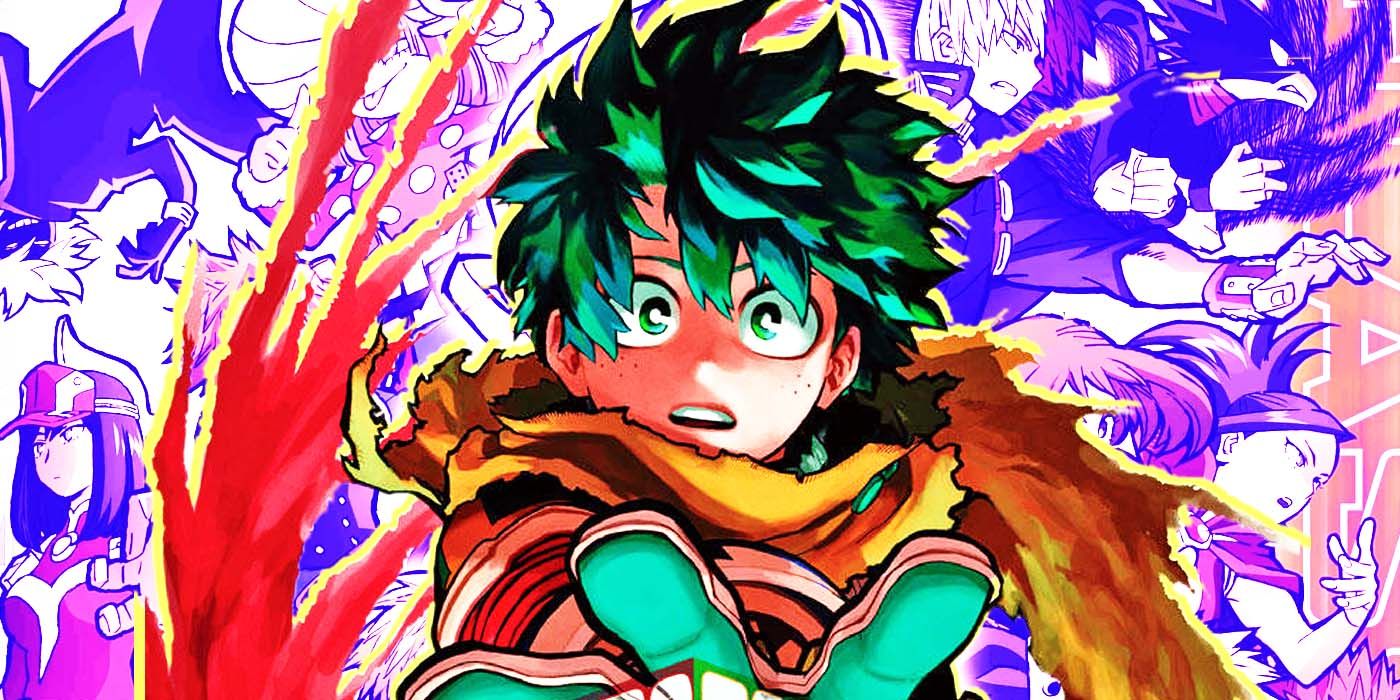
The story of My Hero Academia begins with Izuku Midoriya, a teenager born without superpowers. Over the course of 430 chapters, he works incredibly hard to gain his abilities, and each time he gets stronger, it comes with a physical challenge, which keeps the story engaging. The author, Kohei Horikoshi, also dedicates significant effort to developing the characters around Izuku, making them just as compelling.
Most of the students in Class 1-A experience significant personal growth throughout the series. The intense rivalry between Deku and Bakugo develops into a relationship built on respect, and the villains are given complex backstories that add depth to the story’s conflicts. My Hero Academia also offers insightful social commentary, exploring the fate of those overlooked and forgotten by society.
Hajime No Ippo Has Been Running Since 1989 And Still Has Something to Prove
Even after more than 1,510 chapters, the manga Hajime No Ippo continues thanks to creator George Morikawa’s dedication. Characters who were once Ippo’s opponents don’t just vanish; they return later, pursuing their own boxing careers and championships. The story centers on Ippo Makunouchi, who starts as a shy, bullied teenager with hidden potential, and his development comes entirely from rigorous training and unwavering commitment.
The boxing in this series feels realistic, based on how fighting actually works and drawing from historical techniques. The opponents aren’t just nameless rivals; they’re developed as people both before and during their matches, making each fight feel meaningful. Later on, the story takes a surprising turn when injuries force the main character to retire, adding emotional weight and leaving fans eager to see if he’ll ever come back.
Vinland Saga Writes Its Ending by Burning Down Everything It Built
Vinland Saga boldly changes direction mid-story. It starts as a violent tale of Viking revenge, but then completely resets itself, even altering its main character. The series then brilliantly rebuilds itself as a thoughtful exploration of peace and the consequences of violence. Most shows wouldn’t survive such a dramatic shift, but Vinland Saga managed to keep its audience engaged for two decades.
Thorfinn’s journey over 220 chapters is a truly remarkable character transformation in manga. He evolves from a young assassin fueled by revenge into a man who chooses to abandon violence altogether. The artwork by Makoto Yukimura perfectly complements the story, vividly portraying everything from brutal battles to peaceful farm scenes with equal skill. It’s clear that Yukimura had a well-defined four-part plan for the series from the beginning.
Golden Kamuy Doubles As A Post-War Survival Thriller And A Culinary Documentary
Considering its length and many different storylines, Golden Kamuy‘s 314 chapters shouldn’t be as cohesive as they are. Yet, Satoru Noda skillfully manages to balance everything, preventing any single plot point from overshadowing the others.
Sugimoto, a war veteran, and Asirpa, a young Ainu girl, team up to find a huge treasure of hidden gold. They use a map tattooed onto the skin of escaped convicts as their guide. The story always focuses on this central goal, with each chapter bringing someone closer to—or further from—finding the gold. The series is deeply informed by Noda’s thorough research into Ainu culture and history, and realistic depictions of hunting and cooking provide moments of calm amidst intense violence.
Vagabond Turns a Swordsman’s Journey Into a Search for Peace
The manga Vagabond explores how even great strength can become a burden. It follows Miyamoto Musashi’s journey from a ruthless warrior driven by the need to be unbeatable, to realizing that each win leaves him feeling emptier. The artist, Takehiko Inoue, uses delicate calligraphy brushes for much of the series – all 327 chapters – creating incredibly detailed artwork where characters express deep emotions like sorrow, instability, and moments of calm simply through their facial expressions.
Later in the story, the focus shifts away from fighting and follows Musashi as they find themselves in a peaceful farming village, where hard work leads to personal growth. Throughout this journey, we also see Kojiro Sasaki, a deaf swordsman who finds pure joy in combat, offering a fresh and important viewpoint. Ultimately, Vagabond explores the nature of ego and what happens to a person when fighting loses its purpose.
Read More
- Green Game Jam returns with 70 games teaming up to tackle the climate crisis
- PI PREDICTION. PI cryptocurrency
- USD THB PREDICTION
- USD CHF PREDICTION
- USD MYR PREDICTION
- USD HKD PREDICTION
- Brent Oil Forecast
- USD MXN PREDICTION
- USD JPY PREDICTION
- EUR HKD PREDICTION
2026-06-17 18:01