
When it comes to superheroes who can stretch, Marvel’s Mr. Fantastic and DC’s Plastic Man are the two biggest names. Most comic book fans probably know Mr. Fantastic better, likely because he’s portrayed as a brilliant leader, Reed Richards, and plays a key role in many important Marvel stories. Plastic Man, whose real name is Patrick O’Brien, often comes across as a silly, joke-focused character. Considering all of this, Mr. Fantastic *should* be the more interesting hero. But surprisingly, Patrick is actually a more creative and down-to-earth character than Reed ever is.
The Fantastic Four and Plastic Man came to be heroes in very different ways. Reed Richards was a brilliant scientist who built the first spaceship able to travel between planets. He took his girlfriend, Susan Storm, her brother Johnny, and his friend Ben Grimm on the maiden voyage. During the flight, a cosmic storm bombarded them with radiation, unexpectedly granting them amazing powers and forming the Fantastic Four – a world-renowned superhero team. Meanwhile, Patrick was a small-time thief who took any job for money. He earned the nickname “The Eel” because he could bypass any security system. But during a robbery at a chemical plant, Patrick fell into a tank of acid. This accident altered his body at a molecular level, giving him the power to shapeshift into anything he could think of. He then became the flexible and unpredictable hero known as Plastic Man.
Plastic Man Has Subverted the Superhero Genre on Multiple Occasions

Both Reed Richards and Patrick have greatly influenced the world of superheroes, but Patrick has consistently pushed the boundaries of the genre more. Reed and the Fantastic Four, debuting in 1961, were groundbreaking for focusing on science and exploration rather than typical superhero action, and they felt like a real family. While innovative, the Fantastic Four generally still followed established superhero conventions – powerful villains, dramatic rescues, and serious storylines. In contrast, Patrick, who first appeared in 1941, actively challenged and overturned those very conventions.
Patrick the superhero was different from most heroes of his time. While heroes were usually meant to be role models and teach lessons, Patrick was created purely for entertainment. He’s a clumsy, silly character with the flexible, over-the-top movements of classic cartoons like Bugs Bunny. Even when he fought villains, it was all done for laughs. He was essentially a cartoon brought to life as a superhero – a truly unique concept that proved incredibly popular. In fact, Patrick is often credited with being the first superhero to directly address the audience, breaking the ‘fourth wall’ back in 1941. His comedic style and quirky personality immediately made him memorable, and even now, alongside iconic heroes like Superman and Batman, Patrick remains a distinct and unusual figure in the DC universe.
While both are entertaining, Patrick is a more fascinating character than Mr. Fantastic. Reed Richards, as the intelligent leader of the Fantastic Four, is often seen as one of Marvel’s greatest heroes, but his consistent success makes it hard to create unexpected moments in his stories. Patrick, on the other hand, is an underdog in the DC universe, full of surprises. He initially appears as a clumsy and not very bright hero, seemingly unable to compete with Reed’s brilliance. However, Patrick possesses incredible powers: he can alter his body’s molecular structure, allowing him to transform into anything imaginable – he can mimic others, grow to enormous sizes, and even turn body parts into weapons. Despite this power, he prefers to make people laugh, so he usually hides his abilities behind a cheerful facade. This leads other heroes to underestimate him, making the moments when he reveals his full power even more impressive. The idea of a funny hero with such immense destructive capability who chooses to use it for harmless jokes is what makes him truly captivating.
Plastic Man’s Story is Much More Meaningful

The most compelling heroes are those who grapple with complex, human problems and imperfections. While Reed Richards faces interesting challenges, they often center around the classic “troubled genius” archetype, focusing heavily on his internal conflicts. He’s a brilliant scientist consumed by his work, constantly trying to balance his intellectual pursuits with his duties to the world and his family. However, his personal struggles aren’t always deeply engaging because he rarely suffers lasting consequences for his errors. Even if his actions put the world in danger or strain his family, he’s typically forgiven by the start of the next adventure.
While Reed’s struggles are generally relatable, Patrick is a far more complex and tragic character, and easier to empathize with. He appears cheerful and incredibly powerful, giving the impression of a carefree life, but this is just a mask. Patrick had a difficult childhood, growing up with an abusive, alcoholic father. This led to him feeling worthless and incapable of goodness. These feelings drove him to make selfish and ultimately damaging choices, including a life of crime. Unlike Reed, Patrick continues to face serious consequences for his actions. One example is his relationship with Angel, who had his son, Luke. Feeling unable to be a good father due to his own upbringing and low self-esteem, Patrick abandoned them both. He channeled his energy into being a hero who provides laughter, but this is simply a way to avoid dealing with his past and the repercussions of his decisions. By always playing the role of “the funny guy,” Patrick postpones facing the pain and shame that haunt him.
Plastic Man Presents a True Tale of Redemption
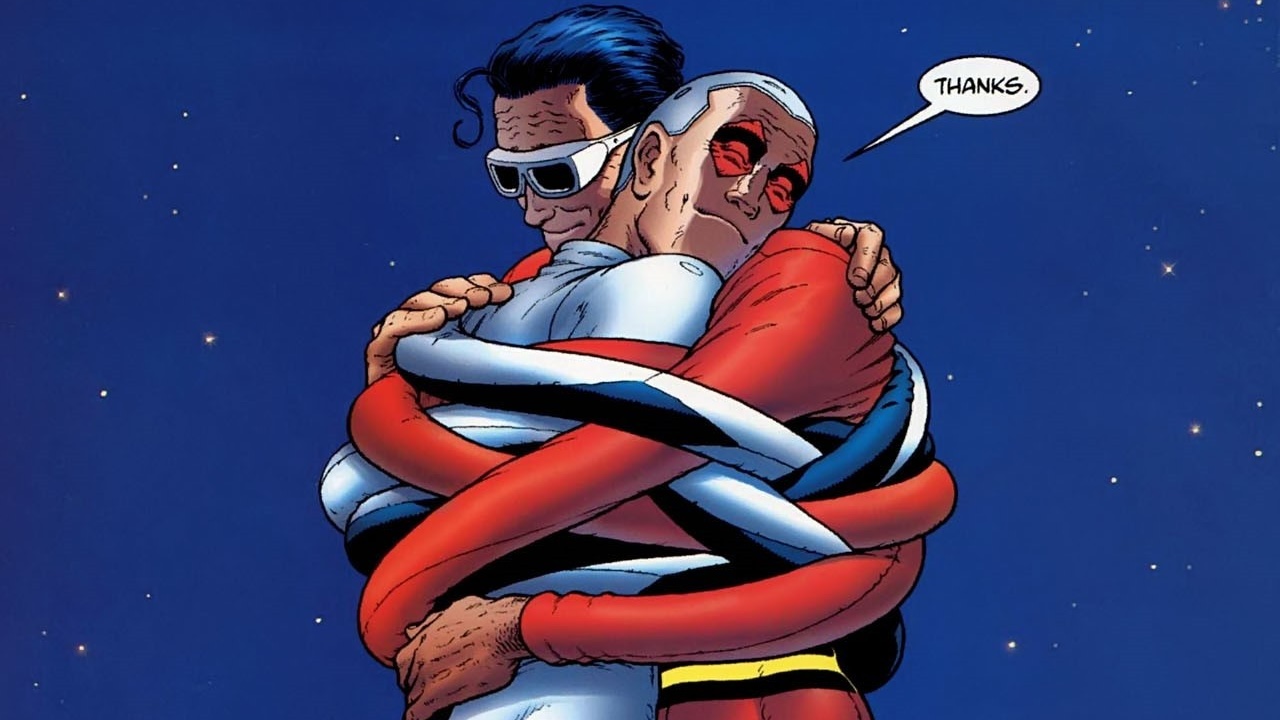
Reed is a compelling character because of his intelligence and his attempts to juggle work and family, which create dramatic moments. However, his problems mostly come from outside himself – his job and his relationships. Patrick, on the other hand, deals with issues that are much more personal and internal. He’s a cautionary tale about how putting yourself down, being selfish, and using unhealthy ways to cope can hurt both yourself and others. Importantly, Patrick’s story shows that even someone who has made many mistakes can change and become a better person, facing real consequences and growing from them.
A central part of Patrick’s journey to make things right is him understanding his flaws and being committed to improving. He’s still troubled by past decisions, which motivates him to change his life. The most powerful parts of his story focus on his attempts to become a better person and a hero, or his efforts to rebuild his family’s life.
Having faced his own difficult childhood, Batman understood Patrick’s troubled exterior and encouraged him to overcome his fears and self-loathing to be a better father to Luke. At first, both Angel and Luke were hesitant to respond to Patrick’s attempts to make amends, considering his past mistakes as a partner and father. Even knowing he and Angel wouldn’t reconcile romantically, Patrick persisted in trying to connect with his son. Their relationship is particularly moving because Luke was at risk of repeating Patrick’s criminal behavior – a cycle of generational trauma. However, Patrick found the strength to guide Luke away from that path, preventing him from making the same errors. Now, they fight crime together as a father-son team, with Luke becoming the hero known as Offspring – a name that acknowledges the pain they both experienced growing up. The story doesn’t shy away from the lasting impact of Patrick’s past actions on Luke, but their relationship is steadily healing. Patrick’s journey shows that true redemption isn’t a one-time decision, but a continuous, daily effort to improve, even when it’s hard.
https://comicbook.com/comics/news/6-superpowers-you-didnt-know-these-heroes-had/embed/#
Read More
- Best Controller Settings for ARC Raiders
- Meet the cast of Good Omens season 3: All the actors and characters
- Mark Zuckerberg & Wife Priscilla Chan Make Surprise Debut at Met Gala
- Nippon Sangoku Is The Best New Post-Apocalyptic Anime of Spring 2026
- Review: Final Fantasy Tactics: The Ivalice Chronicles (PS5) – Still the Benchmark for Turn-Based Tactics
- 7 Great Marvel Villains Who Are Currently Dead
- FRONT MISSION 3: Remake coming to PS5, Xbox Series, PS4, Xbox One, and PC on January 30, 2026
- Welcome to Demon School! Iruma-kun season 4 release schedule: When are new episodes on Crunchyroll?
- Elon Musk’s Mom Maye Musk Shares Her Parenting Philosophy
- The Boys Season 5 Officially Ends An Era For Jensen Ackles’ Soldier Boy
2025-10-07 18:28