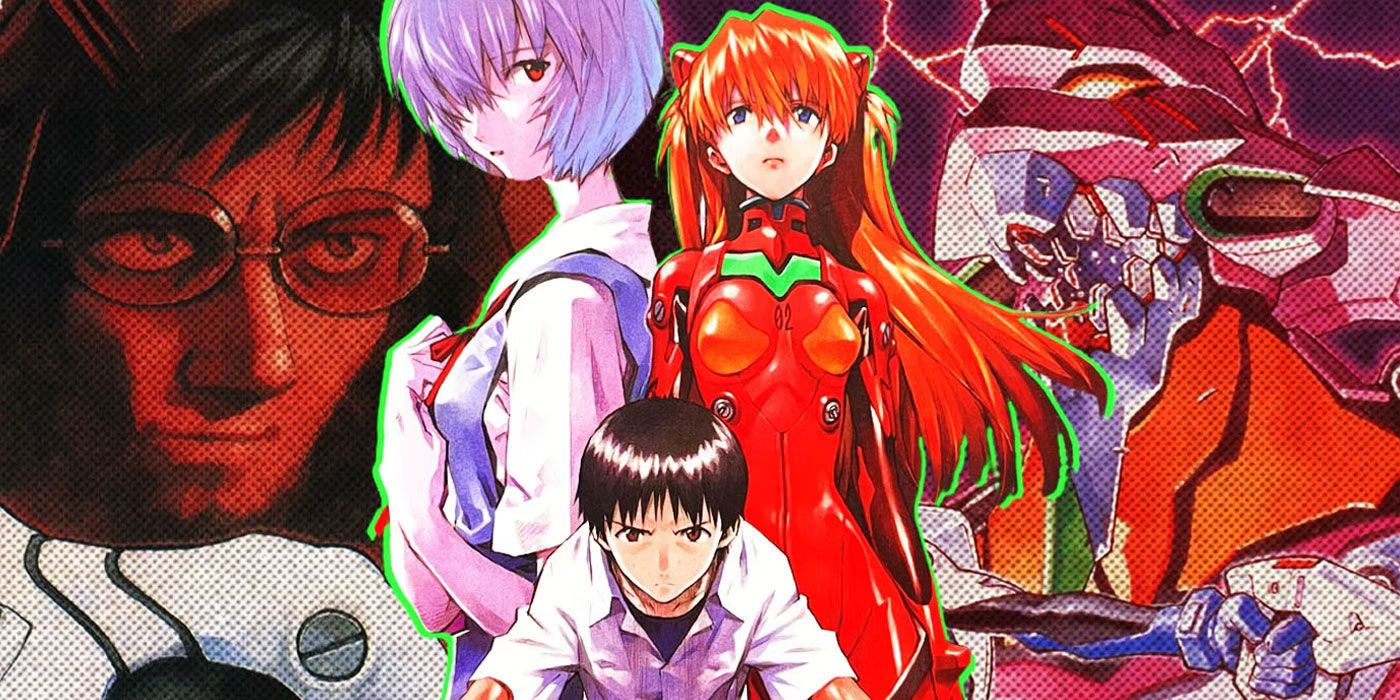
Hideaki Anno, the creator of Neon Genesis Evangelion, has shared his thoughts on the growing use of artificial intelligence in animation and other creative fields. He believes that artists and creators might need to accept that AI will increasingly handle tasks currently done by people.
Hideaki Anno has admitted that artificial intelligence is a technology that’s hard to dismiss, calling it “almost too convenient.” While he understands concerns about AI potentially replacing people, he believes the technology is here to stay. “It already exists,” Anno explained, “so we need to embrace it and see what it can do.”
He then explored how human and machine learning are alike, pointing out that people create new things by building on what they’ve learned before. He predicted it might soon be impossible to distinguish between writing created by AI and a human, and suggested that because humans operate on similar principles, it’s reasonable to consider AI taking over some human tasks.
Evangelion Creator Hideaki Anno Says It’s Acceptable for AI to Do Human Jobs
The director used Godzilla as an example to make his point. Hideaki Anno, who directed Shin Godzilla, suggested that if a company like Toho used AI to create a new Godzilla movie based solely on its existing films, it would blur ethical boundaries. He pointed out that people likely wouldn’t object, or even be able to, because Toho owns the copyright.
He clarified that while he accepts the rise of AI, it needs to follow existing laws. He explained, “As long as copyright laws are in place, we need clear rules for AI, but it should primarily learn and operate based on its own capabilities, not simply do anything without limits.”
Takashi Yamazaki, director of Godzilla Minus One, compared the current concerns about AI to the initial reaction to CGI. He explained that when CGI first emerged, those who worked with traditional miniatures felt threatened, believing it was an easy and perhaps unfair way to create impressive visuals. He sees a similar dynamic happening now with AI. However, Yamazaki doesn’t believe that high-quality art will be easily produced by AI without substantial effort, even if the technology becomes widely adopted.
The Anime Industry Is Actively Experimenting with AI in Series Production
The anime industry is starting to use generative AI in its production process. A good example is the release of the short anime, HinaHima, earlier this year. Created by Frontier Works and KaKa Creation, this project essentially served as a trial run for how AI could be used to make anime.
Other major animation studios are also starting to adopt AI. Toei Animation has announced it will use AI to speed up parts of its production process, like creating background art and filling in the gaps between key animation frames. Industry leaders, including Taiki Sakurai, a producer known for his work on Pokémon, are backing this move, hoping to make anime production more efficient.
A major concern about AI – that it could replace human jobs – recently came to light when AI-generated voiceovers appeared in popular anime like Banana Fish. Although the platform quickly removed the content after public criticism, the anime industry continues to explore AI. 81Produce, a large Japanese voice acting agency home to stars like Rie Takahashi and Saito Soma, recently announced a partnership to use AI technology. While 81Produce says this “VoiceCAPCHA” technology will prevent unauthorized cloning of its 400+ actors’ voices, the move has understandably caused worry.
The entertainment industry is expanding beyond traditional animation and voiceovers. Companies like Orange Inc. and Mantra Inc. are receiving substantial funding and collaborating with major players such as Shueisha, Shogakukan, Kadokawa, and Kodansha to speed up the process of adapting content for different regions. Although these companies currently state that humans review and refine the final work, some worry this approach will ultimately lead to artificial intelligence completely taking over the roles of artists and creators.
Read More
- Trails in the Sky 2nd Chapter launches September 17
- HBO Max Just Added the Final Episodes of a Modern Adult Swim Classic
- Paradox codes (April 2026): Full list of codes and how to redeem them
- Crimson Desert’s Momentum Continues With 10 Incredible New Changes
- Pragmata Shows Off Even More Gorgeous RTX Path Tracing Ahead of Launch
- PRAGMATA ‘Eight’ trailer
- Dragon Quest Smash/Grow launches April 21
- How Could We Forget About SOL Shogunate, the PS5 Action RPG About Samurai on the Moon?
- Hulu Just Added One of the Most Quotable Movies Ever Made (But It’s Sequel Is Impossible To Stream)
- Solo Leveling’s New Character Gets a New Story Amid Season 3 Delay
2025-12-29 22:38