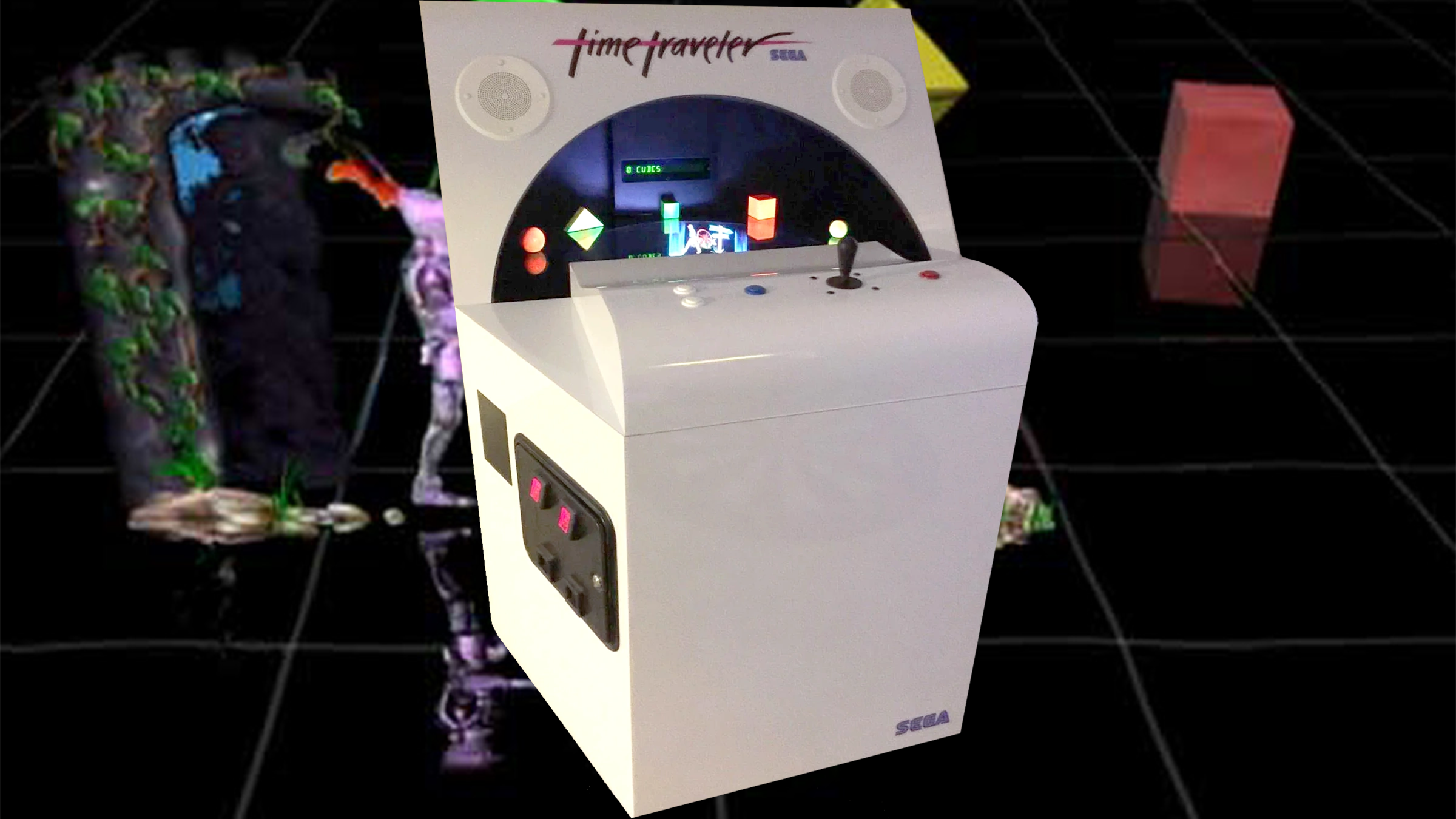
Man, if you were hitting up arcades back in ’91 and got super lucky, you might’ve found this weird white cabinet Sega put out called Time Traveler. It was unlike anything else at the time, and that’s honestly why it was so cool. It was a LaserDisc game, like Dragon’s Lair, where you watched a movie and made choices for the hero, Marshal Gram, as he traveled through time trying to rescue Princess Kyi-La from this bad guy, Lord Vulcor. The game itself was okay, but the tech behind it – that cabinet – was the really impressive part.
Sega created a buzz with what seemed like a brand new invention, but it was actually a clever use of a classic optical illusion. They marketed the game as “holographic,” but it worked by projecting images onto curved glass. This made it look like the game was floating above a flat, black surface – essentially the game’s playing field. While similar technology existed – projecting onto a backglass – it didn’t have the same impact. Sega’s approach was unique and impressive for its time, offering a fresh look for gamers.
Sega’s Holo Games Were Part Gimmick, Part Game
Sega advertised Time Traveler as “The World’s First 3D Holographic Video Game,” and though that wasn’t strictly accurate, the game created a convincing illusion. Sega spent a lot of money developing a special cabinet to showcase the effect. It used a clever trick with a large, black spherical mirror to reflect images from a traditional TV screen. This made the characters and objects seem to float above the glass surface, and many players, myself included, instinctively reached out to touch the images, feeling like they were really there.
The game cabinets were pricey, making each play cost four quarters – a higher price than the one or two quarters most arcade games charged in 1991. People were more excited to see the cabinet in action than actually play the game. While Time Traveler wasn’t a terrible game, it earned enough to encourage Sega to create Holosseum. However, like many LaserDisc games of the time, it could be challenging. Success depended on quickly and accurately responding to on-screen prompts, which proved difficult for many players.
Released in arcades in 1992, Holosseum was a unique LaserDisc game because it was a fighting game – a departure from other titles in the format. While it featured a hologram effect, the gameplay itself wasn’t particularly groundbreaking compared to other fighting games of the time. It didn’t reach the same level of popularity as hits like Mortal Kombat or Street Fighter II, which continued to draw crowds long after Sega stopped making its holographic arcade machines. It’s hard to say exactly how well Holosseum did, but Sega quickly discontinued the expensive cabinets, suggesting it wasn’t very profitable and effectively ended the brief trend of ‘holographic’ gaming in the 1990s.
Sega’s Holographic Games Live on in Memory and a Possible Reproduction
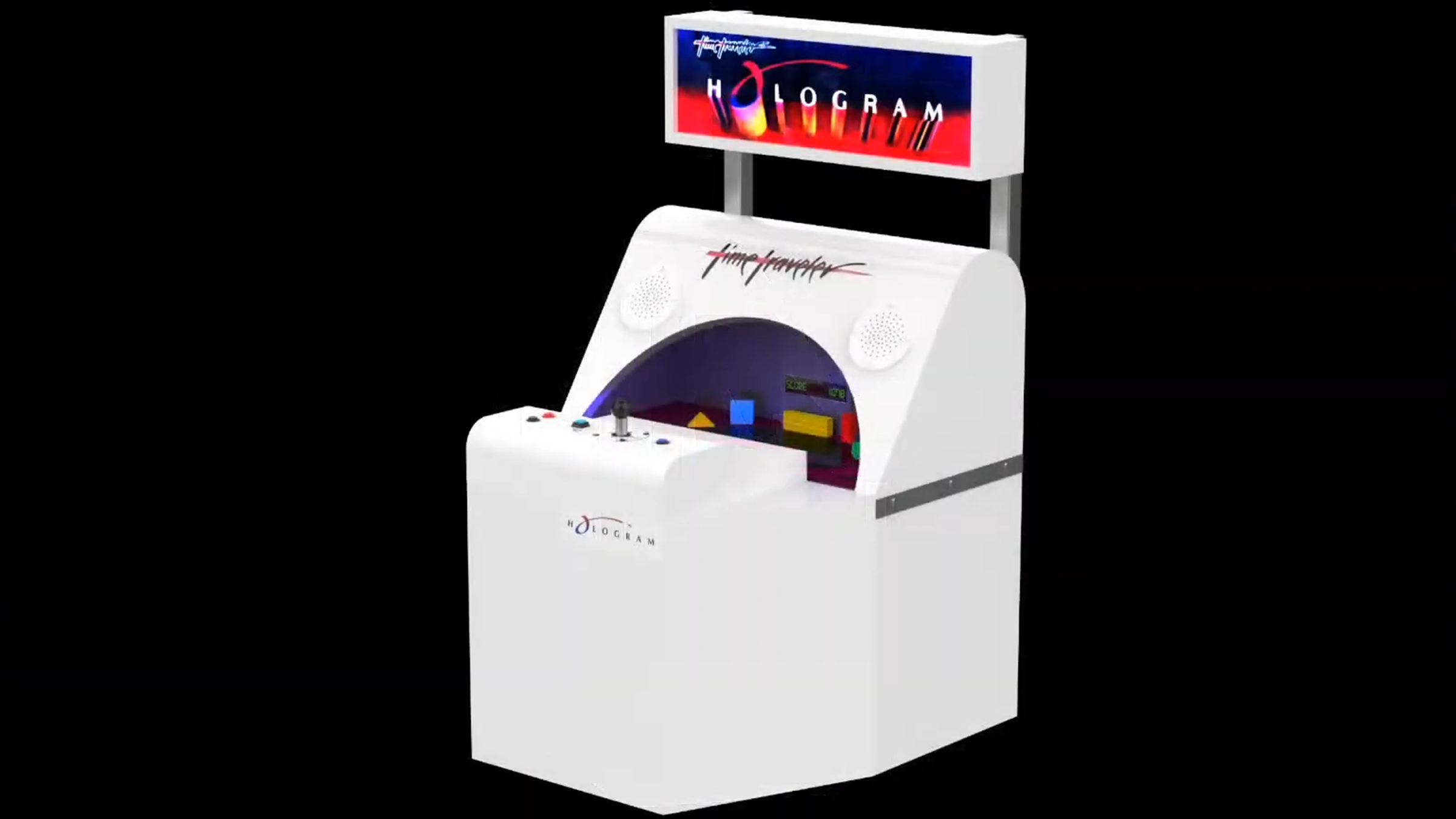
Sega later released its two holographic games on DVD, letting players experience a 3D effect that looked like holograms on their TVs. These games are fondly remembered today, and one of them, Time Traveler, might be making a comeback – but as a much smaller version. New Wave Toys, which makes scaled-down arcade cabinets, announced in 2025 that they were recreating Time Traveler. The challenge for the designers is to shrink everything down while still perfectly recreating the original holographic effect. If they succeed, a miniature arcade cabinet could become available for collectors.
Man, I remember spending all my allowance at the arcade! Did you get to play these classics back in the day? I’d love to hear your stories – let’s chat about them over on the ComicBook Forum!
Read More
- Everything You Need To Know About Nikki Baxter In Stranger Things’ Animated Spinoff
- After 11 Years, Black Clover Officially Ends With Final Release (& Crowns a New Wizard King)
- Welcome to Demon School! Iruma-kun season 4 release schedule: When are new episodes on Crunchyroll?
- 7 Most Brutal Avengers Villains, Ranked by Threat Level
- Gemma Arterton spy thriller Secret Service based on hit novel gets release date confirmed on ITV
- The Boys Season 5, Episode 5 Ending Explained: Why Homelander Does THAT
- The Boys Season 5, Episode 2’s Soldier Boy Ending Twist Changes Everything for Homelander & Butcher
- ‘You Can Play Your Purchased Games As Usual’: Sony Breaks Silence on PS5, PS4 Game Expiry DRM
- Miranda Kerr Shares “Quick” Procedure She Got Before Met Gala 2026
- ‘The Bride!’ Review: Jessie Buckley Breathes Life into a Monstrous Mess
2026-01-01 17:45