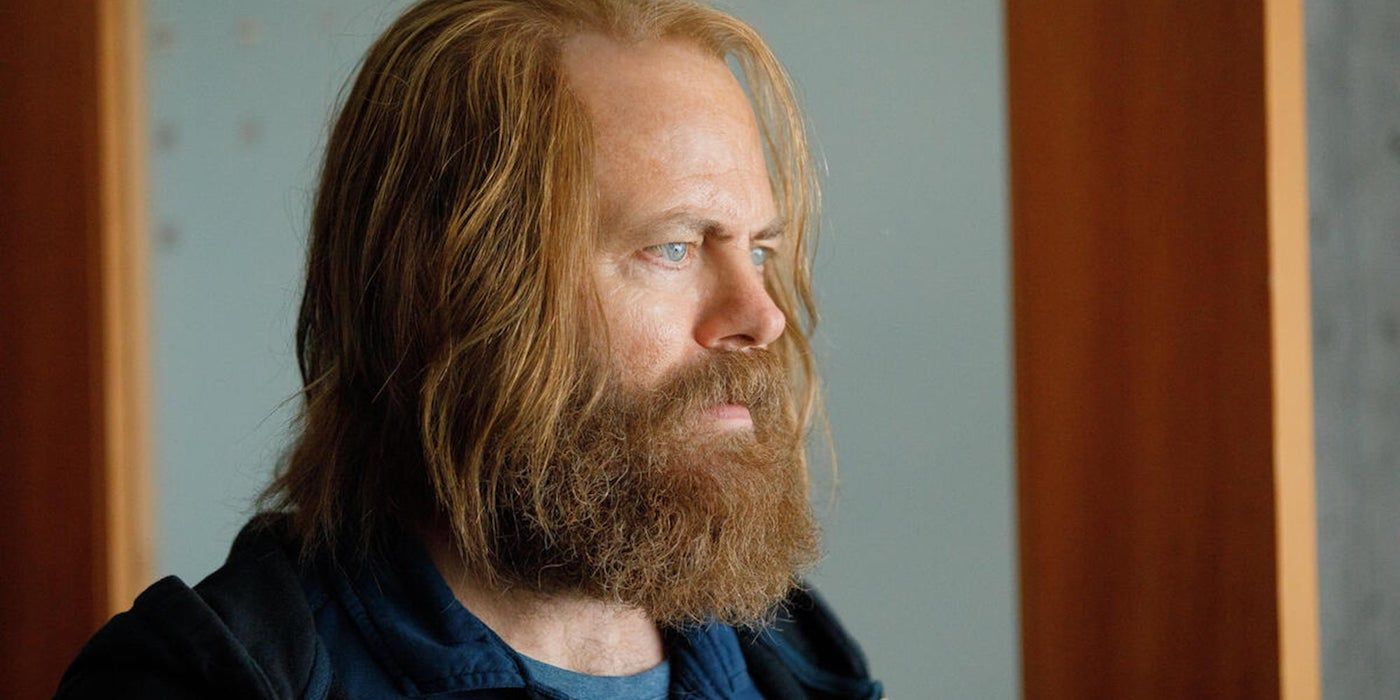
Alex Garland’s TV series Devs stays with you long after you finish watching it. This eight-part science fiction thriller expertly blends mystery, technology, and thought-provoking ideas, especially appealing to dedicated viewers. The show combines a compelling conspiracy rooted in technology with big questions about destiny, free will, and the nature of reality.
Devs centers around Lily Chan, a software engineer who uncovers the inner workings of a powerful tech company after a personal tragedy. As secrets are revealed, the show transforms into a thought-provoking mystery, moving beyond a simple thriller. Despite its complex themes, Devs maintains a fast pace across its eight episodes, which are enough to create a fully realized and unsettling world.
Devs Features a Mystery Rooted in Silicon Valley Power
Built on secrecy and boasting impressive, subtly powerful campuses, the Devs division operates in complete isolation – no outsiders are ever permitted inside. When young engineer Sergei gets a coveted position there, it seems like the peak of his career, but it quickly becomes his introduction to the strange world of Devs and the central puzzle at its heart.
Sergei’s unexpected death deeply impacts Lily Chan and viewers alike. The government’s explanations feel untrustworthy, and the show Devs quickly throws us off balance, challenging our assumptions. Lily Chan isn’t a typical detective; she’s a relatable and perceptive character who reacts strongly to the unfolding events, rather than actively investigating. Her refusal to accept the official story drives the plot forward in the early episodes and defines the series’ overall tone.
The central mystery revolves around both personal stories and larger, systemic problems. Lily’s investigation begins with her own feelings of love and grief, but soon suggests a much wider conspiracy. Amaya’s company is keeping secrets, and is also safeguarding an experiment that could fundamentally change how humans understand reality. The company’s employees are creating Deus, a unique quantum computer. Unlike computers designed to predict the future or improve behavior, Deus is built to simulate reality itself.
As a movie lover, I found this series really interesting because it doesn’t rush things. It lets the story unfold naturally and trusts you to piece things together. It’s not about flashy reveals or complicated explanations; instead, it presents information straightforwardly. What’s really striking is how the characters have these very formal, almost scholarly conversations, even when they’re talking about totally bizarre stuff. It creates a really unique and compelling dynamic.
The Sci-Fi Show Gets Philosophic
Okay, so picture this: there’s this machine, they call it the Deus, and it’s basically a super-powered quantum computer. The concept is surprisingly straightforward – it aims to understand how everything works at the tiniest, most fundamental level. But honestly, trying to really grasp it is mind-bending. The idea is that if every single particle follows a set of rules, and that computer can actually calculate those rules, then, theoretically, the past and the future aren’t set in stone, they’re… predictable. It’s a wild thought, right?
The team uses technology to recreate past events, initially as blurry images that sharpen with improvements to the device. These recreations show history unfolding exactly as it did. The technology also suggests a fixed future, implying that everything is predetermined. This device represents the idea that all events are inevitable, already set in motion by what came before.
Forest unexpectedly becomes CEO of Amaya during a heated discussion. He explains his belief in determinism stems from a personal tragedy – the loss of his family. He had to accept that the accident couldn’t have been prevented, leading him to believe the world operates according to fixed rules where blame isn’t meaningful. He sees this as a kind of divine mechanism at work, proving his point.
Forest and Lily don’t clash physically; their conflict is based on opposing beliefs. Their interactions unfold through conversations, predictions, and challenges. The show delves into deep philosophical territory when the machine reveals Lily’s future actions, but it trusts the viewer to interpret things for themselves. Ultimately, Devs remains grounded in both scientific concepts and the emotional journeys of its characters.
Alex Garland Tackles Quantum Theory
As the story progresses, it gets harder to tell whether the characters’ defiance is a result of their own choices or if it was always meant to happen. Lily, in particular, seems to be rebelling through genuine free will. She actively fights against the machine’s control by refusing to follow its predictions and deliberately placing herself in the exact situation the machine had already calculated.
As time passes, Lily’s initial resistance transforms into something more meaningful. It becomes a symbol of hope because she starts to challenge the idea that everything is predetermined. By making her own choices, independent of the machine’s control, Lily demonstrates that we can shape our own destinies through our actions. It’s almost beside the point whether her defiance actually changes things. The important thing is that Lily realizes her actions matter, and this newfound belief guides everything she does from then on.
This idea falls apart when small errors begin to appear in the predictions. The developers notice these inconsistencies when events don’t unfold as expected. These errors make them doubt not only whether everything is predetermined, but also the very notion of…
With other explanations now offered, the machine can’t definitively claim to know what’s true. The idea that everything is predetermined falls apart when confronted with the possibility of multiple realities. The show Devs introduces the concept of quantum theory, suggesting that if the universe splits into different paths, the machine’s predictive power would fail. Forest rejects this idea because it disrupts his need for control, while Lily embraces it, finding that it gives her choices real significance and a feeling of freedom.
A confrontation between Lily and Forest was about to happen. The machine had predicted Lily would be the one to shoot, and everyone expected it. But when the moment arrived, Lily refused to fire. For a brief time, she chose her own path. Sadly, the machine then released an electromagnetic pulse, killing both Lily and Forest and ensuring the predicted outcome came true.
The show doesn’t end with a clear winner or loser. Instead, Devs suggests that even when events feel unavoidable, there’s still purpose behind them. The story implies that true meaning isn’t in the events themselves, but in how people react – transforming abstract beliefs into tangible, human experiences.
Simulation, Consciousness, and a Quiet Ending
Though they’ve seemingly died, Lily and Forest continue to live within a world generated by the Deus machine. This virtual reality is sustained by their own minds, effectively allowing them to exist as a creation of their consciousness.
Forest feels a sense of completion, as his family is reunited with him in a world where people don’t die. Lily gets a fresh start in a world free from the fixed future predicted by the Deus machine. This outcome completely upends everything that came before.
This suggests that if consciousness isn’t tied to objective facts, a machine isn’t simply predicting or observing – it’s actually creating. Furthermore, what the machine shows hints that our world might be a simulation, an idea that will be explored throughout this series without ever being fully explained. The series will present this as a possibility, leaving it open for consideration. The idea is that reality isn’t a single layer, but exists on multiple levels.
The ending of the story is handled effectively; it avoids a big reveal and simply moves forward in a natural way. This fits perfectly with the overall feel of the series. The world isn’t presented as a place of rewards and punishments, but one governed by its own rules that characters must accept. The story doesn’t try to definitively answer whether or not the characters truly have free will.
Though it might not become a mainstream hit, Devs is a show built for those who seek it out. The eight-hour series is best enjoyed when you can really focus on it, offering a thrilling story that also delves into complex philosophical questions – all while keeping you entertained.
At its heart, Devs isn’t about technology—it’s about faith. The show explores whether life has meaning if we don’t have free will, or if a predetermined universe can still hold purpose. Devs doesn’t offer solutions, but rather encourages viewers to contemplate these questions. It’s a thought-provoking series that lingers in your mind long after the credits roll.
Read More
- Everything You Need To Know About Nikki Baxter In Stranger Things’ Animated Spinoff
- The Boys Season 5, Episode 5 Ending Explained: Why Homelander Does THAT
- Miranda Kerr Shares “Quick” Procedure She Got Before Met Gala 2026
- After 11 Years, Black Clover Officially Ends With Final Release (& Crowns a New Wizard King)
- ‘The Bride!’ Review: Jessie Buckley Breathes Life into a Monstrous Mess
- Welcome to Demon School! Iruma-kun season 4 release schedule: When are new episodes on Crunchyroll?
- Sonic the Hedgehog Has Lowkey Become Hollywood’s Most Successful Franchise
- Leveling Up In RPGs Is Getting Outdated
- Halo Standalone Multiplayer Title “Project Ekur” is Being Co-Developed by Certain Affinity – Rumor
- “Masterpiece” horror film’s sequel starring Nicolas Cage gets major release update
2026-01-02 07:38