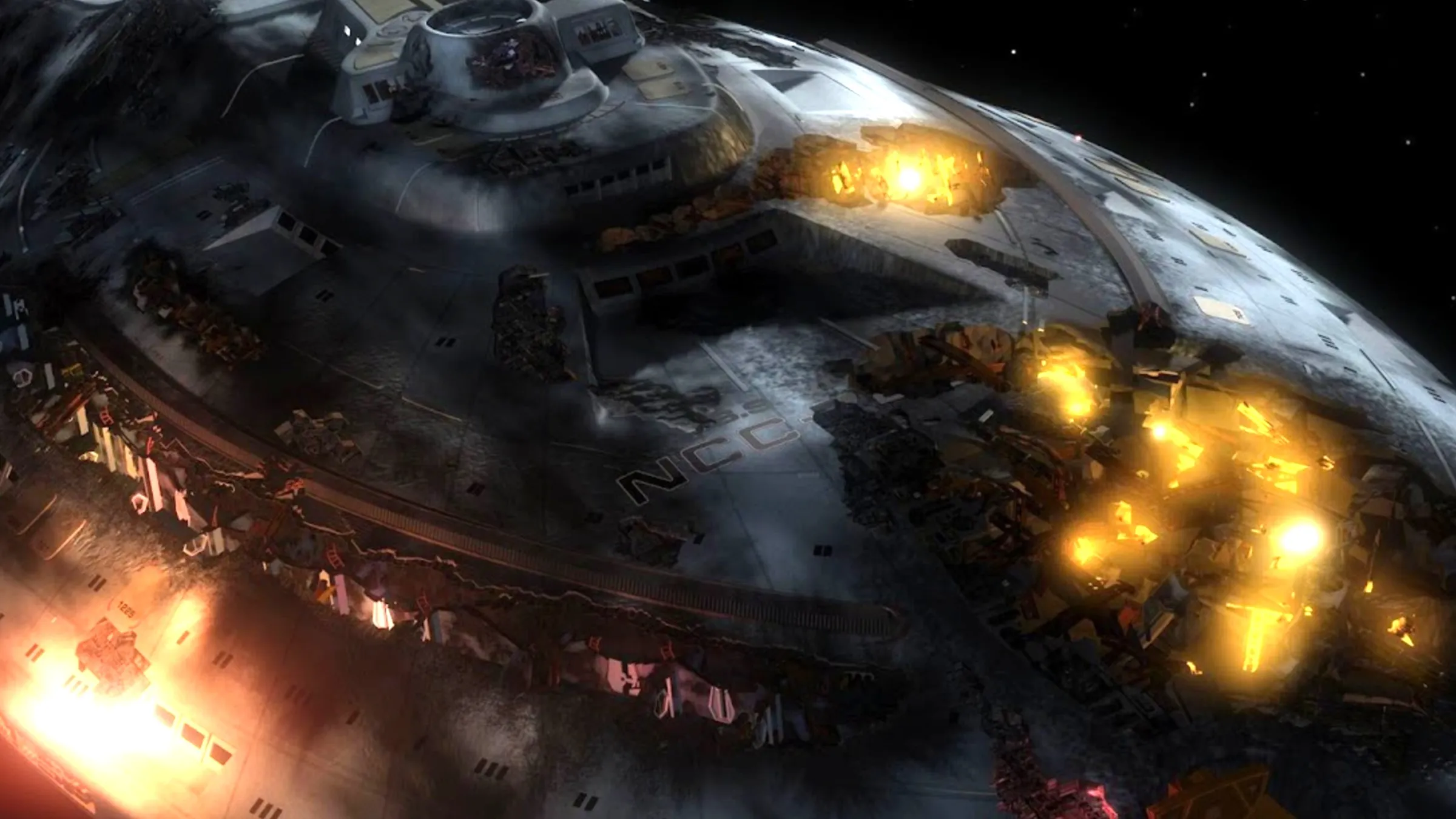
When Star Trek: Voyager premiered in 1995, it faced high expectations. Star Trek was already hugely popular, and fans were enjoying the successful spin-off The Next Generation. Plus, Deep Space Nine, considered one of the best Star Trek series, was still airing at the same time, offering a direct and popular point of comparison. Fortunately, those in charge realized Voyager needed a fresh approach to make its mark. The show delivered with a compelling idea: what would happen to a Starfleet crew if they were stranded 70,000 light-years from Earth, forced to survive on their own with no help from the Federation?
The premise of Voyager – featuring Starfleet’s first female captain, brilliantly played by Kate Mulgrew – held a lot of potential. However, many viewers were disappointed because the show didn’t fully live up to its promise for much of its run. It rarely explored the real challenges of being stranded far from home. Despite being lost in deep space, the ship’s damage was often quickly fixed, resources were easily found, and crises were usually resolved within a single episode – a common pattern for Star Trek. Essentially, the show didn’t convey a strong sense of isolation or desperation, and the crew’s difficult situation was often overlooked – except in one significant instance.
The two-part ‘Year of Hell’ from Star Trek: Voyager’s fourth season remains a standout story, known for being both daring and intense. But what makes this particular storyline so memorable even today?
A Glimpse of the Voyager We Rarely Saw
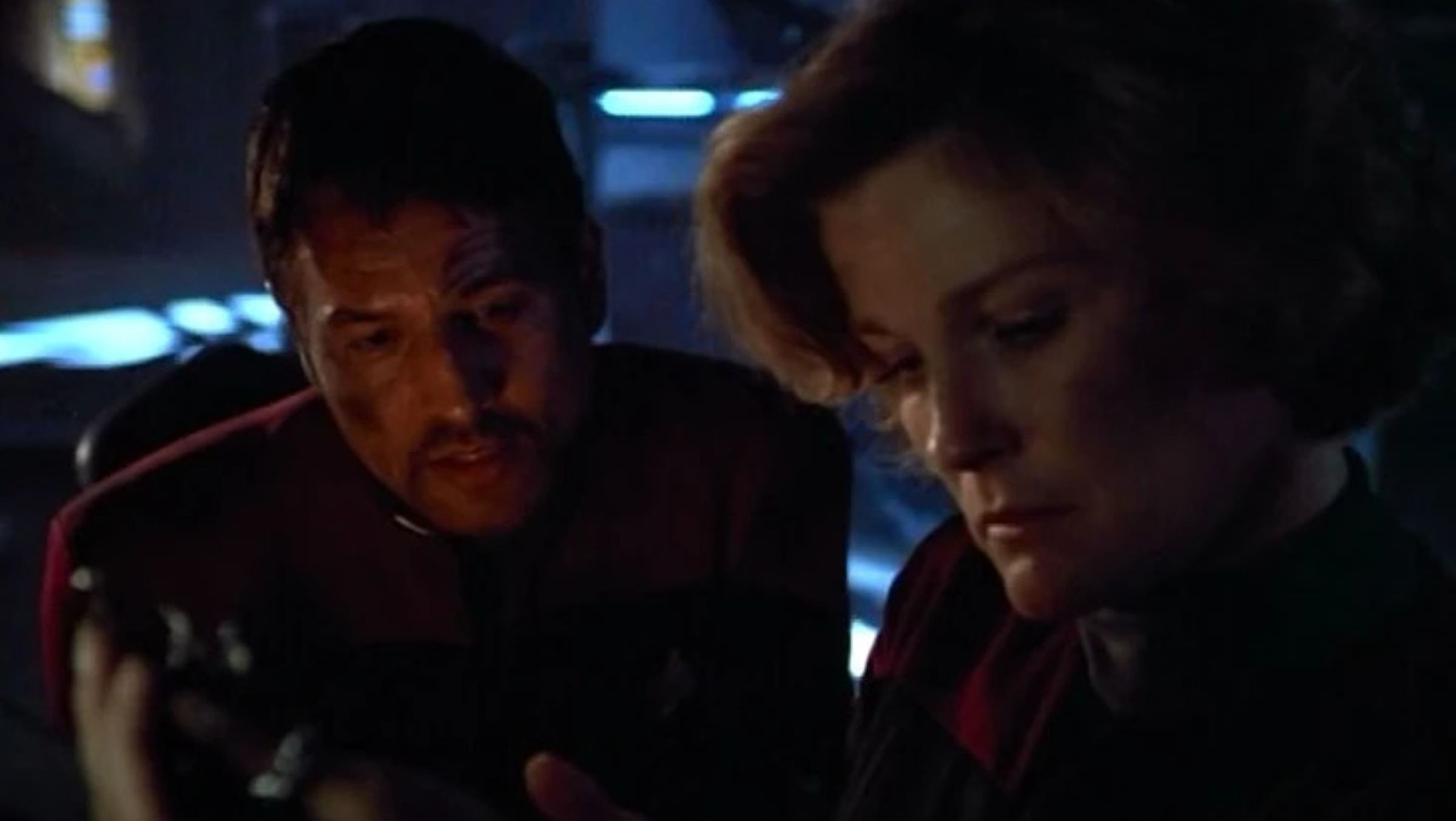
The two-part episode “Year of Hell” really highlighted how vulnerable Voyager and its crew were. After months of fighting the Krenim – a species that could erase people from history using time-altering weapons – the ship was severely damaged and the crew was exhausted. Major systems were failing, Tuvok was badly injured, and Chakotay and Paris had been captured. Janeway was pushed to her limits, becoming a desperate and hardened leader who was willing to do almost anything to ensure the survival of her ship.
Even after all this time, “Year of Hell” remains a fan favorite and is often praised by critics as being among the best episodes of Star Trek. This two-part story resonates with viewers because it delivers the Voyager many had hoped for from the beginning: a ship and crew clearly marked by the hardships of their journey, and realistically struggling with the possibility of never returning home, rather than easily adjusting to their situation.
These episodes really emphasize the overwhelming hopelessness, fatigue, and difficult moral choices the leader faces, something the show hasn’t consistently portrayed well. It’s even more interesting to learn that this storyline was initially planned as a complete season, not just a two-part story.
The Original Plan: A Season of Suffering
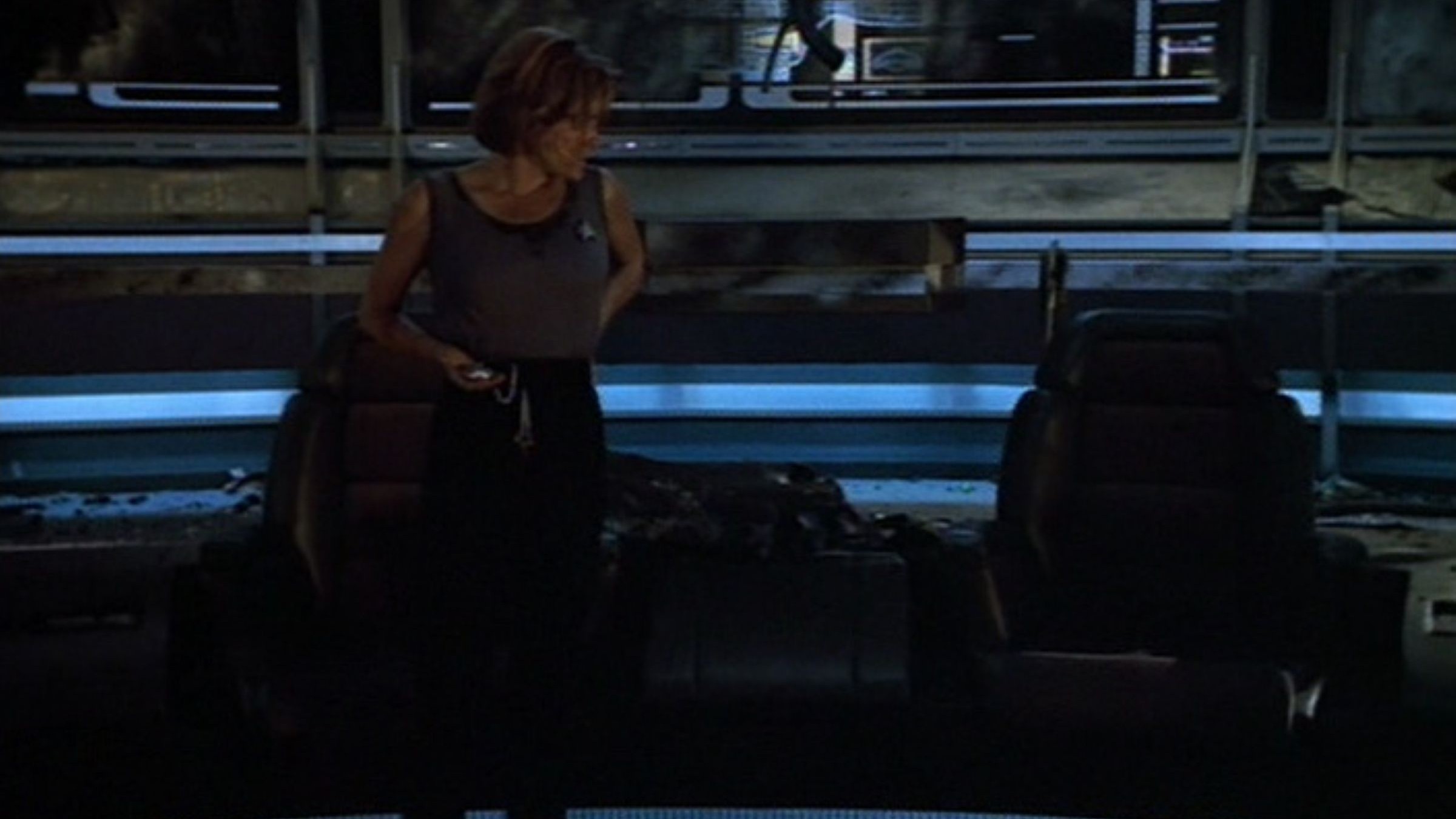
The writers originally envisioned the “Year of Hell” storyline as a season-long arc, not just two episodes. They imagined a months-long, suspenseful story where Voyager would suffer continuous damage and barely escape disaster after disaster, with characters facing difficult losses along the way. This approach felt like the perfect embodiment of what Voyager should have been all along – a show constantly pushing its characters and ship to the limit. If they’d been able to execute this plan, it would have been a fantastic and innovative season for Star Trek, especially for a show airing in the late 1990s.
Looking back, it was likely a good decision to simplify the original plan. Telling one continuous story over an entire season was a gamble before streaming made it easy to binge-watch. Back then, viewers often tuned in sporadically, and shows needed to attract casual watchers. A whole season focused on darkness and despair could have turned off audiences used to self-contained episodes, and it might not have appealed to Star Trek fans who preferred a more hopeful and positive tone.
By telling the story in just two episodes, the show makes a strong impression. It acknowledges the dark themes but doesn’t push them so far that the ending feels unbelievable.
Star Trek’s Reset Button Problem
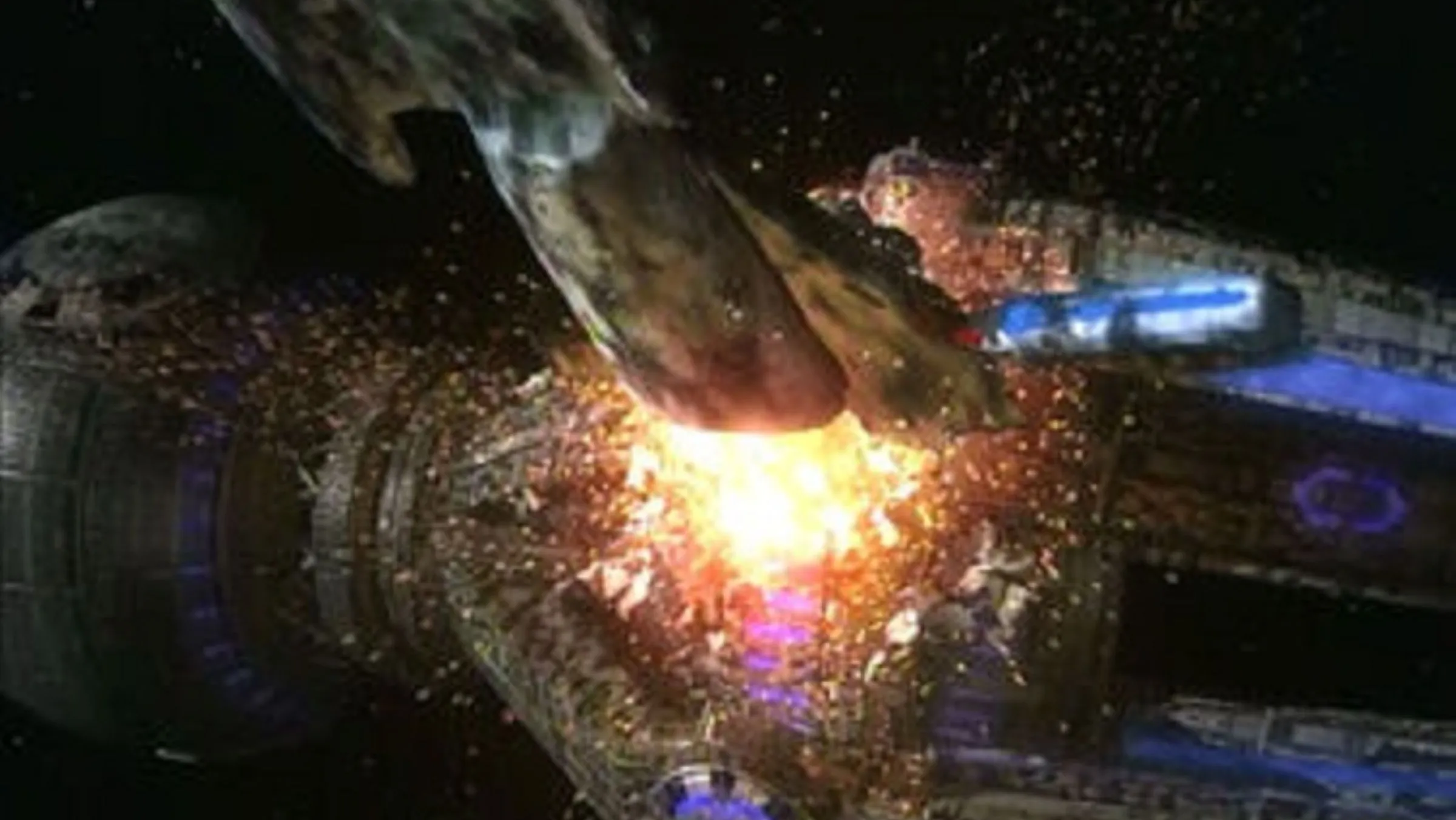
Okay, so the big reveal at the end of “Year of Hell” totally blew my mind! It turns out none of that awful stuff actually happened. Captain Janeway, in a crazy last move, flew Voyager right into the Krenim time ship – and it looked like Voyager was destroyed! But, it also destroyed the time ship’s core, which reset everything. Seriously, all the pain, all the things they lost, all the damage… it was all for nothing because it never really happened. Voyager just… reappeared, completely fine, and the crew had no idea any of it ever happened. It was like a nightmare they never even had!
Although some critics pointed out the ending relied on the familiar ‘it was all a dream’ reset, it actually works well for this particularly strong two-part episode. It might be a simple way to avoid dealing with lasting consequences and quickly move on to the next story, and yes, it possibly is. However, the ending feels right, makes logical sense, and is ultimately satisfying. It feels justified because viewers recognize the emotional impact comes from the possibilities explored – we saw those events unfold, and our beloved characters genuinely went through them, even if it was in another reality.
But consider how frustrating it would be to reach the end of a season only to find out none of it mattered. After investing over twenty hours watching characters struggle, endure hardship, and grow, only to have the writers reveal it was all a joke would likely leave viewers feeling cheated. The emotional connection built throughout the season would be completely undermined, making it feel like wasted time – as if you could have skipped it entirely.
As a big fan, I think limiting the story to a single season was actually a smart move. It could have easily dragged on and become too convoluted, potentially ruining the whole show. While another direction for a longer arc might have been interesting, keeping ‘Year of Hell’ concise probably saved it – and the series as a whole – from becoming overly ambitious and collapsing under its own weight.
Why “Year of Hell” Endures
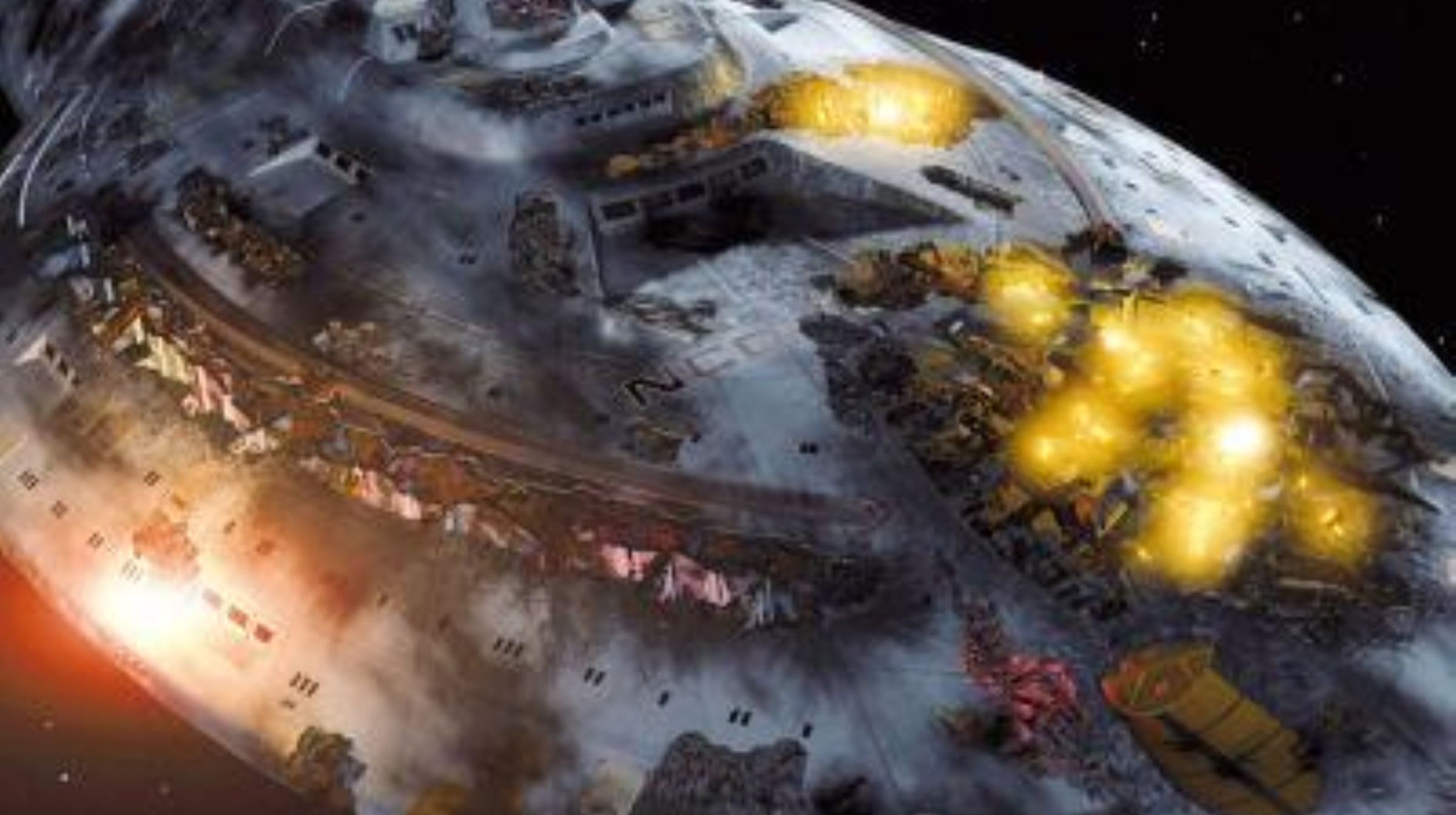
Splitting the story into two parts allowed the writers to focus on the core ideas, making them more powerful. Each scene emphasizes the main themes: what people will do to survive, the risks of becoming fixated on something, and the folly of trying to manipulate time. Kurtwood Smith’s performance as Annorax is key. He’s different from most villains on Voyager because he’s driven not by a desire to conquer or cause harm, but by sadness and a twisted logic. His conviction that bringing back his wife justifies destroying entire civilizations echoes Janeway’s own willingness to make difficult choices and sacrifices.
The show’s visual style is also stunning. The deliberately damaged sets, the feeling of constant tension, and the dark lighting are all incredibly effective – and surprising – because they’re a departure from the show’s usual look. If everything always looked this way, the impact wouldn’t be as strong.
With today’s viewers accustomed to complex and often dark storylines, a season dedicated to consistently high stakes—like the two-part story’s ‘Year of Hell’ concept—could potentially work. However, Voyager wasn’t originally built to handle that much darkness without changing its core identity. The story ultimately showed us the absolute most challenging version of the crew’s situation, but wisely avoided dwelling on it for too long. It explored just how difficult things could become, without making the audience endure that bleakness endlessly.
The “Year of Hell” storyline is effective because it feels like a cautionary tale, not a permanent shift in the show’s tone. It highlights the delicate balance Star Trek maintains between hopeful adventures and challenging ethical dilemmas—and suggests that a brief look at a grim future can be more impactful than a prolonged one. In the end, Voyager gave us two exceptional episodes and smartly avoided pushing the limits of how much darkness its viewers could handle.
What do you think? Leave a comment below and join the conversation now in the ComicBook Forum!
Read More
- FRONT MISSION 3: Remake coming to PS5, Xbox Series, PS4, Xbox One, and PC on January 30, 2026
- Taylor Sheridan’s Gritty 5-Part Crime Show Reveals New Final Season Villain
- The Boys Season 5, Episode 5 Ending Explained: Why Homelander Does THAT
- ‘The Bride!’ Review: Jessie Buckley Breathes Life into a Monstrous Mess
- Mark Zuckerberg & Wife Priscilla Chan Make Surprise Debut at Met Gala
- From season 4 release schedule: When is episode 2 out on MGM+?
- How to Build Water Elevators and Fountains in Enshrouded
- Ashley’s Powers in The Boys Season 5 Explained & Why They Don’t Work On [SPOILER]
- Why There’s No Ghosts Tonight (Nov 27) & When Season 5, Episode 7 Releases
- Invincible Season 4 Episode 4 Post-Credits Unveils a Demonic Return & More
2026-01-03 01:42