
In Resident Evil Requiem, the character of FBI analyst Grace Ashcroft is defined by her instability – she’s either remarkably capable or completely overwhelmed. The game introduces a complex new heroine who starts in a vulnerable state: the demo begins with her hanging upside down, injured, and panicked. Despite this, she manages to regain control, even removing her own IV needles to escape into the Rhodes Hill facility. However, she’s easily frightened, as demonstrated by her fear of even her own shadow while navigating the dark hallways.
Grace typically works at a desk, but now she’s out in the field, investigating a series of unusual deaths near the crumbling city of Raccoon City, thirty years after the initial outbreak. Her strengths and weaknesses aren’t just part of her personality – they’re reflected in how the game, Requiem, is presented. For the first time in the series, you can choose how you experience the horror: through the intense, personal view of first-person, or the broader, more strategic view of third-person. You can switch between these perspectives whenever you like, and each one feels unique. The camera you choose will impact not only how you feel, but also how you play.
As a long-time fan, it’s been interesting seeing where Resident Evil has gone lately. It feels like there are two main paths the series is taking. On one hand, you’ve got the newer games like Resident Evil 7 and Village, which really changed things up with that first-person perspective. But then there are the remakes, starting with Resident Evil 2 in 2019 and continuing with Resident Evil 3. What I love about the remakes is that they take the classic games and bring them up to date without completely changing what made them great. They’re still scary and focus on survival horror, but with a modern, over-the-shoulder camera and a faster pace. It’s like they’ve created their own separate, really strong path, different from the more experimental direction of the newer games.
Resident Evil Requiem blends the series’ classic roots with modern gameplay. The game lets you experience its horrors from different viewpoints, including through the eyes of Grace, allowing you to approach the scares in a way that suits your preference.
The horror in Requiem doesn’t simply tell you what’s scary; it makes you question your own reactions to the darkness. Experiencing the story through Grace’s eyes feels claustrophobic, while observing from a distance offers a moment of relief. Regardless of the perspective, Grace is compelled to move deeper into the darkness, like a fragile light drawn towards it. For her, the only escape lies further within.
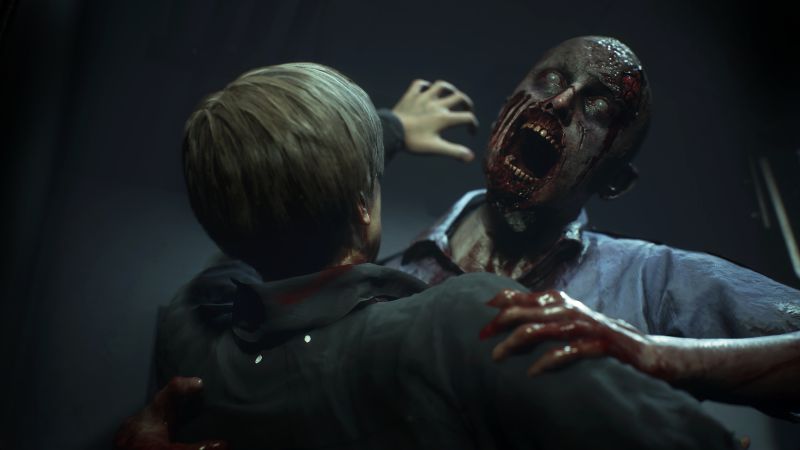
The early gameplay shows Grace won’t be using guns anytime soon; instead, she relies on light sources – lamps, switches, and even a lighter – as her primary tools (we’ll explain why later). The game features the kind of focused exploration, challenging puzzles, and item hunts that define the Resident Evil series. However, it also draws inspiration from the atmosphere of Resident Evil Village and the tense, stalking enemies of Resident Evil 2 Remake.
The atmosphere of Resident Evil Requiem is heavily influenced by Village. The Rhodes Hill Chronic Care Center isn’t just a location; its dark and decaying environment strongly resembles that of Village. With its detailed Victorian design, slightly gothic style, and damp interiors, the Center’s offices hint at corruption, while its shadowy hallways conceal gruesome secrets. Like the isolated village in Village, the Center has a disturbing past that you can sense through its oppressive atmosphere before you even learn what happened there.
Both games share a dark and oppressive atmosphere, but it’s more than just scenery – it shows how dangerous the worlds truly are. Like the police station in RE2 Remake, Requiem uses the environment to its advantage, creating a terrifying, lumbering enemy – the latest in Resident Evil’s long line of relentless pursuers. Similar to enemies like Mr. X, Nemesis, or Lady Dimitrescu from Village, this creature in Requiem appears without warning and chases you through complex indoor spaces. It constantly interrupts Grace’s searches, appearing unexpectedly from almost anywhere, and even breaks through ceilings to do so.
Once the monster is aware of you, sound becomes incredibly important – it both attracts the creature and serves as your main way to distract or defend yourself in the darkness. The way sound works in this game feels even more central to survival than in games like Resident Evil 2, where you could hear Mr. X’s heavy footsteps and door slams throughout the police station. In Requiem, the monster scratches and moves through the walls and floors of the cramped, claustrophobic hallways, letting you know exactly where it is. The game also intentionally creates noisy moments to draw the monster towards you – for example, dropping metal objects creates loud clangs that alert it, leading to a constant cycle of careful exploration and quick, quiet movement. While it shares similarities with the stealth gameplay in Resident Evil 7, Requiem feels more confident and refined in its use of stealth mechanics.
Like many stealth games, you can use distractions – often by throwing glass bottles – to mislead the monster and hide your location. However, the monster will eventually find you. The developers say its behavior isn’t entirely predictable; your success depends on how well you avoid it. It’s hard to tell from demos how much of the monster finding you is scripted versus due to player error, but when it does chase you, there are safe areas to hide in. These function similarly to the save rooms in Resident Evil, but are more integrated into the story.
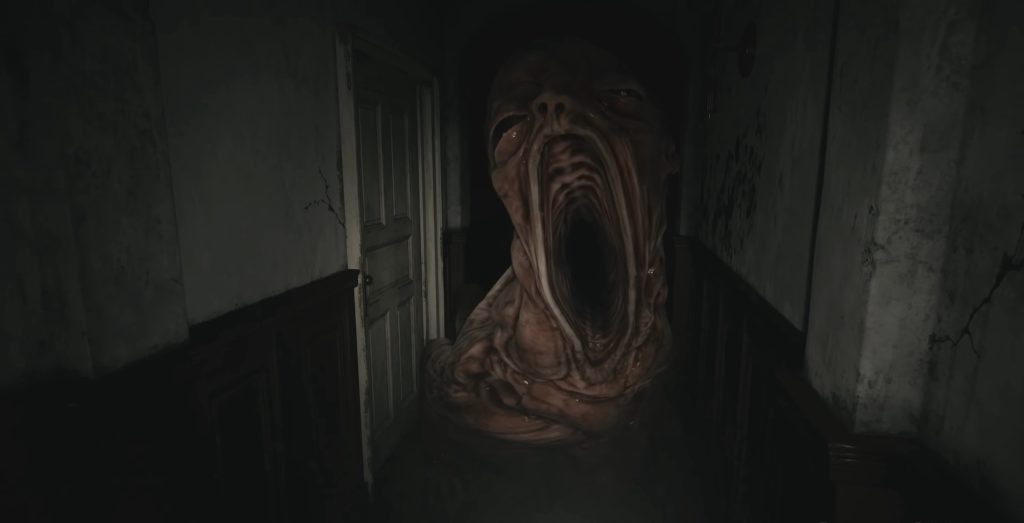
As we mentioned before, Grace doesn’t fight the creature with weapons, but with light. When she gets into a lit room, the monster backs down because the bright lights hurt it. In the original Resident Evil 2 Remake, Mr. X’s avoidance of rooms with typewriters was a bit odd, but it was convenient for the player. Resident Evil Requiem explains this behavior – the monster retreats from the light for a logical reason, instead of just giving the player a break. This makes the game feel more realistic and immersive.
Based on what we’ve seen of the game, Grace eventually gets a gun. However, at the beginning, she’s defenseless and ill-equipped, only able to rely on the occasional flashlight. Grace feels more vulnerable than most Resident Evil heroes – similar to Sherry Birkin in the Resident Evil 2 Remake – and embodies the scary, slow-burn horror of the older games. This is a shift from the more action-focused style of Resident Evil Village.
According to the developers of Requiem, the game’s two main characters will directly influence how the horror unfolds, much like the ability to switch between their perspectives. You can choose how you want to view the action, but switching between Grace, who is vulnerable and investigates clinically, and Leon, who is powerful and brutal, will create a deeply emotional and unsettling experience. The gameplay will shift between moments of quiet tension and intense, violent action.
Requiem doesn’t drastically change the Resident Evil formula, but it expertly blends the series’ signature horror with a feeling of vulnerability and reactive gameplay. If the developers can maintain this delicate balance, Requiem could be more than just the next installment – it could be the culmination of everything Resident Evil has been building towards. There’s a glimmer of hope amidst the darkness, but are you ready to confront your fears?
Please be aware that the opinions shared in this article are the author’s own and don’t reflect the official stance of GamingBolt.
Read More
- Best Controller Settings for ARC Raiders
- Review: Final Fantasy Tactics: The Ivalice Chronicles (PS5) – Still the Benchmark for Turn-Based Tactics
- Mark Zuckerberg & Wife Priscilla Chan Make Surprise Debut at Met Gala
- The Boys Season 5 Officially Ends An Era For Jensen Ackles’ Soldier Boy
- Nippon Sangoku Is The Best New Post-Apocalyptic Anime of Spring 2026
- Elon Musk’s Mom Maye Musk Shares Her Parenting Philosophy
- 10 Greatest Manga Endings of All Time
- The Witcher 3 Officially Reveals Stunning New Ciri Figure Coming 2026
- The WONDERfools ending explained: What happened to the Child of Eternity?
- 7 Great Marvel Villains Who Are Currently Dead
2026-01-16 16:47