Author: Denis Avetisyan
Recent results from the Belle and Belle II experiments are pushing the boundaries of the Standard Model by searching for rare decays that could signal the existence of new particles and interactions.
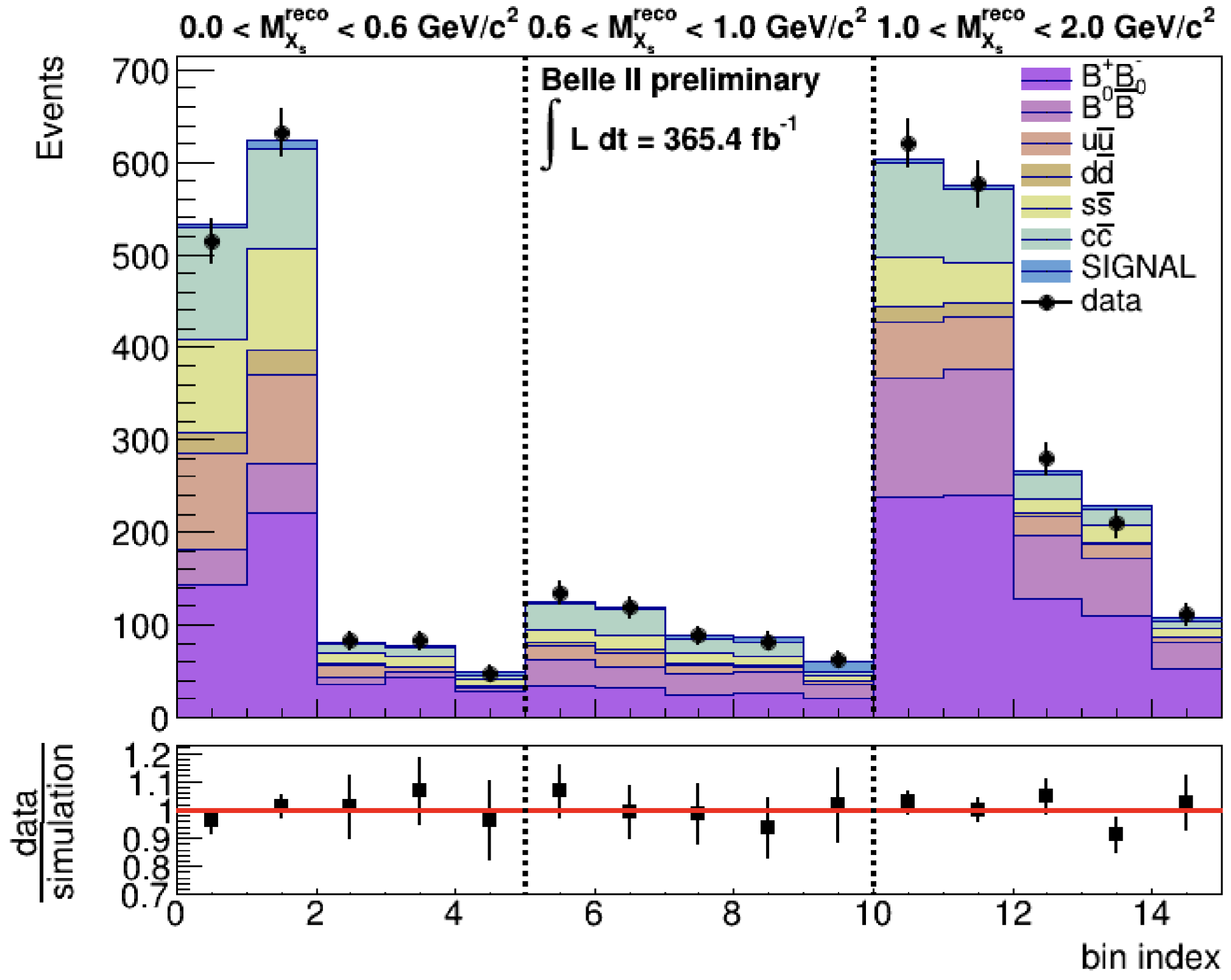
This review details searches for lepton-flavor violation and electroweak penguin decays of B-mesons to final states with missing energy, establishing frameworks for interpreting results and constraining beyond-the-Standard-Model scenarios.
Despite the remarkable success of the Standard Model, discrepancies hint at underlying physics beyond our current understanding, motivating searches for rare processes. This paper, ‘Measurements of electroweak penguin and lepton-flavor violating B decays to final states with missing energy at Belle and Belle II’, presents recent analyses from the Belle and Belle II experiments seeking evidence for such deviations in B-meson decays. By examining decays involving neutrinos, taus, and muons – particularly those with missing energy signatures – these studies establish sensitive frameworks for probing new physics. Will these searches reveal the first definitive cracks in the Standard Model, paving the way for a more complete theory of particle physics?
Unveiling the Cracks: Beyond the Standard Model with B Meson Decays
The Standard Model of particle physics, despite its decades of success in describing fundamental forces and particles, remains incomplete. Numerous cosmological observations – such as the existence of dark matter and dark energy – alongside phenomena like neutrino masses, lie outside its predictive power. This inadequacy motivates the ongoing search for “New Physics” – theoretical frameworks extending the Standard Model to encompass these unexplained observations. Physicists propose various extensions, including supersymmetry, extra dimensions, and new fundamental particles, each offering potential explanations for the discrepancies. The pursuit of New Physics isn’t about disproving the Standard Model, but rather identifying the more comprehensive theory of which it is merely a low-energy approximation, a stepping stone towards a deeper understanding of the universe’s fundamental laws.
B mesons, unstable particles containing a bottom quark, provide a unique window into fundamental physics due to their well-defined decay pathways. Scientists meticulously analyze these decays, not to simply catalogue the resulting particles, but to test the precision of the Standard Model-the prevailing theory describing all known fundamental forces and particles. Because the Standard Model makes specific predictions about the rates and properties of these decays, any observed deviation-even a tiny fractional difference-could signal the presence of new, undiscovered particles or interactions. These measurements are particularly sensitive because quantum effects amplify the influence of potential new physics, meaning even weak interactions beyond the Standard Model can leave a detectable imprint on B meson decay patterns. Consequently, B meson decays serve as a high-precision ‘stress test’ for the Standard Model, offering a powerful avenue for exploring the mysteries that lie beyond our current understanding of the universe.
Recent analyses of B meson decays reveal intriguing anomalies that challenge the predictions of the Standard Model. Specifically, the observed rates for decays involving a b quark transforming into a strange quark, accompanied by a pair of leptons (τ and ℓ̄), consistently deviate from theoretical expectations. These discrepancies aren’t simply statistical fluctuations; they hint at the possible involvement of previously unknown particles – perhaps heavy bosons or new types of quarks – influencing these decay processes. While further data is crucial for confirmation, the observed patterns suggest these new entities could be interacting with the b and s quarks, altering the probabilities of these specific decays and providing a tantalizing glimpse beyond the established framework of particle physics. The ongoing investigation focuses on refining measurements and exploring theoretical models that could accommodate such deviations, potentially revolutionizing the understanding of fundamental forces and particle interactions.
![Fits to <span class="katex-eq" data-katex-display="false">\bar{b}\to\bar{s}\tau^{-}e^{+}\</span> data, combining Belle and Belle II results for the <span class="katex-eq" data-katex-display="false">K_{S}^{0}\</span> mode (3a) and simultaneously fitting the <span class="katex-eq" data-katex-display="false">K^{*0}\</span> mode (3b, 3c), demonstrate consistency between the datasets [6, 8].](https://arxiv.org/html/2601.11279v1/clo2.png)
Precision Measurements: Dissecting the Decay Pathways
The Belle and Belle II experiments are central to current B meson decay studies due to their capacity to collect high-statistics datasets. Belle accumulated an integrated luminosity of 711 fb⁻¹ during its operational period. Belle II has, through Run 1 and Run 2, achieved a combined integrated luminosity of 490 fb⁻¹ (365 fb⁻¹ + 125 fb⁻¹). These high luminosities, facilitated by advanced detector technologies, enable precise measurements of branching fractions and decay parameters, crucial for probing the Standard Model and searching for new physics.
Precise reconstruction of B meson decays is complicated by the frequent production of particles that do not directly register in detectors, most notably neutrinos. Because neutrinos interact weakly with matter, they leave no discernible track, resulting in “missing energy” within the event. To account for these undetectable particles, physicists employ techniques that infer neutrino presence and momentum based on the measured properties of the visible decay products, applying conservation laws – specifically conservation of energy and momentum – to calculate the missing four-vector. Accurate determination of this missing four-vector is essential for precisely measuring the kinematic variables of the decay and extracting meaningful physics results from the experiment.
BB tagging, utilized in B meson decay studies, encompasses techniques to identify and reconstruct the presence of both B mesons produced in e^+e^- collisions. Inclusive tagging identifies all charged tracks not associated with the decay under study, assuming they originate from the other B meson. Hadronic tagging specifically focuses on reconstructing the other B meson via its hadronic decay products, requiring particle identification and kinematic reconstruction. Both methods are essential for fully reconstructing the event, allowing for improved signal efficiency by providing a clean sample enriched in events where both B mesons are detected and their kinematics are well-measured, effectively reducing background noise and increasing the precision of decay parameter measurements.
The selection of specific B meson decay channels, such as B^0 \rightarrow K^{*0}\tau^{+}\tau^{-} and B \rightarrow X_s\nu\nū , benefits from the application of machine learning algorithms, notably Boosted Decision Trees (BDTs). BDTs function by combining multiple decision trees to create a strong classifier, effectively discriminating between signal and background events. These algorithms are trained on simulated data and utilize kinematic variables of the decay products to optimize selection criteria. By leveraging the complex relationships between these variables, BDTs significantly improve the signal-to-background ratio, enhancing the statistical power of analyses targeting rare decay modes and precise measurements of Standard Model parameters. The output of the BDT is a discriminant variable, which is then used as an input for subsequent analysis steps.
![Transformed Boosted Decision Tree distributions effectively differentiate between <span class="katex-eq" data-katex-display="false">B\bar{B}</span> and <span class="katex-eq" data-katex-display="false">q\bar{q}</span> backgrounds, the <span class="katex-eq" data-katex-display="false">B^{0}\to K^{0}\tau^{+}\tau^{-}</span> signal, and a reference signal at <span class="katex-eq" data-katex-display="false">\mathcal{B}=10^{-2}</span>, as demonstrated in reference [7].](https://arxiv.org/html/2601.11279v1/Ksztautau.png)
A Framework for the Unknown: Weak Effective Theory and Precision Calculations
Weak Effective Theory (WET) offers a systematic method for analyzing the impact of high-energy physics beyond the Standard Model on low-energy processes. Rather than directly modeling the unknown high-energy dynamics, WET focuses on the observable, low-energy effects by expanding physical quantities in powers of q/Λ, where q represents the typical momentum transfer of the process and Λ is a characteristic energy scale of the new physics. This allows for a model-independent description, parameterizing the influence of new physics through a series of effective operators added to the Standard Model Lagrangian. By focusing on these low-energy operators, WET provides a framework for calculating observable quantities and comparing them with experimental measurements, enabling searches for deviations from the Standard Model predictions without needing a specific high-energy completion.
Wilson Coefficients provide a systematic method for incorporating the effects of new physics into calculations of low-energy observables. These coefficients function as parameters that quantify the strength of interactions mediated by hypothetical heavy particles beyond the Standard Model. By treating these new interactions as perturbations, their contributions to processes like decay rates or scattering cross-sections are expressed as expansions in powers of 1/Λ, where Λ represents the mass scale of the new physics. Each Wilson Coefficient corresponds to a specific operator in the effective Hamiltonian, representing a particular type of new interaction. Determining the values of these coefficients, through comparison of theoretical predictions with experimental measurements, allows for a precise characterization of the nature and strength of potential new physics effects.
Histogram reweighting is a statistical technique used to modify the probability distribution function (PDF) of a Monte Carlo simulation without requiring a full re-simulation. This is achieved by applying a weight to each event based on the ratio of the new theoretical PDF to the original one. The technique is particularly useful in high-energy physics for reinterpreting experimental results obtained under one set of theoretical assumptions to test alternative scenarios, such as those involving Beyond the Standard Model physics. By efficiently modifying the event weights, histogram reweighting enables precise comparisons between theoretical predictions and experimental data across a range of parameter spaces, significantly reducing computational cost compared to generating entirely new datasets.
Combining theoretical calculations of decay rates with high-precision experimental measurements allows for rigorous Standard Model tests and the potential discovery of New Physics. Specifically, analysis of B \rightarrow X_s \nu \nu decays, where X_s represents all possible strong decay products containing a strange quark, has yielded the most stringent 90% Confidence Level upper limit on the branching fraction to date. This limit is derived from precise predictions of the form factor and phase space, combined with data collected by experiments like Belle and BaBar, providing a sensitive probe for beyond the Standard Model contributions to leptonic decays.
The Horizon of Discovery: Implications and Future Directions
The meticulous examination of B meson decays represents a crucial frontier in the search for physics beyond the Standard Model. These decays, particularly those involving charged leptons, offer a sensitive probe for deviations from established theoretical predictions. Specifically, searches for charged lepton flavor violation – a process strictly forbidden within the Standard Model – could provide a definitive signal of New Physics. Furthermore, precise measurements of R(D(*)), the ratio of the branching fractions of B mesons decaying into leptons and D mesons, reveal intriguing discrepancies with Standard Model expectations. Continued analyses, leveraging ever-increasing datasets, aim to confirm or refute these anomalies, potentially unveiling the existence of new particles and interactions that reshape our understanding of the fundamental constituents of the universe.
The pursuit of New Physics relies heavily on the continued refinement and expansion of experimental capabilities, and facilities like Belle II are poised to deliver substantial advancements. Planned upgrades will dramatically increase the collected data samples, allowing physicists to probe for exceedingly rare decay processes with unprecedented precision. This heightened sensitivity is crucial because potential signals of New Physics are often masked by the overwhelming abundance of Standard Model events; a larger dataset effectively amplifies the signal, making subtle deviations – those hinting at physics beyond current understanding – far more detectable. By pushing the boundaries of data acquisition and analysis, these improvements promise to unlock new insights into the fundamental laws governing the universe and potentially reveal the existence of undiscovered particles or forces.
The experiments at Belle and LHCb are now capable of examining particle interactions with unprecedented precision, reaching sensitivities below 10⁻⁵ for certain rare decay processes. This leap in capability allows physicists to explore regions of theoretical parameter space that were previously beyond experimental reach. These previously inaccessible areas may harbor subtle deviations from the Standard Model of particle physics, potentially revealing the influence of undiscovered particles or forces. By meticulously analyzing vast datasets with this enhanced sensitivity, researchers are effectively pushing the boundaries of knowledge and seeking evidence for New Physics that could reshape our fundamental understanding of the universe.
The persistent anomalies observed in B meson decays aren’t merely statistical fluctuations; they represent a potential fracture in the Standard Model of particle physics, hinting at a more complex reality awaiting discovery. Should these deviations from established theory withstand further scrutiny, a paradigm shift would be necessary, demanding the incorporation of new particles and forces to explain the observed behavior. This would not only address the existing discrepancies but also unlock entirely new avenues of exploration in fundamental physics, potentially revealing connections between the seemingly disparate realms of quantum mechanics and gravity. The pursuit of understanding these anomalies promises a revolution in our comprehension of the universe’s building blocks and the forces that govern them, pushing the boundaries of scientific knowledge and inspiring generations of researchers to delve deeper into the mysteries of existence.
The pursuit of precision measurements in B-meson decays, as detailed in this study, reveals a commitment to rigorously testing the boundaries of the Standard Model. This methodical approach echoes Thomas Kuhn’s observation that “the more novel and revolutionary an idea, the more thoroughly it must be tested.” The researchers establish frameworks for reinterpreting results, acknowledging that even negative findings contribute to a deeper understanding of particle physics. This dedication to empirical verification, even in the face of expected outcomes, is paramount; it is not merely about confirming existing theories but about responsibly refining the landscape of knowledge and acknowledging the values embedded within the methods of inquiry.
Beyond the Standard Model: Charting a Course
The continued search for lepton flavor violation in B-meson decays, as detailed in this work, reveals a field perpetually at the edge of its observational power. Establishing robust frameworks for reinterpreting results is a necessary, if somewhat humbling, acknowledgement that the theoretical landscape may outpace experimental precision. The focus on missing energy signatures, while elegant, demands continuous refinement of hadronic tagging techniques; a deeper understanding of strong interaction dynamics remains crucial, lest systematic uncertainties obscure genuinely new physics.
One cannot help but note the implicit assumption that deviations from the Standard Model will resemble the patterns predicted by existing extensions. The persistent null results require a critical re-evaluation of the theoretical priors guiding these searches. The endeavor is not simply about finding cracks in the established model, but about being open to the possibility that the true physics lies beyond the currently imagined frameworks. Technology without care for people is techno-centrism; similarly, physics without humility risks becoming a self-fulfilling prophecy.
The Belle II experiment, with its increased luminosity, promises a wealth of data. However, data alone are insufficient. Ensuring fairness is part of the engineering discipline; in this context, it demands a rigorous assessment of potential biases in both data analysis and theoretical interpretation. The ultimate value of these searches lies not merely in confirming or refuting specific models, but in expanding the boundaries of what is known – and, crucially, acknowledging the limits of that knowledge.
Original article: https://arxiv.org/pdf/2601.11279.pdf
Contact the author: https://www.linkedin.com/in/avetisyan/
See also:
- GBP CNY PREDICTION
- Elon Musk’s Mom Maye Musk Shares Her Parenting Philosophy
- Forza Horizon 6 Car List So Far: Confirmed Highlights, Cover Cars, DLC, and Rewards
- 10 Greatest Manga Endings of All Time
- Elon Musk’s Ex Ashley St. Clair Reveals When Romance Became “Weird”
- 38 Years Later, Murder, She Wrote’s Most Overlooked Episode Still Pulls Off TV’s Greatest Crossover
- Mark Zuckerberg & Wife Priscilla Chan Make Surprise Debut at Met Gala
- Hollow Knight: Silksong Guide – All 30 Lost Flea Locations
- 20 K-Dramas That Nailed the Perfect Ending
- A Major PlayStation Delisting Exposes a Sony Problem
2026-01-19 21:59