Author: Denis Avetisyan
New research applies advanced quantization techniques to k-essence cosmology, offering insights into the universe’s earliest moments and its ultimate destiny.
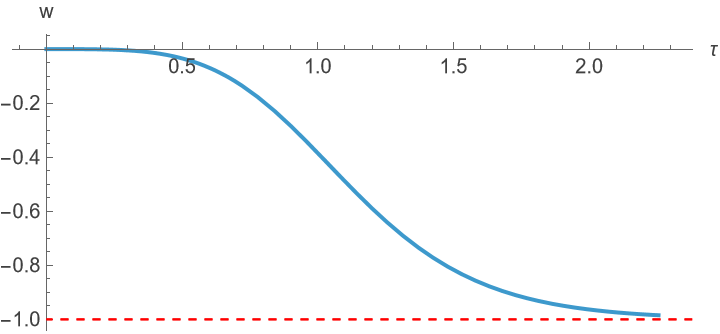
This paper presents a universal quantum description of k-essence cosmology using the Dirac-Bergmann algorithm, exploring implications for singularity avoidance and the nature of phantom energy.
The persistent challenge of quantizing cosmological models necessitates methods that consistently address constraints and provide physically meaningful quantum descriptions. This paper, ‘Dirac-Bergmann algorithm and canonical quantization of $k$-essence cosmology’, presents a canonical quantization scheme for $k$-essence cosmology utilizing the Dirac-Bergmann algorithm to construct a Hamiltonian formulation and identify relevant constraints. We demonstrate a universal quantum description, independent of potential form, leading to a Wheeler-DeWitt equation analogous to the massless Klein-Gordon case, and explore the implications for phantom energy and singularity avoidance. Under what conditions can quantum tunneling effects resolve cosmological singularities and provide insights into the nature of dark energy?
The Universe’s Genesis: A Delicate Balance
The prevailing Big Bang theory accurately predicts many observed features of the cosmos, yet it encounters difficulties when attempting to explain the universe’s large-scale structure. Specifically, the observed geometry of the universe is remarkably flat – akin to a sheet of paper rather than a strongly curved sphere or saddle – a condition demanding incredibly precise initial conditions. This is known as the Flatness Problem. Compounding this is the Horizon Problem, which notes that distant regions of the universe appear remarkably uniform in temperature, despite never having been in causal contact – meaning light, and thus information, hasn’t had time to travel between them since the Big Bang. These puzzles indicate that the standard model, while successful in many respects, may be incomplete, and necessitate further investigation into the very earliest moments of cosmic history to understand how such a finely-tuned and uniform universe arose.
The observed uniformity of the cosmos and its nearly flat geometry present a significant challenge to standard cosmological models, indicating a need for an expansive force in the universe’s infancy. Early inhomogeneities – variations in density and temperature – would have been stretched and diluted by a period of extremely rapid expansion, effectively smoothing out the universe and driving it towards the flatness observed today. This proposed epoch, often termed ‘inflation’, posits an exponential increase in scale within a tiny fraction of a second after the Big Bang. By dramatically increasing the volume of space, inflation would have taken initially small, causally connected regions and expanded them to encompass the vast observable universe, explaining the remarkable homogeneity across cosmic scales. Consequently, the search for evidence supporting or refuting this inflationary epoch remains a central focus in modern cosmology, seeking to unravel the universe’s earliest moments and its initial conditions.
The prevailing cosmological models encounter difficulty in accounting for the universe’s observed uniformity and spatial flatness without positing an extraordinarily precise set of initial conditions – a scenario demanding the early universe began in a state of almost unbelievable order. This reliance on finely tuned starting points has motivated physicists to explore dynamical explanations, mechanisms inherent to the universe itself that could have driven it towards these observed conditions. Rather than accepting a universe that just happened to begin in the right state, research focuses on identifying processes – such as a period of extremely rapid expansion known as inflation – that would naturally smooth out irregularities and flatten the geometry of spacetime, offering a compelling alternative to the need for improbable initial configurations. These dynamical explanations aim to shift the burden of explanation from the initial state to the laws of physics governing the universe’s evolution.
Cosmic Inflation: An Elegant Solution
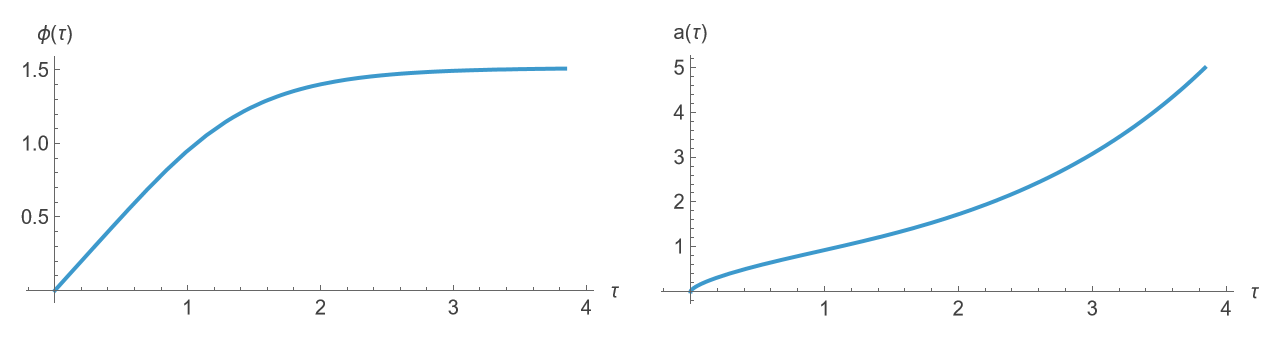
Inflationary cosmology postulates a period of accelerated, exponential expansion in the very early universe, lasting from approximately 10^{-{36}} to 10^{-{32}} seconds. This expansion is theorized to be driven by a hypothetical scalar field, often termed the “inflaton,” possessing a potential energy that dominated the universe’s energy density during this epoch. The rapid expansion addresses the flatness problem by stretching any initial curvature of spacetime to near-zero, and resolves the horizon problem by inflating small, causally connected regions to sizes exceeding the current observable universe; effectively, regions now vastly separated were once in thermal equilibrium. This “stretching” of initial conditions explains the observed homogeneity and isotropy of the Cosmic Microwave Background radiation.
Slow-Roll Inflation posits that the inflationary epoch was driven by a scalar field slowly rolling down its potential energy surface. This mechanism predicts a nearly scale-invariant spectrum of density perturbations, consistent with observations of the Cosmic Microwave Background (CMB). The predictions are derived from solving the equations of motion for the scalar field during inflation, relating the field’s potential, V(\phi), to observable parameters like the spectral index and tensor-to-scalar ratio. A frequently analyzed limiting case simplifies the potential to a constant value, V = V_0, which leads to a specific set of predictions that can be compared to CMB data, enabling constraints on the energy scale of inflation and the properties of the inflaton field.
Establishing the precise initial conditions responsible for initiating inflationary expansion remains a significant challenge in cosmology. Current models, while successful in describing the subsequent exponential growth and its observable consequences-such as the flatness and homogeneity of the universe and the characteristics of the Cosmic Microwave Background-do not fully address the state of the universe prior to inflation. A comprehensive understanding necessitates a theoretical framework that bridges inflationary cosmology with the earliest, Planck-era moments-a regime where quantum gravity effects are dominant and classical descriptions break down. This requires investigation into the potential origins of the inflaton field and its initial energy density, possibly linking inflation to pre-Big Bang scenarios or quantum fluctuations in a primordial spacetime.
Beyond Classical Limits: Quantum Cosmology’s Reach
Quantum cosmology represents an attempt to apply the principles of quantum mechanics, traditionally used to describe microscopic systems, to the universe considered as a whole. This approach is motivated by the limitations of classical general relativity at the very beginning of the universe, specifically at the cosmological singularity – a point of infinite density and curvature. By treating the universe as a quantum system, described by a wavefunction Ψ, researchers aim to avoid this singularity and provide a description of the universe’s initial conditions. The wavefunction encapsulates the probability amplitude for observing a particular universe, allowing for the investigation of quantities like the scale factor and momentum, and potentially offering insights into the universe’s origin and evolution without encountering the predictive failures of classical cosmology at extreme scales.
Canonical quantization and the Dirac-Bergmann algorithm are utilized in quantum cosmology to transition from a classical description of the universe to a quantum one within the Hamiltonian framework. The Hamiltonian formulation expresses the universe’s dynamics in terms of generalized coordinates and their conjugate momenta. Canonical quantization involves promoting these classical variables to operators acting on a wavefunction, subject to canonical commutation relations. However, applying this directly to general relativity leads to the problem of a constrained Hamiltonian – the constraints represent dependence on redundant degrees of freedom. The Dirac-Bergmann algorithm systematically identifies first-class and second-class constraints, allowing for the reduction of the phase space and the consistent quantization of the remaining degrees of freedom. This process is crucial for obtaining a well-defined quantum cosmology, as it ensures the resulting theory is both mathematically consistent and physically meaningful, allowing for calculations of observables like the scale factor.
The Mini-Superspace approach simplifies cosmological calculations by reducing the infinite degrees of freedom in the universe to a finite number, typically focusing on the Scale Factor. When combined with Path Integral methods, this allows for the computation of the universe’s wavefunction and makes theoretical predictions possible. Analysis of the resulting mini-superspace metric reveals a diagonal form, specifically with components of -V0/2 and 2/V0, where V0 represents a characteristic volume. This diagonal metric indicates a simplification of the quantum description, suggesting that the dynamics of the universe, within this approximation, can be effectively modeled using a limited set of parameters and a relatively straightforward quantum mechanical framework.
Beyond the Standard Model: Exploring Exotic Cosmic Fates
KK-Essence Theory presents a compelling avenue for cosmological research by moving beyond traditional assumptions about the behavior of scalar fields – fields that permeate the universe and drive phenomena like inflation. Standard cosmological models typically assume a specific form for the kinetic term in the scalar field’s equation of motion, but this theory deliberately introduces non-standard terms, allowing for a broader range of possibilities. This flexibility is crucial because it opens the door to alternative inflationary scenarios – periods of rapid expansion in the early universe – that may better align with observational data. By manipulating the kinetic terms, researchers can explore how different scalar field potentials influence the expansion rate and ultimately, the large-scale structure of the cosmos. The implications extend to understanding the very beginning of the universe and potentially resolving discrepancies between current models and observed cosmic microwave background anisotropies, offering a nuanced approach to the fundamental questions surrounding cosmic origins.
The KK-Essence theory extends cosmological models beyond conventional scalar fields, opening doors to the investigation of exotic energy components like Tachyonic Fields and Phantom Energy. These concepts, while initially appearing counterintuitive-Tachyonic Fields possessing imaginary mass and Phantom Energy exhibiting negative kinetic energy-offer potential solutions to long-standing cosmological puzzles. Specifically, Phantom Energy, with its equation of state w < -1, suggests a universe destined for a “Big Rip,” where the accelerating expansion overcomes all binding forces. Conversely, exploring Tachyonic Fields allows for models where the universe avoids an initial singularity, offering alternative scenarios to the standard Big Bang. By rigorously analyzing these unconventional energy forms within the KK-Essence framework, researchers aim to refine predictions about the universe’s evolution and ultimately determine its ultimate fate, potentially revealing a future drastically different from current expectations.
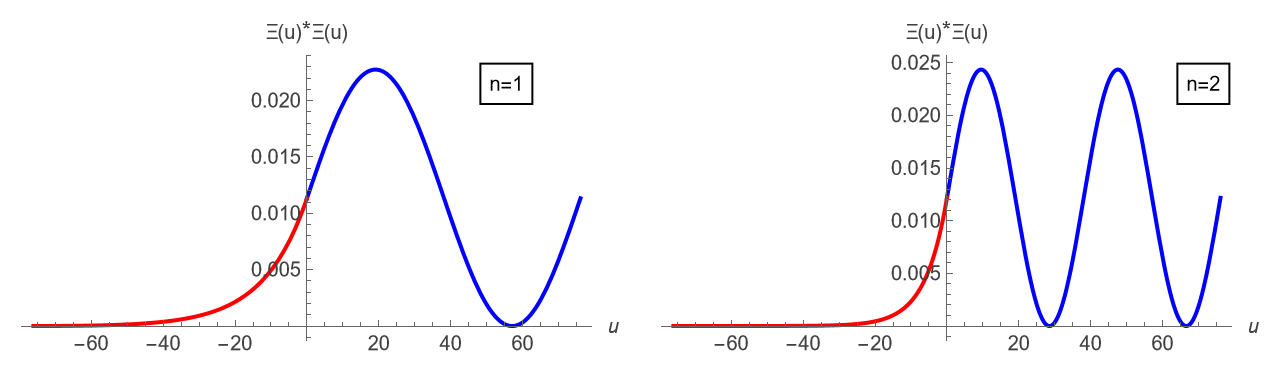
Quantum cosmology, when integrated with the principles of Loop Quantum Cosmology, presents a compelling avenue for addressing the long-standing cosmological singularity problem. This approach moves beyond classical general relativity by quantizing the geometry of spacetime itself. Recent analysis reveals a crucial link between boundary conditions imposed on the wave function of the universe and the avoidance of this singularity; specifically, enforcing a condition where the wave function diminishes to zero at a maximum scale u_{max} correlates with a ‘node’ occurring at the phantom divide. This phantom divide represents a critical energy density threshold, and the presence of a node suggests that the universe may transition from a contracting phase to an expanding one before reaching infinite density – effectively circumventing the singularity predicted by classical models. This mechanism proposes a quantum bounce, offering a potential explanation for the universe’s origin and a resolution to the puzzle of its initial state.
The pursuit of a universal quantum description, as demonstrated by the Dirac-Bergmann algorithm’s application to kk-essence cosmology, echoes a principle of elegant reduction. This work distills complex potential forms into a foundational quantum framework, much like refining a design to its essential components. The exploration of boundary conditions concerning singularity avoidance and phantom energy isn’t merely mathematical exercise; it’s an act of editing, not rebuilding, seeking clarity within the inherent structure of the universe. As Marcus Aurelius observed, “The impediment to action advances action. What stands in the way becomes the way.” This resonates deeply – the challenges encountered in defining these cosmological boundaries ultimately define the path toward a coherent quantum cosmology.
Where Do We Go From Here?
The application of the Dirac-Bergmann algorithm to $k$-essence cosmology, as demonstrated, yields a gratifyingly universal quantum description. Yet, one is left with the distinct impression of having solved a particularly elegant puzzle, only to reveal a far larger, more enigmatic landscape. The independence from specific potential forms, while aesthetically pleasing, merely shifts the burden of explanation. The true challenge lies not in quantizing a model, but in selecting the correct model-and justifying that selection with something beyond mathematical consistency.
The exploration of boundary conditions-particularly those relevant to singularity avoidance and phantom energy-hints at a deeper connection between quantum gravity and the observed late-time acceleration of the universe. However, these conditions remain, for now, largely phenomenological. A truly compelling account would derive them from fundamental principles, perhaps through a more complete understanding of the wavefunction of the universe. The current formalism, while robust, offers little guidance in navigating the subtle interplay between quantum fluctuations and classical spacetime.
Ultimately, the beauty in this work emerges not from the answers it provides, but from the clarity with which it frames the questions. Every interface element, every Hamiltonian constraint, is part of a symphony-a complex arrangement of mathematical structures that, while harmonious, still leaves one searching for the composer. The path forward demands a bolder embrace of conceptual innovation, and a willingness to venture beyond the comfortable confines of well-established paradigms.
Original article: https://arxiv.org/pdf/2601.16703.pdf
Contact the author: https://www.linkedin.com/in/avetisyan/
See also:
- GBP CNY PREDICTION
- 10 Most Powerful Versions of Superman, Ranked
- Gold Rate Forecast
- 10 Greatest Wii U Games of All Time, Ranked
- DOGE PREDICTION. DOGE cryptocurrency
- EUR CNY PREDICTION
- 007 First Light: Release Date, Story, Gameplay, Cast, Editions, and Platforms
- Superman’s 7 Best Power-Ups, Ranked
- Forza Horizon 6 Car List So Far: Confirmed Highlights, Cover Cars, DLC, and Rewards
- 10 Best Free Games on Steam in 2026, Ranked
2026-01-26 10:42