Author: Denis Avetisyan
Researchers have developed a novel formalism for consistently describing interactions between classically propagating fields and fully quantum systems, offering a pathway beyond standard perturbative calculations.
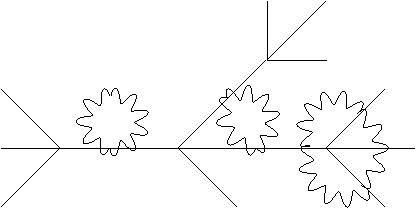
This review details a reorganization of quantum field theory using Lagrange multipliers to constrain fields to tree-level propagation, enabling consistent calculations of interactions with purely quantum fields.
Conventional quantum field theory relies on perturbative expansions that can become unwieldy when considering constrained field dynamics. This paper, ‘Classical interactions in quantum field theory’, introduces a reorganized perturbative framework utilizing Lagrange multipliers to enforce classical propagation-restricted to tree diagrams-for fields interacting with fully quantum counterparts. This approach allows for consistent calculations beyond standard methods, yielding insights into effective potentials and symmetry breaking, demonstrated here within a six-dimensional O(N)-symmetric model. Could this formalism offer a pathway to systematically explore non-perturbative phenomena and novel interactions in quantum field theory?
The Illusion of Simplicity: Constrained Propagation
Quantum Field Theory (QFT) traditionally employs perturbation theory to approximate solutions to complex interactions, but this method frequently necessitates summing an infinite series of terms to achieve even a reasonable level of accuracy. Each term in this series corresponds to a Feynman diagram representing a possible interaction between particles, and while the initial diagrams are straightforward, the complexity-and the number of diagrams required for precision-grows rapidly. This reliance on infinite sums presents a significant obstacle to practical calculations, often leading to divergent results or requiring elaborate renormalization procedures to extract meaningful physical predictions. The inherent difficulty in managing these infinite series has long motivated the search for alternative, more tractable approximation schemes within the framework of QFT, ultimately aiming to simplify calculations without sacrificing crucial physical insights.
A novel approach termed ‘Classical Field Propagation’ offers a pathway to simplify calculations within Quantum Field Theory by deliberately restricting field interactions. This method circumvents the typical issue of infinite sums arising from perturbative expansions-a common obstacle in QFT-by exclusively utilizing tree diagrams for field propagation. Tree diagrams, representing the most basic Feynman diagrams with no loops, provide a finite and well-defined approximation to complex interactions. By focusing solely on these fundamental diagrams, the technique establishes a robust calculation scheme, maintaining crucial physical insights while avoiding the mathematical difficulties inherent in higher-order perturbative corrections. This constrained propagation effectively offers a practical means of tackling previously intractable problems within the framework of quantum field theory, offering a clear and manageable pathway to explore complex physical phenomena.
The methodology offers a robust and definitively bounded approximation for calculations within Quantum Field Theory, sidestepping the typical divergences encountered with perturbative expansions. By strictly limiting field propagation to tree diagrams – those representing the most straightforward interactions – the scheme avoids the infinite sums that often plague QFT calculations. This constraint doesn’t merely offer computational convenience; it establishes a framework where physical predictions remain meaningful and grounded in established principles. Consequently, researchers can explore complex phenomena and refine theoretical models without being hampered by mathematical inconsistencies, preserving the essential physical insights needed to advance understanding of the quantum world.
The Symmetry We Impose: Breaking and Effective Potentials
The Coleman-Weinberg mechanism describes spontaneous symmetry breaking through the generation of an effective potential, V_{eff}(\phi), for scalar fields φ. This potential arises from quantum corrections – specifically, one-loop fluctuations of the scalar field itself – even when the classical Lagrangian possesses a symmetry that would normally be preserved. The effective potential includes a constant term and a contribution proportional to \phi^4, and can develop a minimum away from \phi = 0, indicating a symmetry-breaking vacuum. This mechanism differs from explicit symmetry breaking, as the classical Lagrangian remains symmetric; the symmetry is broken only in the quantum vacuum state defined by the minimum of V_{eff}(\phi). Consequently, fluctuations around this new vacuum state acquire a non-zero expectation value, leading to the emergence of a massless Goldstone boson or, when a gauge field is present, a massive gauge boson via the Higgs mechanism.
Constrained perturbation theory, implemented through the Lagrange Multiplier technique, addresses the challenges inherent in calculating the effective potential for scalar fields. Traditional perturbation theory diverges due to the presence of massless Goldstone bosons arising from spontaneous symmetry breaking; the Lagrange Multiplier method introduces constraints that regulate these divergences by fixing the symmetry-breaking order parameter. This allows for a well-defined, convergent perturbative expansion in terms of loop corrections to the effective potential, V_{eff}. Specifically, the method systematically incorporates loop diagrams while maintaining control over the ultraviolet behavior, enabling the calculation of quantum corrections to the potential and the determination of its minimum, which defines the symmetry-breaking vacuum.
Calculations utilizing constrained perturbation theory demonstrate that symmetry breaking can occur through quantum corrections even when the Lagrangian contains no explicit mass terms for the scalar field. These corrections arise from loop diagrams involving virtual particles, modifying the potential energy of the field. Specifically, the one-loop effective potential receives contributions that can shift the minimum of the potential away from zero field value, leading to a non-zero vacuum expectation value. This spontaneous symmetry breaking occurs because the quantum fluctuations effectively generate a mass scale, inducing a potential that favors a broken symmetry ground state; the resulting effective potential, V_{eff}, exhibits a minimum at a non-zero field value, signifying the broken symmetry.
The effective potential, V_{eff}(\phi), determines the ground state, or vacuum, of the quantum field theory by minimizing with respect to the field φ. The value of φ at this minimum defines the vacuum expectation value (VEV), and deviations from zero indicate spontaneous symmetry breaking. Furthermore, the shape of the effective potential around this minimum dictates the mass and self-coupling of the resulting particles. Specifically, the second derivative of V_{eff}(\phi) at the minimum provides the particle mass, while higher-order derivatives relate to interaction strengths. Therefore, a precise calculation of the effective potential is crucial for predicting the physical properties of the particles within the theory, including their masses, decay rates, and scattering cross-sections.
The Flow of Reality: Renormalization Group and Fixed Points
The Renormalization Group (RG) is a methodological framework used to analyze how the effective values of physical parameters within a theory change as the energy scale at which observations are made is varied. This is achieved through a series of transformations that systematically integrate out high-energy degrees of freedom, thereby modifying the coupling constants and other parameters governing the low-energy behavior. Specifically, the RG flow describes how these parameters evolve under changes in a momentum or energy scale μ. By examining the behavior of these parameters under continuous scale transformations, we can determine whether the theory exhibits ultraviolet (UV) or infrared (IR) fixed points, and consequently, understand its long-distance and short-distance properties, respectively. This process allows for the identification of relevant and irrelevant operators, crucial for constructing effective field theories at different energy scales.
Fixed points in the Renormalization Group (RG) flow represent specific values of coupling constants that remain unchanged under a rescaling of the energy or length scale. These points are crucial as they determine the long-distance, or infrared (IR), behavior of a physical theory. The stability of a fixed point dictates whether the system flows towards it as the energy scale decreases; a stable fixed point implies the system will exhibit behavior governed by the physics at that point. Conversely, unstable fixed points indicate a deviation from that behavior. The presence and nature of these fixed points are directly related to the existence of phase transitions; a change in the fixed point structure often signals a qualitative change in the system’s properties, such as a transition between different ordered phases. Therefore, identifying and characterizing fixed points within the RG flow is fundamental to understanding the critical behavior and long-range correlations of a system.
The combination of the 1/N expansion with Renormalization Group (RG) analysis provides a systematic method for locating and characterizing Infrared (IR) fixed points in a theory. The 1/N expansion allows for the calculation of β functions – which describe the energy scale dependence of coupling constants – as a series in powers of 1/N. These β functions are then used within the RG framework to identify fixed points, defined as the values of coupling constants that remain unchanged under changes in energy scale. IR fixed points, specifically, dictate the long-distance, low-energy behavior of the system and are crucial for understanding phenomena like phase transitions and critical phenomena. The accuracy of the 1/N expansion, and therefore the reliability of the identified IR fixed points, is directly related to the value of N; calculations demonstrate stable fixed points for N ≥ 40, but these fixed points are no longer present for N ≤ 56.
Analysis within our formalism demonstrates the existence of stable infrared fixed points for systems with a parameter N greater than or equal to 40. However, these fixed points are no longer present when N is less than or equal to 56. This indicates a critical value within this range where the long-distance, low-energy behavior of the system undergoes a qualitative change, potentially signifying a transition from a phase exhibiting critical behavior to one that does not. The observed dependence on N suggests that the stability of these fixed points, and thus the critical behavior, is sensitive to the underlying degrees of freedom or the effective number of interacting components within the system.
The Geometry of Mass: Dimensionality and Long-Range Behavior
Within the framework of six spacetime dimensions, a fascinating phenomenon known as Dimensional Transmutation arises from the intricate dance between quantum corrections and the Renormalization Group (RG) flow. This process reveals how a theory initially defined by dimensionless parameters – those without inherent units – can spontaneously generate a characteristic mass scale. Effectively, the RG flow, which describes how physical parameters change with energy scales, is altered by quantum fluctuations in such a way that dimensionless couplings acquire a dimension. This isn’t a mere mathematical quirk; it suggests a fundamental mechanism for the origin of mass within the theory, implying that mass isn’t necessarily an input parameter, but rather an emergent property of the spacetime structure and quantum interactions. The study highlights that the interplay between these quantum corrections and the RG flow isn’t simply additive, but can qualitatively alter the behavior of the theory, giving rise to new physical scales where none previously existed.
The generation of mass within this theoretical framework relies critically on a novel approach to perturbation theory, deliberately constrained to avoid the divergences typically encountered in quantum field theory. This constrained perturbation theory allows for the exploration of previously inaccessible regimes, revealing how dimensionless couplings can effectively ‘dress’ themselves with a mass scale through interactions in six spacetime dimensions – a phenomenon termed Dimensional Transmutation. By carefully controlling the approximations, the theory circumvents the need for ad-hoc renormalization procedures, instead revealing an inherent mechanism for mass generation arising from the structure of higher dimensions and quantum corrections. This process is not merely a mathematical trick, but a fundamental aspect of how the theory achieves stability and describes realistic physical phenomena, providing a pathway to understand the origin of mass itself.
The stability and ultimate behavior of quantum field theories are demonstrably linked to the number of spacetime dimensions, according to recent investigations. These studies reveal that altering dimensionality doesn’t simply scale existing phenomena; it fundamentally reshapes the landscape of possible interactions and outcomes. Specifically, research indicates a critical threshold – a point at which the theory transitions from instability to stability – occurs around six dimensions. Below this threshold, fixed points crucial for defining predictable long-range behavior vanish, suggesting a breakdown in the theory’s ability to consistently describe interactions at large distances. Conversely, in spacetimes with more than 56 dimensions, these stable fixed points emerge, indicating a robust framework for understanding the theory’s behavior even at infinite ranges. This sensitivity to dimensionality underscores the profound impact of geometric structure on the very foundations of quantum field theory, implying that the number of dimensions is not merely a setting, but a determinant of theoretical viability.
Investigations into the renormalization group flow reveal a critical threshold in spacetime dimensionality impacting the stability of quantum field theories. Specifically, the research demonstrates the existence of stable fixed points – points where the theory’s parameters remain constant under scale changes – only when the number of spacetime dimensions, denoted as N, exceeds 56. Below this threshold, these crucial fixed points vanish, suggesting a fundamental shift in the theory’s behavior and potentially leading to instability. This finding highlights the profound influence of dimensionality on the long-range properties of quantum fields, indicating that a sufficiently high-dimensional spacetime is necessary to maintain a well-behaved and stable quantum field theory; the value of N=56 represents a demarcation between stable and unstable regimes.
Visualizing the Invisible: Tools and Future Directions
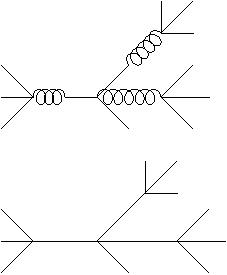
The research leveraged the combined power of Jaxodraw and Google Gemini to generate compelling visualizations of complex theoretical concepts. Specifically, Feynman diagrams, which depict particle interactions, and renormalization group (RG) flows, illustrating how physical laws change with energy scales, were rendered with unprecedented clarity. This visual approach proved instrumental in deciphering intricate relationships within the data, allowing for a more intuitive understanding of the underlying physics. By translating abstract mathematical results into accessible imagery, the team facilitated a deeper analysis and interpretation of their findings, ultimately strengthening the conclusions drawn from the study. These visualizations weren’t merely aesthetic enhancements; they served as crucial analytical tools, providing new perspectives on the behavior of quantum field theories.
This research establishes a versatile framework applicable to a diverse spectrum of quantum field theories, extending beyond the traditionally studied high-energy physics. The methodology proves particularly well-suited for investigations within condensed matter physics, where strongly correlated electron systems present challenges demanding non-perturbative approaches, and cosmology, where understanding the early universe requires grappling with quantum gravity and phase transitions. By combining constrained perturbation theory with renormalization group analysis, the technique offers a systematic way to explore critical phenomena and emergent behavior in these disparate fields, potentially revealing unifying principles governing complex quantum systems and offering new avenues for theoretical advancement in both fundamental physics and materials science.
Investigations are now shifting toward applying these computational methods to increasingly intricate theoretical frameworks. Researchers aim to move beyond established models and probe the potential structure of physics beyond the Standard Model, examining scenarios involving supersymmetry, extra dimensions, or novel particle interactions. This expansion requires refining algorithms to handle the computational demands of complex Feynman diagrams and renormalization group flows, potentially leveraging machine learning techniques to accelerate calculations and identify emergent patterns. Ultimately, this ongoing work seeks to determine whether these visualization and analytical tools can provide crucial insights into resolving long-standing puzzles in particle physics and cosmology, and potentially reveal the underlying principles governing the universe at its most fundamental level.
The synergy between constrained perturbation theory, renormalization group (RG) analysis, and cutting-edge visualization tools represents a powerful advance in theoretical physics. Constrained perturbation theory provides a systematic approach to calculations, while RG analysis reveals how physical laws evolve with energy scales – crucial for understanding phenomena across vastly different regimes. However, these methods often yield complex results. Advanced visualization, employing tools capable of rendering intricate diagrams like Feynman diagrams and RG flows, transforms abstract mathematical expressions into intuitive visual representations. This allows researchers to identify patterns, explore the behavior of quantum field theories in new ways, and ultimately, gain deeper insights into the fundamental laws governing the universe, potentially extending beyond the limitations of the Standard Model and into areas such as condensed matter systems and early cosmology.
The pursuit of consistent calculations, as detailed in this formalism, echoes a fundamental challenge in theoretical physics. Each measurement is a compromise between the desire to understand and the reality that refuses to be understood. As Bertrand Russell observed, “The difficulty lies not so much in developing new ideas as in escaping from old ones.” This paper attempts to escape the limitations of standard perturbation theory by reorganizing it with Lagrange multipliers, a method which, while mathematically rigorous, still operates within the boundaries of established frameworks. The elegance of defining ‘classical’ fields through this approach shouldn’t obscure the fact that any theoretical construction, no matter how refined, remains vulnerable to the infinite darkness beyond its event horizon.
What Lies Beyond?
The presented formalism, while mathematically consistent, ultimately illuminates the fragility of the classical picture itself. Current quantum gravity theories suggest that inside the event horizon – or, perhaps more aptly, beyond the limits of predictive power – spacetime ceases to have classical structure. The insistence on maintaining classical trajectories, even as a mathematical convenience, may prove a self-deception. Calculations involving Lagrange multipliers offer a method for interfacing these constrained fields with fully quantum ones, but this interface is itself a construct, a boundary drawn across a landscape where such distinctions may not ultimately exist.
Future work will undoubtedly focus on extending this approach to more complex interactions, and perhaps incorporating loop corrections. However, it is crucial to remember that everything discussed remains mathematically rigorous but experimentally unverified. The true test will not be in achieving numerical precision, but in confronting the inevitable divergence between theory and observation – the point at which the meticulously crafted classicality dissolves into the probabilistic foam.
The pursuit of classical limits in quantum field theory is not merely a technical exercise; it is a demonstration of intellectual humility. Each refinement of the formalism, each successful calculation, serves as a reminder that even the most elegant theories are, at best, temporary approximations, destined to vanish beyond the horizon of our understanding.
Original article: https://arxiv.org/pdf/2602.01310.pdf
Contact the author: https://www.linkedin.com/in/avetisyan/
See also:
- What Song Is In The New Supergirl Trailer (& What It Means For The DC Movie)
- Highly Anticipated Strategy RPG Finally Sets Release Date (And It’s Soon)
- Why is Tech Jacket gender-swapped in Invincible season 4 and who voices her?
- TV legend Carol Kirkwood reveals the reasons why she decided to retire after 28 years with BBC
- MOUSE: P.I. For Hire Loops in Caravan Palace for A Catchy New Track Ahead of April 16 Release
- Alan Ritchson’s Reacher Future Looks Hopeful Thanks To Amazon’s 10/10 Action Thriller Series
- 50 Years Ago, Star-Lord Made His Bizarre Debut
- Sydney Sweeney’s The Housemaid 2 Sets Streaming Release Date
- Crimson Desert is a “Cynical Amalgamation of Borrowed Mechanics,” Says Larian’s Publishing Director
- How Blake Lively & Ryan Reynolds’ Kids Pranked Her on April Fool’s Day
2026-02-03 22:16