Author: Denis Avetisyan
A new theoretical analysis reveals the unique spin-polarized currents and topological electronic structure of 2D d-wave altermagnets, paving the way for advanced spintronic devices.
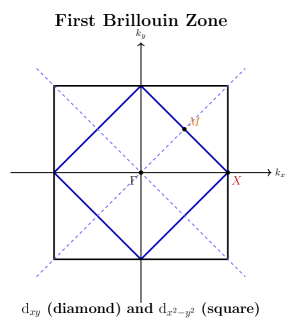
This review details a real and momentum space analysis of topological phases in 2D d-wave altermagnets, focusing on their potential for spin-orbit torque applications.
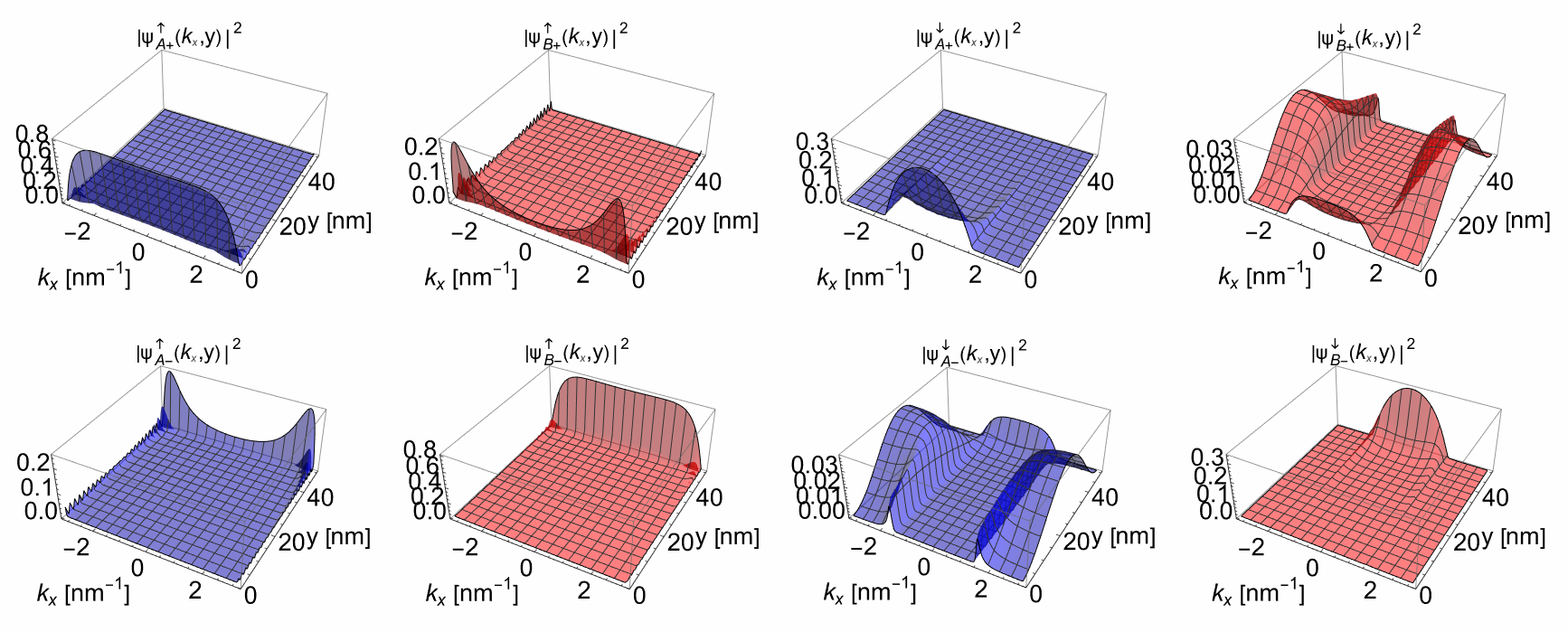
Conventional magnetism relies on net magnetization or antiferromagnetic order, yet a recently emerging paradigm-altermagnetism-challenges this dichotomy with momentum-dependent spin splitting and vanishing net magnetization. This study, ‘Real and momentum space analysis of topological phases in 2D d-wave altermagnets’, provides a comprehensive real- and momentum-space characterization of topological phases in this novel magnetic state, revealing robust edge states and giant conductivity anisotropy. We demonstrate that hybridization of these edge states enables controllable energy gaps, suggesting a pathway toward novel topological altermagnetic field-effect transistors. Could this information-theoretic framework pave the way for next-generation spintronic devices capable of both high-speed operation and efficient spin manipulation?
Beyond Conventional Magnetism: Introducing Altermagnetism
The well-established paradigms of magnetism – ferromagnetism, where spins align in parallel, and antiferromagnetism, characterized by opposing spin alignment – are increasingly inadequate for explaining recently discovered magnetic behaviors in certain materials. These traditional models struggle to account for complex spin arrangements that don’t fit neatly into either parallel or antiparallel categories, particularly as researchers explore materials with strong spin-orbit coupling and reduced dimensionality. Observations of unconventional magnetic order, where spins exhibit more intricate textures and interactions, necessitate a broadened understanding beyond these classical descriptions. This limitation has spurred the search for novel magnetic phases, highlighting the need to move beyond binary classifications and embrace a more nuanced view of spin interactions to fully characterize and ultimately harness these emerging magnetic phenomena.
Altermagnetism emerges as a distinct magnetic state, defying simple categorization as either ferromagnetic or antiferromagnetic. This novel phase arises from a specific arrangement of atomic spins that exhibits characteristics of both orderings, but crucially, doesn’t fully conform to either. Unlike ferromagnets, where spins align in the same direction, or antiferromagnets with alternating alignment, altermagnetism allows for a more complex, non-collinear spin texture. This intricacy isn’t merely academic; it provides a previously unattainable degree of control over spin orientation and manipulation. Researchers believe this unique control will be crucial for developing advanced spintronic devices, potentially enabling faster, more energy-efficient technologies by leveraging the spin of electrons, rather than just their charge, for information processing and storage.
Altermagnetism distinguishes itself through the emergence of intricate spin textures – arrangements of electron spins that aren’t simply aligned parallel or anti-parallel, but exhibit more complex, non-collinear patterns. These textures, arising from a unique interplay of magnetic interactions, aren’t merely a curiosity; they represent a new degree of freedom for manipulating spin-based information. Researchers anticipate these controlled spin configurations will be pivotal in the development of advanced spintronic devices, potentially enabling faster, more energy-efficient data storage and processing. The ability to engineer these textures opens doors to novel device functionalities, exceeding the limitations of traditional spintronics and paving the way for innovations in fields like magnetic sensors, memory technologies, and even quantum computing components.
Unveiling the Spin Landscape: Symmetry and Splitting
Altermagnetic materials exhibit a distinctive electronic behavior arising from their symmetry properties, most notably D-wave symmetry within their electronic band structure. Unlike conventional ferromagnets which rely on time-reversal symmetry breaking due to a net magnetization, altermagnetism arises from a spatially modulated, alternating pattern of magnetic moments. This specific symmetry leads to an inversion symmetry in momentum space, allowing for the existence of band degeneracies and unique spin-polarized states. The D-wave character dictates that the spin splitting of electronic bands is not uniform across the Brillouin zone but exhibits angular dependence, directly influencing the material’s topological properties and potential for generating large spin currents.
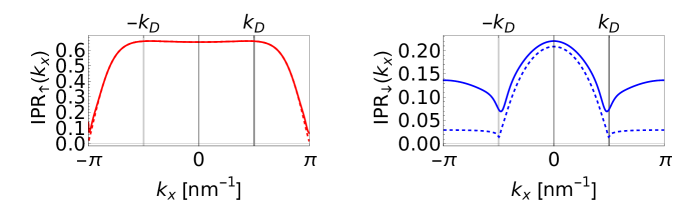
D-wave symmetry in altermagnetic materials directly impacts spin splitting by creating a momentum-dependent polarization of electronic states. Unlike conventional spin-orbit coupling which produces a constant spin polarization, D-wave symmetry leads to spin splitting that varies with the electron’s momentum within the Brillouin zone. This results in bands where electrons with opposite momenta have different spin polarizations, effectively creating a momentum-resolved spin texture. The electronic band structure is therefore modified, with the energy levels of spin-up and spin-down electrons diverging depending on their direction of travel, and influencing the material’s transport properties and potential for spin current manipulation.
Spin splitting, the removal of spin degeneracy in a material’s electronic band structure, is a key mechanism for generating and controlling spin currents. This control is essential for developing novel spintronic devices and functionalities. In altermagnetic materials exhibiting a topological phase, spin splitting can achieve effective polarization levels of up to 80%. This high degree of polarization facilitates efficient spin transport and manipulation, enabling the creation of devices with enhanced performance and reduced energy dissipation compared to conventional materials. The ability to reliably induce and control such substantial spin polarization is critical for applications including spin-based transistors, high-density data storage, and quantum computing components.
Topological Signatures and Electronic Control
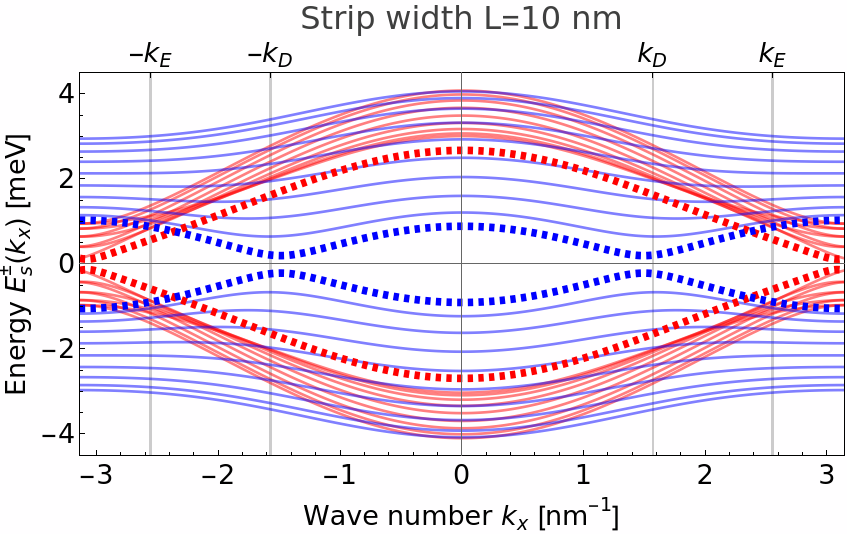
Altermagnetic materials, characterized by alternating antiferromagnetic ordering, demonstrate the capacity to undergo topological phase transitions impacting their electronic properties. These transitions represent a shift in the material’s band structure, fundamentally altering how electrons propagate. Specifically, the material moves between a topologically trivial insulating state and a topologically non-trivial state possessing protected edge states. This change is not a result of symmetry breaking in the conventional sense, but arises from the unique spin configurations within the altermagnetic structure, resulting in altered electron transport characteristics and potentially enabling novel electronic devices.
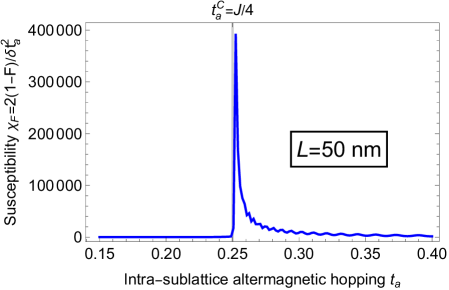
Topological phase transitions in altermagnetic materials are fundamentally linked to alterations in the material’s electronic band structure. Specifically, these transitions manifest as changes in the allowed energy levels for electrons within the material. A key characteristic of these transitions is the emergence of protected edge states – electronic states that exist at the boundaries or surfaces of the material and are robust against certain types of disorder. These transitions occur at a defined critical hopping strength, denoted as t_{aC} = J/4, where J represents the exchange interaction. At this critical point, the band structure undergoes a qualitative change, leading to the formation of these topologically protected states and altered electronic conductivity.
The ability to predict and modulate altermagnetic topological phase transitions enables precise control of electron behavior by manipulating the material’s band structure. Fidelity, representing the robustness of a specific electronic state, and susceptibility, indicating the ease with which the transition occurs in response to external stimuli, are key parameters in this control. Specifically, maintaining fidelity around the critical hopping strength of t_aC = J/4 ensures stable edge states and predictable electron transport. Conversely, increasing susceptibility allows for on-demand switching between topological phases, offering a pathway to create novel electronic devices where electron flow is governed by the material’s topological properties and external control parameters.
Altermagnetism: A Pathway to Spintronic Innovation
Altermagnetism, a unique magnetic ordering where magnetization alternates between opposite directions across a material’s structure, is proving pivotal in the development of next-generation spintronic devices. Unlike conventional ferromagnets, altermagnetic materials exhibit a net zero magnetization, yet still allow for the manipulation of electron spin – the fundamental principle behind spintronics. This characteristic opens doors to designing advanced memory storage solutions, potentially exceeding the density and energy efficiency of current technologies. Furthermore, altermagnetism facilitates the creation of novel logic components where information is processed using spin rather than charge, promising faster and more energy-efficient computation. The ability to finely control spin polarization without a net magnetic field dramatically reduces energy dissipation and allows for miniaturization, paving the way for compact and powerful spintronic circuits.
Recent advancements in spintronics have revealed Spin-Splitter Torque, a mechanism that dramatically enhances the efficiency of magnetization switching within devices. Unlike conventional Spin-Transfer Torque, which relies on a single spin current, Spin-Splitter Torque utilizes a dual-current approach, effectively separating spin-up and spin-down electrons to exert a more focused and powerful force on the magnetic material. This refined control reduces the energy required for switching, leading to lower power consumption and faster operation speeds in spintronic devices. The increased efficiency isn’t merely incremental; it promises a significant leap forward in the development of high-density, low-power memory and logic components, potentially overcoming limitations currently hindering broader adoption of spintronic technologies. Initial studies suggest this technique could improve switching speeds by up to two orders of magnitude, opening doors to entirely new device architectures and performance benchmarks.
Edgetronics, a burgeoning field within spintronics, centers on manipulating and utilizing the unique electronic states that exist at the edges or surfaces of materials. These edge states, arising from quantum confinement and topological properties, offer a pathway to create devices that operate with significantly reduced power consumption and enhanced speed. Unlike conventional devices relying on bulk material properties, edgetronic devices leverage these surface phenomena, minimizing energy dissipation and maximizing electron mobility. Researchers are actively exploring various materials, including topological insulators and two-dimensional materials, to harness these edge states for applications ranging from ultra-fast transistors to highly sensitive sensors and novel memory architectures. The inherent robustness of edge states against backscattering also promises increased device reliability and performance in challenging environments, positioning edgetronics as a key enabler for future nanoscale technologies.
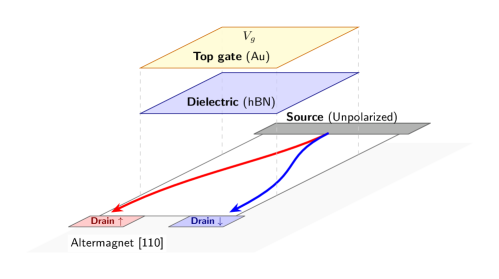
The convergence of recent spintronic innovations is actively shaping the future of data storage and processing. Specifically, advances are enabling the development of next-generation memory technologies, most notably Spin-Transfer Torque Magnetization Random-Access Memory (STT-MRAM), which promises faster speeds and lower energy consumption compared to conventional RAM. Simultaneously, research into innovative Nanoribbon Field-Effect Transistors (FETs) is yielding promising results; these devices feature a hybridization gap-a key determinant of their electronic properties-that can be precisely tuned by adjusting the ribbon width, denoted as L_y. Crucially, the coherence length governing electron transport within these nanoribbons has been experimentally determined to be approximately \lambda \approx 16 \text{ nm}, providing a critical parameter for optimizing device performance and scaling potential. This level of control over material properties suggests that nanoribbon FETs could eventually complement or even surpass traditional silicon-based transistors in certain applications.
Charting the Future: Probing and Expanding Altermagnetic Potential
A robust understanding of altermagnetism hinges on sophisticated theoretical modeling, with the Tight-Binding Hamiltonian serving as a particularly valuable tool. This approach allows researchers to simulate the electronic structure of materials, predicting the emergence of alternating ferromagnetic and antiferromagnetic arrangements without net magnetization. By accurately representing the interactions between electrons and the lattice, the Tight-Binding model can map out the band structure and density of states, revealing the presence of Dirac points and their sensitivity to spin-orbit coupling λ. These calculations are not merely predictive; they provide a crucial framework for interpreting experimental data, such as that obtained through Angle-Resolved Photoemission Spectroscopy, and for guiding the design of novel altermagnetic materials with tailored electronic and magnetic properties. The model’s ability to capture the complex interplay of quantum mechanical effects makes it indispensable for both fundamental research and potential applications in spintronics.
Angle-Resolved Photoemission Spectroscopy (ARPES) serves as a powerful experimental probe for directly visualizing the electronic states within altermagnetic materials. This technique measures the kinetic energy and momentum of electrons emitted from a sample when struck by photons, effectively mapping out the material’s electronic band structure – a crucial step in understanding its behavior. Importantly, ARPES is sensitive to the spin of emitted electrons, allowing researchers to not only chart energy and momentum but also to directly observe the complex spin textures characteristic of altermagnetic order. By analyzing these spin-resolved band structures, scientists can confirm the presence of symmetry-protected Dirac points and gain insight into how spin-orbit coupling influences the material’s electronic properties, ultimately guiding the design of novel spintronic devices.
Future investigations into altermagnetic materials are increasingly directed towards manipulating spin polarization with greater precision, aiming to move beyond simply observing this unique magnetic order. Researchers anticipate that controlled spin textures will unlock novel functionalities, particularly through the exploitation of the Crystal Hall Effect – a phenomenon where a current driven through the material generates a voltage perpendicular to both the current and the magnetic field, without the need for a net magnetization. Optimizing this effect holds significant promise for low-power spintronic devices, potentially leading to advancements in data storage, sensors, and energy-efficient computing. Current efforts focus on material design and strain engineering to enhance the Crystal Hall conductivity and minimize energy dissipation, paving the way for practical applications of this emerging field.
The emergence of altermagnetism is deeply intertwined with the topological properties of electronic band structures, particularly the presence of Dirac points and the strength of spin-orbit coupling. Dirac points, where conduction and valence bands touch, facilitate unique spin-dependent transport, while spin-orbit coupling-an interaction between an electron’s spin and its motion-lifts spin degeneracy and unlocks unconventional magnetic textures. Materials exhibiting strong spin-orbit coupling near Dirac points are predicted to host robust altermagnetic phases, characterized by non-collinear spin order and a finite net magnetization even without time-reversal symmetry breaking. Consequently, researchers are actively exploring heterostructures and compounds designed to engineer these Dirac points and enhance spin-orbit interactions, aiming to precisely control the resulting magnetic properties and ultimately create materials with tailored functionalities for spintronic devices and quantum technologies. \vec{k} \cdot (\vec{S} \times \vec{p}) represents the fundamental interaction driving these effects, where \vec{k} is the wave vector, \vec{S} is the spin, and \vec{p} is the momentum operator.
The exploration of altermagnetism, as detailed in this study, reveals a fascinating interplay between electronic structure and emergent topological properties. This pursuit of novel states of matter demands careful consideration of the underlying principles guiding material behavior. As Isaac Newton observed, “An object in motion tends to stay in motion.” Similarly, the drive for innovation in spintronics, particularly concerning spin-polarized currents and Dirac points, carries an inherent momentum. However, this momentum must be tempered with ethical considerations; scalability without acknowledging the potential societal impact of these advancements risks acceleration toward unforeseen consequences. The careful analysis of Berry phases and edge states presented here underscores the need for responsible development in this burgeoning field.
Where Do We Go From Here?
The exploration of altermagnetism, as detailed within this work, reveals a landscape of tunable spin polarization and topological effects. However, the immediate promise of ‘novel spintronic devices’ demands a more critical assessment. What exactly is being optimized for in these designs? Increased efficiency, certainly, but at what cost to energy consumption, materials sourcing, or the potential for unforeseen emergent behaviors? The theoretical elegance of Dirac points and edge states must not overshadow the practical realities of fabrication and control.
A key limitation remains the disconnect between idealized models and the inherent disorder of real materials. The pursuit of topological protection is, in a sense, an attempt to build resilience against imperfection. Yet, the very imperfections that disrupt perfect topological order may also give rise to functionalities currently unconsidered. Algorithmic bias is, after all, a mirror of values – and the values encoded within these simulations must be explicitly stated and interrogated.
Future work should prioritize not simply the discovery of new phases, but a deeper understanding of their stability, controllability, and – crucially – their ethical implications. Transparency is the minimum viable morality, and the field must move beyond celebrating ‘potential’ towards a rigorous evaluation of the societal impact of these increasingly sophisticated materials and devices.
Original article: https://arxiv.org/pdf/2602.04854.pdf
Contact the author: https://www.linkedin.com/in/avetisyan/
See also:
- The Super Mario Galaxy Movie: 50 Easter Eggs, References & Major Cameos Explained
- 10 Best Free Games on Steam in 2026, Ranked
- Surprise Isekai Anime Confirms Season 2 With New Crunchyroll Streaming Release
- Sydney Sweeney’s The Housemaid 2 Sets Streaming Release Date
- Welcome to Demon School! Iruma-kun season 4 release schedule: When are new episodes on Crunchyroll?
- Preview: Sword Art Online Returns to PS5 as a Darker Open World Action RPG This Summer
- Skate 4 – Manny Go Round Goals Guide | All of the Above Sequence
- Why is Tech Jacket gender-swapped in Invincible season 4 and who voices her?
- Forza Horizon 6 ‘Prologue’ gameplay
- Joel Kinnaman Claims ‘Peacemaker’ Was His Last Time as Rick Flag Jr. in the DCU
2026-02-05 12:58