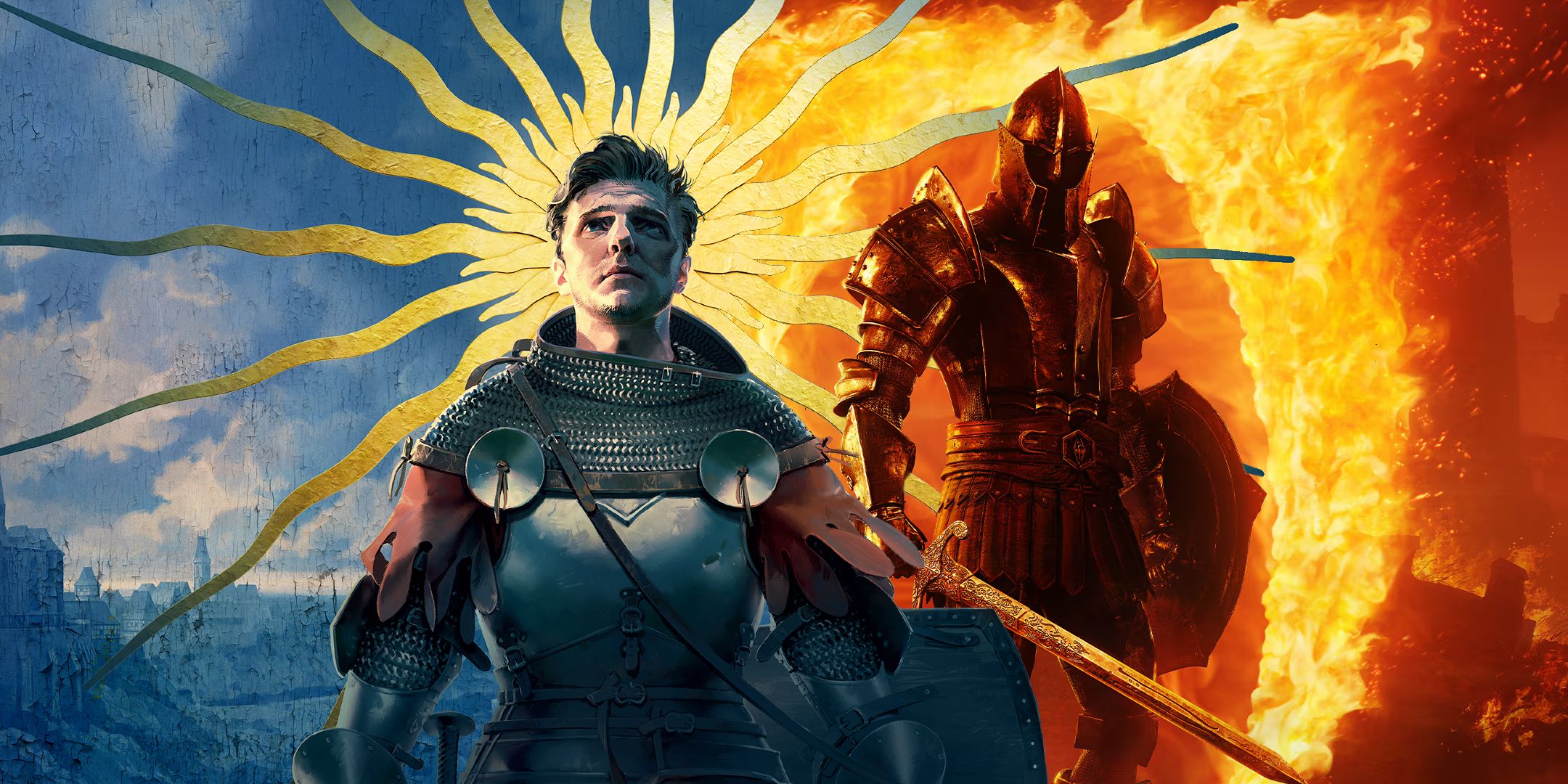
I started playing The Elder Scrolls 4: Oblivion Remastered expecting a lot, because the original game is a classic for me. While the remaster itself is a great improvement (even with some performance problems), I think I went in with unrealistic expectations. I played for many hours, but couldn’t bring myself to finish the game, and don’t think I’ll revisit it. It wasn’t until I began playing Kingdom Come: Deliverance 2 that I realized what Oblivion Remastered was lacking.
I’ve got a bit of a complicated relationship with Kingdom Come: Deliverance. I really tried to get into the first game a few years back, but honestly, it felt too awkward and I ended up stopping before I made much progress. It was pretty clunky – reminded me of Oblivion in that way – and while the sequel, KCD2, still has some of that, it feels much more refined overall. But what’s really struck me about both Oblivion Remastered and KCD2 isn’t necessarily about how smoothly they play, or don’t!
Oblivion Isn’t As Immersive As My Nostalgia Led Me To Believe

When Oblivion was released in 2006, it was a game-changer, and not just for me. As an 11-year-old just getting into gaming, it really opened my eyes to what video games could be. It was also incredibly ambitious for its time. A key feature of Oblivion is Bethesda’s Radiant AI system. Simply put, Radiant AI makes the characters in the game feel more alive by giving them their own routines and goals to pursue.
I’ve always loved how Bethesda RPGs let you get lost in these huge, living worlds. What really grabbed me was how the characters felt like they were actually living their lives, going about their daily routines. But revisiting Oblivion Remastered recently, even after all these years, really highlighted how far games have come. It’s still amazing how big the world is, with all those cities bustling with people, but honestly, it feels a little shallow compared to modern games. It’s funny, people were even making mods back then to try and improve how the characters acted – that’s how much potential it had, and how much people cared!
I didn’t get the same feeling of being completely lost in Oblivion Remastered as I did with the original game. Instead of exploring and getting sidetracked, I found myself just quickly traveling between towns to finish the main story. It’s not the game’s fault – it came out 20 years ago – but I’ve unexpectedly found what I was hoping for in Kingdom Come: Deliverance 2.
KCD2 Is The Immersive Sandbox RPG I Didn’t Know I Needed

Kingdom Come: Deliverance 2, the new game from Warhorse Studios, feels a lot like a Bethesda RPG, but it’s grounded in history instead of fantasy—though there’s a talking dog and whispers of magical horseshoes! Set in 15th-century Bohemia (modern-day Czech Republic), the game focuses on realistic historical fiction. Its complex mechanics and the way it starts you—stripped of everything as the main character, Henry—make it feel like a true medieval peasant simulator.
Like older games such as Oblivion and Skyrim, KCD2 includes realistic survival elements where you need to eat and sleep. The game also features a day/night cycle that affects what characters are doing – you might need to wait until morning to talk to someone who’s asleep at night. Overall, the Kingdom Come games share a similar feel to those classic titles, but offer a more detailed and immersive experience.
You’ll need to wear clothes beneath your armor. Walking through mud will wear out your shoes quickly. And people won’t be happy if you approach them covered in blood or smelling like death after visiting a graveyard. Don’t expect a typical, overpowered fantasy experience like in The Elder Scrolls with Kingdom Come: Deliverance 2. Its unique combat system is actually quite challenging, but the game excels at creating a believable, immersive world where everything feels connected and demands your attention.
Creating a sword requires careful work – heating and hammering it into the desired form. To preserve fresh fruit, you need to dry it in a smokehouse or cook it over a fire. The game’s quests feel similar to those in Oblivion, with the main character constantly getting involved in trouble and local conflicts. Even the user interface in KCD2 brings Oblivion to mind, particularly its historically-inspired map and menus.
Video games have become more complex since Oblivion Remastered first came out, and while that’s not a criticism of the game itself, it’s hard to recreate that original feeling of being completely immersed in its world. Thankfully, Kingdom Come: Deliverance 2 has filled that void. Despite not receiving the recognition it deserved at the Game Awards, Kingdom Come: Deliverance 2 has really impressed me and unexpectedly given me the same experience I used to have with The Elder Scrolls 4: Oblivion Remastered.
Read More
- The Super Mario Galaxy Movie: 50 Easter Eggs, References & Major Cameos Explained
- Surprise Isekai Anime Confirms Season 2 With New Crunchyroll Streaming Release
- 10 Best Free Games on Steam in 2026, Ranked
- ‘Project Hail Mary’: The Biggest Differences From the Book, Explained
- Skate 4 – Manny Go Round Goals Guide | All of the Above Sequence
- Starfield (PS5) Review – A Successful Cross-Console Voyage
- Sydney Sweeney’s The Housemaid 2 Sets Streaming Release Date
- Why is Tech Jacket gender-swapped in Invincible season 4 and who voices her?
- Preview: Sword Art Online Returns to PS5 as a Darker Open World Action RPG This Summer
- Every Real Housewives Series Ranked: Worst to Best
2026-02-08 20:21