Author: Denis Avetisyan
New research reveals that subtle effects from neutron star spin and relativistic hydrodynamics significantly impact our ability to determine the matter composition of these extreme objects.
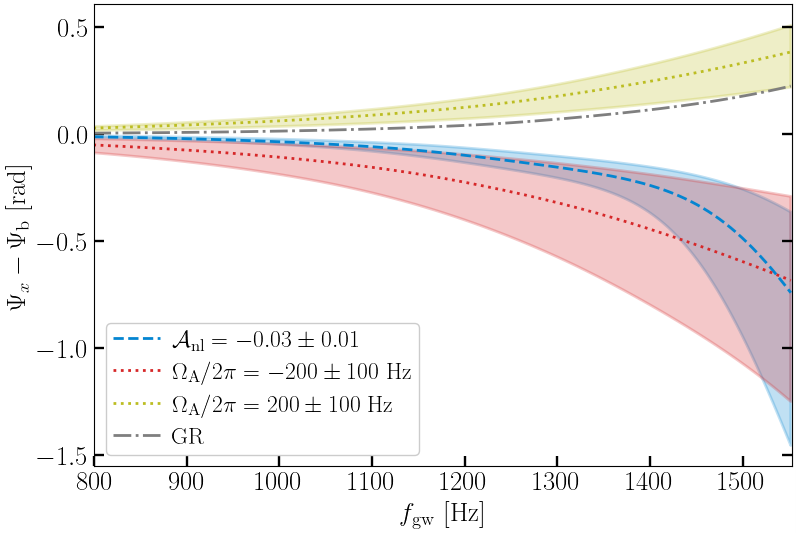
Accounting for nonlinear hydrodynamics and frame-dragging effects is crucial for accurately inferring the neutron star equation of state from gravitational wave observations of f-mode frequencies.
Constraining the equation of state of neutron stars remains a central challenge in nuclear astrophysics, despite recent progress enabled by gravitational wave observations of binary neutron star mergers. This research, ‘Impact on Inferred Neutron Star Equation of State due to Nonlinear Hydrodynamics, Background Spin, and Relativity’, investigates systematic biases in tidal deformability estimates arising from approximations in modeling neutron star f-mode frequencies. We demonstrate that neglecting the effects of nonlinear hydrodynamics, background spin, and relativity can introduce a significant bias-up to +8%-in inferred tidal deformabilities, crucial for equation of state inference. As next-generation gravitational wave detectors approach design sensitivity, will improved waveform models incorporating these corrections be essential to accurately probe the fundamental properties of matter at extreme densities?
The Echo of Creation: Listening to the Universe in a New Light
For decades, astronomy relied almost exclusively on electromagnetic radiation – light, radio waves, X-rays, and more – to reveal the secrets of the cosmos. However, the recent, direct detection of gravitational waves has fundamentally altered this landscape, inaugurating a new era of multi-messenger astronomy. These ripples in spacetime, predicted by Einstein’s theory of general relativity, are generated by accelerating massive objects, offering a completely independent way to observe the universe. Notably, events like the merger of binary neutron stars – incredibly dense remnants of collapsed stars – become visible through these waves. Unlike light, gravitational waves are virtually unimpeded by intervening matter, allowing scientists to probe events hidden from traditional telescopes and offering unprecedented insights into the most violent and extreme environments in the universe. This capability promises a deeper understanding of stellar evolution, the behavior of matter under immense pressure, and even the fundamental laws governing the cosmos.
Binary neutron star mergers represent unique astrophysical laboratories for investigating gravity in its most extreme form and unveiling the properties of matter at unprecedented densities. The intense gravitational fields near merging neutron stars-far exceeding those achievable in terrestrial experiments-allow physicists to rigorously test Einstein’s theory of General Relativity and search for deviations that might hint at new physics. Simultaneously, the material ejected during these collisions-rich in neutrons-undergoes rapid nuclear reactions, forging heavy elements like gold and platinum. By analyzing the gravitational wave signal and the electromagnetic radiation emitted, scientists can reconstruct the conditions within these mergers, effectively probing the equation of state of ultra-dense nuclear matter-a realm where the very structure of matter is pushed to its limits and 10^{17} kg/m3 densities are routinely encountered.
Decoding the complex signals of gravitational waves from merging neutron stars demands sophisticated theoretical frameworks. These aren’t simple recordings; the observed waveforms represent the culmination of extreme gravitational forces, matter compressed to unimaginable densities, and the dynamic interplay of spacetime itself. Scientists construct detailed models, often employing numerical relativity – computationally intensive simulations that solve Einstein’s field equations – to predict the expected gravitational wave signature. These models account for factors like the neutron stars’ masses, spins, and equations of state – the relationship between pressure and density within the stars. By meticulously comparing these predictions with the observed signals, researchers can not only confirm the existence of these mergers but also extract crucial information about the fundamental physics governing matter under the most extreme conditions, effectively using these cataclysmic events as cosmic laboratories to test the limits of General\, Relativity and probe the nature of dense matter.
The Imprint of Deformation: Mapping Neutron Star Interiors
As binary neutron star systems inspiral and approach merger, the gravitational field of each star induces tidal forces on the other, causing them to deviate from their spherical shape. This deformation is not merely a static effect; the changing separation and relative orientation of the stars during the inspiral dynamically alters the tidal forces and, consequently, the emitted gravitational wave signal. The amplitude and phase of these gravitational waves are sensitive to the magnitude of the deformation, providing a means to infer the stars’ tidal deformability. Specifically, the leading-order effect manifests as a 5/2-post-Newtonian correction to the waveform’s phase, allowing for constraints on the neutron stars’ internal structure and equation of state through gravitational wave observations.
TidalDeformability, quantified by the dimensionless tidal parameter Λ, directly reflects a neutron star’s susceptibility to distortion from external tidal forces. This parameter is fundamentally linked to the Equation of State (EoS) which describes the relationship between pressure and density within the star. Because neutron star matter exists at densities exceeding that of atomic nuclei, the EoS is highly uncertain and dependent on the behavior of hyperons, quarks, and other exotic forms of matter. A ‘softer’ EoS, indicating a rapid decrease in pressure with increasing density, results in greater deformability and a larger Λ value, while a ‘stiffer’ EoS leads to lower deformability and a smaller Λ. Therefore, precise measurements of tidal deformability, obtained through gravitational wave observations of binary neutron star mergers, provide crucial constraints on the EoS and, consequently, our understanding of matter at extreme densities.
The interaction between binary neutron star systems is significantly affected by stellar spin and relativistic phenomena. A neutron star’s ω spin frequency influences the magnitude and pattern of tidal deformation, introducing asymmetries into the gravitational waveform. Furthermore, strong gravitational fields necessitate consideration of frame-dragging, where the rotating mass of one star warps spacetime, altering the orbital trajectory and tidal forces experienced by its companion. Relativistic redshift, caused by the intense gravity, modifies the observed frequencies of emitted gravitational waves, and affects the precise measurement of tidal deformability. These effects are not simply additive; they interact, requiring complex modeling to accurately predict the gravitational wave signal and infer the properties of the neutron stars.
Beyond Simplification: Reconstructing the Merger in Full Complexity
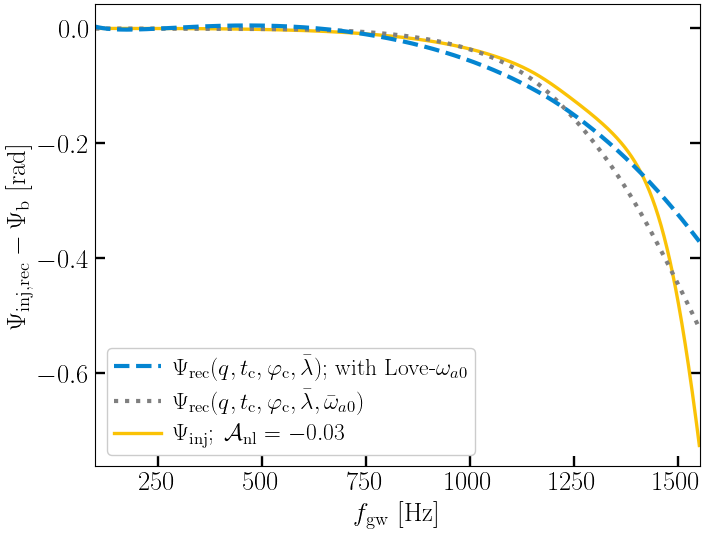
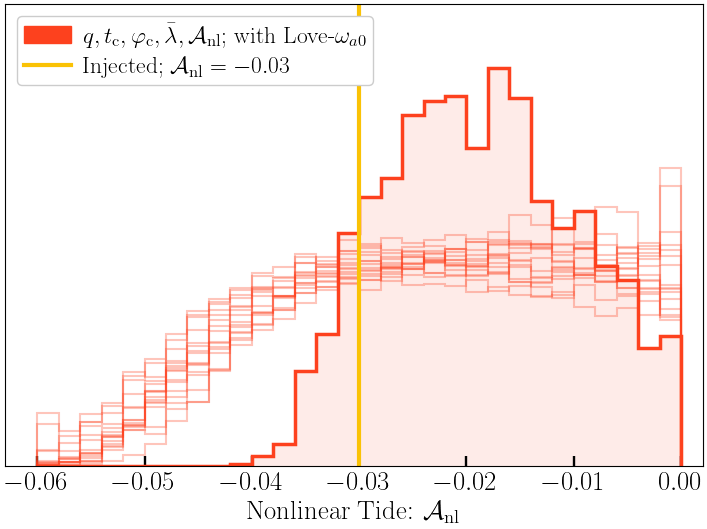
Accurate modeling of neutron star mergers necessitates the inclusion of Nonlinear Hydrodynamics due to the significant non-linearities inherent in gravitational tidal forces. Simplified approaches that treat tidal interactions as linear fail to capture crucial effects arising from the strong gravitational fields and rapidly changing densities during the merger process. These non-linearities directly impact the dynamics of the system, influencing the formation of tidal tails, the ejection of matter, and ultimately, the gravitational waveform emitted. Consequently, neglecting these effects introduces a systematic bias; studies indicate an approximate +8% error in estimated tidal deformability when utilizing linear approximations, highlighting the importance of incorporating a full non-linear treatment for precise predictions and accurate parameter estimation.
The fundamental mode of oscillation, a natural vibrational frequency of the neutron star, significantly influences the dynamics of a binary neutron star merger. This mode, typically around 2-3 kHz, is excited by the tidal forces exerted during the inspiral phase. Accurate modeling requires capturing the coupling between the oscillating neutron star and the changing tidal field; neglecting this interplay leads to inaccuracies in predicting the merger’s evolution and the emitted gravitational wave signal. The excitation and subsequent damping of the fundamental mode alters the neutron star’s shape and affects the peak amplitude and phase of the gravitational waves, particularly during the later stages of the inspiral and the initial moments of the merger. Consequently, precise parameter estimation, including the determination of tidal deformability, necessitates a robust treatment of the fundamental mode’s behavior within the broader non-linear hydrodynamical simulation.
Accurate prediction of the gravitational wave signal from neutron star mergers necessitates the use of numerical relativity simulations, combined with statistical parameter estimation techniques such as Hamiltonian Monte Carlo. These simulations model the spacetime curvature and matter dynamics during the merger process, allowing for the computation of waveform templates used in gravitational wave detection. Critically, neglecting nonlinear hydrodynamical effects within these simulations introduces a systematic bias in estimated tidal deformability – a key parameter governing the strength of tidal interactions – quantified as an overestimation of approximately +8%. This bias directly impacts the accuracy of parameter inference and the ability to constrain the equation of state of neutron star matter, highlighting the importance of fully relativistic, hydrodynamically complete simulations.
The Future of Gravitational Wave Astronomy: Peering Deeper into the Cosmic Fabric
The accurate interpretation of gravitational waves hinges on a rigorous comparison between observed signals and the predictions of theoretical models. Because these signals are incredibly faint, even minor discrepancies can obscure crucial information about the source. To quantify these differences, scientists employ metrics like WaveformMismatch, which essentially measures the degree to which two waveforms – one predicted by theory and one observed – fail to align. A lower WaveformMismatch indicates a better agreement between the model and the data, bolstering confidence in the extracted parameters like mass and spin. This precise comparison isn’t merely about confirming a signal’s existence; it’s about unlocking the detailed physics of extreme events like black hole mergers and neutron star collisions, allowing researchers to test the limits of Einstein’s theory of general relativity and probe the nature of gravity itself.
Neutron stars, remnants of massive stellar collapses, present a unique laboratory for probing extreme physics, but directly observing their internal composition remains a challenge. Fortunately, relationships between seemingly disparate properties offer indirect insights. Empirical connections, such as the ‘I-Love’ relation, link a neutron star’s moment of inertia (I) to its tidal deformability (Love), allowing scientists to constrain the elusive Equation of State – the mathematical description of matter at incredibly high densities. By precisely measuring these external properties through gravitational wave observations, researchers can effectively narrow down the possibilities for the internal composition and behavior of these fascinating objects, even without directly ‘seeing’ inside. This approach provides a powerful tool for understanding matter under conditions impossible to replicate on Earth.
The next generation of gravitational wave observatories-including Cosmic Explorer and Einstein Telescope, augmenting the capabilities of Advanced LIGO-promises a substantial leap in our ability to probe the universe’s most extreme events. These facilities are designed to detect signals at lower frequencies than currently accessible, opening a new window onto stellar mergers and the behavior of neutron stars. However, extracting meaningful information, particularly regarding subtle nonlinear and relativistic effects, demands extraordinarily high signal clarity; reliable detection of these phenomena requires a Signal-to-Noise Ratio (SNR) of at least 100 for nonlinearities and an even more demanding SNR of 200 to confidently observe fully relativistic effects. Achieving these thresholds will not only confirm theoretical predictions but also reveal previously inaccessible details about the fundamental physics governing these cataclysmic cosmic occurrences.
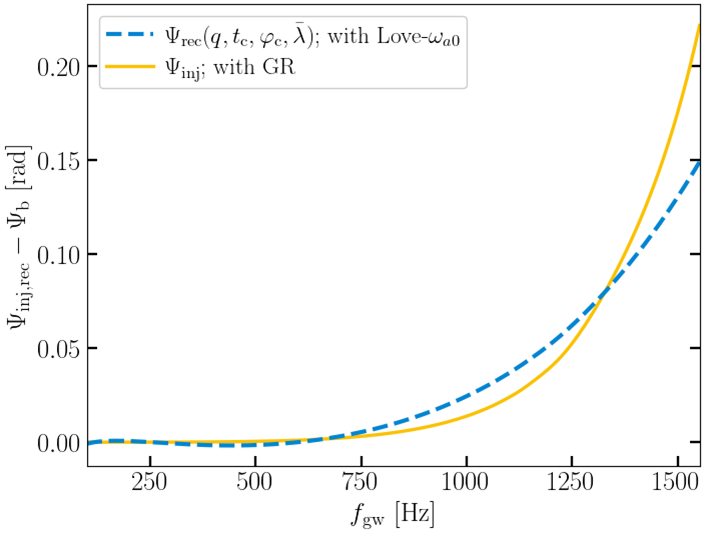
The pursuit of accurate modeling, as demonstrated in this research concerning neutron star f-modes, reveals a predictable pattern of decay in initial assumptions. Just as systems inevitably drift from their ideal states, so too do simplified hydrodynamic models diverge from reality when confronted with the complexities of extreme gravity and spin. This study, quantifying an 8% bias due to neglected nonlinear effects, underscores that all approximations are temporary. As Thomas Hobbes observed, “There is no such thing as absolute certainty, only probability based on the best available evidence.” The evolution of waveform models, therefore, isn’t about achieving a perfect representation, but rather refining successive versions to minimize the inevitable error-a process akin to versioning a complex system to preserve a functional memory of its past states.
The Long Resonance
This work reveals a predictable, yet persistently overlooked, bias in estimations of tidal deformability. The eight percent discrepancy, born from simplifying assumptions regarding hydrodynamical behavior, serves as a quiet admonishment. Every failure is a signal from time; the elegance of a theoretical construct does not negate the imperative of rigorous validation against the complexities of the actual. The challenge, predictably, does not end with the inclusion of nonlinearities. The current methodologies, while improved, remain tethered to approximations of resonance – a fleeting glimpse of order within chaotic systems.
Future efforts must confront the limitations inherent in waveform modeling. The pursuit of greater accuracy demands a deeper understanding of the interplay between spin, relativistic effects, and the nuanced frequencies of oscillation. Refactoring is a dialogue with the past; each iteration of these models must acknowledge the assumptions discarded and the potential for unforeseen consequences. Hamiltonian Monte Carlo provides a path, but the true landscape of neutron star interiors remains largely uncharted.
Ultimately, the quest to constrain the equation of state is not merely a technical exercise. It is an attempt to trace the echoes of creation, to understand the conditions that allowed these singular objects to exist. The universe offers no shortcuts; it demands a meticulous accounting of every force, every frequency, every fleeting resonance. The long resonance, after all, is the sound of time itself.
Original article: https://arxiv.org/pdf/2602.04951.pdf
Contact the author: https://www.linkedin.com/in/avetisyan/
See also:
- The Super Mario Galaxy Movie: 50 Easter Eggs, References & Major Cameos Explained
- Surprise Isekai Anime Confirms Season 2 With New Crunchyroll Streaming Release
- 10 Best Free Games on Steam in 2026, Ranked
- ‘Project Hail Mary’: The Biggest Differences From the Book, Explained
- Sydney Sweeney’s The Housemaid 2 Sets Streaming Release Date
- Starfield (PS5) Review – A Successful Cross-Console Voyage
- Welcome to Demon School! Iruma-kun season 4 release schedule: When are new episodes on Crunchyroll?
- Frieren: Beyond Journey’s End Gets a New Release After Season 2 Finale
- Why is Tech Jacket gender-swapped in Invincible season 4 and who voices her?
- Preview: Sword Art Online Returns to PS5 as a Darker Open World Action RPG This Summer
2026-02-09 02:48