Author: Denis Avetisyan
Researchers have demonstrated a novel technique to suppress noise in interferometric measurements, pushing the boundaries of our ability to detect the subtle nonlinear effects of the quantum vacuum.
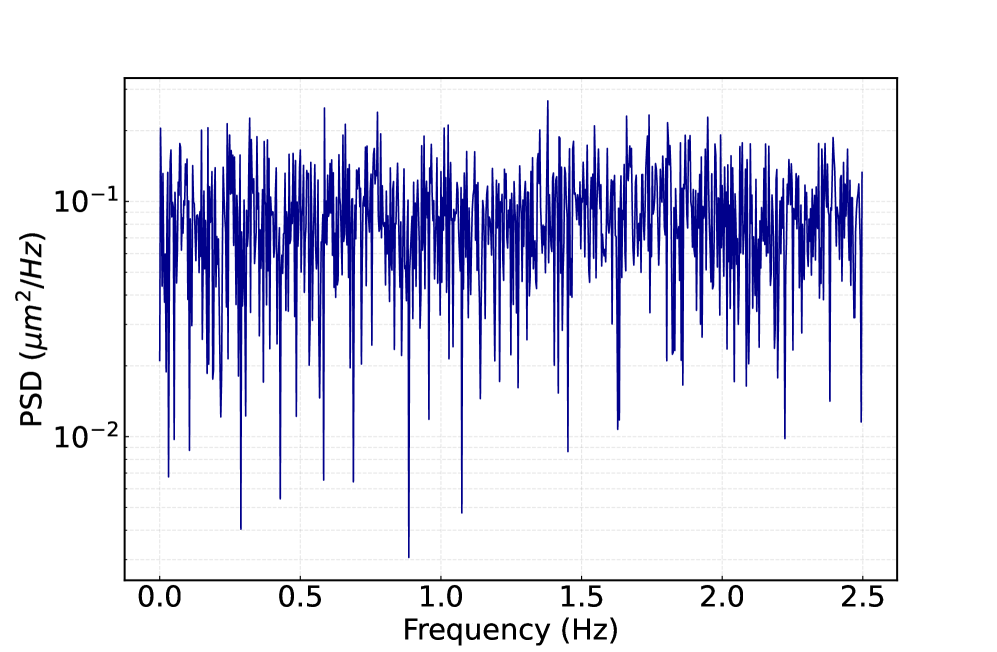
This work details the development and validation of a high-frequency phase noise suppression method for Sagnac interferometry, achieving near-shot-noise-limited resolution in the search for vacuum birefringence.
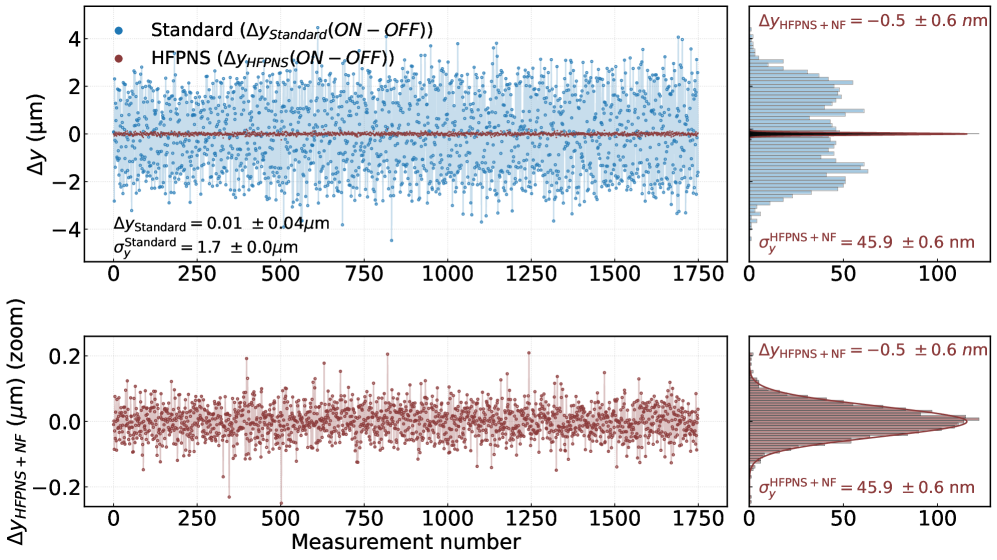
Detecting the subtle nonlinearities of the quantum vacuum presents a formidable challenge due to limitations imposed by fundamental noise sources. This work, ‘Reaching the quantum noise limit for interferometric measurement of optical nonlinearity in vacuum’, details the development and experimental validation of a novel High-Frequency Phase Noise Suppression (HFPNS) method designed to enhance the sensitivity of a Sagnac interferometer used to probe vacuum birefringence. By effectively mitigating mechanical vibrations, we demonstrate a path toward picometer-scale spatial resolution, approaching the quantum noise limit. Will this advancement pave the way for definitive observation of QED-induced vacuum refraction and a deeper understanding of the quantum nature of spacetime?
The Vacuum’s Illusions: Beyond Empty Space
The long-held classical view of a vacuum as truly empty space has been profoundly challenged by the development of Quantum Electrodynamics (QED). This theory posits that even in the absence of matter, the vacuum isn’t void but rather a bustling arena of fleeting energy fluctuations. These aren’t simply empty spaces, but rather temporary appearances of virtual particles-particle-antiparticle pairs that spontaneously pop into existence and almost immediately annihilate each other. While impermanent, these virtual particles possess measurable energy and contribute to observable physical phenomena. This conceptual shift fundamentally alters the understanding of what constitutes ‘nothingness’, transforming the vacuum from a passive background to an active participant in the universe’s processes and paving the way for explorations into its surprising properties.
Quantum Electrodynamics posits that even what appears to be empty space-the vacuum-is not truly devoid of activity, but rather a seething cauldron of virtual particles constantly popping into and out of existence. This unconventional view predicts fascinating nonlinear optical phenomena, most notably vacuum magnetic birefringence. This effect proposes that a strong magnetic field can alter the propagation of light through the vacuum itself, effectively changing its refractive index. Consequently, light traveling through a magnetized vacuum would experience a slight rotation in its polarization – a subtle twisting of the light’s electromagnetic field. Detecting this rotation requires exquisitely sensitive measurements, as the effect is predicted to be incredibly weak, but its observation would confirm the dynamic, and surprisingly interactive, nature of the vacuum and offer a direct test of QED in extreme conditions. n = 1 + \chi
Detecting the subtle interactions between light and the quantum vacuum demands experimental setups of extraordinary sensitivity. These aren’t simply improvements on existing technology, but rather ventures into realms where the signal-a minuscule change in light polarization caused by vacuum birefringence-is dwarfed by all other sources of noise. Researchers are compelled to meticulously control and eliminate every conceivable disturbance, from stray electromagnetic fields to thermal fluctuations and even the Earth’s rotation. Current efforts involve utilizing incredibly powerful magnetic fields, specialized cryogenic systems to minimize thermal noise, and advanced laser technology to produce highly polarized light. The pursuit isn’t merely about confirming a theoretical prediction; it’s a technological frontier, forcing the development of measurement techniques previously considered unattainable and potentially unlocking new avenues for precision sensing and fundamental physics research.
Amplifying the Immeasurable: A Dance with the Void
The DeLLight experiment investigates vacuum nonlinearity by analyzing alterations in the polarization state of laser pulses with intensities exceeding 10^{22} \text{W/cm}^2. Theoretical predictions in quantum electrodynamics suggest that extremely strong electromagnetic fields can induce nonlinear effects even in a vacuum, manifesting as phenomena like photon splitting or the creation of electron-positron pairs. Detecting these effects requires precise measurement of subtle changes in polarization, as the induced nonlinearities are expected to produce minute rotations in the polarization plane. The experiment is designed to differentiate these rotations from systematic errors and noise, establishing whether vacuum nonlinearity is a measurable physical reality at these energy scales.
A Sagnac interferometer is utilized in the DeLLight experiment due to its capacity for interferometric amplification of exceedingly weak signals. This configuration involves splitting a laser beam and propagating the two resulting beams in opposite directions around a closed loop. Any rotation or, in this case, a change in polarization induced by vacuum nonlinearity, causes a phase shift proportional to the area enclosed by the loop and the rate of change. This phase shift manifests as an interference pattern detectable at the output, effectively amplifying the signal beyond the sensitivity of direct measurement techniques. The resulting signal is proportional to the rotation rate, but in this case, it reflects the extremely subtle changes induced by nonlinear vacuum effects, allowing for increased detection probability.
The LASERIX Facility at the Laboratoire d’Optique Quantique is central to the DeLLight experiment, providing the requisite high-intensity laser pulses necessary to investigate vacuum nonlinearity. This facility is capable of generating laser pulses with peak powers exceeding 300 TW and durations of approximately 30 femtoseconds. These parameters are critical, as the interaction between such pulses and the quantum vacuum is predicted to manifest as nonlinear effects, albeit at extremely small scales. The high energy density achieved with LASERIX allows researchers to probe these predicted effects, searching for deviations from linear behavior in the vacuum’s response to the electromagnetic field.

The Noise Within: A System’s Inevitable Entropy
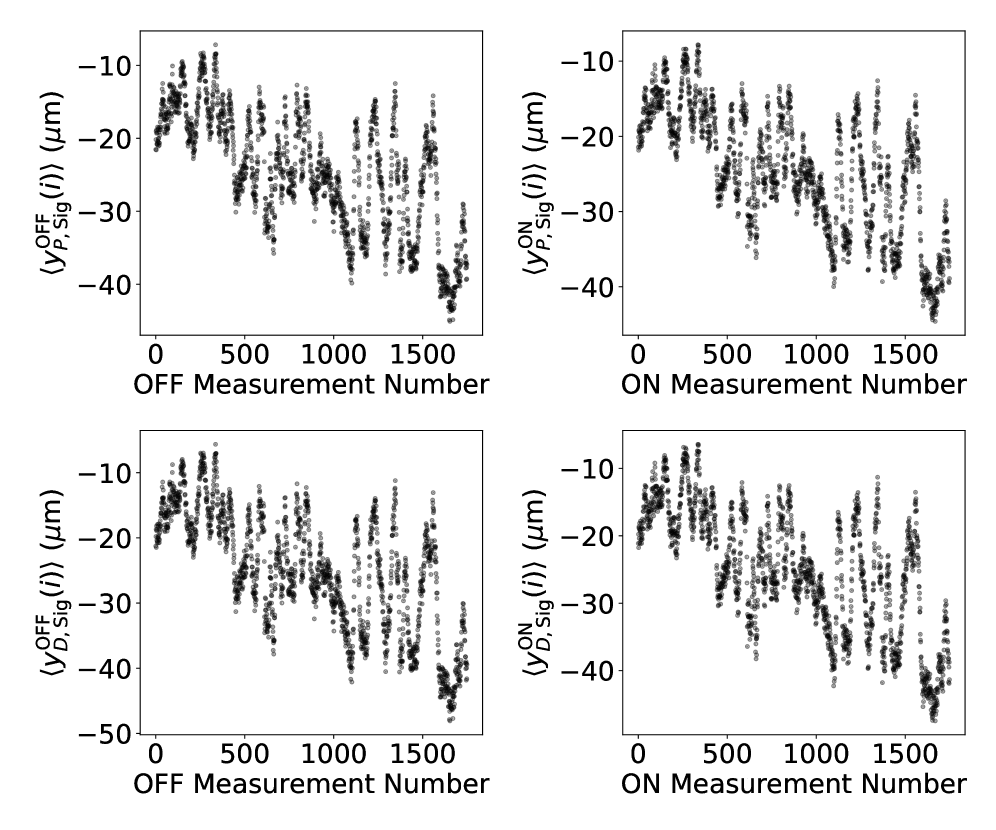
The DeLLight experiment is susceptible to multiple noise sources that degrade measurement precision. Mechanical vibrations, originating from environmental factors and internal equipment, introduce fluctuations in the optical path length, directly impacting the stability of the interference pattern. Simultaneously, the experiment is fundamentally limited by shot noise, a quantum mechanical effect arising from the discrete nature of photons. This inherent noise scales with the square root of the light intensity and represents a lower bound on achievable precision, currently estimated at 36 nm for the CCD camera used in the experiment. Mitigating both mechanical and quantum noise is crucial for achieving accurate barycenter determination and maximizing the experiment’s spatial resolution.
Fluctuations in mechanical vibrations and inherent shot noise manifest as distortions within the DeLLight experiment’s interference pattern. These distortions directly impede the precise localization of the interference fringes, thereby increasing uncertainty in the determination of the barycenter – the geometric center of the interference pattern. An inaccurate barycenter calculation translates directly into errors in the final measurement, limiting the experiment’s ability to resolve subtle spatial variations. The magnitude of these fluctuations is proportional to the amplitude of the noise sources, demanding stringent vibration isolation and signal processing techniques to minimize their impact on barycenter precision.
The DeLLight experiment has achieved a spatial resolution of 45.9 nm through the implementation of a High-Frequency Phase Noise Suppression (HFPNS) method. This resolution is nearing the theoretical limit imposed by the CCD camera’s shot noise, which is measured at 36 nm. Prior to HFPNS implementation, the experiment’s spatial resolution was significantly lower; the current resolution represents a 2.3x improvement over previous performance levels. This enhancement allows for more precise determination of the interference pattern’s features, critical for accurate barycenter calculation and data analysis.
The Vacuum’s Echo: Implications for a Dynamic Reality
Confirmation of vacuum nonlinearity, a prediction of quantum electrodynamics (QED), represents more than a validation of existing theory; it signifies a potential paradigm shift in understanding the very fabric of reality. Currently treated as empty space, the vacuum is, according to QED, a dynamic medium capable of exhibiting nonlinear behavior under extreme conditions. Detecting this nonlinearity would demonstrate that light, and potentially other electromagnetic radiation, can interact with the vacuum itself, causing distortions and generating new photons even in the absence of material substances. Such a discovery would not only refine models of the vacuum’s energy density – linked to concepts like dark energy – but also pave the way for exploring novel phenomena, potentially enabling control over vacuum fluctuations and offering insights into the interplay between light, space, and the fundamental constants of the universe.
The experimental setup hinged on sophisticated techniques with broad applicability beyond vacuum nonlinearity studies. Interferometric amplification, a method of enhancing weak signals by exploiting wave interference, allowed researchers to detect incredibly subtle effects buried within noise. Complementing this was a rigorous noise modeling approach, essential for distinguishing genuine signals from spurious fluctuations. This precise characterization of noise sources-including laser frequency fluctuations, thermal vibrations, and detector limitations-establishes a benchmark for high-precision measurements in diverse fields such as gravitational wave detection, atomic clocks, and quantum sensing. The methodologies developed not only enabled this specific investigation but also provide a powerful toolkit for enhancing sensitivity and accuracy in any experiment pushing the boundaries of measurement precision.
Ongoing research endeavors are now concentrating on several key enhancements to further probe the intricacies of the quantum vacuum. Refinements to data analysis techniques aim to extract signals hidden within the noise, while plans to increase laser intensity promise a stronger interaction with the vacuum itself. These improvements are guided by the experimental figure of merit – currently at 0.44 with an optimal region of interest measuring 1.75 times the full width at half maximum – which serves as a benchmark for sensitivity. By systematically optimizing these parameters, scientists hope to unveil even more subtle manifestations of vacuum nonlinearity, potentially revealing previously unknown aspects of fundamental physics and the very fabric of spacetime.
The pursuit of minimizing noise, as demonstrated in this work concerning the quantum vacuum, echoes a fundamental truth about complex systems. Every attempt to impose order, to refine signal from the chaos, inevitably introduces new dependencies. As Max Planck observed, “An appeal to the authority of a book is a sign of weakness.” This resonates with the HFPNS method; it doesn’t eliminate noise, but rather manages the promises made to past imperfections, accepting the inherent limitations of measurement. The spatial resolution approaching the shot noise limit isn’t a point of control, but an acceptance of the system’s natural cycles, a recognition that even failure contains the seeds of future correction. The architecture doesn’t conquer the noise; it grows with it.
The Horizon Beckons
The pursuit of vacuum nonlinearity, once relegated to theoretical curiosities, now demands experimental fidelity at the quantum limit. This work, in approaching that threshold, reveals not a destination, but a more precise articulation of the problem. The Sagnac interferometer, a deceptively simple architecture, confesses its inherent limitations through the very noise it suppresses. Each gain in sensitivity is, inevitably, a magnification of the system’s own internal prophecies of failure – stray fields, thermal drifts, the irreducible uncertainty of measurement itself.
Future iterations will not be defined by further refinement of the instrument, but by a widening of the lens. The challenge lies not solely in detecting a signal, but in distinguishing it from the emergent complexity of the measurement apparatus. Perhaps the true nonlinearity resides not in the vacuum, but in the inescapable coupling between observer and observed. A focus on active cancellation, on predictive modeling of systemic errors, feels less like science and more like a desperate attempt to quiet a restless ghost.
The spatial resolution, edging toward the shot noise limit, is a siren song. It promises detail, but delivers only the illusion of completeness. The system remains, fundamentally, an ecosystem. It grows, adapts, and reveals its secrets reluctantly. The question is not whether the vacuum is nonlinear, but whether any measurement can ever truly capture its nature, or merely project upon it the patterns of its own becoming.
Original article: https://arxiv.org/pdf/2602.10896.pdf
Contact the author: https://www.linkedin.com/in/avetisyan/
See also:
- Trails in the Sky 2nd Chapter launches September 17
- HBO Max Just Added the Final Episodes of a Modern Adult Swim Classic
- Paradox codes (April 2026): Full list of codes and how to redeem them
- PRAGMATA ‘Eight’ trailer
- Crimson Desert’s Momentum Continues With 10 Incredible New Changes
- Pragmata Shows Off Even More Gorgeous RTX Path Tracing Ahead of Launch
- How Could We Forget About SOL Shogunate, the PS5 Action RPG About Samurai on the Moon?
- Solo Leveling’s New Character Gets a New Story Amid Season 3 Delay
- Hulu Just Added One of the Most Quotable Movies Ever Made (But It’s Sequel Is Impossible To Stream)
- Dragon Quest Smash/Grow launches April 21
2026-02-13 01:04