Author: Denis Avetisyan
A novel theoretical framework demonstrates that treating spacetime geometry as a quantum variable leads to inherent entanglement with matter fields.
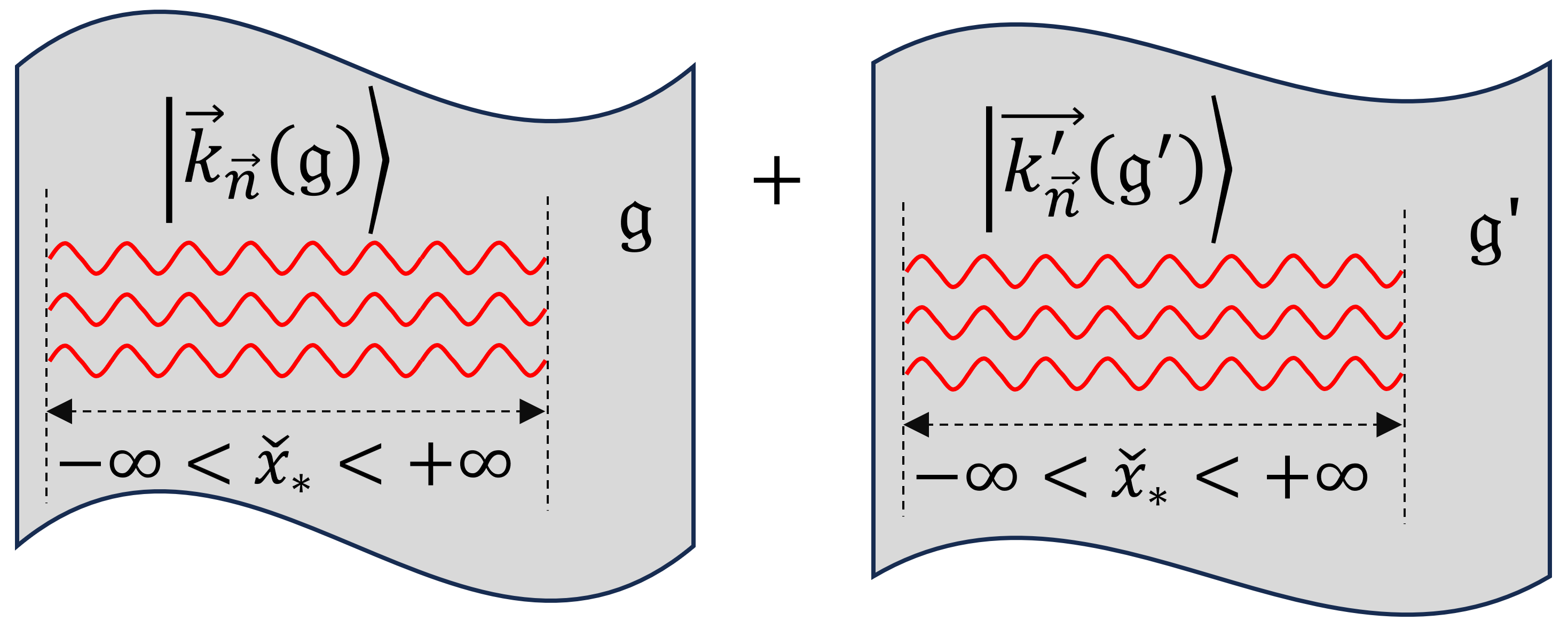
Hamiltonian constraint dynamics in loop quantum gravity generate entanglement between gravitational and material degrees of freedom, resolving inconsistencies in quantum field theory on curved spacetime.
A long-standing challenge in theoretical physics is reconciling quantum field theory on curved spacetime with the principles of quantum mechanics. This is addressed in ‘Quantum Geometry Effects in Quantum Field Theory: Hamiltonian constraint Generates Gravity-Matter Entanglement’, which develops a consistent framework within loop quantum gravity to define meaningful superpositions of quantum geometry and matter. The authors demonstrate that imposing the quantum Hamiltonian constraint generates inherent entanglement between gravitational and material degrees of freedom, resolving inconsistencies arising from treating spacetime as a classical background. Could this framework provide new insights into the quantum foundations of gravity and ultimately shed light on unresolved problems like the black hole information paradox?
Decoding the Void: When Gravity and Quantum Mechanics Collide
The most successful theories describing the universe – general relativity and quantum mechanics – reach an impasse when confronted with black holes, giving rise to the Black Hole Information Paradox. General relativity portrays these cosmic entities as regions of spacetime so warped that nothing, not even light, can escape, characterized solely by mass, charge, and angular momentum. However, quantum mechanics dictates that information cannot be truly destroyed; any process must, in principle, be reversible. This creates a conflict: if matter falls into a black hole and only those three properties define it, all other information about its composition is seemingly lost, violating a fundamental tenet of quantum mechanics. The paradox isn’t simply about lost data; it suggests a breakdown in the very foundations of physics, hinting that either general relativity or quantum mechanics – or both – must be modified to accurately describe the behavior of gravity and information at the extreme conditions within and around black holes.
Conventional physics falters when attempting to describe the conditions within and surrounding black holes, revealing a fundamental incompatibility between general relativity and quantum mechanics. The established mathematical frameworks, so successful in their respective domains, break down at the singularity – the point of infinite density at a black hole’s core – and near the event horizon. This necessitates the development of entirely new theoretical tools, moving beyond perturbative approaches that rely on treating gravity as a gentle force. Researchers are exploring concepts like string theory, loop quantum gravity, and holographic principles, each attempting to redefine spacetime itself at its most extreme scales. These approaches suggest that spacetime may not be smooth and continuous, as traditionally understood, but rather granular or emergent, demanding a radical shift in how the universe’s fundamental structure is perceived and modeled.
The persistent challenge of unifying general relativity and quantum mechanics culminates in the need for a complete theory of quantum gravity, a framework that has resisted formulation for decades. This isn’t merely a mathematical hurdle; it demands a fundamentally new understanding of spacetime itself, potentially requiring it to be quantized – existing not as a smooth continuum, but as discrete, fundamental units. Current attempts, such as string theory and loop quantum gravity, offer promising avenues, but each faces significant theoretical and experimental tests. The difficulty arises from the fact that quantum gravity effects are expected to be significant only at the Planck scale – an energy level so high and a distance so small that direct observation remains beyond current technological capabilities, forcing physicists to rely on indirect evidence and mathematical consistency as guiding principles in this ongoing quest.
Rewriting the Fabric: Loop Quantum Gravity’s Radical Approach
Loop Quantum Gravity (LQG) diverges from traditional approaches to quantum gravity by employing a non-perturbative quantization method. This means LQG does not rely on treating gravity as a small perturbation on a fixed background spacetime, a technique common in perturbative quantum field theory. Instead, LQG directly quantizes the geometry of spacetime itself. A core component of this process is the definition of a kinematical Hilbert space, \mathcal{H}_k , which provides the mathematical framework for describing the quantum states of geometry. This space is constructed from fundamental excitations of geometry, often visualized as spin networks, and allows for the study of quantum geometric operators without presupposing a classical spacetime background, achieving background independence. The resulting framework aims to provide a consistent quantum description of gravity at the Planck scale, addressing issues encountered in perturbative methods when dealing with strong gravitational fields or singularities.
Semiclassical Coherent States (SCS) within Loop Quantum Gravity (LQG) provide a mechanism to bridge the gap between the quantum and classical descriptions of spacetime geometry. These states are constructed as superpositions of quantum geometrical eigenstates, approximating solutions to the classical Einstein field equations in a specific limit. Mathematically, SCS are defined through a functional integral involving the Wheeler-DeWitt operator, yielding wave functionals \Psi[\gamma] representing the quantum state of a gravitational field associated with a given spatial geometry γ. Their expectation values reproduce classical geometrical quantities, such as the metric tensor, allowing for the recovery of classical general relativity as an approximation to the underlying quantum theory. Crucially, the construction of SCS within LQG relies on the choice of a suitable inner product on the Hilbert space of geometrical states to ensure the physical validity of the resulting quantum geometry.
The mathematical consistency of Loop Quantum Gravity relies heavily on the properties of the SubspaceUvv, a specific Hilbert space representing physical states. This subspace is defined by imposing constraints on the wave functionals to ensure they satisfy the requirements of a well-defined quantum theory, specifically positive physical probability and the absence of catastrophic quantum geometry. Crucially, the selection of SubspaceUvv guarantees unitary equivalence of the resulting Fock representations, meaning that different choices of basis within this subspace describe the same physical states and preserve probabilistic interpretations. Without this constraint, the theory would suffer from instabilities and inconsistencies in its predictions regarding quantum spacetime.
Beyond Conventional Solutions: Constructing a Quantum Vacuum
The Hartle-Hawking vacuum state, traditionally employed in quantum cosmology, is constructed as the ground state of the Wheeler-DeWitt operator subject to the constraint that the spatial slices are asymptotically flat. While adequate for describing the early universe under relatively mild gravitational conditions, this approach encounters limitations in regimes of strong curvature. Specifically, the standard formulation relies on strong solutions to the Hamiltonian constraint, which may not exist or be physically relevant in scenarios involving singularities or extreme gravitational fields. This can lead to an incomplete description of the quantum state of spacetime and matter, potentially omitting contributions from physically viable, albeit weakly constrained, solutions and resulting in an inaccurate representation of quantum gravitational effects in these extreme regimes.
The Generalized Hartle-Hawking vacuum state is constructed by employing Weak Constraint Operators to address limitations in the standard Hartle-Hawking approach, particularly in regimes with strong gravitational effects. Unlike strict solutions to the quantum Hamiltonian constraint, this method incorporates weak solutions, meaning the constraint is satisfied in a distributional sense rather than pointwise. This allows for a broader class of states to be considered, effectively relaxing the requirement for exact solutions and providing a more complete description of the quantum vacuum. The mathematical formulation utilizes the ADM constraints to ensure background independence and consistency, resulting in a wavefunction that doesn’t necessarily vanish on surfaces where the Hamiltonian constraint is not strictly satisfied, but rather integrates to zero in a defined sense.
The Generalized Hartle-Hawking vacuum construction explicitly incorporates the Arnowitt-Deser-Misner (ADM) constraints to ensure a consistent quantum state. Specifically, the implementation of weak constraint operators allows for solutions to the quantum Hamiltonian constraint that satisfy the ADM constraints weakly, resulting in what is termed Entangled Geometry Matter. This entanglement is a fundamental quantum correlation between the degrees of freedom describing spacetime geometry and the matter fields residing within it; the resulting kinematical states are not factorizable into independent geometric and matter sectors, demonstrating that these two are intrinsically linked at a fundamental level. Ψ cannot be written as a product state of purely geometric and purely matter states.
The Ghost in the Machine: Reclaiming Information from the Abyss
The longstanding “information paradox” of black holes-the apparent loss of information as matter falls into them-finds a potential resolution in the PageCurve. This theoretical construct details how the entanglement entropy of Hawking radiation-the thermal emission from black holes-changes over time. Contrary to initial expectations of ever-increasing entropy, signifying information loss, the PageCurve demonstrates a peak and subsequent decrease. This suggests information isn’t simply destroyed, but rather subtly encoded within the complex correlations present in the emitted quantum fields. Essentially, the outgoing radiation becomes increasingly intertwined with the black hole’s internal state, preserving information not in a readily accessible form, but as a deeply hidden pattern within quantum relationships. This preservation isn’t about retrieving a complete copy, but maintaining the underlying quantum information, effectively resolving the paradox by demonstrating information conservation even in the face of apparent black hole evaporation and challenging classical understandings of information and entropy.
A rigorous understanding of information preservation hinges on a consistent depiction of the QuantumScalarField – the fundamental field describing scalar particles – within the geometric framework of Loop Quantum Gravity. This necessitates moving beyond traditional approaches and employing specialized mathematical tools, notably FockSpace. FockSpace provides a mathematical construct to describe the states of an indefinite number of particles, allowing physicists to analyze the quantum field in a way that accounts for the creation and annihilation of particles as predicted by quantum field theory. By representing the field’s behavior within this space, researchers can investigate how information about infalling matter is encoded in the outgoing Hawking radiation, potentially resolving the black hole information paradox. This approach isn’t merely theoretical; it demands careful mathematical validation to ensure consistency, requiring the field’s description to adhere to stringent criteria within the established quantum framework.
Maintaining mathematical rigor in describing information preservation requires a specific analytical framework. Researchers employ the Bogoliubov transformation, a mathematical tool that relates the creation and annihilation operators of quantum fields in different vacuum states, to ensure a consistent description of particle production during Hawking radiation. Crucially, the validity of this transformation is verified through the Shale-Stinespring criterion within the subspace U_{vv}, a mathematical condition guaranteeing the well-definedness of the transformation. The coefficients, denoted as β, arising from this transformation are not merely algebraic elements, but form a Hilbert-Schmidt operator, a condition that ensures the stability and physical realizability of the quantum state and, ultimately, confirms that information isn’t truly lost, but rather subtly encoded within the quantum fields.
The research delves into the very fabric of reality, treating geometry not as a fixed background, but as a dynamic, quantum variable intrinsically linked with matter. This echoes a sentiment expressed by Isaac Newton: “If I have seen further it is by standing on the shoulders of giants.” The study builds upon established theories-quantum field theory and general relativity-but actively tests their boundaries by introducing quantum geometrical effects. It isn’t merely an extension of existing knowledge; it’s a deliberate attempt to dismantle conventional assumptions about the relationship between spacetime and the quantum realm, ultimately revealing inherent entanglement-a foundational connection previously obscured by classical approximations. The framework presented aims to resolve inconsistencies and paradoxes, demonstrating that a deeper understanding requires challenging and re-evaluating the rules themselves.
Beyond the Patch
The consistent description of quantum fields on fluctuating geometries, achieved through treating geometry as a dynamical, entangled partner, feels less like a resolution and more like a beautifully engineered bypass. The framework exposes the inherent limitations of simply placing quantum fields onto a pre-defined curved spacetime; the geometry isn’t merely a backdrop, it’s a participant. Yet, this entanglement, while formally demonstrated, begs the question of operational access. Can this geometric entanglement be measured, manipulated – or is it destined to remain a theoretical artifact, a mathematical necessity rather than a physical resource?
The persistent shadow of the black hole information paradox looms. While this work provides a mechanism for entanglement between geometry and matter at the horizon – and thus a potential pathway for information preservation – it doesn’t, of itself, retrieve the information. The next step isn’t simply demonstrating entanglement, but detailing the specific decoherence pathways and their impact on observable correlations.
Ultimately, the best hack is understanding why it worked. Every patch is a philosophical confession of imperfection. The consistency achieved here isn’t the final answer, but a precise articulation of the question: not how to quantize gravity, but what does it even mean for geometry to be quantized in the first place? The field shifts, predictably, toward exploring the operational consequences of this entanglement-a search for the measurable signature of a geometry that isn’t quite ‘there’ until observed.
Original article: https://arxiv.org/pdf/2602.14282.pdf
Contact the author: https://www.linkedin.com/in/avetisyan/
See also:
- Everything You Need To Know About Nikki Baxter In Stranger Things’ Animated Spinoff
- The Boys Season 5, Episode 5 Ending Explained: Why Homelander Does THAT
- Taylor Sheridan’s Gritty 5-Part Crime Show Reveals New Final Season Villain
- FRONT MISSION 3: Remake coming to PS5, Xbox Series, PS4, Xbox One, and PC on January 30, 2026
- ‘The Bride!’ Review: Jessie Buckley Breathes Life into a Monstrous Mess
- Why There’s No Ghosts Tonight (Nov 27) & When Season 5, Episode 7 Releases
- Welcome to Demon School! Iruma-kun season 4 release schedule: When are new episodes on Crunchyroll?
- From season 4 release schedule: When is episode 2 out on MGM+?
- Mark Zuckerberg & Wife Priscilla Chan Make Surprise Debut at Met Gala
- USD JPY PREDICTION
2026-02-17 07:59