
When people think of truly epic films, a few titles always come up. But one stands out above the rest: The Lord of the Rings. This movie trilogy, based on beloved books, wasn’t just a story—it created a complete and immersive world that continues to amaze viewers with its incredible detail, memorable characters, and grand fantasy feel. The filmmakers built everything from detailed landscapes and political systems to unique cultures and even entire languages, all of which contributed to its massive success. Many films have tried to achieve the same level of impact since then, but most have either relied too much on special effects or become overly complicated. Almost all, that is.
The movie Dune, released in 2021, quietly established itself as a powerful cinematic achievement, proving that science fiction epics can be just as impressive as medieval fantasies. Many big-budget sci-fi films struggle to explain their complex worlds without losing the audience, but Denis Villeneuve successfully navigated this challenge with Dune, and even surpassed his own success with Dune: Part Two in 2024. He didn’t simply adapt Frank Herbert’s novel; he completely drew viewers into that world with remarkable skill.
Dune Has Surpassed the Epic Scale of The Lord of the Rings

For years, it seemed no movie could match the epic scope of The Lord of the Rings. Peter Jackson’s films set the standard for modern epics with their huge battles, detailed worlds, and the feeling that every choice mattered. But Denis Villeneuve’s Dune films aren’t just comparable – they actually surpass that standard in some ways. Unlike traditional fantasy epics that rely on war and grand speeches, Dune builds its scale through atmosphere, political intrigue, and profound themes.
The Dune films have shown that big-budget movies can be visually spectacular without being chaotic. While the films are beautiful to watch – and director Denis Villeneuve clearly prioritizes visual style – the planet Arrakis is more than just a pretty setting. It’s a fully realized world with its own ecosystem, and a key location in conflicts driven by politics, religion, and money. Every group – like Houses Atreides and Harkonnen, the Emperor, and the Bene Gesserit – has its own goals, which all impact the main story. No character feels unnecessary, and even if they seem minor now, it’s likely a setup for the next film. This fully developed world is similar to what made Middle-earth in The Lord of the Rings so captivating, but Dune feels colder, more strategic, and more carefully planned – and it’s just as effective.
One way Dune excels is through its stunning visuals. Like other films by director Denis Villeneuve, it avoids quick cuts and excessive explanation, instead relying on quiet moments, expansive shots, and the power of its settings. Scenes like the sandworm attacks, Paul’s first time riding a worm, and the monochrome landscapes of Giedi Prime don’t need much dialogue to feel epic and meaningful – they simply unfold and immerse you in the story. This is truly masterful filmmaking. It’s rare for a director to maintain such a strong visual style, especially with a large-scale franchise like this.

What really sets Dune apart is its grand scope and complex themes. While The Lord of the Rings relies on traditional hero stories, Dune explores challenging ideas about religion, power, and the risks of following charismatic leaders. Paul Atreides isn’t a typical hero; he’s a product of myth and events that quickly become uncontrollable. This depth makes the world of Dune feel vast and the conflict more than just a battle – it’s a clash of ideas. This is when Dune moves beyond being comparable to The Lord of the Rings and begins to set a new standard for epic filmmaking.
It would be a really good idea for Dune: Part Three to borrow a technique from The Lord of the Rings. But what should that technique be?
Dune: Part Three Should Repeat The Lord of the Rings Prologue Strategy

While the first Dune film did well, Dune: Part Two was a much bigger hit, largely because the first movie served as an introduction to the story. Now, with the sequel’s incredible success, there’s huge anticipation for the next installment. The franchise has proven its potential, and it could really benefit from starting the third film with a historical prologue – similar to what The Lord of the Rings did so effectively – to fully lay out the background and scope of the conflict.
The opening of The Lord of the Rings: The Fellowship of the Ring quickly establishes the immense danger posed by Sauron and the long history of that world, immediately letting the audience understand what’s at stake. It does this concisely, without excessive explanation. Similarly, by the end of Dune: Part Two, the story strongly suggests the coming Holy War led by Paul. It would be effective if the next film, even if it doesn’t fully depict that war, mirrored The Fellowship of the Ring by clearly foreshadowing it.
The book Dune Messiah doesn’t fully depict the jihad, skipping ahead to its aftermath. However, a film adaptation could powerfully begin with a prologue showing the early stages of this holy war. This isn’t just about visual spectacle; it’s crucial storytelling. Paul’s war isn’t a small event – it fundamentally changes the universe, causing massive death, conquest, and forced religious conversion. Starting the film by placing the audience directly into that conflict would build a much deeper emotional and political understanding, allowing them to feel the consequences rather than simply being told about them.
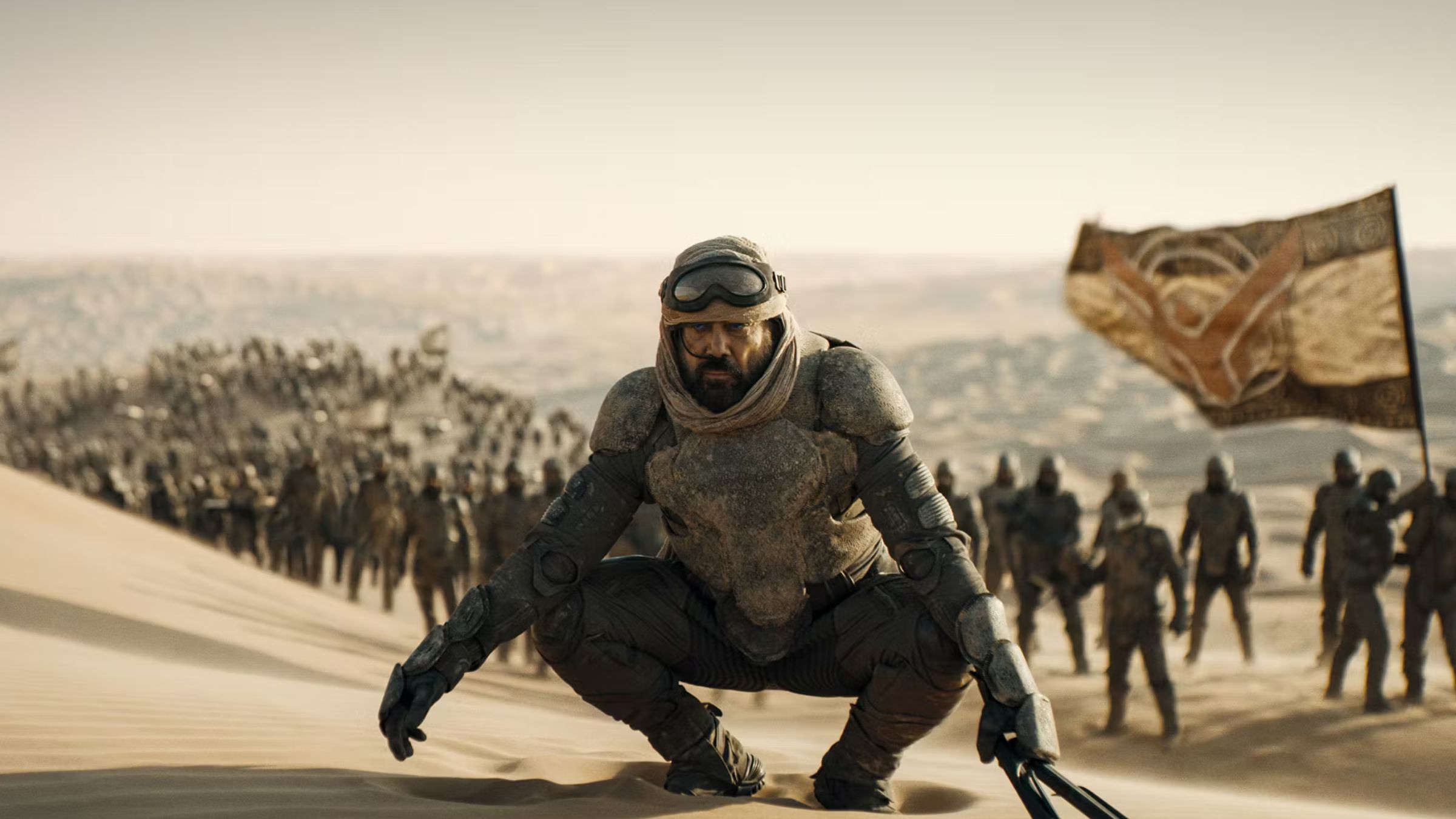
Presenting the film’s structure this way would emphasize that the story isn’t just about Paul’s personal journey, but about the far-reaching consequences of his decisions. The conflict, known as the Holy War, is directly caused by the Bene Gesserit’s manipulation of religion, their carefully crafted prophecy, and Paul’s growing influence with the Fremen. Establishing this large-scale context early on would make the events that follow even more powerful, particularly since the sequel, Dune Messiah, delves deeper into politics and Paul’s inner thoughts.
Director Denis Villeneuve has discussed his vision for Dune: Messiah, focusing on a key theme from Frank Herbert’s novel: the dangers of unquestioningly following charismatic leaders. Now, fans are waiting to see if he delivers on that promise, stays true to the source material, or even surpasses expectations. Even a brief look at the devastating consequences of the Holy War early in the film would powerfully demonstrate that while Paul Atreides achieved victory, the price was incredibly high. This would significantly raise the film’s ambitions. Dune is already comparable in scope to The Lord of the Rings, but this approach could make it a more daring story and set a new standard for epic films.
What do you think? Leave a comment below and join the conversation now in the ComicBook Forum!
https://comicbook.com/movies/list/5-great-movie-epics-of-the-21st-century/embed/#
Read More
- Adam Levine Looks So Different After Shaving His Beard Off
- Trails in the Sky 2nd Chapter launches September 17
- After AI Controversy, Major Crunchyroll Anime Unveils Exciting Update
- FRONT MISSION 3: Remake coming to PS5, Xbox Series, PS4, Xbox One, and PC on January 30, 2026
- Gold Rate Forecast
- Bitcoin’s Rollercoaster: Will the Crypto Crown Its Lost Roving Glory?
- Xbox Game Pass Users “Blown Away” by New Exclusive Game
- Dialoop coming to Switch on June 17
- How Could We Forget About SOL Shogunate, the PS5 Action RPG About Samurai on the Moon?
- Japan’s No. 1 Spring 2026 Anime Is the True Successor to an All-Time Great
2026-02-17 17:11