Author: Denis Avetisyan
Researchers have demonstrated a novel method for engineering interactions between atoms in a gas, paving the way for simulating complex quantum systems.
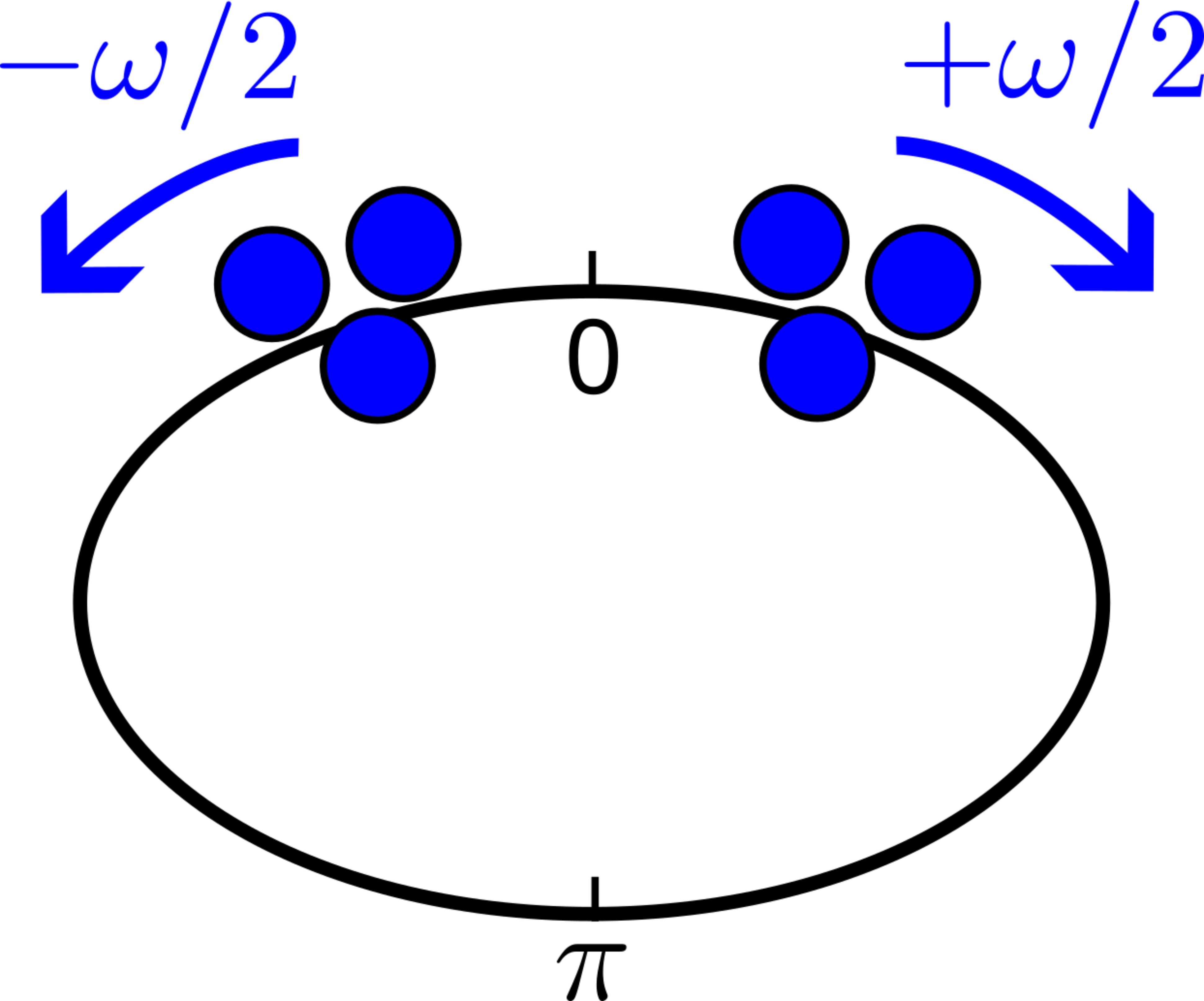
Periodic driving of a single-component Bose gas on a ring enables the emulation of long-range interactions present in two-component systems.
Realizing complex quantum many-body systems often requires precise control over interatomic interactions, a task frequently limited by experimental constraints. In the article ‘Engineering interactions shape in resonantly driven bosonic gas’, we propose a novel approach to overcome this challenge by simulating tunable, long-range interactions in a two-component Bose gas using a single component of ultracold atoms confined to a ring geometry and subject to rapid modulation of their scattering length. This Floquet engineering technique effectively maps the time-periodic drive onto static, engineered interactions between atoms, opening a pathway to explore exotic many-body phenomena. Could this method pave the way for simulating a wider range of quantum systems previously inaccessible to experimental realization?
Beyond Control: Orchestrating Emergence in Quantum Systems
The burgeoning field of quantum simulation relies heavily on the ability to isolate and control individual atoms cooled to temperatures just above absolute zero. These ultracold atoms serve as ideal qubits – the building blocks of quantum computers – and allow researchers to model complex quantum systems. However, traditional trapping techniques, such as magnetic or optical tweezers, often present limitations when attempting to create the intricate and highly-ordered atomic arrangements necessary for simulating many-body physics. While effective at containing atoms, these methods can struggle to provide the precise spatial control and scalability required to build large, interconnected quantum systems, hindering the exploration of emergent phenomena and the development of novel quantum materials. Consequently, a drive for innovative trapping and manipulation strategies is underway, seeking to overcome these constraints and unlock the full potential of ultracold atoms for quantum simulation.
The pursuit of harnessing quantum phenomena for simulations and the creation of new materials demands exquisite control over interacting quantum particles. Current methodologies for trapping and manipulating ultracold atoms, while effective for initial confinement, frequently fall short when attempting to simultaneously maintain this strong confinement and exert the precise, individual control needed to probe many-body physics. This limitation stems from the inherent trade-offs in trap design; intensifying confinement often introduces unwanted interactions or restricts the ability to address individual atoms within the ensemble. Consequently, researchers face a challenge in creating systems complex enough to exhibit emergent quantum behaviors, yet controllable enough to thoroughly investigate and engineer these states. Overcoming this difficulty is central to unlocking the full potential of quantum simulation and realizing advanced quantum technologies, requiring innovative approaches to trap design and control mechanisms.
From Isolation to Interaction: Weaving Complexity into Quantum Mixtures
Moving beyond systems comprised of single atomic species to two-component mixtures-those containing two distinct types of atoms-fundamentally increases the available interaction pathways and potential for emergent quantum behavior. In single-component systems, interactions are largely defined by the inherent properties of a single atom. Two-component mixtures introduce cross-interactions between the two species, adding a degree of freedom for controlling system properties. This capability enables the observation of phenomena not possible in single-component systems, including novel superfluid phases, symmetry-broken states, and the exploration of Bose-Fermi mixtures exhibiting unique collective excitations. Furthermore, manipulating the relative concentrations of each component allows for tuning of the overall system density and interaction strength, providing a versatile platform for investigating a wider range of quantum phases and transitions.
Feshbach resonance is a technique used to manipulate the strength of interactions between atoms in a two-component quantum mixture. This is achieved by applying an external magnetic field near a specific value where a bound molecular state coincides with the free atomic states, effectively controlling the scattering length and thus the interaction potential. By precisely tuning the magnetic field, the interaction strength can be varied from repulsive to attractive, or even to zero, allowing researchers to engineer systems with specific quantum properties. This control enables the creation of Bose-Einstein condensates with tunable interaction strengths, the investigation of strongly correlated many-body physics, and the exploration of novel quantum phases of matter, such as polaron formation and Efimov physics. The resulting tailored quantum systems offer opportunities for fundamental research and potential applications in quantum technologies.
Applying time-periodic driving to two-component quantum mixtures enables Floquet engineering, a technique used to manipulate quantum systems by leveraging the time-dependence of the Hamiltonian. This approach effectively creates an effective Hamiltonian,
Rhythmic Perturbations: Sculpting Effective Potentials in Time
The application of time-periodic perturbations to atomic systems results in an effective potential landscape that dictates atomic behavior. These perturbations, which include techniques like periodic modulation of system parameters or resonant driving of atomic transitions, introduce a time-dependent force on the atoms. Through mathematical techniques such as Floquet theory, this time-dependent influence can be recast as a time-averaged, or effective, potential. This effective potential then governs the dynamics of the atoms as if they were moving in a static potential, allowing for analysis of resulting steady-state or periodically driven behaviors. The form of this effective potential is directly related to the frequency and amplitude of the applied perturbation and the system’s inherent properties.
The application of time-periodic perturbations can induce the formation of non-equilibrium crystalline structures, specifically phase space crystals and time crystals. Phase space crystals exhibit periodic spatial order, while time crystals demonstrate periodic behavior in time – maintaining a stable, repeating state even without external energy input. This temporal order distinguishes them from conventional crystals and represents a novel state of matter. The stability of these time-crystalline structures relies on the system’s ability to minimize its energy within the periodically modulated potential, leading to a discrete set of allowed energy levels and sustained oscillations at frequencies related to the driving perturbation. These structures are not simply driven by the external force but exhibit self-sustained oscillations arising from the effective potential landscape.
The Magnus expansion and secular approximation are analytical techniques employed to determine the effective Hamiltonian governing the dynamics of systems subject to time-periodic perturbations. The Magnus expansion provides a systematic way to express the time-evolution operator as an infinite series, while the secular approximation eliminates rapidly oscillating terms, simplifying the resulting Hamiltonian. The validity of these approximations, and the resulting low-energy solutions, are confirmed when the perturbation frequency
Beyond Control Parameters: Disorder and the Emergence of Novel Molecules
The deliberate introduction of disorder, achieved through techniques like disordered driving, represents a significant advancement in controlling quantum systems. This approach transcends simple manipulation, enabling the creation of what are known as Anderson molecules – localized, bound states that emerge not from direct attraction, but from the effective interactions facilitated by the disorder itself. Unlike conventional molecules formed by covalent or ionic bonds, these Anderson molecules are stabilized by the surrounding disordered environment, offering a novel pathway to engineer quantum matter with tailored properties. By carefully controlling the characteristics of this disorder, researchers can effectively ‘sculpt’ the potential landscape, dictating the formation, stability, and characteristics of these unique bound states and opening new possibilities for exploring many-body physics and quantum simulation.
The introduction of resonant driving alongside disordered driving unlocks the potential for creating topologically protected edge states within the system, leading to the formation of what are termed topological molecules. These edge states are remarkably robust, meaning they are largely unaffected by imperfections or disturbances within the material-a crucial advantage for potential applications in quantum information processing and robust waveguiding. The inherent protection arises from the topology of the system’s energy bands, ensuring that these states persist even when the system is subjected to disorder. This combination of disorder and resonant driving therefore doesn’t simply add complexity; it actively enhances the stability and resilience of the resulting molecular structures, opening avenues for engineering materials with predictable and reliable quantum properties.
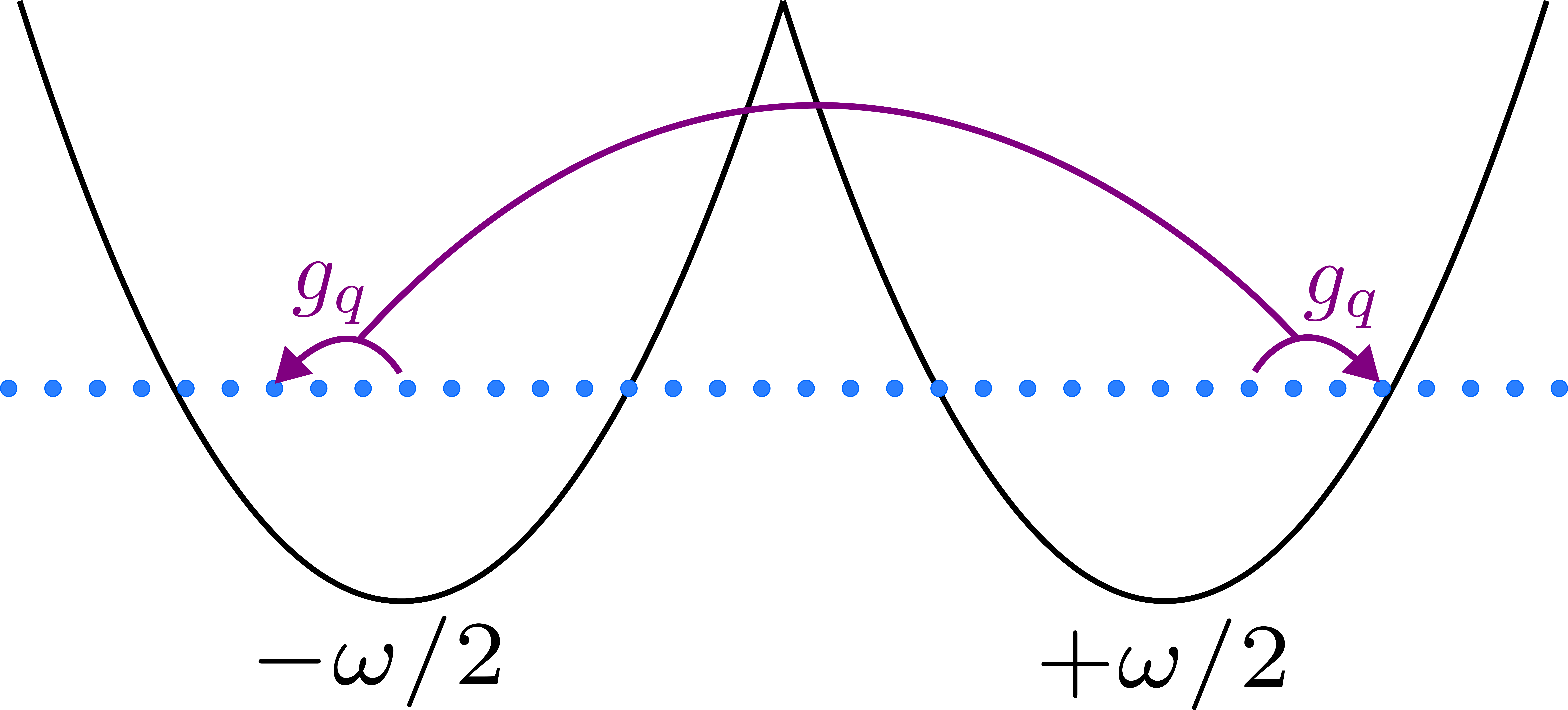
Researchers have developed a novel simulation technique capable of modeling a two-component Bose gas with unprecedented control over long-range interactions between its constituents. This approach utilizes driven disordered systems to effectively engineer these interactions, allowing for exploration of many-body physics beyond the reach of traditional methods. Crucially, the system can be driven at frequencies reaching
A Symphony of Platforms: Towards Scalable Quantum Simulation
The pursuit of quantum simulation relies heavily on physical systems capable of maintaining quantum coherence and being precisely manipulated; several platforms have emerged as frontrunners in this endeavor. Ultracold atoms, chilled to temperatures near absolute zero, offer excellent isolation from environmental noise and are controlled using lasers. Trapped ions, individually suspended and controlled by electromagnetic fields, boast long coherence times and high fidelity operations. Rydberg atoms, with their exaggerated electronic properties, allow for strong interactions between individual atoms, facilitating the creation of complex quantum states. Complementing these, superconducting circuits, engineered at the nanoscale, offer rapid control and scalability using microwave pulses. Each of these platforms-atoms, ions, Rydberg species, and superconducting qubits-provides unique strengths in implementing the intricate trapping and driving techniques essential for accurately modeling quantum systems and pushing the boundaries of scientific discovery.
Researchers are increasingly focused on hybrid quantum simulation architectures that leverage the strengths of different physical platforms, and a key innovation lies in the implementation of ring traps. These traps, created by carefully layering optical and radio-frequency dressed magnetic confinement, offer significant advantages over traditional trapping methods. Optical traps provide tight, localized control of individual atoms, while the RF-dressed magnetic fields create a larger, ring-shaped potential well. This combination not only enhances the control over atomic positions but also dramatically improves scalability, allowing for the manipulation of a far greater number of qubits – potentially exceeding
Quantum simulation, leveraging the principles of quantum mechanics to model complex systems, benefits from a scalability that allows for investigations previously beyond reach. Current techniques, utilizing platforms like trapped ions or ultracold atoms, demonstrate the capacity to simulate systems containing up to
The study demonstrates a fascinating principle: complex system-wide behaviors can arise from manipulating local interactions. Rather than imposing global control, the researchers engineer interactions within the bosonic gas to achieve desired outcomes, mirroring how natural systems self-organize. This echoes Albert Camus’s observation, “In the midst of winter, I found there was, within me, an invincible summer.” Just as inner resilience doesn’t require external direction, the emergent properties of this gas don’t necessitate top-down control. The researchers effectively demonstrate that by focusing on the resonant driving and s-wave scattering length modulation-the ‘local rules’-they can shape the system’s behavior, illustrating that order doesn’t need architects; it emerges from these finely tuned connections.
Beyond the Ring: Future Directions
The demonstration of engineered interactions in a resonantly driven bosonic gas offers more than a novel simulation technique. It subtly reinforces a long-held suspicion: stability and order emerge from the bottom up. Attempts to dictate collective behavior through imposed, global control – to ‘design’ a many-body system – are, at best, temporary illusions. This work doesn’t create a specific interaction; it modulates the potential for interaction, allowing self-organization to proceed under subtly altered constraints. The ring geometry, while elegant for initial demonstration, represents a simplification. The true test lies in extending these techniques to more complex geometries – and, ultimately, to disordered systems – where the interplay between local rules and global outcomes becomes truly fascinating.
Current limitations reside not in the modulation itself, but in the readout. Precise characterization of the resulting many-body state requires increasingly sophisticated probes. Furthermore, the reliance on a single component limits the exploration of genuinely two-component phenomena. Future work should focus on extending these Floquet engineering techniques to simultaneously control multiple internal states, opening avenues for simulating richer, more realistic quantum systems.
The enduring question isn’t whether one can impose order, but whether one can nudge a system toward self-organized complexity. This research suggests the latter is not only possible, but potentially far more robust – and, perhaps, more beautiful – than any top-down design.
Original article: https://arxiv.org/pdf/2602.15582.pdf
Contact the author: https://www.linkedin.com/in/avetisyan/
See also:
- Adam Levine Looks So Different After Shaving His Beard Off
- After AI Controversy, Major Crunchyroll Anime Unveils Exciting Update
- Trails in the Sky 2nd Chapter launches September 17
- FRONT MISSION 3: Remake coming to PS5, Xbox Series, PS4, Xbox One, and PC on January 30, 2026
- Dialoop coming to Switch on June 17
- How Could We Forget About SOL Shogunate, the PS5 Action RPG About Samurai on the Moon?
- Bitcoin’s Rollercoaster: Will the Crypto Crown Its Lost Roving Glory?
- Xbox Game Pass Users “Blown Away” by New Exclusive Game
- New Reveal Proves Windrose Isn’t The Only Promising Pirate Game Coming Out In 2026
- EA Game Free With PlayStation Plus For Only 72 Hours
2026-02-19 01:50