Author: Denis Avetisyan
Researchers are leveraging the polarization of light from swirling gas and dust around young stars to search for subtle signatures of elusive axion-like particles, a leading candidate for dark matter.
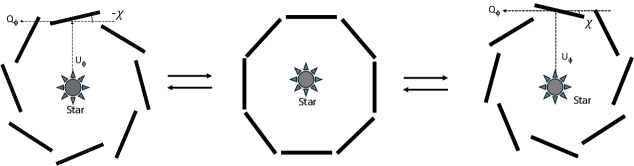
This study presents the first time-domain polarimetric analysis of protoplanetary disks, establishing initial constraints on axion-like particle properties and demonstrating a novel approach to dark matter detection.
The nature of dark matter remains one of the most compelling mysteries in modern physics, motivating exploration of diverse candidates beyond the Standard Model. This paper, ‘Searching for Axion-like particle Dark Matter with Time-domain Polarization: Constraints from a protoplanetary disk’, presents a novel approach, leveraging the birefringence induced by potential axion-like particles (ALPs) as revealed through time-series polarimetric observations of a protoplanetary disk. By analyzing archival data, the authors establish first-of-their-kind upper limits on the ALP-photon coupling, g_{aγ} \lesssim 7.5 \times 10^{-{12}} (m_a / 10^{-{22}}\,{\rm eV})\,{\rm GeV}^{-1}, and demonstrate the promising potential of protoplanetary disks as sensitive probes of ultralight dark matter-could future, higher-precision measurements unlock definitive evidence for these elusive particles?
The Illusion of Order: Dark Matter’s Persistent Questions
The prevailing model of dark matter, known as the Cold Dark Matter paradigm, successfully explains many large-scale cosmic structures. However, when applied to the formation of galaxies and the distribution of matter within them, discrepancies arise. Simulations based on this model predict a higher concentration of dwarf galaxies and a central density profile in larger galaxies than observations reveal – a problem often referred to as the “missing satellites” and “core-cusp” problems, respectively. These tensions suggest that the standard model may be incomplete, prompting scientists to investigate alternative dark matter candidates with different properties. The search extends beyond weakly interacting massive particles (WIMPs), the long-favored candidate, to encompass possibilities like self-interacting dark matter, warm dark matter, and, increasingly, ultralight dark matter, each offering unique solutions to these persistent galactic-scale puzzles.
The prevailing understanding of dark matter, known as the Cold Dark Matter paradigm, currently faces challenges in fully explaining observations at the scale of galaxies. Consequently, researchers are increasingly exploring alternative candidates, with ultralight dark matter-particularly hypothetical particles called Axion-Like Particles (ALPs)-gaining significant attention. These particles, predicted by extensions to the Standard Model of particle physics, exhibit wave-like behavior due to their extremely small mass, potentially resolving discrepancies in galactic structure formation. This quantum nature allows ultralight dark matter to form dense cores in galaxies and influence the distribution of dark matter halos in ways that conventional cold dark matter cannot. Furthermore, ALPs interact with photons, opening avenues for detection through their effects on light, a property that distinguishes them from many other dark matter candidates and provides a promising path toward unraveling the mysteries of the universe’s missing mass.
The search for dark matter has entered a new phase with a proposed technique focused on detecting axion-like particles (ALPs) through their influence on light polarization. This study posits that ALPs, as they traverse cosmic magnetic fields, can induce subtle changes in the polarization of photons. Unlike traditional dark matter searches relying on gravitational effects or direct detection of particle interactions, this method looks for these minute alterations in light’s orientation. Researchers aim to identify these polarization shifts by leveraging highly sensitive polarimetric instruments, effectively using light itself as a probe for the elusive dark matter. This innovative approach offers a complementary pathway to unraveling the mysteries of dark matter, potentially revealing its presence through a previously untapped observational channel.
The search for subtle interactions between dark matter and ordinary light necessitates extraordinarily sensitive measurement techniques. Researchers are focusing on polarimetry – the measurement of light polarization – as a key method to detect the presence of axion-like particles. These particles, if they exist, are predicted to induce minuscule rotations in the polarization angle of light passing through a magnetic field. To discern these effects from background noise and align with current astrophysical limits, experiments are being designed to achieve a remarkable polarization angle precision of 0.1 degrees. This level of accuracy demands state-of-the-art instrumentation and data analysis strategies, pushing the boundaries of precision measurement in the quest to unravel the mysteries of dark matter.
Whispers of New Physics: The Theoretical Basis for ALPs
Axion-Like Particles (ALPs) are hypothesized to interact with photons via a coupling described by the Chern-Simons term in the effective Lagrangian. This interaction results in a predicted vacuum birefringence effect, where the polarization of light propagating through a magnetic field is rotated. The magnitude of this rotation is proportional to the strength of the magnetic field, the propagation distance, and the ALP’s coupling constant to photons. Specifically, the angle of rotation θ can be expressed as \theta \approx \frac{g_a \cdot B \cdot L}{2} , where g_a represents the ALP-photon coupling, B is the magnetic field strength, and L is the path length. Consequently, sensitive measurements of polarization rotation can potentially constrain the parameter space for ALPs and provide evidence for their existence.
Photon birefringence, the dependence of refractive index on the polarization of light, arises from the differing interactions of left- and right-circularly polarized photons with the medium. In materials exhibiting this property, the ordinary and extraordinary rays experience distinct propagation velocities, resulting in a phase difference that is proportional to the path length and the material’s birefringence. This manifests as a change in polarization state for light traversing the medium, and can be quantified by the difference in refractive indices \Delta n = n_{ordinary} - n_{extraordinary} . The magnitude of birefringence is sensitive to the strength of the coupling between axion-like particles (ALPs) and photons, making it a potential signature for ALP detection within optically active environments such as certain crystals or vacuum regions subject to strong magnetic fields.
The Peccei-Quinn mechanism addresses the strong CP problem in quantum chromodynamics (QCD) by proposing a new dynamical symmetry. This symmetry, when spontaneously broken, introduces a new pseudoscalar particle – the axion – which also encompasses the broader class of axion-like particles (ALPs). The strong CP problem arises from the theoretical possibility of a CP-violating term in the QCD Lagrangian, which experiments have shown to be extremely small or zero. The Peccei-Quinn mechanism dynamically relaxes this term to zero, effectively solving the strong CP problem and simultaneously predicting the existence of a very weakly interacting particle with properties that make it a viable dark matter candidate. The mass of the axion/ALP is inversely proportional to the symmetry breaking scale, m_{a} \propto 1/f_{a}, where f_{a} represents this scale.
String theories, particularly those involving extra dimensions and compactifications, routinely predict the existence of axion-like particles (ALPs) as components of the particle spectrum. These ALPs emerge as massless or very light bosons associated with the closed string modes, often arising from the zero modes of higher-dimensional gauge fields. The predicted mass range for ALPs within string theory models varies significantly, but frequently falls within the 10^{-6} \text{eV} - 10^{-3} \text{eV} range, making them viable candidates for constituting the galactic dark matter halo. Furthermore, the abundance of ALPs produced in the early universe through non-thermal mechanisms, such as misalignment or decay of cosmic strings, aligns with the observed dark matter density, reinforcing the theoretical connection between string theory and the dark matter problem.
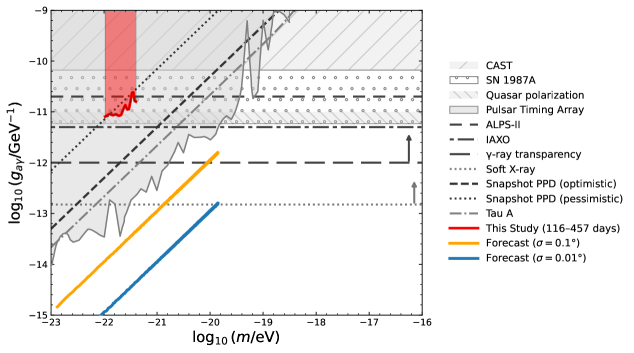
![Analysis of the HD 163296 dataset constrains the axion-photon coupling constant to <span class="katex-eq" data-katex-display="false">95\%</span> confidence levels, excluding regions limited by current laboratory and astrophysical observations (including CAST[9], SN 1987A[28], quasar polarization[27], and Pulsar Timing Array[40]) and forecasting sensitivity improvements with upcoming experiments like ALPS-II[5] and IAXO[3] for ALP masses between approximately <span class="katex-eq" data-katex-display="false">10^{-{22}}-10^{-{21}}eV</span>.](https://arxiv.org/html/2602.15611v1/x3.png)
Protoplanetary Disks: A Cosmic Laboratory for Polarization Studies
Protoplanetary disks represent a viable astrophysical setting for the detection of birefringence induced by Axion-Like Particles (ALPs). These disks, composed of gas and dust surrounding young stars, generate polarized radiation via scattering processes. The presence of ALPs within these disks would cause a vacuum birefringence effect, rotating the polarization plane of emitted light in a manner dependent on the ALP’s mass m_a and coupling constant g_{a\gamma} . The strong magnetic fields commonly found within protoplanetary disks enhance this interaction, potentially creating a measurable signal in polarized light observations. This makes these disks a natural laboratory for searching for and constraining the properties of ALPs, complementing results from other experimental approaches.
The high optical depth of protoplanetary disks introduces significant challenges to polarimetric measurements due to multiple scattering events. Photons undergo repeated scattering within the disk’s dust and gas, altering their initial polarization state and creating a complex signal. This multiple scattering effectively “washes out” subtle polarization signatures potentially indicative of axion-like particles (ALPs). Consequently, data analysis requires the implementation of radiative transfer modeling and specialized algorithms to disentangle the intrinsic polarization signal from the effects of multiple scattering, accurately accounting for the scattering albedo and phase function of the disk material to recover the underlying polarized emission.
High-precision polarimetric observations of the HD 163296 protoplanetary disk were conducted using the Spectro-Polarimetric High-contrast Exoplanet REsearch instrument (SPHERE) and its InfraRed Dual-band Imager and Spectrograph (IRDIS). SPHERE/IRDIS, located at the Very Large Telescope, provides the necessary angular resolution and sensitivity to resolve the disk’s structure and measure the polarization state of light scattered from dust grains within the disk. Data acquisition involved multiple exposures and dithering strategies to mitigate systematic effects and maximize signal-to-noise. The resulting polarimetric maps were then calibrated and processed to isolate the signal attributable to dust scattering, forming the basis for subsequent time-series analysis searching for signatures of axion-like particles.
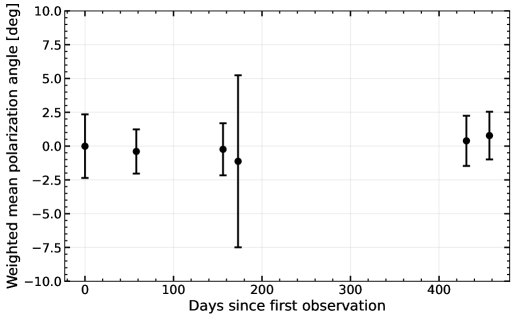
Analysis of time-series polarimetric data obtained from the HD 163296 protoplanetary disk enabled the detection of minute fluctuations potentially attributable to interactions with Axion-Like Particles (ALPs). These variations, when compared against theoretical models, allowed researchers to establish an upper limit on the coupling constant g_{a\gamma} between axions and photons. Specifically, the study constrained g_{a\gamma} to be less than 7.5 x 10⁻¹² GeV-1, for an axion mass m_a of 10-22 eV. This represents a significant improvement in the existing constraints on ALP parameters derived from astrophysical observations.
Decoding the Signal: Methods and the Promise of Future Discoveries
A complete description of light necessitates understanding its polarization, and this is achieved through the use of Stokes Parameters. These four values – typically denoted as S0, S1, S2, and S3 – quantify the intensity and the degree to which light is polarized in different directions. S_0 represents the total intensity, while S_1, S_2, and S_3 describe the linear polarization along horizontal and vertical axes, and circular polarization, respectively. By meticulously measuring these parameters, researchers can move beyond simply detecting light and begin to characterize its complete state, revealing subtle clues about the material it has interacted with – crucial for probing the faint signatures of hypothesized axion-like particles (ALPs) within protoplanetary disks, as any interaction alters the polarization state in a predictable way.
Changes in the polarization angle of light passing through a protoplanetary disk serve as a sensitive probe for the presence of axion-like particles (ALPs). These hypothetical particles, considered a candidate for dark matter, interact with photons, altering the light’s polarization in a predictable manner. Researchers leverage this interaction by meticulously mapping the polarization patterns across the disk; deviations from expected patterns, caused by ALP interactions, reveal information about the particles’ strength and abundance. The magnitude of the polarization shift is directly related to the coupling constant of the ALP, allowing scientists to constrain its properties and potentially confirm its existence. This technique effectively transforms the protoplanetary disk into a natural laboratory for particle physics, using starlight to search for elusive components of the universe.
The techniques employed in this research, while demonstrated on the protoplanetary disk surrounding HD 163296, are not limited to a single system. The core principle – detecting subtle changes in polarization patterns to infer the presence of axion-like particles – translates effectively to other protoplanetary disks. This scalability is crucial, as expanding the observational scope to include a larger sample of these disks significantly increases the probability of detecting a definitive ALP signal. Each additional disk examined contributes to a greater cumulative search volume, improving statistical power and potentially revealing the elusive dark matter candidate through its interaction with polarized light. This broader application promises a more comprehensive investigation into the nature of dark matter and its impact on the formation of planetary systems.
The potential discovery of axion-like particles (ALPs) extends far beyond simply identifying a dark matter candidate; it promises a revolution in particle physics by validating theoretical extensions to the Standard Model. This research establishes a critical coherence length of 40 parsecs for ALP phase alignment, assuming a mass of 10^{-{22}} eV, demonstrating the scale over which these particles must maintain synchronized behavior to produce observable polarization signatures in protoplanetary disks. Maintaining this coherence necessitates remarkably precise distance measurements – an uncertainty of only 0.13 parsecs – highlighting the stringent requirements for future observations and emphasizing the sensitivity of this method to subtle astrophysical phenomena. A successful detection would not only confirm the existence of ALPs but also provide a unique pathway to explore their properties, offering insights into the fundamental nature of dark matter and potentially revealing connections between the visible and dark universes.

The search for axion-like particles within protoplanetary disks, as detailed in this study, exemplifies the cosmos generously showing its secrets to those willing to accept that not everything is explainable. This investigation, utilizing time-domain polarization analysis, attempts to illuminate the nature of dark matter – a substance stubbornly refusing full comprehension. It’s a humbling pursuit, acknowledging the limitations of current models while simultaneously pushing the boundaries of observational techniques. As Max Planck observed, “A new scientific truth does not triumph by convincing its opponents and proving them wrong. Eventually the opponents die, and a new generation grows up that is familiar with it.” This work, though offering only initial constraints, demonstrates a willingness to embrace the unknown, a necessary posture when confronting the vastness and inherent mysteries of existence. Black holes are nature’s commentary on our hubris, and so too is the persistent enigma of dark matter.
What Lies Beyond the Horizon?
The presented work, a foray into time-domain polarimetry of protoplanetary disks as a means of detecting axion-like particles, reveals as much about the limitations of current methodology as it does about the elusive nature of dark matter. Establishing initial constraints is, of course, a necessary step; however, these constraints remain heavily dependent on assumptions regarding the local dark matter density and the magnetic field structure within the disk. Any attempt to refine these limits necessitates a more nuanced understanding of these environments, requiring sophisticated magnetohydrodynamic simulations coupled with radiative transfer modeling.
The true challenge, though, extends beyond mere computational power. The search for axion-like particles, like all quests to define the unseen universe, is predicated on the belief that our current theoretical framework, however incomplete, is sufficient to guide the search. A null result, or even a tentative detection, should not be interpreted as definitive proof, but rather as a boundary condition, a reminder that the universe may operate by principles beyond our present grasp.
Future investigations should focus not only on improving signal-to-noise ratios and expanding the observational parameter space, but also on developing novel techniques that are less reliant on pre-conceived theoretical biases. Perhaps the most fruitful path lies in embracing the inherent uncertainty, in acknowledging that the event horizon of our knowledge is perpetually expanding, obscuring as much as it reveals.
Original article: https://arxiv.org/pdf/2602.15611.pdf
Contact the author: https://www.linkedin.com/in/avetisyan/
See also:
- Adam Levine Looks So Different After Shaving His Beard Off
- Trails in the Sky 2nd Chapter launches September 17
- After AI Controversy, Major Crunchyroll Anime Unveils Exciting Update
- Bitcoin’s Rollercoaster: Will the Crypto Crown Its Lost Roving Glory?
- Xbox Game Pass Users “Blown Away” by New Exclusive Game
- Dialoop coming to Switch on June 17
- How Could We Forget About SOL Shogunate, the PS5 Action RPG About Samurai on the Moon?
- Prime Monster launches May 4
- Upcoming Movie Based on 10/10 Fantasy Masterpiece Gets a Release Date & Exciting Cast Update
- Why is Tech Jacket gender-swapped in Invincible season 4 and who voices her?
2026-02-19 03:32