Author: Denis Avetisyan
New research reveals that atomic vacancies and subtle interactions between nanoparticle atoms dramatically influence their magnetic stability and tendency to flip polarization.
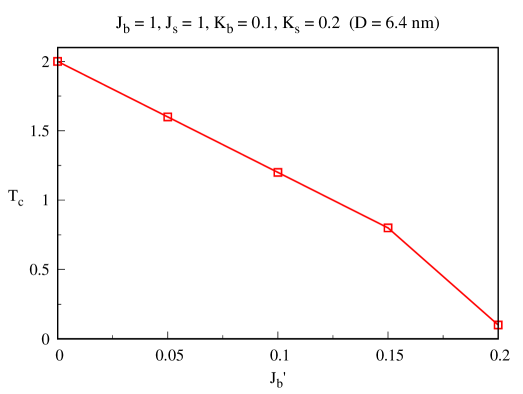
Second-neighbor antiferromagnetic exchange coupling and atomic vacancies are shown to play a critical role in determining the superparamagnetic transition temperature of ferromagnetic nanoparticles.
Disorder and magnetic frustration within nanoscale systems often limit their potential for stable magnetization. This research, detailed in ‘Role of atomic vacancies and second-neighbor antiferromagnetic-exchange coupling in a ferromagnetic nanoparticle’, utilizes Monte Carlo simulations within the Heisenberg model to investigate the combined influence of atomic vacancies and long-range magnetic interactions on nanoparticle behavior. We find that both randomly distributed vacancies and second-neighbor antiferromagnetic exchange coupling contribute to enhanced superparamagnetic characteristics. How might these findings be leveraged to engineer nanoparticles with tailored magnetic properties for advanced applications?
Beyond Bulk Behavior: The Nuances of Nanoscale Magnetism
The potential of magnetic nanoparticles extends across diverse fields, from targeted drug delivery and high-resolution medical imaging in biomedicine to the development of ultra-high density data storage devices. However, realizing these applications demands a precise understanding – and ultimately, control – of their magnetic characteristics. Conventional models, derived from studying bulk magnetic materials, often fall short when applied to the nanoscale, yielding inaccurate predictions of nanoparticle behavior. This discrepancy arises because the magnetic response of these tiny structures is significantly influenced by factors largely negligible in bulk materials – including finite size effects, the proportion of surface atoms, and the presence of structural imperfections. Consequently, a new theoretical framework and experimental techniques are required to accurately characterize and predict the magnetic properties of nanoparticles, paving the way for optimized performance in advanced technologies.
The magnetic characteristics of nanoparticles diverge significantly from those observed in bulk materials due to several factors. As dimensions shrink to the nanoscale, a disproportionately large fraction of atoms reside on the surface, where broken bonds and altered coordination numbers introduce unique magnetic moments and surface anisotropy. Furthermore, structural defects – imperfections in the crystalline lattice – act as pinning sites for magnetic domain walls, influencing magnetization reversal processes. Consequently, traditional models predicated on continuous magnetic behavior and uniform material properties become inadequate; the collective magnetic response is no longer simply a scaled-down version of the bulk, but rather a complex interplay of size, shape, surface chemistry, and structural imperfections that dictates the nanoparticle’s magnetic behavior and functionality.
The predictable magnetic behavior observed in bulk materials breaks down at the nanoscale, demanding a revised understanding of magnetization. Traditional models, reliant on collective magnetic phenomena, fail to account for the disproportionate influence of surface atoms, quantum effects, and structural imperfections present in nanoparticles. Consequently, researchers are focusing on investigating how particle size, shape, composition, and crystalline structure individually and collectively affect magnetic properties like coercivity and saturation magnetization. This shift necessitates the development of new theoretical frameworks and experimental techniques capable of probing magnetic behavior at the atomic level, potentially unlocking novel functionalities for applications ranging from high-density data storage to targeted drug delivery and advanced magnetic resonance imaging.
Simulating the Unseen: Computational Approaches to Nanoscale Magnetism
The Heisenberg model, a cornerstone of nanomagnetism, describes the interactions between localized magnetic moments – often represented as spins \vec{S}_i – within a nanoparticle’s lattice structure. It posits that the total energy of the system is minimized when these spins align either ferromagnetically (parallel) or antiferromagnetically (antiparallel), dictated by the exchange interaction J_{ij} between neighboring spins \vec{S}_i and \vec{S}_j . This interaction strength, dependent on the interatomic distance and material properties, determines the overall magnetic ordering. The model’s Hamiltonian is expressed as H = - \sum_{<i,j>} J_{ij} \vec{S}_i \cdot \vec{S}_j , where the summation is over all pairs of nearest-neighbor spins. While simplified, the Heisenberg model effectively captures the fundamental physics governing magnetic behavior in nanoparticles and serves as a basis for more complex simulations and analyses.
Monte Carlo simulation utilizes random sampling to model the probabilistic behavior of interacting spins within a nanomagnetic system. This computational technique addresses the N-body problem inherent in simulating many-spin interactions by iteratively updating spin configurations based on calculated energies and probabilities determined by the Heisenberg exchange interaction and externally applied fields. By repeatedly sampling these configurations, the simulation generates an ensemble of spin states, allowing for the statistical averaging of magnetic properties – such as magnetization and magnetic anisotropy – while explicitly incorporating the effects of thermal fluctuations, which introduce randomness and influence the stability of magnetic order. The method is particularly useful for systems where analytical solutions are intractable due to the complexity of the spin arrangements and the large number of interacting spins.
Computational modeling offers a cost- and time-effective alternative to physical experimentation for investigating nanoscale magnetic behavior. By implementing simulations, researchers can systematically vary parameters such as temperature, particle size, or material composition and observe the resulting changes in magnetic properties – including magnetization, coercivity, and magnetic anisotropy – without the need for synthesizing and characterizing physical samples. This parametric study capability is crucial for understanding complex magnetic phenomena and predicting material performance under diverse conditions, ultimately accelerating materials discovery and optimization efforts. The ability to isolate and control individual variables within the simulation environment provides insights that are often difficult or impossible to obtain through empirical methods alone.
The Influence of Imperfection: Defects and Magnetic Order
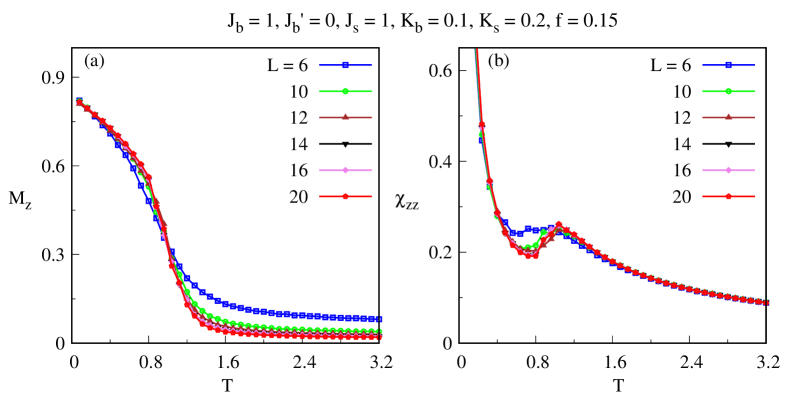
Atomic vacancies within nanoparticles introduce localized disruptions to the exchange interactions responsible for maintaining long-range magnetic order. These vacancies act as defects in the crystal lattice, breaking the periodicity of spin alignment and thereby reducing the overall magnetization of the material. Quantitative analysis demonstrates a linear correlation between vacancy concentration and the Curie temperature ( T_c ), indicating that increasing the number of vacancies progressively lowers the temperature at which the material transitions from ferromagnetic to paramagnetic behavior. This reduction in T_c is directly attributable to the weakening of ferromagnetic coupling caused by the disruption of spin arrangements around the vacancy sites.
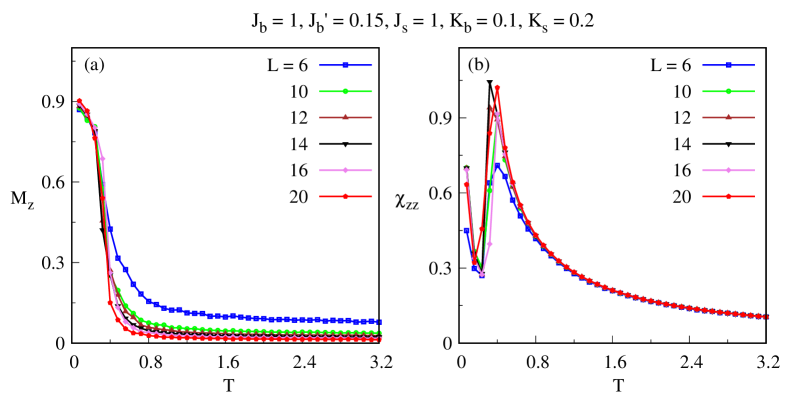
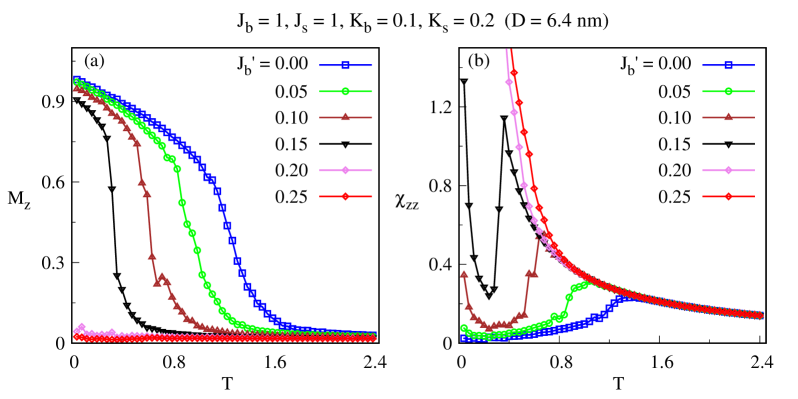
Second-neighbor antiferromagnetic coupling introduces magnetic frustration within the nanoparticle structure, effectively diminishing the strength of ferromagnetic interactions. This coupling, quantified by Jb', promotes competing alignment tendencies, hindering the establishment of long-range magnetic order. Experimental data demonstrates a substantial decrease in saturation magnetization when the coupling strength exceeds Jb' \approx 0.2. Beyond this threshold, the antiferromagnetic interactions increasingly dominate, suppressing the overall magnetic moment and reducing the nanoparticle’s response to external magnetic fields.
The magnetic susceptibility and thermal stability of nanoparticles are significantly affected by the interplay of intrinsic defects, surface anisotropy, and long-range magnetic correlations. Defects disrupt the balanced magnetic moments, while surface anisotropy-a preference for magnetization along specific surface directions-introduces additional energy barriers. These factors, combined with residual long-range magnetic interactions between nanoparticles, lower the energy required for magnetization reversal. Consequently, even relatively low concentrations of defects, such as a 5% vacancy concentration, can reduce the nanoparticle’s effective anisotropy and induce superparamagnetic behavior, where the magnetization fluctuates randomly at a given temperature, leading to a substantial alteration in the overall magnetic response and diminished thermal stability.
From Fluctuations to Functionality: Superparamagnetism and its Applications
The emergence of superparamagnetism in nanoscale materials arises from a delicate balance between several competing factors. As particle size diminishes to the nanometer scale, the influence of surface effects becomes pronounced, introducing a magnetic anisotropy that favors specific magnetization directions. Simultaneously, inherent or intentionally introduced defects within the nanoparticle’s structure, alongside finite size limitations, reduce the energy barrier preventing magnetization reversal. This interplay allows for rapid, thermally-induced fluctuations in the magnetic moment, even in the absence of an external magnetic field – a state known as superparamagnetism. Essentially, the particle is so small, or contains enough imperfections, that its magnetization constantly and randomly flips direction, resulting in a zero net magnetic moment when averaged over time and offering unique opportunities for applications leveraging this dynamic behavior.
The potential of superparamagnetic nanoparticles extends significantly into the realm of biomedicine, most notably through magnetic hyperthermia – a targeted cancer treatment. In this process, these nanoparticles are introduced into cancerous tissues and, when exposed to an alternating magnetic field, rapidly generate heat due to their magnetization fluctuations. This localized heating effectively destroys cancer cells while minimizing damage to surrounding healthy tissue. The efficacy of magnetic hyperthermia is directly linked to the ability to precisely control nanoparticle magnetic properties, ensuring sufficient heat generation without causing systemic toxicity. Therefore, the superparamagnetic regime, characterized by these rapid fluctuations, is not merely a physical phenomenon, but a critical enabler for more effective and less invasive cancer therapies.
The deliberate manipulation of nanoparticle defects presents a pathway to engineer magnetic characteristics for specialized uses. Recent research highlights that introducing atomic vacancies – imperfections in the crystal structure – can induce a superparamagnetic state, where magnetization rapidly fluctuates, even at relatively high concentrations of up to 25%. This transition is accompanied by a predictable, nearly linear decrease in the material’s saturation magnetization, offering a quantifiable parameter for design. By precisely controlling these vacancy concentrations, scientists can tailor nanoparticle behavior for applications ranging from targeted drug delivery and enhanced magnetic resonance imaging to magnetic hyperthermia, where particles generate heat to destroy cancerous tissues, and advanced data storage technologies.
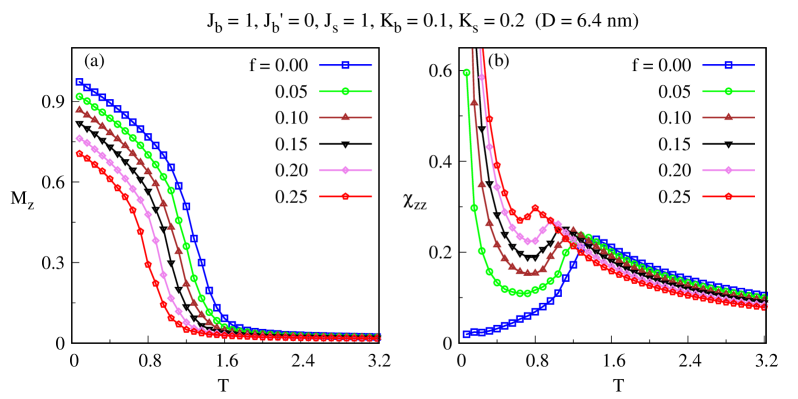
The study illuminates how seemingly minor imperfections – atomic vacancies – significantly influence the magnetic behavior of nanoparticles. This aligns with a perspective valuing the discipline of uncertainty; the research doesn’t claim perfect, defect-free magnetism, but rather quantifies how imperfections alter the critical temperature and superparamagnetic transition. As Niels Bohr stated, “How wonderful that we have met coincidence.” This isn’t merely a happy accident, but a recognition that complex systems rarely conform to idealized models. The modeling, through Monte Carlo simulation, acknowledges this inherent unpredictability, providing a confidence interval around the observed magnetic properties rather than absolute certainty. The investigation into second-neighbor exchange coupling further emphasizes that magnetic behavior isn’t solely determined by direct interactions, but by a network of subtle influences-a truth revealed through rigorous examination of uncertainty.
Where Do We Go From Here?
The demonstrated influence of atomic vacancies and second-neighbor exchange coupling on nanoparticle magnetic behavior isn’t a revelation that alters fundamental physics. Rather, it’s a persistent reminder that seemingly minor structural details can exert disproportionate control over macroscopic properties. The current work establishes a link, but correlation isn’t causation, and the precise mechanisms governing the interplay between vacancy concentration, exchange interactions, and superparamagnetic transition temperatures require further scrutiny. Anything confirming expectations needs a second look.
Future investigations shouldn’t focus solely on refining existing models-Heisenberg or otherwise. A hypothesis isn’t belief-it’s structured doubt. Instead, the field might benefit from exploring alternative theoretical frameworks capable of capturing the subtle, long-range effects likely present in these systems. Consideration of more complex magnetic anisotropies, or the inclusion of dynamic effects beyond the static snapshots provided by Monte Carlo simulations, could reveal currently hidden variables.
Ultimately, the practical implications are clear: predictable control over nanoparticle magnetic properties demands an understanding that extends beyond idealized structures and simple interactions. The path forward isn’t about achieving perfect nanoparticles, but about quantifying and accounting for the inherent imperfections that define their behavior.
Original article: https://arxiv.org/pdf/2602.17057.pdf
Contact the author: https://www.linkedin.com/in/avetisyan/
See also:
- Adam Levine Looks So Different After Shaving His Beard Off
- After AI Controversy, Major Crunchyroll Anime Unveils Exciting Update
- Gold Rate Forecast
- Tekken 8 Fans Furious as Tifa Tipped for Street Fighter 6 Instead
- Dialoop coming to Switch on June 17
- 10 Movies That Were Banned in Different Countries For Random Reasons
- From season 4 release schedule: When is episode 2 out on MGM+?
- Steam Makes Sci-Fi Game 100% Free for 72 Hours
- Japan’s No. 1 Spring 2026 Anime Is the True Successor to an All-Time Great
- Welcome to Demon School! Iruma-kun season 4 release schedule: When are new episodes on Crunchyroll?
2026-02-21 19:25