Author: Denis Avetisyan
A new analysis explores how modified gravity theories might avoid the paradoxes of closed timelike curves, and proposes a way to detect causality violations near black holes through gravitational waves.
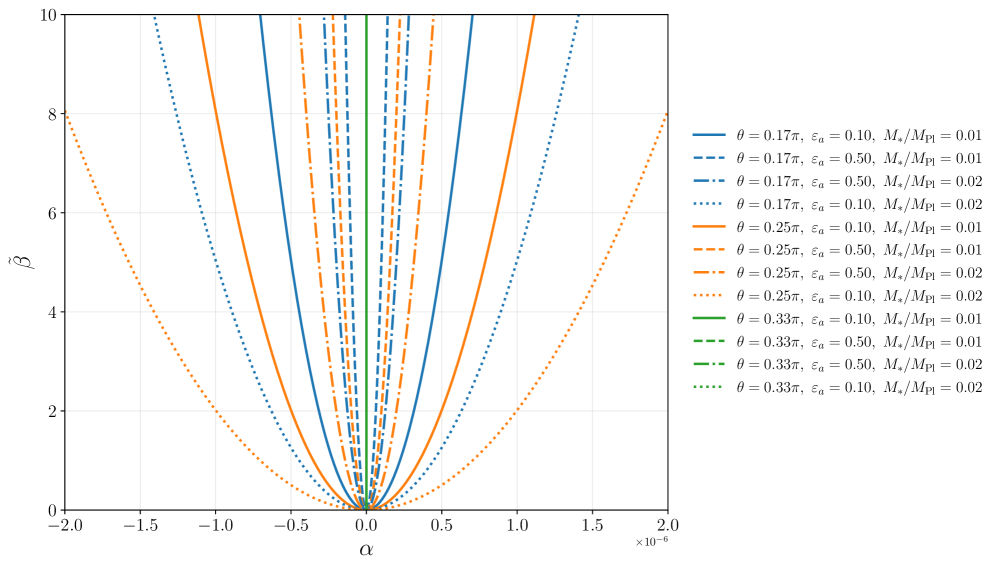
This review investigates the conditions under which modified gravity theories prevent the formation of closed timelike curves, focusing on Gauss-Bonnet gravity, K-essence, and the potential for gravitational wave echoes as signatures of causality violation.
The persistent challenge of reconciling modified gravity with fundamental causality principles necessitates novel theoretical constraints. In the paper ‘There and back again — Closed timelike curves as EFT selection principle’, we propose that the appearance of closed timelike curves-paths in spacetime allowing for time travel-should be harder to achieve in modified gravity theories than in General Relativity, establishing a new selection principle for viable models. By analyzing effective field theory corrections on rotating black-hole backgrounds, we derive parameter bounds and identify a potential observational probe through gravitational wave echoes, offering a pathway to diagnose causality violations. Could the detection of such echoes ultimately confirm or refute the existence of spacetime geometries permitting travel to the past?
The Fragility of Certainty: When Gravity’s Rules Bend
Despite its century of success, Einstein’s General Relativity (GR) isn’t a complete picture of gravity. While remarkably accurate in most scenarios – from predicting the bending of starlight to enabling GPS technology – GR breaks down when confronted with the universe’s most extreme environments. Within black holes, at the very center of spacetime singularities, the theory predicts infinite densities and curvatures, indicating its own limitations. Similarly, extrapolating GR back to the universe’s earliest moments, immediately after the Big Bang, results in conditions where the theory becomes unreliable and predicts its own failure. These aren’t necessarily flaws in GR itself, but rather signposts indicating that it’s an effective theory, valid within a certain domain, and that a more fundamental description of gravity is needed to fully capture the physics of these intense gravitational regimes. Understanding these limitations is therefore crucial for developing a more complete and accurate model of the cosmos.
The persistent difficulties in applying General Relativity to scenarios like the singularities within black holes and the conditions immediately following the Big Bang have spurred a vigorous quest for alternative theories of gravity. This isn’t simply about refining Einstein’s masterpiece, but potentially uncovering entirely new physics operating at extremely high energies – scales far beyond those currently accessible by terrestrial experiments. Researchers hypothesize that modifications to GR may become crucial at these energy levels, revealing previously unknown particles or forces that govern gravitational interactions. These proposed modifications aren’t arbitrary; they are rigorously tested against existing observations and demand a consistent framework that doesn’t introduce logical paradoxes, such as the possibility of traveling backwards in time. The search, therefore, represents a frontier in theoretical physics, promising to expand understanding of the universe’s most fundamental forces and its origins.
The pursuit of theories extending Einstein’s General Relativity faces a fundamental hurdle: the preservation of causality. Any modification allowing for closed timelike curves – paths in spacetime that loop back on themselves – opens the door to logical paradoxes, such as traveling to the past and altering events that led to the journey itself. This research rigorously examines the geometric conditions necessary to prevent such violations in modified gravity theories. Specifically, it investigates how the energy density and pressure of exotic matter, potentially required by these modifications, must behave to ensure spacetime remains free of these problematic loops. The findings establish crucial limitations on viable alternatives to General Relativity, demonstrating that any successful theory must not only explain observed phenomena but also uphold the fundamental principle that effects follow causes, even in the most extreme gravitational environments.
Beyond the Standard Model: Constructing Alternatives
Modified Gravity theories represent a class of gravitational models developed to address limitations within General Relativity, particularly concerning dark energy, dark matter, and the observed accelerated expansion of the universe. These theories achieve this by extending or replacing the Einstein-Hilbert action with additional terms, effectively introducing new dynamical degrees of freedom beyond the tensor fields present in General Relativity. A common mechanism for incorporating these degrees of freedom involves the introduction of scalar fields – fields possessing only magnitude and no direction – which couple to gravity and alter its behavior. These scalar fields can modify the gravitational interaction at different scales, potentially explaining observed cosmological phenomena without invoking dark matter or dark energy. The resulting gravitational dynamics deviate from those predicted by General Relativity, necessitating careful consideration of observational constraints to validate or refute these modified models.
Einstein-Dilaton-Gauss-Bonnet (EdGB) gravity combines the dynamics of a scalar dilaton field with the Gauss-Bonnet invariant, a second-order curvature correction to the Einstein-Hilbert action. The resulting action introduces new coupling constants and modifies the field equations, potentially resolving issues with quantum gravity and dark energy. In contrast, Quadratic K-essence focuses on modifying the kinetic term of a scalar field with higher-order derivatives – specifically, terms quadratic in the gradient of the scalar field \nabla_{\mu}\phi. This approach allows for the construction of theories where the scalar field directly couples to gravity through its kinetic energy, leading to alternative cosmological models and potentially alleviating the need for dark energy. While EdGB gravity modifies the gravitational sector itself, Quadratic K-essence introduces a dynamic scalar field that influences, but does not fundamentally alter, the underlying spacetime geometry. Both approaches require careful consideration of stability and consistency with observational constraints.
Modified gravity theories frequently introduce alterations to the Einstein-Hilbert action via higher-order curvature invariants to address limitations within General Relativity. These invariants, such as the Gauss-Bonnet invariant \mathcal{G} = R^2 - 4R_{\mu\nu}R^{\mu\nu} + R_{\mu\nu\rho\sigma}R^{\mu\nu\rho\sigma} – constructed from the Riemann tensor R_{\mu\nu\rho\sigma} and its contractions – modify the gravitational interaction beyond the standard Einsteinian form. However, to maintain consistency with effective field theory and avoid introducing uncontrollable high-energy behavior, these theories are subject to constraints. Specifically, the scale M* at which new gravitational degrees of freedom become strongly coupled must be greater than the Planck mass M , ensuring a well-behaved ultraviolet completion and preserving the validity of the perturbative approach.
Whispers from the Void: Searching for Observational Signatures
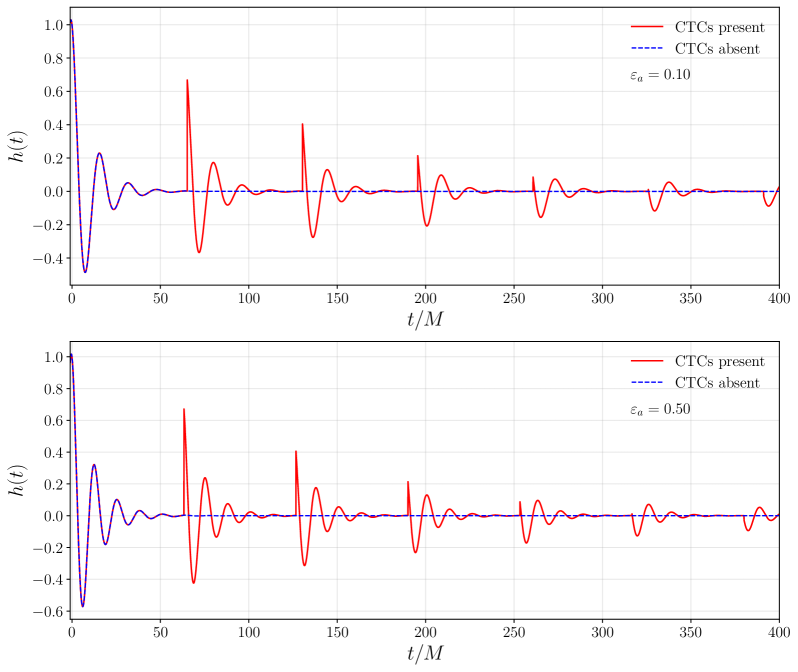
Gravitational wave echoes represent a potential observational signature of modified gravity theories and alternative compact objects. Following the merger of black holes – events routinely detected by gravitational wave observatories – these echoes would manifest as repeating signals arriving after the primary merger waveform. Their presence would deviate from the predictions of General Relativity, which dictates that black hole mergers produce a rapidly decaying signal. The existence of echoes suggests the presence of a surface replacing the event horizon, such as a firewall or a wormhole throat, or a modification to the spacetime geometry near the would-be horizon. These alternative structures would partially reflect gravitational waves, creating the observed echoes; the time delay and amplitude of these echoes are directly related to the properties of the reflecting surface or modified spacetime and can be used to constrain alternative theories of gravity.
Accurate modeling of gravitational wave signals, particularly when searching for subtle effects like echoes, requires advanced numerical techniques such as the Hartle-Thorne Expansion. This method provides a systematic way to solve the Einstein field equations in a perturbed spacetime, allowing researchers to precisely calculate the gravitational waveforms emitted during and after compact object mergers. The Hartle-Thorne expansion decomposes the spacetime metric into a series of spherical harmonics, facilitating the efficient computation of waveform features and enabling the separation of signal from detector noise. Furthermore, the expansion allows for the inclusion of higher-order mode contributions, crucial for characterizing complex source geometries and accurately predicting the observed signal at gravitational wave detectors. The computational demands of these analyses are significant, often requiring high-performance computing resources and specialized numerical relativity codes.
Analyses of gravitational wave signals for deviations from general relativity require careful consideration of causality violation. The presence of exotic compact objects or modified spacetime geometries can potentially lead to the formation of Closed Timelike Curves (CTCs), which represent logical paradoxes. To avoid such scenarios, research employs the concept of the Chronology Horizon, defining a boundary beyond which time travel to the past becomes possible. A critical value, \Lambda_{crit}(\epsilon_a, \theta, \epsilon_q), is calculated to determine the threshold beyond which CTCs form, dependent on parameters \epsilon_a representing the anisotropy of the spacetime, θ denoting the angle of observation, and \epsilon_q representing the quadrupole moment of the object. Constraints based on this critical value are essential for validating the physical plausibility of observed signals and distinguishing between genuine modifications to gravity and spurious detections.
The Power of Abstraction: An Effective Field Theory Framework
Effective Field Theory (EFT) offers a systematic way to explore theories that attempt to extend or modify Einstein’s General Relativity. Rather than committing to a specific, often complex, high-energy completion, EFT instead focuses on the low-energy effects of such modifications, parameterizing deviations from General Relativity using a set of constants known as Wilson Coefficients. These coefficients effectively capture the strength of new interactions and allow physicists to analyze a wide range of modified gravity theories within a unified framework. By treating General Relativity as the lowest-order approximation, EFT enables a comparative analysis between theory and observation, even when the underlying physics at very high energies remains unknown; it provides a powerful tool for pinpointing where and how gravity might differ from its currently accepted description, offering a pathway to test alternative gravitational models against observational data.
The strength of an effective field theory approach to modified gravity lies in its ability to circumvent the need for complete knowledge of physics at extremely high energies. Rather than requiring a fully formulated ultraviolet completion – a detailed description of gravity at the Planck scale – this method focuses on the low-energy effects of modifications to General Relativity. By parameterizing deviations using a set of Wilson coefficients, different theoretical models can be systematically compared to observational data, such as those from cosmological surveys or gravitational wave detectors. This allows researchers to assess the viability of various theories – and place constraints on their parameters – without needing to solve the complex problems associated with a complete high-energy description. The resulting framework provides a powerful tool for probing the nature of gravity and searching for evidence of physics beyond the Standard Model, even in the absence of a definitive understanding of the underlying fundamental principles.
Investigations into modified gravity theories benefit from rigorous constraints on their parameters, and a recent approach focuses on k-essence theory, demanding physically realistic energy conditions – specifically, positive energy density and pressure, represented mathematically by β > 0. By systematically limiting the values of Wilson coefficients within this framework, researchers can effectively assess the viability of different modified gravity proposals. This methodology doesn’t require complete knowledge of the underlying high-energy physics, instead leveraging observational data to establish boundaries on theoretical models. The resulting bound, denoted as Λcrit(εa,θ,εq), serves as a critical benchmark, offering a quantifiable limit on the permissible deviations from General Relativity and actively guiding the direction of future research efforts in the field.
The pursuit of consistent theories in modified gravity, as demonstrated in this work concerning closed timelike curves, reveals a universe governed by emergent properties rather than imposed constraints. The study highlights how conditions preventing causality violation arise not from a central authority dictating spacetime behavior, but from the interplay of local gravitational dynamics. As Blaise Pascal observed, “The eloquence of the body is more powerful than the eloquence of the tongue.” Similarly, the universe ‘speaks’ through its inherent physical laws, revealing order through interaction, not control. The potential detection of gravitational wave echoes, discussed in the paper, serves as an example of observing these emergent signals, a consequence of the system finding its own equilibrium.
Where Do We Go From Here?
The pursuit of modified gravity, as illuminated by explorations into closed timelike curves, reveals a subtle truth: the effect of the whole is not always evident from the parts. Attempts to excise causality violation often rely on fine-tuning, a practice that, while mathematically permissible, offers little conceptual satisfaction. The persistence of horizons as potential breeding grounds for these curves suggests that a deeper understanding of their intrinsic geometry-and perhaps a reconsideration of the very notion of spacetime smoothness-is required.
The observational probes discussed – gravitational wave echoes – offer a tantalizing, if indirect, route toward detecting causality violation. However, discerning genuine echoes from instrumental artifacts or astrophysical mimics presents a formidable challenge. It is entirely possible that nature will consistently find ways to obscure such subtle signatures, reminding one that the universe rarely conforms to the neatness of theoretical expectation.
Perhaps the most fruitful path lies not in aggressively seeking evidence of causality violation, but in accepting the possibility that it may be an inherent feature of reality, albeit one masked by emergent phenomena. Sometimes it’s better to observe than intervene; to allow the universe to reveal its secrets at its own pace, rather than demanding answers from incomplete models.
Original article: https://arxiv.org/pdf/2602.17724.pdf
Contact the author: https://www.linkedin.com/in/avetisyan/
See also:
- Gold Rate Forecast
- Adam Levine Looks So Different After Shaving His Beard Off
- Nintendo Switch 2 Reportedly Getting Remake of One of the Best PS3 and Xbox 360 Games
- Steam Makes Sci-Fi Game 100% Free for 72 Hours
- Tekken 8 Fans Furious as Tifa Tipped for Street Fighter 6 Instead
- Welcome to Demon School! Iruma-kun season 4 release schedule: When are new episodes on Crunchyroll?
- 10 Movies That Were Banned in Different Countries For Random Reasons
- Dialoop coming to Switch on June 17
- Crimson Desert Guide – How To Unlock All Elemental Skills
- When Things Fall Apart: A New View of Phase Transitions
2026-02-24 03:05