Author: Denis Avetisyan
New research reveals how relativistic effects fundamentally alter the geometric properties of ideal gases, impacting condensation and equilibrium behavior.
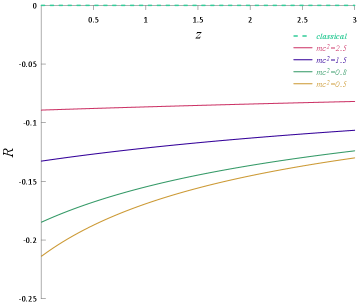
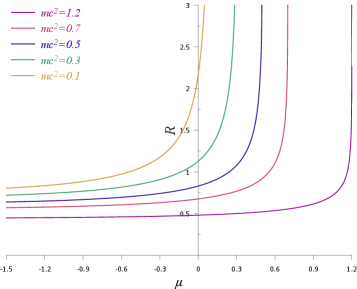
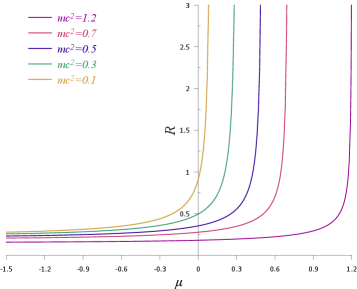
This review explores the thermodynamic geometry of relativistic ideal gases, utilizing the Fisher-Rao metric to analyze curvature singularities and the density of states in both classical and quantum regimes.
Understanding the equilibrium properties of matter at extreme conditions requires reconciling quantum statistics with relativistic kinematics, a challenge often obscured by traditional thermodynamic approaches. This is addressed in ‘Thermodynamic Geometry of Classical and Quantum Statistics in the Relativistic Regime’, which investigates how relativistic effects modify the geometric structure of ideal gases through the Fisher-Rao information metric. The analysis reveals that thermodynamic curvature-reflecting effective interactions-preserves its sign for bosons and fermions even relativistically, while key parameters like the Bose-Einstein condensation temperature exhibit mass-dependent corrections and singularities shift with energy scales. How might these geometric insights extend to more complex, interacting relativistic systems and provide a deeper understanding of emergent phenomena in high-energy environments?
Beyond Classical Limits: Embracing Relativistic Statistics
Conventional statistical mechanics, built upon the foundations of Newtonian physics, encounters significant challenges when applied to systems existing at extreme conditions. The core assumptions – that particle velocities are much less than the speed of light and that densities remain relatively low – break down as temperatures rise or matter is compressed. At high velocities, the relativistic increase in mass, as described by E = mc^2, becomes non-negligible, invalidating the classical kinetic energy calculations. Similarly, at extreme densities, particles are no longer effectively independent, and interparticle interactions – often ignored in simpler models – dominate behavior. Consequently, predictions derived from traditional methods diverge from experimental observations in scenarios like those found in neutron stars, high-energy heavy-ion collisions, or even within the cores of giant planets, necessitating a more nuanced theoretical framework capable of accurately describing these relativistic effects.
The conventional understanding of matter’s behavior, built upon classical statistical mechanics, encounters fundamental challenges when applied to systems experiencing extreme conditions. As densities increase or particle velocities approach a significant fraction of the speed of light, the assumptions underpinning these classical models begin to break down, yielding inaccurate predictions. Incorporating the principles of special relativity into statistical mechanics becomes not merely a refinement, but a necessity. This relativistic framework accounts for phenomena like length contraction and time dilation, altering the distribution of particle energies and fundamentally reshaping predictions regarding thermodynamic properties. Consequently, a relativistic statistical approach extends the range of physical scenarios that can be accurately modeled, providing insights into exotic states of matter found in environments such as neutron stars, high-energy particle collisions, and the early universe.
The Boltzmann distribution, a cornerstone of classical statistical mechanics, elegantly predicts the probability of particles occupying different energy states at a given temperature. However, as particle velocities approach a significant fraction of the speed of light, this familiar framework begins to falter. The classical derivation of the Boltzmann factor, e^{-E/kT}, assumes a non-relativistic kinetic energy of E = \frac{1}{2}mv^2. At relativistic speeds, this approximation breaks down, necessitating the use of the relativistic energy-momentum relation E^2 = (pc)^2 + (mc^2)^2, where p is momentum, m is mass, and c is the speed of light. Consequently, the probability distribution no longer accurately reflects the system’s behavior, leading to discrepancies in calculated properties like energy density and specific heat. A revised statistical framework, accounting for relativistic effects, becomes essential for precisely describing matter under extreme conditions, such as those found in astrophysics or high-energy physics experiments.
The predictive power of statistical mechanics, traditionally built upon Newtonian principles, diminishes when applied to scenarios involving particles at relativistic speeds or extreme densities. Consequently, a shift to relativistic statistical mechanics becomes essential for accurately describing these systems. This transition necessitates replacing the classical Boltzmann distribution with frameworks-such as the Fermi-Dirac or Bose-Einstein statistics-that inherently account for the effects of special relativity on particle energies and velocities. This expanded scope isn’t merely theoretical; it’s crucial for modeling phenomena ranging from the behavior of matter in neutron stars and the early universe to the properties of plasmas and high-energy particle collisions. By embracing relativistic principles, physicists gain access to a more complete and accurate understanding of matter’s behavior under the most demanding conditions, unlocking insights previously inaccessible through classical approximations.
Mapping the Relativistic State: Density and Distributions
The accurate determination of the density of states is fundamental to relativistic statistical mechanics due to the necessity of incorporating the relativistic energy-momentum relation, E^2 = p^2c^2 + m^2c^4. Unlike non-relativistic systems where energy is simply proportional to the square of momentum, the relativistic relation introduces a dependence on both momentum and mass, significantly altering the phase space volume and, consequently, the number of available states. This impacts calculations of thermodynamic quantities; the density of states, \rho(E), defines the number of states per unit energy and is derived by integrating the density of states in momentum space, adjusted for the relativistic energy constraint. Properly accounting for this relativistic modification is crucial for obtaining physically meaningful results in systems where particle velocities approach the speed of light, c.
The density of states, denoted as g(E), directly quantifies the number of available quantum states per unit energy interval and is fundamentally determined by the relativistic energy-momentum relation E^2 = (pc)^2 + (mc^2)^2. Unlike the non-relativistic case where g(E) \propto E^{1/2}, the relativistic form reflects the altered momentum-energy relationship. Specifically, for massless particles, E = pc and the density of states becomes proportional to E. For massive particles, the density of states is proportional to E \sqrt{E^2 - (mc^2)^2}. Accurate determination of g(E) is essential because it serves as the integral component in calculating numerous thermodynamic properties, including entropy, internal energy, and pressure, within a relativistic framework. Variations in g(E) due to relativistic effects significantly impact the predicted behavior of systems at high energies or velocities.
The partition function, denoted as Z = \sum_{i} e^{-\beta E_{i}}, where \beta = 1/(k_{B}T) and E_{i} are the energy levels of the system, remains a central quantity in relativistic statistical mechanics despite increased computational complexity. Its calculation necessitates the accurate determination of all accessible states, which are now defined by the relativistic energy-momentum relation E^{2} = p^{2}c^{2} + m^{2}c^{4}. While the fundamental principles of summing over Boltzmann factors remain the same, the integration over phase space to determine the density of states becomes significantly more involved due to the altered energy dispersion. Accurate determination of the partition function is crucial for calculating all thermodynamic properties of the relativistic system, including energy, entropy, and pressure, and provides insights into the system’s behavior under varying conditions.
Dimensionality significantly impacts relativistic statistical mechanics due to alterations in phase space integrals and particle interactions. In two and three dimensions, the relativistic energy-momentum relation E^2 = p^2c^2 + m^2c^4 affects the calculation of the density of states, requiring modifications to the standard Lorentz-invariant phase space volume element. Specifically, the divergence of the integral defining the density of states is more pronounced in lower dimensions, demanding regularization techniques. Furthermore, the nature of particle interactions changes; for example, long-range interactions, which may be screened in three dimensions, can exhibit different behaviors in two dimensions, influencing the system’s thermodynamic properties and requiring adjustments to the interaction potentials used in calculations.
From Statistics to Condensation: A Relativistic View
Relativistic statistical mechanics provides a framework for consistently describing quantum systems irrespective of particle velocity, thus naturally incorporating both Bose-Einstein and Fermi-Dirac statistics. Unlike the non-relativistic treatment which requires separate derivations for each distribution, the relativistic approach utilizes the same formalism – based on the relativistic dispersion relation E = \sqrt{p^2c^2 + m^2c^4} – to derive both. The Bose-Einstein distribution, applicable to integer-spin bosons, and the Fermi-Dirac distribution, applicable to half-integer spin fermions, emerge as specific cases within this unified framework, differing only in the statistical weights accounted for in the particle counting. This consistency is crucial for accurately modeling systems where particles approach the speed of light or where relativistic effects significantly influence particle behavior, avoiding discrepancies inherent in non-relativistic approximations.
Bose-Einstein condensation (BEC) occurs when a significant fraction of bosons occupy the lowest quantum state, transitioning the system into a macroscopic quantum phase. The probability of this occurring is directly linked to both the temperature T and the chemical potential μ of the bosonic gas. Specifically, BEC is favored at low temperatures, where thermal de Broglie wavelengths become comparable to or larger than the interparticle spacing. The chemical potential must also be less than the lowest energy state of the bosons; as μ approaches the ground state energy, the occupation of that state increases dramatically, initiating the condensation process. The relationship between these parameters dictates the critical temperature below which a substantial fraction of bosons condense, and deviations from ideal conditions impact the condensation temperature and the resulting condensate fraction.
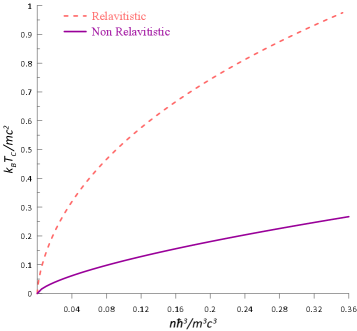
Predicting and controlling Bose-Einstein condensation requires precise manipulation of both chemical potential (μ) and temperature ( T ). The chemical potential dictates the occupation number of the lowest energy state; as μ approaches zero from negative values, the condensate fraction increases. Temperature, conversely, introduces thermal excitation and opposes condensation; a sufficiently low T is necessary to overcome this effect. Furthermore, relativistic corrections significantly alter the critical chemical potential ( \mu_c = mc^2 ) and, consequently, the condensation temperature, demanding accurate consideration of these parameters, especially for light bosons. Precise control over these variables allows for tailoring the condensate properties, such as particle number and density, enabling investigations into macroscopic quantum phenomena and potential applications in quantum technologies.
In relativistic quantum statistics, the critical chemical potential μ_c for Bose-Einstein condensation is determined to be μ_c = mc², where m represents the mass of the bosonic particle. This deviates from the non-relativistic limit where μ_c = 0. The inclusion of relativistic effects results in an increased condensation temperature; this enhancement is particularly pronounced for bosonic particles with low or ultra-low mass. The mass-dependent chemical potential and subsequent temperature shift are critical considerations when modeling and predicting Bose-Einstein condensation in systems where particles approach relativistic speeds.
Geometric Signatures of Stability: Thermodynamic Curvature
Thermodynamic geometry offers a compelling method for representing and interpreting the stability of thermodynamic systems, moving beyond traditional analytical approaches. This framework treats the space of equilibrium states as a geometric manifold, where each point represents a unique thermodynamic state defined by parameters like temperature and pressure. By employing concepts from differential geometry, such as distances and curvatures, it becomes possible to visualize how a system responds to perturbations and identify regions of stability or instability. A system’s susceptibility to change isn’t merely calculated, but mapped, allowing researchers to intuitively grasp the relationship between a system’s internal structure and its external behavior. This geometric perspective not only simplifies the analysis of complex systems but also provides a novel pathway to predict phase transitions and critical phenomena, offering insights unattainable through conventional thermodynamic calculations.
The Fisher-Rao information metric offers a means of measuring how easily distinguishable different probability distributions are within a thermodynamic system, effectively quantifying the system’s sensitivity to changes. This metric doesn’t simply assess the difference between distributions, but rather how much information would be required to reliably identify which distribution generated a given observation. A larger metric value indicates greater distinguishability and, consequently, a higher sensitivity of the system – meaning even small changes in parameters can lead to significant alterations in behavior. This approach provides a powerful tool for analyzing system stability, as a highly sensitive system-one with a large Fisher-Rao metric-may be more prone to fluctuations and less stable overall, while a smaller value suggests robustness. The quantification of distinguishability through this metric goes beyond traditional statistical measures, providing a geometric framework for understanding how information itself impacts thermodynamic properties.
The stability and behavior of thermodynamic systems are profoundly linked to their underlying geometric properties, as revealed by the thermodynamic curvature. This curvature, mathematically derived from the Riemannian curvature tensor, doesn’t merely describe spatial dimensions but encapsulates the strength of interactions between constituent particles. A remarkable finding is the consistent correlation between particle statistics and curvature sign: systems comprised of bosons – particles that prefer occupying the same quantum state – exhibit positive curvature, while those composed of fermions – adhering to the Pauli exclusion principle – display negative curvature. This signature, rooted in quantum mechanics, persists even when considering systems operating within the framework of relativistic physics, suggesting a fundamental connection between geometry, particle statistics, and the emergence of distinct phases of matter. The magnitude and sign of this curvature therefore offer a powerful tool for predicting and understanding phase transitions, providing a deeper insight into how systems respond to changes in energy and density.
Traditional thermodynamic descriptions of a system’s behavior often rely on extensive calculations involving energy, volume, and particle number. However, a geometric approach recasts internal energy and number density as properties defined within a curved space, offering a fundamentally different, and often more intuitive, understanding. This perspective leverages the Fisher-Rao metric to map probability distributions representing system states onto a geometric manifold, where the curvature of this space directly reflects the system’s sensitivity to fluctuations in energy and particle count. Consequently, changes in internal energy or number density aren’t simply numerical shifts, but rather movements within this geometric landscape, allowing researchers to visualize stability and predict phase transitions by observing the landscape’s topology. Such a representation not only simplifies complex calculations but also reveals deeper connections between seemingly disparate thermodynamic quantities, ultimately providing a more holistic comprehension of system behavior and offering new avenues for exploring complex materials and processes.
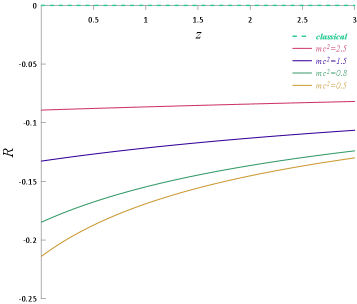
The study reveals how seemingly local interactions within relativistic ideal gases give rise to global thermodynamic properties. This emergent behavior echoes a fundamental principle: robustness isn’t designed, it arises. As Thomas Kuhn observed, “The world does not reveal its secrets easily,” and this research exemplifies that difficulty. The investigation into curvature singularities and their relation to Bose-Einstein condensation demonstrates how shifts in foundational assumptions – incorporating relativistic effects – fundamentally alter the understanding of equilibrium properties. It isn’t a matter of imposing order, but of recognizing the patterns that emerge from the interplay of local rules and relativistic conditions.
Emergent Horizons
The exploration of thermodynamic geometry within relativistic statistical mechanics, as presented, does not offer control over complex systems-only a refined means of observing their intrinsic organization. The identification of curvature singularities, particularly near Bose-Einstein condensation, suggests these are not points of failure, but rather, critical points where the informational landscape reorganizes. Attempts to ‘smooth’ these singularities through artificial constraints would be unproductive; inventiveness arises precisely from such limitations. The geometry isn’t something imposed upon the system, but a consequence of the density of states and the rules governing particle interactions.
Future work needn’t focus on forcing equilibrium, but on mapping the pathways towards it, particularly in scenarios far from standard assumptions. The framework detailed here offers a means to explore non-equilibrium behavior, not by attempting to predict it, but by characterizing the evolving geometric structure as the system self-organizes. Investigating how these geometries respond to external perturbations-modeling not ‘control’ but ‘influence’-will likely reveal more fundamental principles at play.
Ultimately, the strength of this approach lies in recognizing that order doesn’t require an architect. The universe doesn’t ‘want’ equilibrium; it simply explores all accessible states. This work provides tools to trace those explorations, revealing that even in the relativistic realm, self-organization remains a more potent force than any pre-ordained design.
Original article: https://arxiv.org/pdf/2602.19759.pdf
Contact the author: https://www.linkedin.com/in/avetisyan/
See also:
- Gold Rate Forecast
- Adam Levine Looks So Different After Shaving His Beard Off
- Dialoop coming to Switch on June 17
- Welcome to Demon School! Iruma-kun season 4 release schedule: When are new episodes on Crunchyroll?
- Nintendo Switch 2 Reportedly Getting Remake of One of the Best PS3 and Xbox 360 Games
- Steam Makes Sci-Fi Game 100% Free for 72 Hours
- 10 Movies That Were Banned in Different Countries For Random Reasons
- Tekken 8 Fans Furious as Tifa Tipped for Street Fighter 6 Instead
- Crimson Desert Guide – How To Unlock All Elemental Skills
- When Things Fall Apart: A New View of Phase Transitions
2026-02-24 18:11