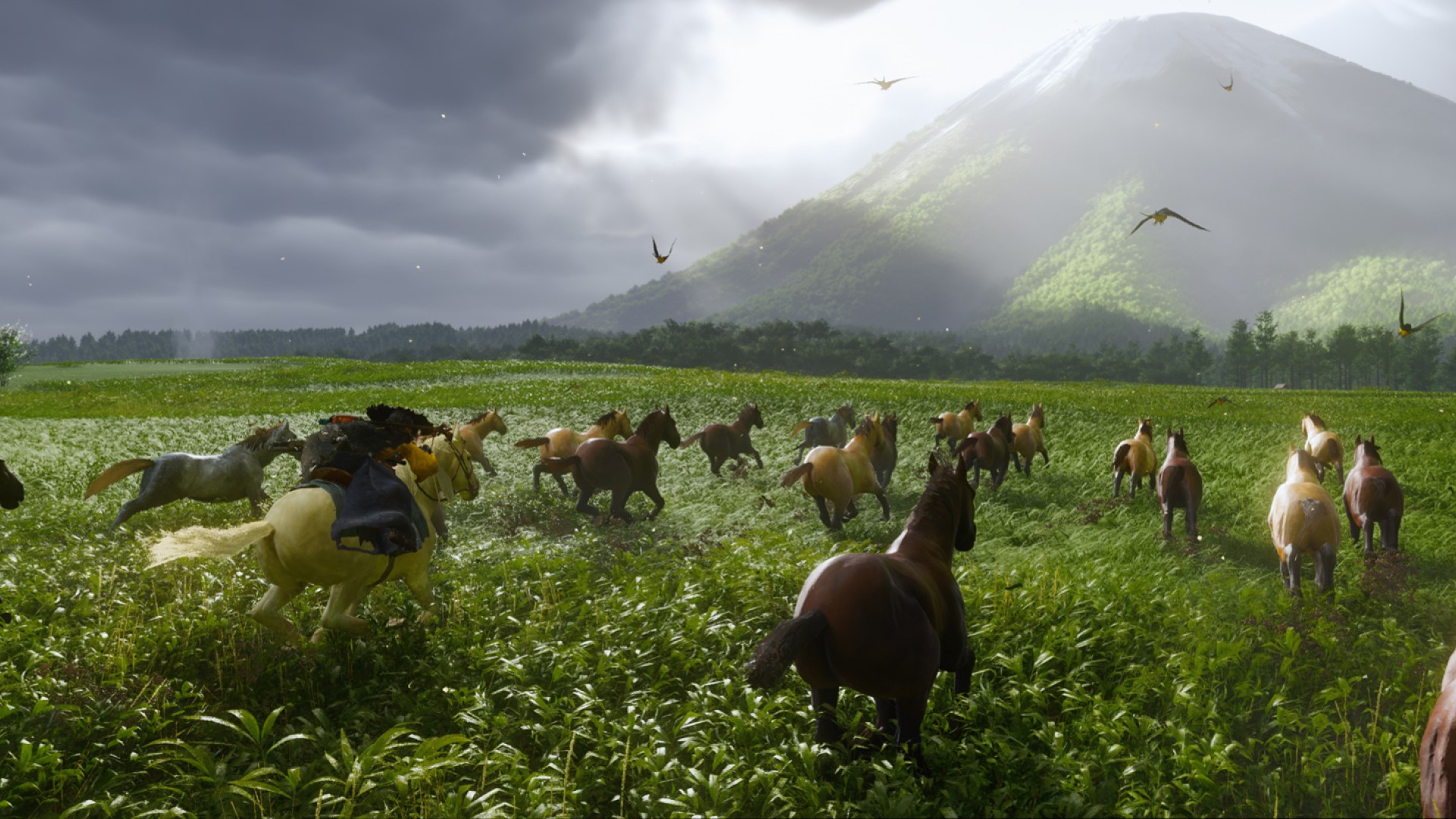
Ghost of Yōtei is a captivating game with a vast and engaging story. While its world appears larger than that of Ghost of Tsushima, Sucker Punch Productions cleverly used design techniques to create that impression without actually expanding the map size. Art director Joanna Wang revealed at a GDC 2026 panel that the team prioritized making the world feel expansive, rather than focusing on its physical dimensions, as reported by GamesRadar.
Rather than focusing on the exact size, we considered how large we wanted it to feel,” she explained. “We weren’t aiming for a perfect replica, but a reimagined version of Ezo. To achieve a sense of scale, we carefully studied the island’s form, mountains, coastline, ocean, and horizon, using these elements as a stunning backdrop.
Sucker Punch Productions designed the game with a smart approach to its open world. They used tight corridors and pathways to connect its six large regions. This contrast between enclosed spaces and wide-open areas made exploring the game feel more significant. While the total playable area isn’t actually bigger than Ghost of Tsushima, it feels much larger to players.
Nate Fox and Jason Connell, the co-directors, shared that early versions of Ghost of Yōtei actually featured rock climbing, similar to what you find in The Legend of Zelda: Breath of the Wild. They explained that their team frequently tests out small gameplay ideas to see if they work well with the overall game. Ultimately, they decided rock climbing didn’t quite fit the atmosphere they were going for – a story about a wandering samurai – so it was removed.
Connell suggests that if a project isn’t working and doesn’t feel right, it’s okay to abandon it. He asks, ‘Does this feel like a pointless effort?’ If the answer is no – meaning it’s simply a bad idea – he advises simply moving on to something else.
However, Fox explained that the original design for Ghost of Yōtei included too many surfaces players couldn’t climb. This would have conflicted with the game’s climbing mechanics and the sense of freedom they were aiming for. He described how they quickly built a prototype to test this, realizing that if players were led to believe they could climb anything, only to find many surfaces were unclimbable, it would discourage exploration. Essentially, it would teach players to stop trying to climb because it wasn’t rewarding.
Last November, Connell mentioned wanting to add more depth to the environmental storytelling in Ghost of Yōtei. He envisioned a system where players could experience flashbacks to Atsu’s past at any location in the game. Ultimately, this idea was abandoned because it would have required the development team to create roughly twice as much artwork.
Read More
- FRONT MISSION 3: Remake coming to PS5, Xbox Series, PS4, Xbox One, and PC on January 30, 2026
- Taylor Sheridan’s Gritty 5-Part Crime Show Reveals New Final Season Villain
- The Boys Season 5, Episode 5 Ending Explained: Why Homelander Does THAT
- ‘The Bride!’ Review: Jessie Buckley Breathes Life into a Monstrous Mess
- Mark Zuckerberg & Wife Priscilla Chan Make Surprise Debut at Met Gala
- From season 4 release schedule: When is episode 2 out on MGM+?
- Welcome to Demon School! Iruma-kun season 4 release schedule: When are new episodes on Crunchyroll?
- Ashley’s Powers in The Boys Season 5 Explained & Why They Don’t Work On [SPOILER]
- Anna Wintour Reacts to Rumors She Approves All Met Gala Looks
- How to Build Water Elevators and Fountains in Enshrouded
2026-03-13 16:42