The second-to-last episode of Star Trek: Starfleet Academy presented the Federation with a particularly dangerous crisis, possibly the most serious since the Burn. The infamous pirate Nus Braka stole experimental weapons containing Omega 47, a highly unstable substance that can tear apart space. Even worse, Braka has turned these weapons into remotely detonated, timed mines – a truly frightening development.
Things have gone from bad to really bad. It turns out Braka completely outsmarted us. He lured the entire Starfleet fleet – all except the badly damaged Athena – into a trap. He got us to pull all our ships back to Federation space, and then sealed off the area with a massive minefield. These aren’t ordinary mines, either. They react to any energy signature, so if a ship tries to get through, it could trigger a chain reaction, rip open subspace, and… well, it wouldn’t be pretty for anyone nearby. It’s a disaster.
And to make matters worse, the device, once activated, completely blocks warp travel throughout the entire sector for thousands of years. It’s a truly bleak outlook. Normally, this would leave the Federation fleet trapped and unable to respond to the danger. However, as any fan of Star Trek knows, there’s usually a way out of even the most hopeless situations, and in this case, that hope lies with the U.S.S. Discovery.
The Star Trek Ship That Could Go Anywhere
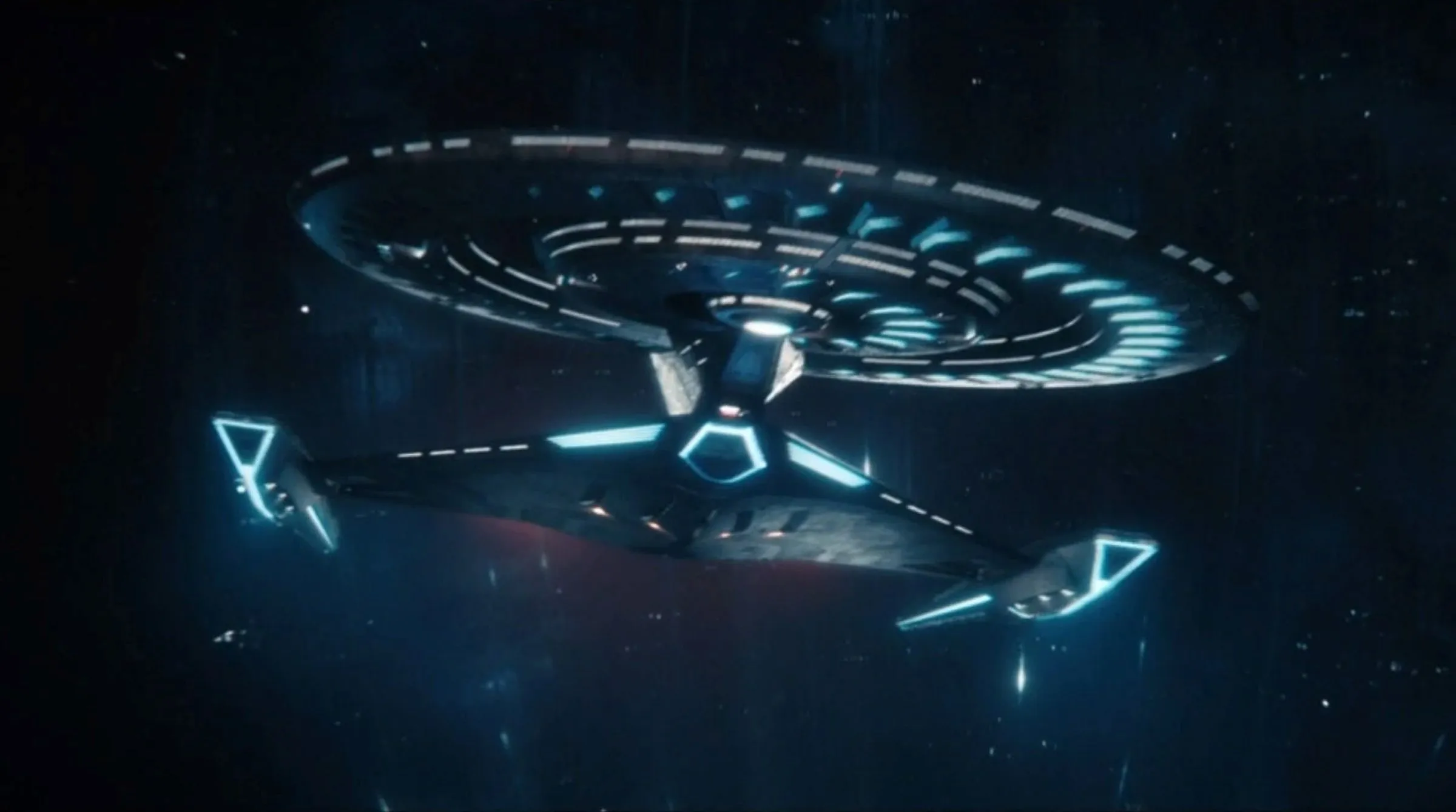
The USS Discovery has been one of Starfleet’s leading ships for almost ten years. Since its debut in Star Trek: Discovery, it quickly gained a reputation as one of the most powerful ships in the franchise, earning its place among the best thanks to its innovative spore drive technology.
This new propulsion system lets Discovery travel huge distances across the galaxy instantly, unlike traditional warp travel. It doesn’t rely on warp drives or wormholes; it simply goes from one point to another in the blink of an eye. It appeared there were no limits to what Discovery could do with this technology – but that impression is now being challenged.
Almost nine years after its initial release, the series finale of Discovery, titled “Rubicon,” has finally shown a potential flaw in what was previously considered the most powerful ship in Starfleet.
Nus Braka’s Perfect Trap
The USS Discovery’s unique strength lies in its ability to travel without using normal space. It achieves this with a ‘spore drive’ that taps into a vast, microscopic network of fungal spores from an alien lifeform. This network connects every point in space and time. By entering this ‘sub-quantum’ spore network, the ship can essentially jump to different locations without physically traveling the distance between them. The drive uses a special chamber to feed these spores—called Prototaxites stellaviatori—and inject them into the ship’s systems, allowing it to move almost instantly and far faster than traditional warp drive.
Discovery’s unique capability allowed it to travel incredibly quickly and over vast distances. This also made it a powerful and unpredictable asset – it could appear almost anywhere without warning, making it ideal for surprise attacks.
Braka’s blockade presents a fascinating problem. It’s a classic scenario: what happens when something completely unstoppable encounters something completely immovable? Given that Braka’s mines respond to changes in space and energy, the question becomes whether Discovery can bypass the blockade using the mycelial network. The answer, surprisingly, is no.
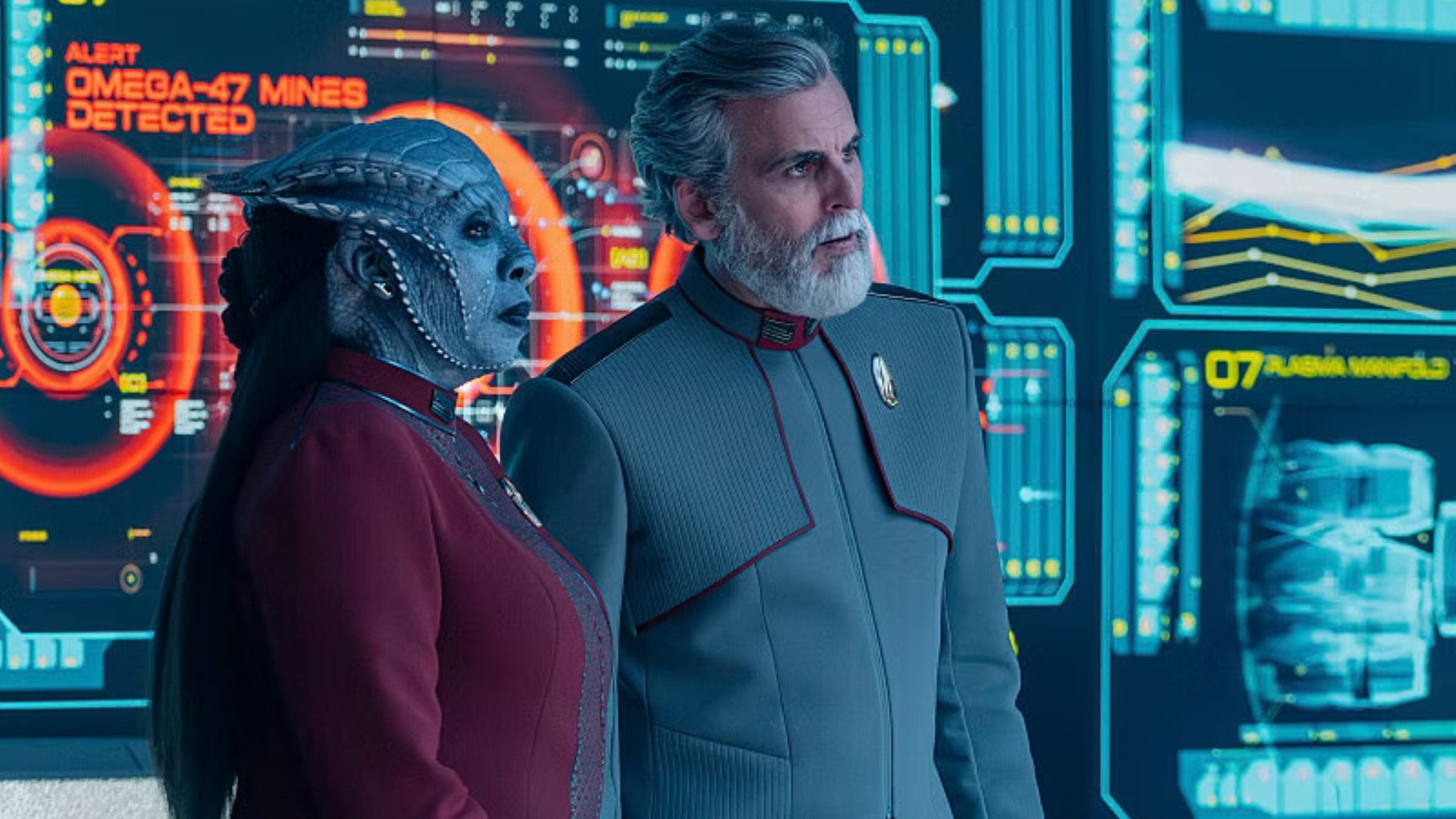
The final episode of Starfleet Academy‘s first season, which has sparked a lot of debate despite being well-made, reveals a potential problem for the Discovery. Admiral Vance explains that the energy fields around the Omega mines operate on a specific subspace frequency, meaning the ship’s spore drive might not be able to navigate through them safely. Even though Discovery doesn’t use traditional warp speed, its jumps still affect space, potentially triggering the mines like any other ship. For the first time, the Federation’s powerful spore drive – usually a solution to any crisis – appears to have limitations.
A Much-Needed Balance

This small weakness, which is understandable considering how difficult it is to bypass such a heavily defended area, could actually be a positive development for the show Discovery. For almost ten years, the USS Discovery has been in an awkward position within Star Trek’s history. Ever since the ship’s unique spore drive was introduced, writers have struggled with its consequences. A ship capable of instantly traveling anywhere in the galaxy could easily make most stories feel unimportant. It’s hard to build tension with challenges like blockades, long distances, or ambushes when a ship can simply teleport around them.
The new threat from Nus Braka feels basic on the surface, but it’s cleverly designed, even challenging the powerful Discovery. This makes the Federation appear less like a perfect, all-powerful military and more vulnerable, especially to outsiders.
Nus Braka stages a fake televised trial, accusing the Federation of destroying his home and committing various other offenses. He presents this as a fair democratic process to a jury made up of his own supporters. Captain Ake is pressured into defending the Federation, and she skillfully uses her leadership abilities to expose Nus’s actions as childish and motivated by a personal grudge. She ultimately convinces his audience of this. Meanwhile, the cadets quickly disable the Omega 47, and Nus, now throwing a tantrum, is finally arrested and taken into custody.
The Federation is now facing challenges that require strategic thinking rather than just relying on advanced technology or weaponry, which aligns with the original spirit of Star Trek – emphasizing diplomacy and peaceful solutions. As Ake explains to Braka, true leadership isn’t about power, but about making tough decisions and remaining composed under stress. It’s unclear what Braka intended to do with a galaxy destabilized by the Federation’s defeat, but as King George famously said, taking full responsibility is a difficult task.
Is This The End of Star Trek’s Cheat Code Era?
This approach aligns with the overall direction of the franchise in the 33rd century. While we continue to follow Starfleet and our cadets, Star Trek: Starfleet Academy is intentionally focusing on the bigger picture of the galaxy after the Burn. It emphasizes the importance of exploring new technologies, ongoing political issues, and the rebuilding of diverse civilizations, rather than simply showcasing the adventures of a single starship and crew.
Starfleet’s discovery remains an incredible accomplishment. However, after nearly a decade, Star Trek appears to have found a way to move beyond focusing solely on that one breakthrough. This shift allows the franchise to explore the larger galactic landscape and its political complexities, rather than centering everything on the Federation.
Interestingly, this could actually make Discovery a more compelling and important show than before. It’s remarkable to think about how much the series has evolved over the past 60 years, and it was a powerful moment to see Discovery join the fleet of liberated Federation ships at the end of this exciting season.
What do you think? Leave a comment below and join the conversation now in the ComicBook Forum!
Read More
- FRONT MISSION 3: Remake coming to PS5, Xbox Series, PS4, Xbox One, and PC on January 30, 2026
- Best Controller Settings for ARC Raiders
- Mark Zuckerberg & Wife Priscilla Chan Make Surprise Debut at Met Gala
- Welcome to Demon School! Iruma-kun season 4 release schedule: When are new episodes on Crunchyroll?
- The Boys Season 5 Officially Ends An Era For Jensen Ackles’ Soldier Boy
- Meet the cast of Good Omens season 3: All the actors and characters
- 7 Great Marvel Villains Who Are Currently Dead
- Nippon Sangoku Is The Best New Post-Apocalyptic Anime of Spring 2026
- Wistoria: Wand and Sword Season 2 release schedule: When are new episodes out?
- XRP AUD PREDICTION. XRP cryptocurrency
2026-03-16 02:11