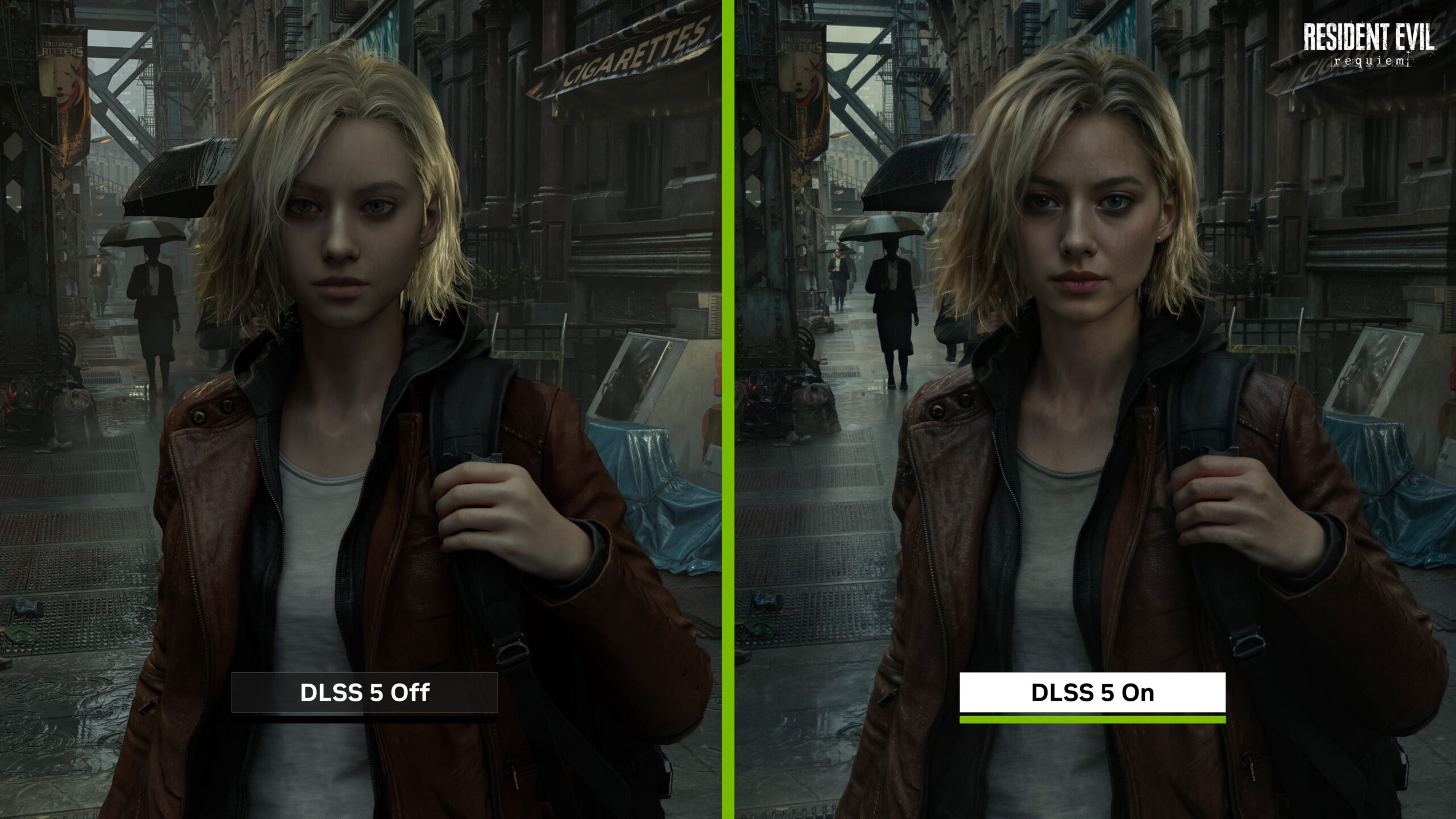
Nvidia CEO Jensen Huang recently addressed concerns about the visual quality of their DLSS 5 technology in an interview with Lex Fridman. Huang acknowledged that he also dislikes images that look poorly generated by AI, but explained that DLSS 5 works differently and doesn’t produce the same kind of visual issues.
Huang acknowledged the criticism surrounding DLSS 5, saying he understands why people are unhappy with AI-generated content. ‘I agree with their point of view,’ he explained, ‘because I don’t particularly like the look of a lot of AI-created images either. It all starts to look the same, and while it’s technically beautiful, it lacks originality.’ He expressed empathy for those voicing concerns.
According to Huang, DLSS 5 works by being “3D conditioned and 3D guided.” This means artists maintain full creative control over the game’s shapes and details, and DLSS 5 uses that information to create the images you see.
He explained that while he demonstrated several examples, DLSS 5 is different because it’s based on 3D data and uses that to guide its process. It accurately reflects the artist’s intended geometry in every frame, staying true to the original design.
Huang has previously defended DLSS 5 against criticism. When asked about the public’s reaction by Tom’s Hardware’s Paul Acorn earlier this month, he strongly disagreed with the negative feedback, stating that the critics were “completely wrong.”
Huang strongly disagreed with the claims, explaining that DLSS 5 combines control over all aspects of a game’s visuals with the power of generative AI. He emphasized that developers retain full artistic control, as they can customize the AI to achieve the specific look they want without altering their creative vision.
He clarified that what they were doing wasn’t simply refining the image after it was created, or tweaking each individual frame. Instead, they were fundamentally controlling the creation process at the level of the 3D shapes themselves.
Developers have a lot of creative freedom with DLSS 5, even being able to create unique visual styles like cartoon-like shading or entirely glass-based environments, and they maintain full control over how it all works. Unlike typical generative AI, this technology puts the power over content creation directly in the hands of the developer, which is why we refer to it as neural rendering.
In a recent interview, Jacob Freeman explained how DLSS 5 works. He clarified that the technology is trained using a game’s 2D image and its motion vectors. DLSS 5 then uses this information to generate its own improved image, even handling complex rendering effects like physically based materials.
Freeman didn’t share many details about how the technology alters characters, like in the Resident Evil Requiem demo. He clarified that the core 3D models remain the same, and emphasized that the demonstration was a preliminary look at the technology.
To learn more about DLSS 5 and the criticism it’s received, see what reporters and developers are saying. You can also find a report detailing how developers and artists at Capcom and Ubisoft weren’t informed about the technology beforehand.
Read More
- Everything You Need To Know About Nikki Baxter In Stranger Things’ Animated Spinoff
- Taylor Sheridan’s Gritty 5-Part Crime Show Reveals New Final Season Villain
- The Boys Season 5, Episode 5 Ending Explained: Why Homelander Does THAT
- Mark Zuckerberg & Wife Priscilla Chan Make Surprise Debut at Met Gala
- Miranda Kerr Shares “Quick” Procedure She Got Before Met Gala 2026
- USD JPY PREDICTION
- Ashley’s Powers in The Boys Season 5 Explained & Why They Don’t Work On [SPOILER]
- ‘The Bride!’ Review: Jessie Buckley Breathes Life into a Monstrous Mess
- Why There’s No Ghosts Tonight (Nov 27) & When Season 5, Episode 7 Releases
- From season 4 release schedule: When is episode 2 out on MGM+?
2026-03-24 16:13