This year’s Opening Day will be a bit different. The first Major League Baseball game of the season is streaming live on Netflix tonight, and the company is adding its own unique style to the broadcast.
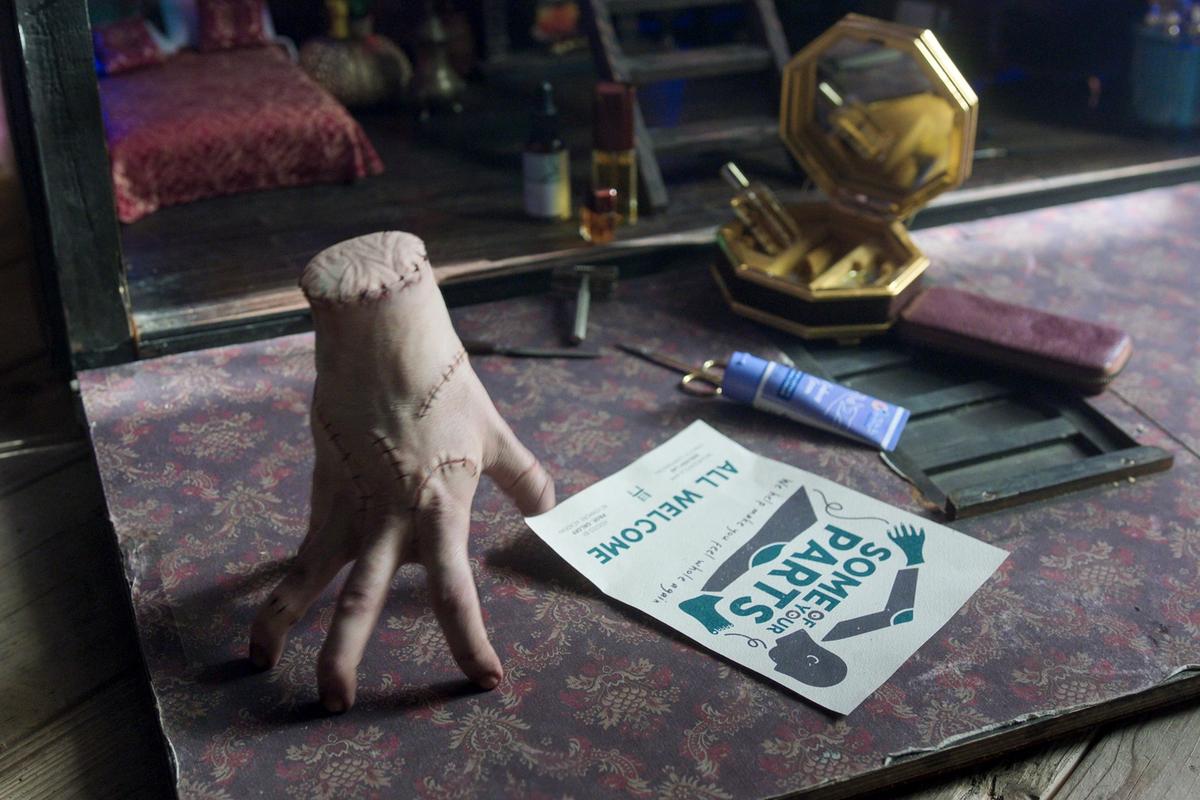
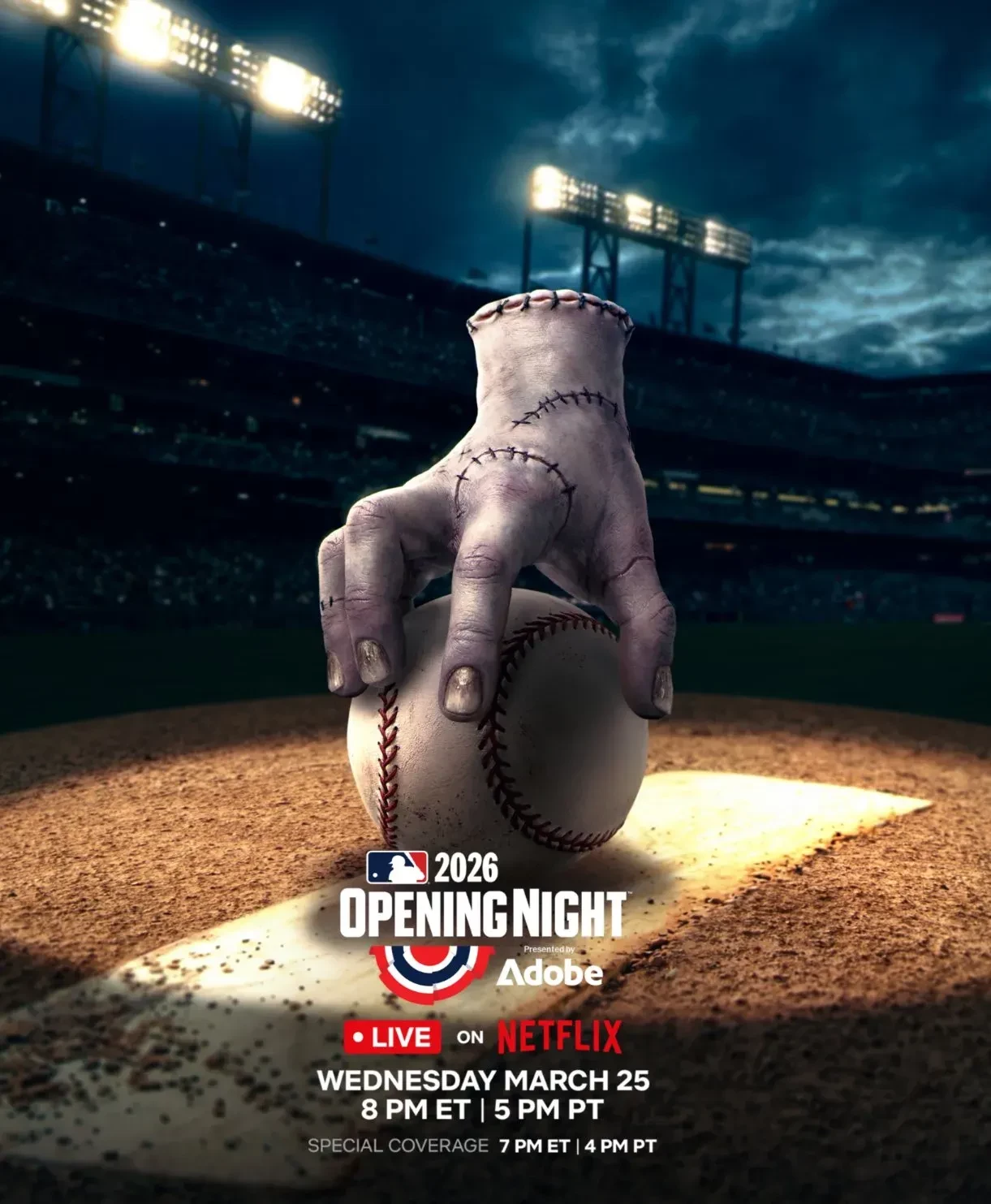
According to the Los Angeles Times, Thing from the show Wednesday will be throwing the first pitch at the New York Yankees versus San Francisco Giants game.
It’s a mystery how a hand without a body can throw the first pitch of a baseball game! But that’s likely the point – when people hear about something so unusual, they become curious and might decide to watch a game they wouldn’t normally see.
Besides the main event, comedian Bert Kreischer will make a guest appearance on Netflix’s broadcast. The coverage will also include real baseball players and commentators. Barry Bonds, Albert Pujols, and Anthony Rizzo will join host Elle Duncan to offer analysis before and after the game. Veteran announcer Matt Vasgersian will call the game, with CC Sabathia and Hunter Pence providing expert commentary from the booth.
According to Gabe Spitzer, VP of Sports at Netflix, broadcasting live baseball games is a way to attract new fans beyond those who already love the sport. He explained that someone who enjoys a baseball documentary on Netflix might decide to watch a live game, like the Yankees versus the Giants, and that’s exactly what Netflix is hoping for.
Netflix will be broadcasting Major League Baseball’s Opening Day, starting at 7 PM Eastern and 4 PM Pacific time. The first pitch is scheduled for around 8 PM Eastern / 5 PM Pacific. Hopefully, they’ll have some fun with it – maybe a Demogorgon leading the seventh-inning stretch or the cast of Bird Box singing the National Anthem!
Essential Movies on Netflix Every Film Lover Should See

Night of the Living Dead (1968)
While Netflix has a lot of content, it doesn’t have many classic or historically important films. One notable exception is George A. Romero’s Night of the Living Dead, a hugely influential horror movie about a zombie outbreak. Beyond the zombies themselves, the film is important because Romero made it independently, and it achieved significant success and impact, making it a landmark achievement in filmmaking.

The Sting (1973)
Often considered even better than Butch Cassidy and the Sundance Kid, The Sting is a captivating and surprisingly sad film. It’s a clever story about a young con man (Redford) who teams up with a seasoned hustler (Newman) to avenge the murder of his friend by a ruthless gangster (Shaw). The three actors give fantastic performances in this twist-filled movie, which also offers a poignant look at life during the Great Depression. The Sting won the Academy Award for Best Picture in 1973 and remains a classic of 1970s Hollywood.

The Texas Chain Saw Massacre (1974)
The 1974 horror film that started a long-running series was recognized by the Library of Congress in 2024 for its significant cultural and artistic value. (A documentary about the film, called Chain Reactions, was also released that year.) If you’ve only heard about the series or seen the generally weaker sequels and remakes, now’s the time to watch the original – it’s a bloody, brutal, and beautifully made film available on Netflix.

Pulp Fiction (1994)
I remember when Pulp Fiction came out, and even though it might not have started a whole trend of movies exactly like it, everyone was trying to copy its style for a while. And honestly, most of those copies were just awful! It really highlighted how incredibly talented Quentin Tarantino is, then and now.
What I loved about Pulp Fiction is that it just shouldn’t have worked. It was this huge, sprawling story about crime in Los Angeles, but also a really intimate look at the characters. It jumped between these wildly over-the-top scenes – magical briefcases, secret dungeons – and then totally normal conversations about things like foot massages or what to order at a foreign fast food place. It was epic and small, funny and sad, violent and cartoonish, all at the same time. That’s just Pulp Fiction for you – completely unique and unforgettable.

Titanic (1997)
James Cameron’s most famous films consistently blend several key ingredients: a love story, large-scale action, exciting chases, and a complex relationship with technology – both admiring and wary of it. While Titanic isn’t as explosively action-packed as films like The Terminator or Avatar, it still embodies these same themes. It was a massive undertaking – and a huge success – for its time, and it’s clear why. Cameron has a unique talent for keeping the story grounded in relatable characters, even when surrounded by spectacular visuals and grand scenes.
Election (1999)
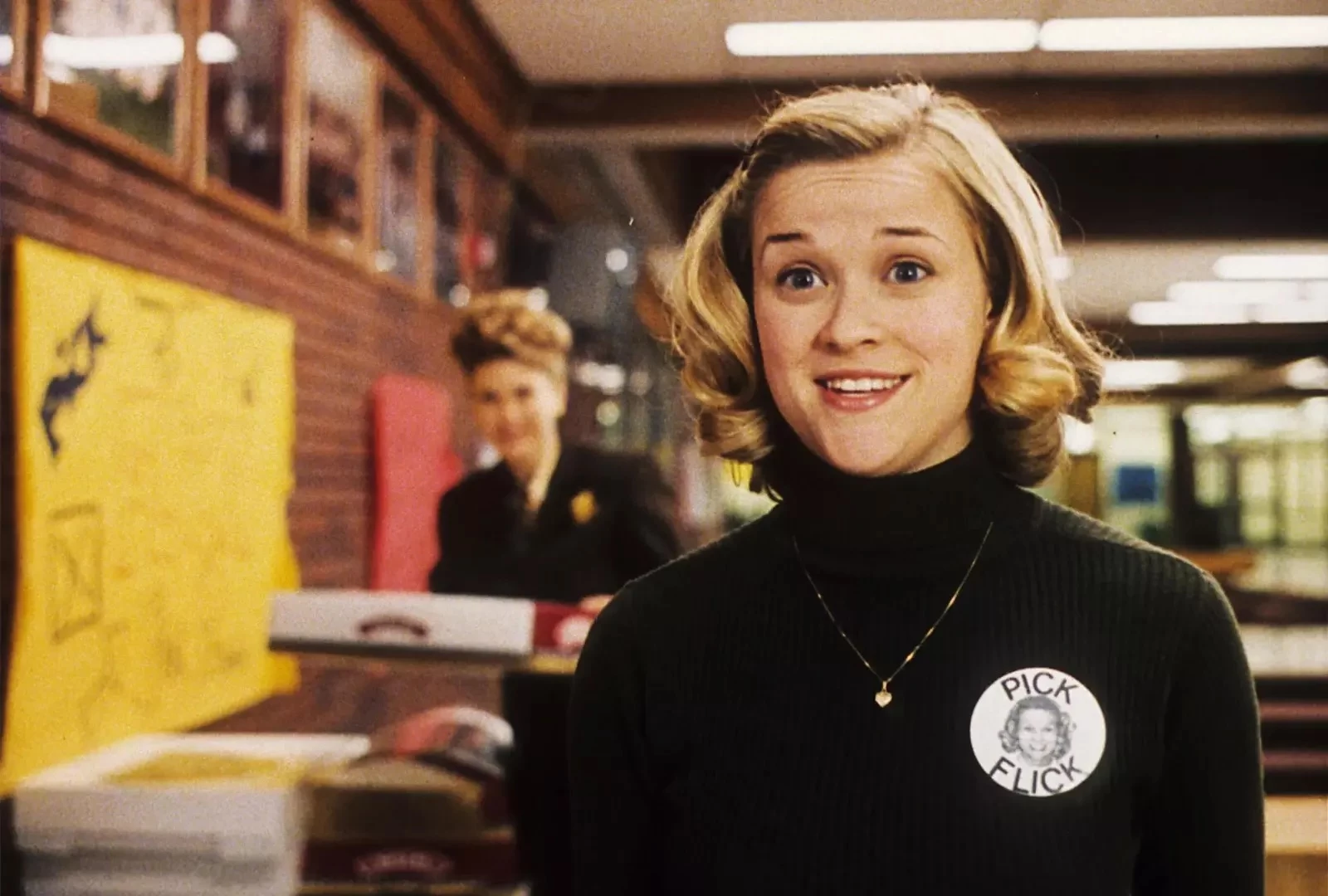
Reese Witherspoon truly broke through with the 1999 comedy Election, where she plays Tracy Flick, an overly enthusiastic high school student who clashes with her cynical history teacher (Matthew Broderick, channeling his Ferris Bueller energy). The film centers around the amusing rivalry that sparks when Tracy runs for student council president. Election is a darkly funny and realistic movie, and it’s often cited as a highlight of a fantastic year for film. What’s great is the title – simply Election – because the movie is about the difficult process of making choices in general, not just the outcome of a school election.

Donnie Darko (2001)
Netflix isn’t the best place to find truly unique or classic cult films, especially if you’re looking for older titles. They have plenty of their own, more recent movies, but options for well-known midnight movie favorites are limited. One standout is Richard Kelly’s Donnie Darko, which features a young Jake Gyllenhaal as a teenager who survives a near-fatal accident and may be the key to preventing a global catastrophe. The film is known for its unsettling visuals, dark mood, and memorable ending, cementing its place as a great independent film from the early 2000s.

The Squid and the Whale (2005)
Noah Baumbach really established himself as a talented filmmaker with a deeply personal movie about a young man (played by Jesse Eisenberg, who also gained significant recognition from the film) navigating his parents’ divorce. The movie received many award nominations and launched Baumbach into a successful period of his career, which continues with films like the Netflix hit Marriage Story and Jay Kelly.

Zodiac (2007)
David Fincher is known for his films about serial killers, but Zodiac is more than just a thriller. It’s a look at San Francisco over several decades, seen through the eyes of three men obsessed with solving the Zodiac Killer case. These include a police inspector (Mark Ruffalo) who inspired the film Bullitt, a crime reporter (Robert Downey Jr.) who became a target of the Zodiac, and an amateur detective (Jake Gyllenhaal) unable to let the case go cold. What Zodiac does exceptionally well is show how a fixation can take over someone’s life. Fincher pulls viewers into a complex web of clues and false leads using skillful camera work and editing. By the end of the film—which cleverly circles back to the beginning after a tense two and a half hours—you’ll understand exactly how Robert Graysmith feels.

Boyhood (2014)
For twelve years, director Richard Linklater secretly filmed scenes with the same actors – a boy (Ellar Coltrane), his mother (Patricia Arquette), and his sister (Lorelei Linklater) – to document their lives. While some might see this as a self-indulgent project, the result is a fascinating look at American life in the early 2000s, and a deeply moving portrayal of one family’s love, struggles, and sacrifices. Unlike other films, Boyhood has a truly special connection to time. Seeing the actors genuinely age on screen adds an extra layer of emotion to many scenes, making moments of joy sweeter and moments of sadness more powerful. When Patricia Arquette reflects on her life at the end of the film, it’s informed by a full twelve years of real experiences. As the late Roger Ebert eloquently put it, movies are windows into our world, and Boyhood feels like it throws those windows wide open.

Whiplash (2014)
Whiplash is a fantastic film that explores the intense dedication and sacrifices artists make for their craft. The movie follows Miles Teller as a driven young jazz drummer at a top music school, and his challenging, often abusive, relationship with his demanding instructor. While pushing him to excel, this relationship raises the question of how much is too much? Director Damien Chazelle masterfully balances the film’s thrilling energy with a subtle exploration of its darker themes, culminating in a truly unforgettable final scene – a powerful showdown between student and teacher. Interestingly, despite rarely being labeled as such, Whiplash is also a remarkably effective horror film; the quiet dread of a disapproving instructor calmly correcting a mistake is far more chilling than anything found in typical horror movies of the decade.

Sing Street (2016)
Just how good is Sing Street? I actually cried while watching it… on a plane! Even on a small airplane screen at 35,000 feet, the movie’s inspiring story about two Irish teens chasing their musical dreams really resonated. It’s filled with witty dialogue, strong performances, and a fantastic soundtrack – honestly, the music is even better than in La La Land. Sing Street is a genuinely feel-good movie, and we could all use one of those right now. Just be warned, it might make you tear up a little (or a lot – no shame in that!).

Spider-Man: Into the Spider-Verse (2018)
While many superhero films prioritize spectacle over substance, Spider-Man: Into the Spider-Verse stands out as both a massive and exceptional entry in the Spider-Man franchise. The film features a large and diverse team of Spider-People, including the new hero Miles Morales, the determined Gwen Stacy, and a down-on-his-luck Peter B. Parker. Beyond its exciting action, the movie powerfully embodies the classic message from Stan Lee and Steve Ditko – that anyone can be a hero – and presents it through stunning animation as a vibrant tribute to that inspiring idea.

Roma (2018)
2018 marked a turning point for Netflix, as its original films truly began to stand out. One example is Alfonso Cuarón’s deeply personal film, Roma, which tells the story of a Mexican family and their housekeeper, Cleo (Yalitza Aparicio). When it was first released, many people argued that Roma deserved to be seen in a movie theater to fully appreciate it—and its beautiful black-and-white visuals certainly looked stunning on the big screen. However, watching it at home had its benefits too, like being able to cry without worrying about other people seeing you. This highlights some of the advantages of Netflix’s approach to releasing films.

The Irishman (2019)
Frank Sheeran truly supported Jimmy Hoffa – and ultimately, that’s where he ended up. This early line is a subtle hint of the careful detail Martin Scorsese put into The Irishman, a film that feels like the culmination of his entire career. The most powerful moments come towards the end, as Robert De Niro’s character faces the consequences of a life filled with wrongdoing. He seems almost pleased with much of what he’s done, especially his loyalty to Jimmy Hoffa (played by Al Pacino). However, he also finally realizes that all the power, wealth, and respect his work brought him couldn’t prevent him from dying alone in a nursing home. A priest attempts to offer forgiveness. But will it be enough to redeem him?

Cats (2019)
Let’s be honest, Cats doesn’t compare to the other films on this list. However, to truly understand something amazing, we need to consider its opposite, and Cats serves that purpose perfectly. Even years after its release, the movie raises so many confusing questions. Why do the cats have human hands? Where are all the humans? What is “hot milk soup”? Why does Jennifer Hudson have a runny nose throughout the entire film, even when she’s not singing? Why does Idris Elba appear half-naked? And why is Taylor Swift wearing heels while everyone else is barefoot? These questions will probably stick with us forever, and that’s exactly why I enjoy it.

The Power of the Dog (2021)
Jane Campion’s The Power of the Dog is a slow-burn film that demands your full attention – you’ll miss crucial details if you’re distracted. The story unfolds gradually, revealing the complexities of its characters. It’s a compelling look at masculinity in the Old West, focusing on Phil Burbank (Benedict Cumberbatch), a tough cowboy who struggles to adjust when his brother (Jesse Plemons) marries a new wife (Kirsten Dunst). Their son, Peter (Kodi Smit-McPhee), doesn’t fit the ranching lifestyle, and Phil’s assumptions about him – and our assumptions about Phil – lead to a surprisingly impactful conclusion. Hopefully, we won’t have to wait another 12 years for Campion’s next film.

RRR (2022)
This exciting Indian film is a three-hour thrill ride packed with stunning visuals, a captivating love story, intense action, and energetic musical numbers. It’s similar to a classic John Woo action movie, but with a South Asian twist, focusing on two strong men on opposing sides of the law who unexpectedly team up. Those men are Bheem, a warrior from the Gond tribe, and Rama, a soldier working for the British Empire. Bheem travels to Delhi to find a missing girl, while Rama is tasked with tracking down whoever is searching for her.
A chance encounter brings them together as friends, but a sense of underlying tension remains as the audience anticipates the moment they discover each other’s true identities. Throughout the film, they perform heroic rescues – Bheem representing water, Rama representing fire – and cleverly challenge the prejudiced British ruling class with their incredible dancing.

Godzilla Minus One (2023)
It’s rare for a prequel to truly enhance a franchise, but Godzilla Minus One does just that. By setting the story in post-World War II Japan, the film powerfully reimagines Godzilla, returning him to his roots as a frightening symbol of atomic devastation and the lasting scars of war. And this Godzilla is genuinely terrifying – immense in scale, visually unsettling, and with a truly frightening atomic breath.
But Godzilla Minus One isn’t just a visual spectacle. It features a compelling, flawed protagonist (Ryunosuke Kamiki) and subtly explores the difficult themes surrounding kamikaze pilots, culminating in a deeply emotional decision. One section of the film feels reminiscent of a classic Howard Hawks adventure, with a crew of weathered sailors battling a colossal, nuclear-powered dinosaur – and it’s as thrilling as that sounds.

Are You There, God? It’s Me, Margaret. (2023)
While Are You There God? It’s Me, Margaret didn’t make a huge splash in theaters, it feels destined to become a defining movie for today’s young people, much like Ferris Bueller’s Day Off was for my generation. This faithful adaptation of the classic book, written and directed by Kelly Fremon Craig, boasts a fantastic cast including Rachel McAdams, Benny Safdie, and Kathy Bates. Abby Ryder Fortson, who was great in the Ant-Man films, is also wonderful as Margaret. As a father of two daughters, I’m honestly a little worried about when they reach this age. But I’m glad this movie will be here for them when they do.
Read More
- Gold Rate Forecast
- 10 Most Powerful Versions of Superman, Ranked
- GBP CNY PREDICTION
- 007 First Light: Release Date, Story, Gameplay, Cast, Editions, and Platforms
- DOGE PREDICTION. DOGE cryptocurrency
- Superman’s 7 Best Power-Ups, Ranked
- 10 Best Free Games on Steam in 2026, Ranked
- 10 Greatest Wii U Games of All Time, Ranked
- Forza Horizon 6 Car List So Far: Confirmed Highlights, Cover Cars, DLC, and Rewards
- What happened to Soldier Boy in The Boys?
2026-03-25 20:00