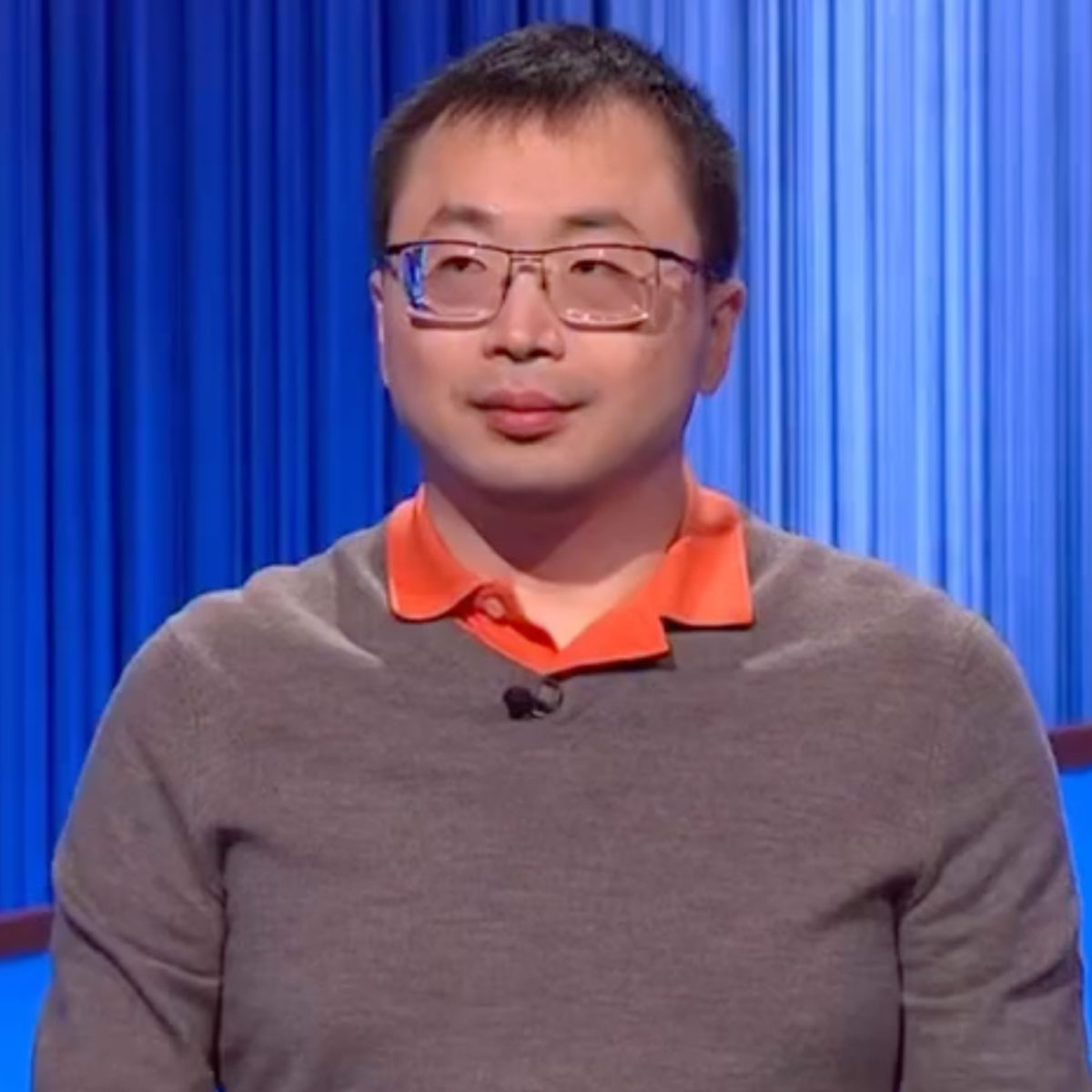
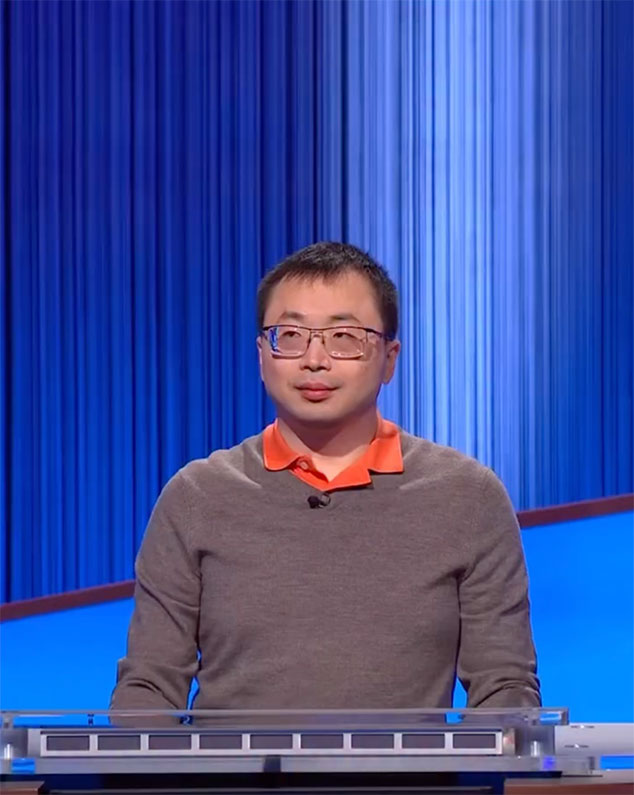
Jamie Ding‘s record-breaking Jeopardy! reign has come to an end.
After a remarkable 31-day run, the 33-year-old’s winning streak on the game show ended on April 27th. Greg Shahade won decisively before the Final Jeopardy round.
During the final question of Double Jeopardy, under the category “The Shape of Things,” host Ken Jennings read this clue: “This man-made island in Dubai, featuring homes and hotels, is built in the shape of one of these.”
Jamie incorrectly answered a question with “palm leaf” instead of “palm tree,” costing him $400 and leaving him with $16,000 while Greg had $32,600 heading into Final Jeopardy. In the end, Greg, a chess champion, defeated Jamie, a New Jersey bureaucrat who had impressively won every game since starting on the trivia show on March 13th.
Jamie signed off in Final Jeopardy by writing “TTFN” (ta ta for now).
In total, he won a whopping $882,605, placing him fifth among Jeopardy!‘s top earners of all time.
Oh my gosh, Ken Jennings is STILL the king! Seventy-four wins in a row – it’s just unbelievable! But honestly, Amy Schneider is a legend too, with 40 wins! And Matt Amodio? Thirty-eight! I was obsessed with his streak! Then there’s James Holzhauer with 32 – he played so differently, it was amazing! They’re all just incredible Jeopardy! champions, but Ken…Ken is on another level!
As for how Jamie feels about be dethroned?
He described his most recent game as strange, explaining that despite being a top player, he suffered a decisive loss – something he believes has never happened to him before. He told People magazine that this actually made him feel a bit better, as there wasn’t any single moment or decision that clearly caused the defeat.
Jamie’s impressive performance made his success seem effortless, but his family was surprised by how far he advanced in the competition.
His father, Yuchuan Ding, told The Detroit News in an interview on April 16th that while they knew he was knowledgeable, they hadn’t realized the extent of his understanding.
Jamie’s sister, Jessie Ding, said she initially feared Jamie wouldn’t do well on the show, thinking they might fail spectacularly.
“I didn’t want him to go on national TV and embarrass himself,” she echoed. “But he didn’t.”
With Jamie’s impressive streak now over—though he will be back for the next Jeopardy! Tournament of Champions—he’s incredibly grateful for all the support he’s received, particularly from his family and fans.
Jamie shared that his family are his heroes, and he wouldn’t have achieved his current success without their unwavering love and support. He’s thrilled to have accomplished something that makes them proud.
Keep reading to find out some surprising secrets behind the making of Jeopardy!.
“I didn’t want him to go on national TV and embarrass himself,” she echoed. “But he didn’t.”
With Jamie’s impressive run now over—though he’ll be back for the next Jeopardy! Tournament of Champions—he’s incredibly grateful for all the support he’s received, particularly from his family and friends.
Jamie shared that his family are his heroes, and he owes everything to their unwavering love and support. He’s thrilled to have achieved something that makes them proud.
Keep reading to find out some surprising secrets behind the making of Jeopardy!.
The game show Jeopardy! originated with Merv Griffin in the 1960s. He and his wife, Julann Wright, were talking about the quiz show scandals of the 1950s when she playfully suggested a show where the host would provide answers, and contestants would have to phrase the questions.
Griffin claims he took the concept directly to NBC, and they immediately agreed to it, not even needing to see a test episode.
The show wasn’t originally called Jeopardy!—it was first titled What’s the Question? But network executives didn’t like that name, feeling it didn’t convey the risk and excitement inherent in the game. They thought it needed more ‘jeopardy!’ and ultimately suggested the name we know today.
Art Fleming was the original host of Jeopardy! when it debuted in 1964. Alex Trebek became the host in 1984 when the show began airing in syndication.
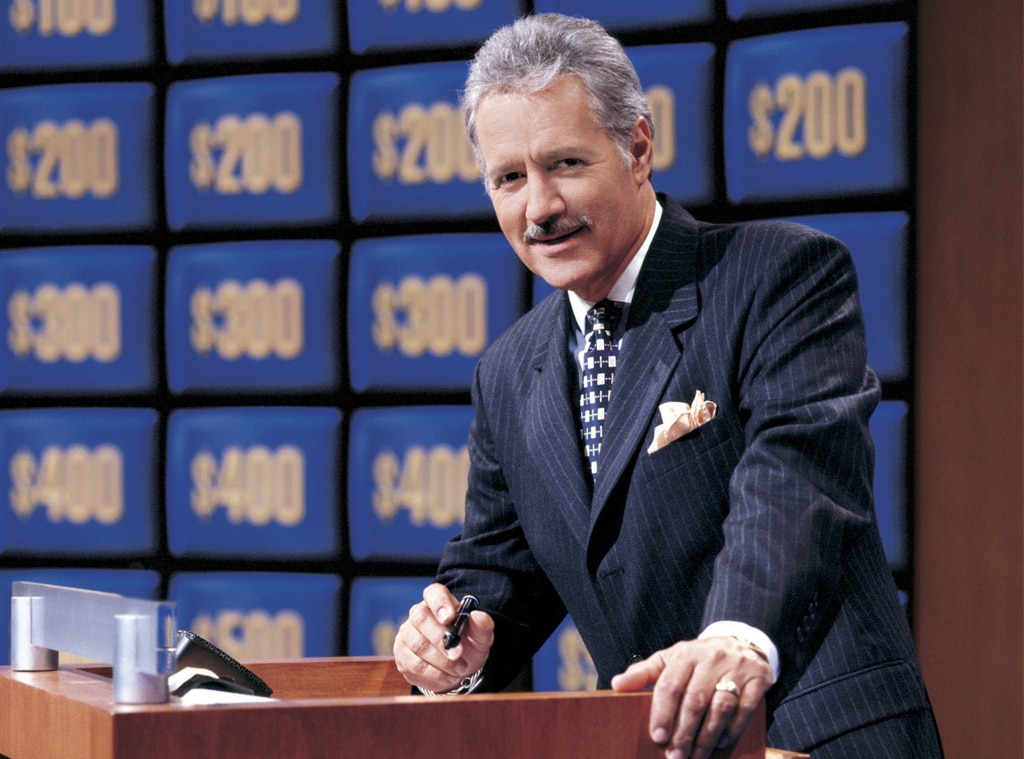
Throughout his 37 years hosting the show, Alex Trebek only missed one recording session. This happened in 1997 when he and Pat Sajak, the host of Wheel of Fortune, jokingly switched roles as an April Fool’s Day prank.
Alex Trebek filmed his final episode on October 29, 2020, just ten days before he passed away from pancreatic cancer at the age of 80. His daughter, Nicky Trebek, believed he knew it would be his last time recording the show.
She remembered driving him home and asking if he planned to return. He responded, telling her, ‘I don’t think so, Nick,’ as she shared on the 2023 Inside Jeopardy! podcast.
Alex Trebek passed away at his home on November 8, 2020. His daughter, Nicky, shared that he spent his final days surrounded by family, enjoying time on his favorite swing and reminiscing over old photos.
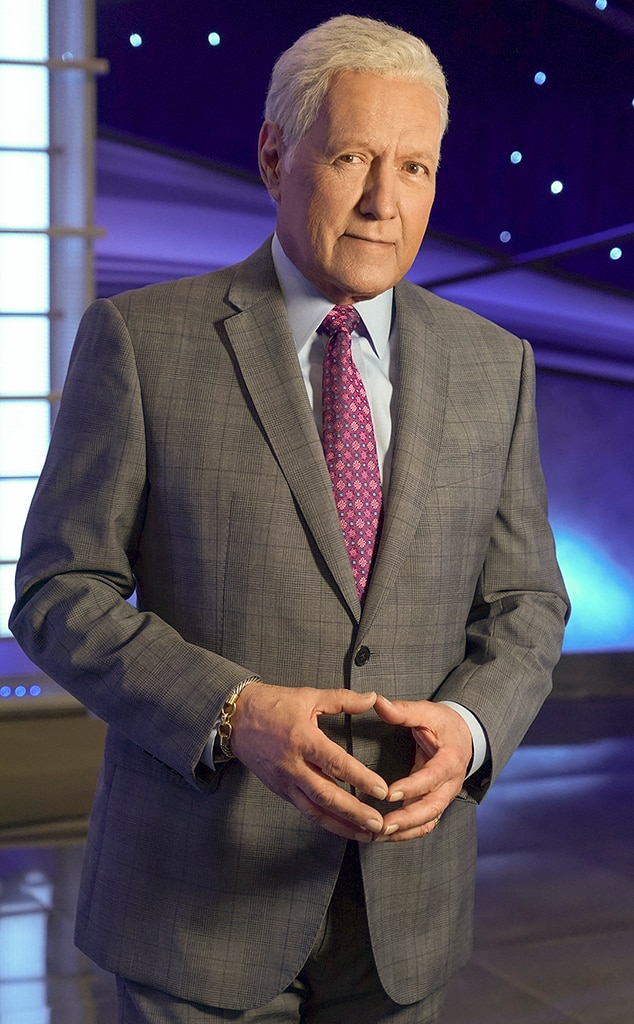
Before Alex Trebek’s death, the Jeopardy! team had already prepared for him to take time off for scheduled surgery, according to supervising producer Lisa Broffman. They planned to have Ken Jennings, a former contestant and consulting producer at the time, fill in temporarily. However, rehearsals for this transition were canceled when news of Trebek’s passing arrived.
After Alex Trebek passed away, Ken Jennings was among the first celebrities to temporarily host the show while producers searched for a new permanent host. Other guest hosts included Mayim Bialik, Anderson Cooper, Katie Couric, LeVar Burton, Robin Roberts, and Savannah Guthrie.
In August 2021, Mike Richards, an executive producer for Jeopardy!, was chosen to replace Alex Trebek as host. However, he resigned from the position just weeks later due to backlash over past sexist comments he had made.
Almost a year after Alex Richards left, Mayim Bialik and Ken Jennings were named permanent co-hosts. However, Bialik left the show in 2023, making Jennings the only host.
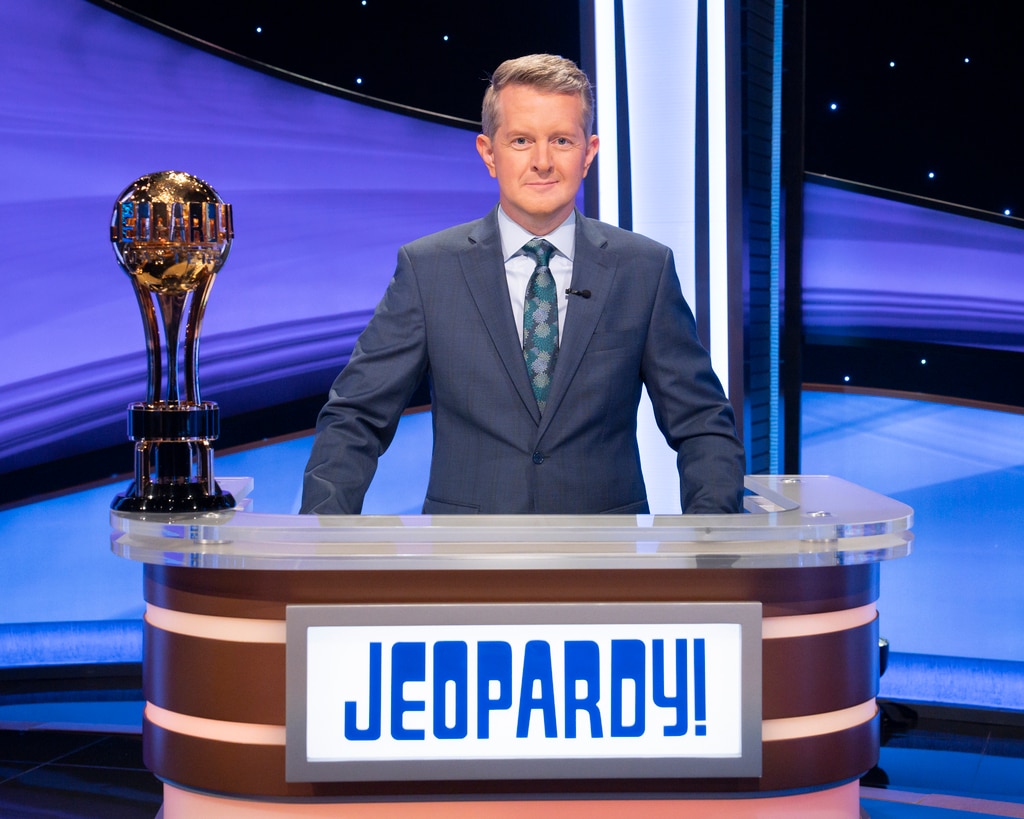
When it comes to the setup, the stand Jennings speaks from is a lectern, not a podium. The podium is the platform where the contestants stand.
During the competition, contestants can either stand or sit at the podium; chairs are available if requested. According to producer Sarah Whitcomb on the Inside Jeopardy! podcast, the show doesn’t question a contestant’s choice – if they want a chair, they’ll receive one.
Whether contestants prefer to sit or stand, they all stand on adjustable platforms hidden behind their podiums. This ensures they appear to be the same height on television, which avoids the need to constantly adjust the cameras, as explained on the official Jeopardy! website.
A subtle feature could be added to the game show podiums: a small white light in the bottom left corner. This would illuminate to indicate which player most recently answered a question correctly, letting the host easily identify them.
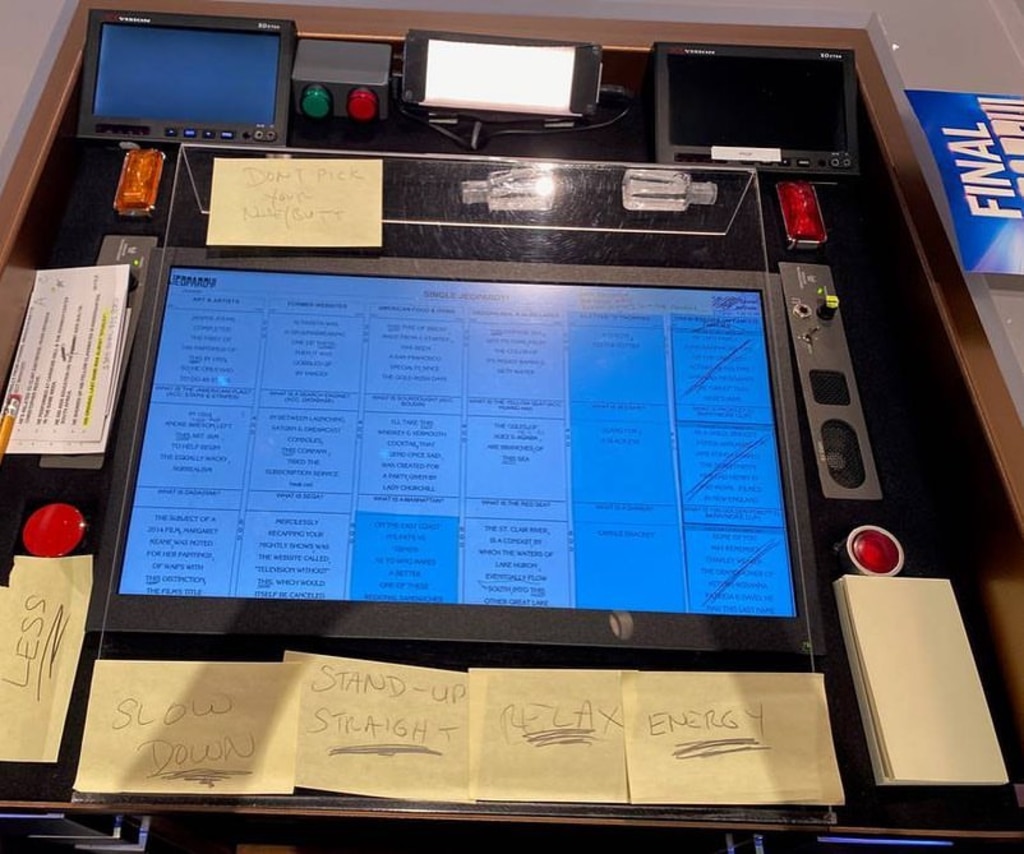
The lectern is equipped with modern technology, like a monitor that displays all the clues from the gameboard. When Aaron Rodgers guest-hosted Jeopardy! in 2021, he took a picture showing his view from behind the lectern. The photo revealed he’d covered the computer screen with sticky notes to remind himself to maintain good posture and stay calm.
Despite all the technology, some parts of the Jeopardy! set still need a person to operate them. Specifically, when a contestant chooses a clue, a crew member has to manually trigger it to appear on the gameboard.
During each recording, a team of judges watches closely to make sure the game runs smoothly. They check when contestants buzz in, how clues are read, and whether answers are correct. If there’s a problem with the technology or scoring, they’ll alert the host using colored lights at the podium, signaling a need to pause the game.
Stagehands also control the buzzers. When the host finishes reading the clue, a crew member presses a button to open the floor to answers. This action also turns on lights near the game board, signaling to contestants that they can now buzz in.
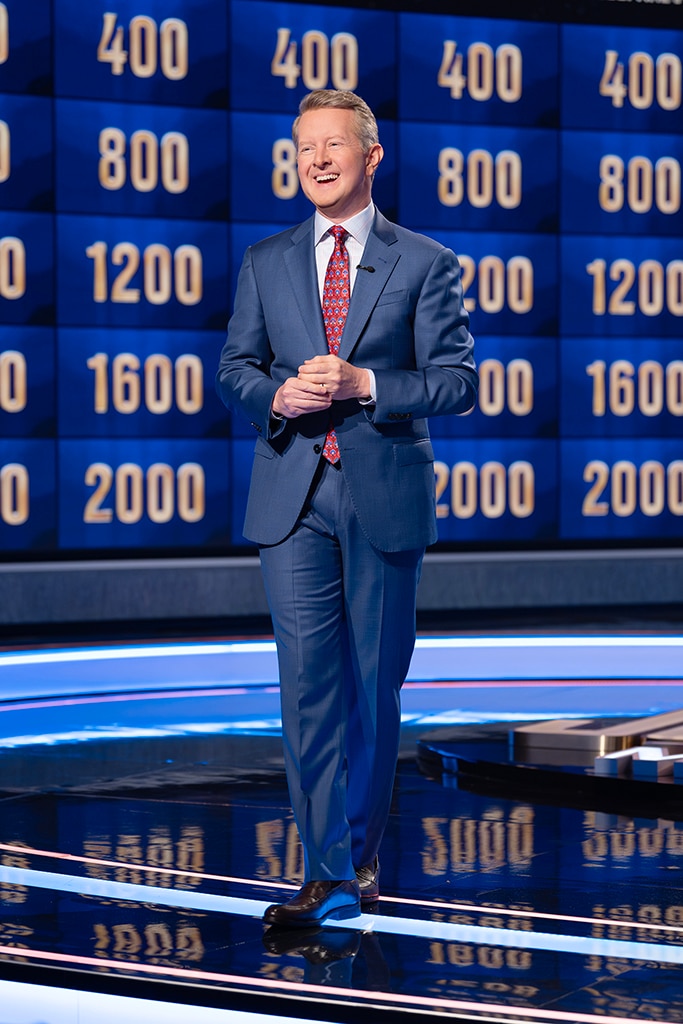
One thing you rarely see on TV is the scoreboard positioned right in front of the contestants. It helps them figure out how much to bet during Daily Doubles.
While quick reflexes are helpful on Jeopardy!, they don’t guarantee a win. The show’s website explains that buzzing in too early—before the light indicates you’re eligible—results in a brief lockout of about a quarter of a second. This “digital policeman” ensures fair play and keeps the game moving at a good pace.
Who has won the most money on Jeopardy!? Currently, Ken Jennings holds the record for the longest winning streak, having won 74 games in a row back in 2004. He’s also earned the most money in regular Jeopardy! games, totaling $2,520,700 during that incredible run.
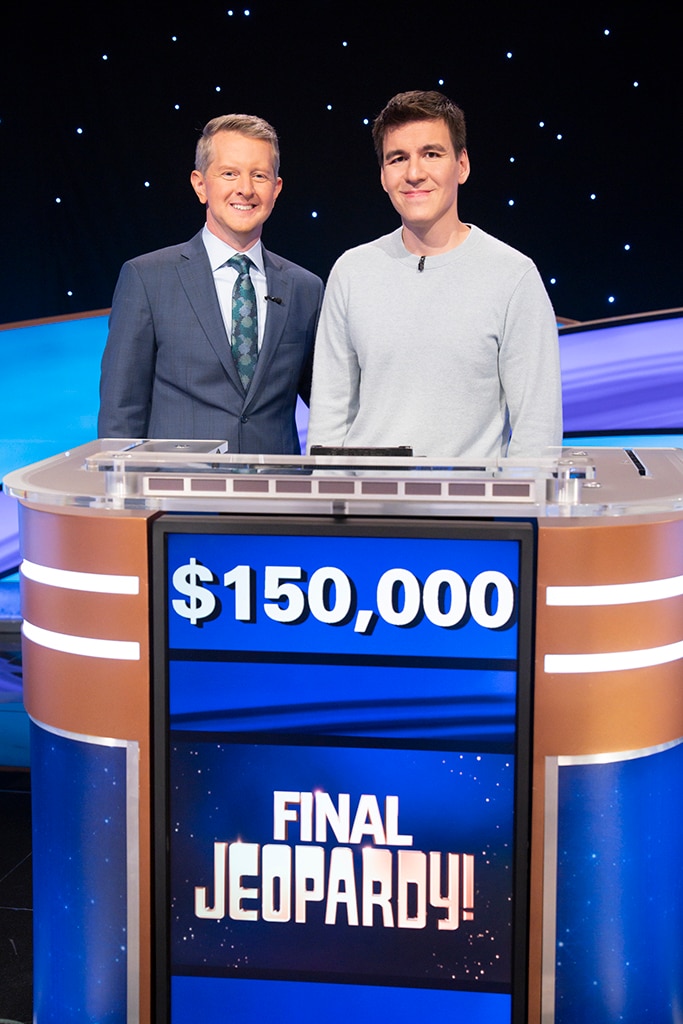
James Holzhauer won the most money in a single game of Jeopardy!, earning an impressive $131,127 on the April 17, 2019, episode. Remarkably, this professional sports gambler, who won 32 games in a row that year, holds the top ten spots for single-game winnings in the show’s history.
There’s also a record for the lowest score ever. On the July 26, 2021 episode, Patrick Pearce lost $7,400.
While rare, ties have happened on the show before. When two or more players have the same score after Final Jeopardy!, a tie-breaker clue is used. The first player to answer correctly wins the game.
If all three contestants have zero dollars remaining at the end of Final Jeopardy!, the next show will start fresh with three new players and no returning champion, as stated in the official Jeopardy! rulebook.
According to the official rules, if all three players have zero or a negative score after Double Jeopardy!, the Final Jeopardy! round will not be played.
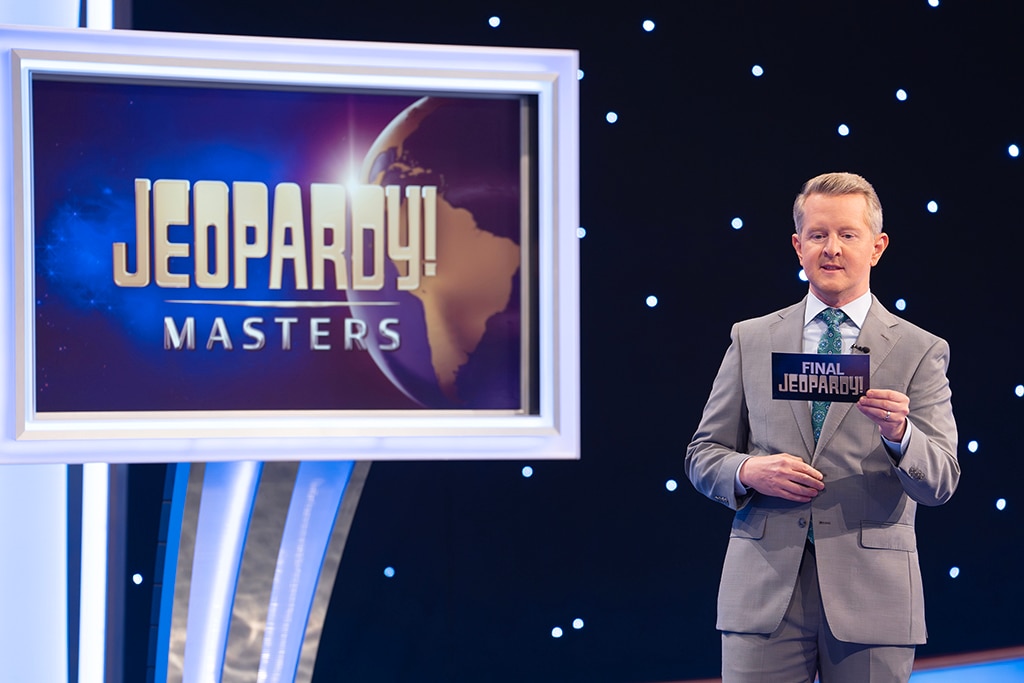
Jennings has stated that betting $69 is not allowed. Former Jeopardy! players have also shared that wagers of $666, $14, $88, and $1488 are prohibited because these numbers are linked to a white supremacist group.
One of the most well-known rules of Jeopardy! is that all answers must be phrased as a question. However, the question doesn’t have to be grammatically perfect. Interestingly, if the correct answer is already a question – such as the name of the band The Who – contestants don’t need to reword it.
During the first round of Jeopardy!, contestants who don’t answer in the form of a question will be gently reminded. But, if an answer isn’t phrased correctly during Double Jeopardy! or Final Jeopardy!, it won’t be accepted, according to the show’s website.
Read More
- Gold Rate Forecast
- 10 Movies That Were Banned in Different Countries For Random Reasons
- Tekken 8 Fans Furious as Tifa Tipped for Street Fighter 6 Instead
- Nintendo Switch 2 Reportedly Getting Remake of One of the Best PS3 and Xbox 360 Games
- Welcome to Demon School! Iruma-kun season 4 release schedule: When are new episodes on Crunchyroll?
- See Kaia Gerber & Lewis Pullman’s Vanity Fair Oscars Party Date Night
- 9 Great Supernatural Characters Everyone Forgot About
- Michael Jackson Biopic’s Record-Breaking Debut Unseats 2026’s Biggest Box Office Hit On U.S. Chart
- Is Bitcoin Really Going to $1,000,000? You Won’t Believe the Predictions!
- EUR JPY PREDICTION
2026-04-28 05:48