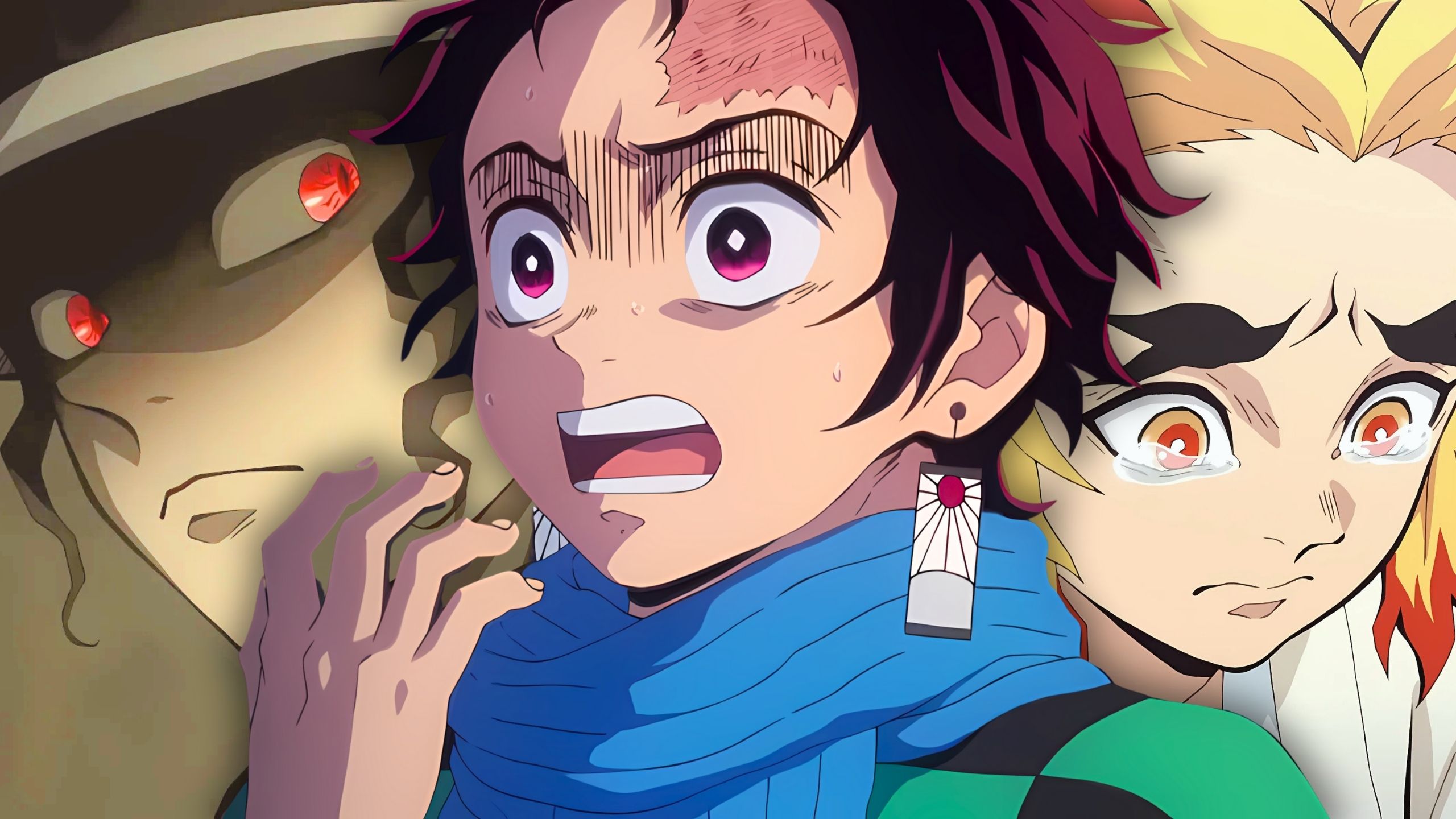
This anime is widely considered one of the most visually beautiful ever created. Thanks to the incredible animation by Ufotable, a simple story about a demon hunter became a huge international success, breaking box office records and attracting many new fans to anime. The action sequences are breathtaking, emotional deaths have a real impact, and the world feels incredibly immersive – more so than most similar anime series.
Watching Demon Slayer again offers a different perspective. While the beautiful visuals are still enjoyable, it’s easier to notice the show’s weaknesses. Things like uneven pacing, underdeveloped characters, and emotional scenes that feel forced become much more apparent. The impact of these moments relies on shock value rather than genuine storytelling.
The Flashback Formula Turns Every Death Into a Funeral Fans Didn’t Ask For
As a huge fan of Demon Slayer, I’ve noticed a pattern that sometimes slows things down. It’s amazing how the show gives even the villains really heartbreaking backstories, but they often show them right before or after the character dies. A prime example is with Gyutaro and Daki – we get a whole episode dedicated to their past right after their big fight! It felt like the story just stopped moving forward at the most exciting part. The same thing happened during Shinobu’s fight with Doma; the action kept getting interrupted by flashbacks, sometimes every few minutes. While I appreciate learning about their histories, it definitely disrupted the flow of the battle.
When watching Demon Slayer again, the flashbacks lose their impact because viewers already know what’s going to happen. They shift from revealing surprising depth in the characters to feeling predictable. Instead of gradually building sympathy for the villain through their actions and personality, the show tries to create an emotional connection very quickly at the end, which feels rushed and unnatural.
Nezuko’s Demon Powers Exist Only When the Plot Needs Them
Nezuko’s change into a demon gives her impressive powers, including the ability to change size, quickly heal from injuries, and use flames that only harm other demons. While these abilities are showcased during the Entertainment District Arc against Daki and sometimes help save her brother Tanjiro, Nezuko spends much of the time resting in a box or simply in the background.
Nezuko’s incredibly powerful, rage-fueled transformation, which allowed her to defeat a major villain, is simply dropped from the story with no explanation. Looking back at the series, it’s noticeable that this ability isn’t used when it would be most helpful, making it seem like the writers forgot they had even given her this power.
Tanjiro’s Victories Undermine the Threat Level Demon Slayer Builds
The anime Demon Slayer shows demons who have survived for decades, even against the strongest fighters, the Hashira. However, Tanjiro, a relatively inexperienced demon slayer with only two years of training, manages to defeat these powerful demons. This is especially noticeable in the Swordsmith Village arc where Tanjiro defeats Hantengu, a demon whose true form is incredibly small and quick – so much so that even seasoned demon slayers struggle to find it. Tanjiro delivering the final blow feels unrealistic given the established power levels within the series.
While it felt right that Tanjiro narrowly defeated Rui after a tough battle, Season 3 of Demon Slayer relies too much on the same formula: Tanjiro gets close to losing, then suddenly gains a new ability to win. Demon Slayer aims to show Tanjiro as vulnerable, but his victories consistently suggest otherwise, diminishing the impact of his struggles.
The Breathing Style System Produces Visually Distinct but Strategically Identical Fights
The anime Demon Slayer features unique fighting styles – Water, Flame, Sound, Mist, Love, and Wind Breathing – each linked to a powerful character’s personality. While these styles suggest diverse combat, many fights actually follow a predictable pattern: a demon attacks, the slayer names their technique, and then performs it with impressive visuals.
I’ve noticed that the best battles in Demon Slayer, like the one between Tengen and Gyutaro, really shine because both fighters are adapting and reacting to each other as the fight goes on. But a lot of the other fights, where characters just use their breathing styles, feel like they’re showing off moves at an enemy who doesn’t really do much to counter. Ufotable’s animation is amazing and covers this up the first time you watch, but if you rewatch, you start to realize a lot of the fights lack actual strategy.
The Hashira Lack Sustained Character Arcs Beyond Their Introductions
The anime Demon Slayer features powerful characters called Hashira, each with a memorable design and personality – from the serious water user to the boisterous sound user and the quiet mist user, among others. However, the show often fails to develop these characters beyond brief glimpses into their pasts. While Tengen Uzui gets a full arc in the Entertainment District and Kyojuro Rengoku shines in the Mugen Train movie, most of the Hashira only receive backstory flashbacks without much opportunity to grow or demonstrate their personalities in the present.
The Hashira Training arc has Tanjiro working with each of the Hashira to improve his skills. However, the Hashira mostly just tell him what to do and respond to his efforts. While characters like Sanemi, Obanai, Gyomei, and Mitsuri are compelling, the story doesn’t explore them in enough detail.
The Demon Slayer Corps Carries Depth That the Story Does Not Use
The organization has been around since Japan’s Heian period, secretly agreed to operate independently of the government, and has continued functioning for over a thousand years through all of Japan’s historical changes. While this rich history is interesting, Demon Slayer only hints at it through small details – a line of dialogue or a quick explanation – and never builds a story around it.
While the world of Demon Slayer hints at a fascinating, hidden organization battling demons and operating outside of government control, the story doesn’t fully explore this potential. Instead, the series focuses on using the organization’s past to explain the origins of the Ubuyashiki family. Upon revisiting the series, it becomes clear how much richer the world could have been if the story had delved deeper into these overlooked elements.
Muzan Kibutsuji Is More Effective as an Absence Than a Villain
Throughout much of Demon Slayer, every demon the characters fight is connected to Muzan, making him feel like a constant threat even when he’s not directly present. His brief appearance in the Asakusa arc is particularly chilling – he effortlessly kills a demon in public, demonstrating his immense power without revealing everything he’s capable of.
Watching the final battle, I was struck by how strangely Muzan fought. He relied heavily on whipping attacks and poison, which felt… underwhelming for a villain who’d spent centuries building a reputation on pure fear. Knowing how he ultimately behaves in that last fight actually made earlier scenes, where his lack of presence was so effective, feel less impactful. It created a real disconnect between the terrifying image he’d cultivated and what he actually delivered in the end.
Comic Relief Moments Don’t Respect the Emotional Timing They Interrupt
Demon Slayer frequently switches from heartbreaking or violent moments to sudden comedy, often through the antics of characters like Inosuke and Zenitsu. While other shows use this technique, it feels particularly jarring in Demon Slayer. For example, the Rehabilitation Training arc will quickly cut from scenes of Tanjiro struggling with intense pain to lighthearted jokes, which undermines the serious tension the story has carefully built up over several episodes.
I noticed this a lot during the Spider Demon arc. They’d cut to Zenitsu screaming, which felt like an attempt to lighten the mood after something scary. The idea was probably to give the audience a break, but because the scary parts didn’t really build any real tension, those comedic interruptions just fell flat and the drama didn’t feel impactful.
The Swordsmith Village Arc Reveals the Show’s Structural Ceiling
The Entertainment District arc is a standout part of the series, thanks to the complex character of Tengen Uzui, the interesting dynamic between the villainous siblings, and the consistently building tension. Later, in the Swordsmith Village arc, the show falls into a predictable pattern: the characters arrive at a location, split up, battle an Upper Moon demon with a unique ability, and ultimately win with a narrow, last-minute victory.
I’ve noticed while rewatching that the story structure used in the Entertainment District arc has been used before. Tengen Uzui’s character just made it feel new and exciting. But looking ahead, without another strong, developed Hashira like Tengen to carry the story, the repetition in Demon Slayer becomes really obvious. It starts to feel like we’re going through the motions without much progress.
The Emotional Peaks Cost Less When Viewers Know Who Survives
Rengoku’s death is particularly impactful the first time you watch Demon Slayer because the show doesn’t previously suggest any main characters will die. However, when rewatching Mugen Train, knowing his fate changes the experience. Every happy scene between Tanjiro and Rengoku then feels like foreshadowing instead of a natural, heartfelt connection.
While Demon Slayer frequently aims for emotional moments, these can lose their power if they happen too often. The show’s impact feels strongest when sadness arises organically from characters’ developing relationships, and on repeat viewings, some of the most heartbreaking scenes can feel artificial instead of truly moving.
Read More
- Best Controller Settings for ARC Raiders
- FRONT MISSION 3: Remake coming to PS5, Xbox Series, PS4, Xbox One, and PC on January 30, 2026
- Mark Zuckerberg & Wife Priscilla Chan Make Surprise Debut at Met Gala
- Meet the cast of Good Omens season 3: All the actors and characters
- 7 Great Marvel Villains Who Are Currently Dead
- Welcome to Demon School! Iruma-kun season 4 release schedule: When are new episodes on Crunchyroll?
- Nippon Sangoku Is The Best New Post-Apocalyptic Anime of Spring 2026
- Wistoria: Wand and Sword Season 2 release schedule: When are new episodes out?
- The Boys Season 5 Officially Ends An Era For Jensen Ackles’ Soldier Boy
- Khloe, Kourtney Kardashian Call Out Kylie Jenner for Mother’s Day Post
2026-05-17 21:43