Aave, a leading platform for lending in the decentralized finance (DeFi) world, recently experienced a significant problem. A security breach at Kelp DAO, a project that allows users to ‘restake’ their crypto, revealed weaknesses in how assets are transferred between different blockchains, resulting in a loss of $292 million.
On April 18th, attackers exploited a weakness in Kelp’s bridge, which uses LayerZero technology, to steal 116,500 rsETH. They faked messages sent between blockchains and quickly used the stolen tokens as collateral on Aave V3 to borrow wETH.
Aave is facing approximately $196 million in debt that’s difficult to recover. To prevent further losses, the platform quickly paused trading in rsETH and related markets.
The response was immediate and severe. Within two days, users withdrew over $8.45 billion from Aave, causing its total value to plummet from approximately $26.4 billion to as low as $15.84 billion, according to data from DeFiLlama. This nearly 33% decrease briefly knocked Aave from its position as the leading DeFi protocol based on total value locked.
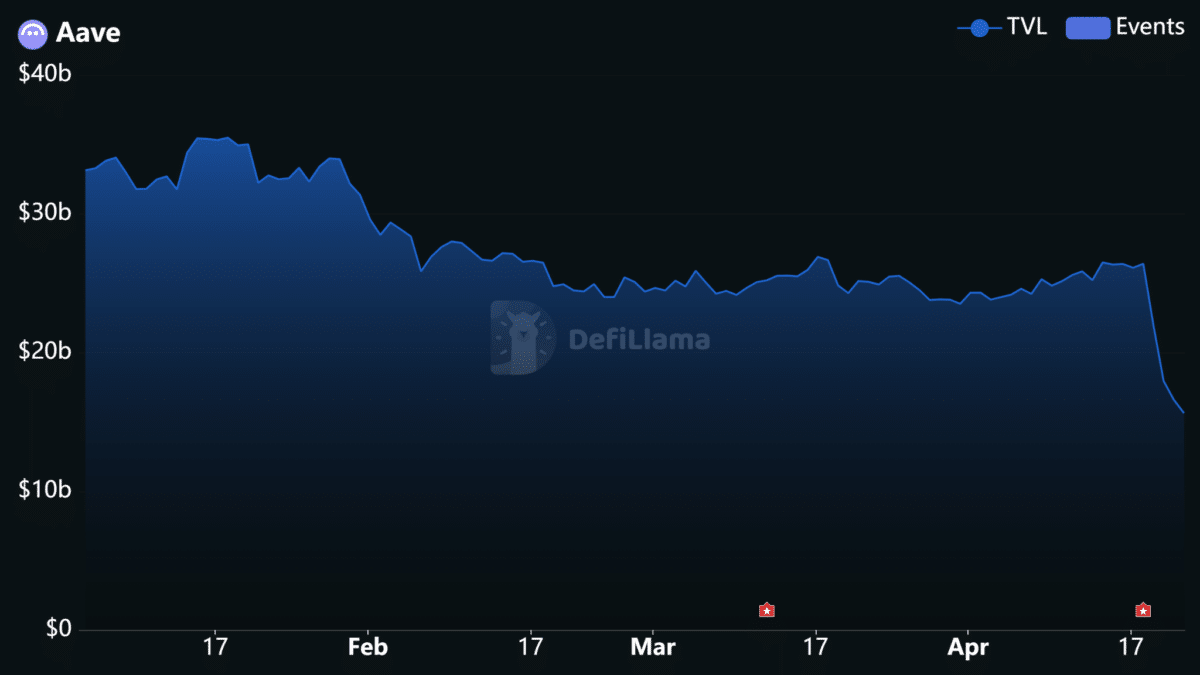
The issues at Aave weren’t isolated. Over just two days, the total value of assets locked in all of DeFi (decentralized finance) fell from $99.5 billion to around $85.72 billion – a loss of over $13 billion. Other lending platforms also suffered: Morpho saw deposits drop by about $1.7 billion, Sky lost around $600 million, and platforms like SparkLend, Fluid, Euler, and Sentora experienced significant declines or limited their exposure to a specific asset (rsETH) as a safety measure.
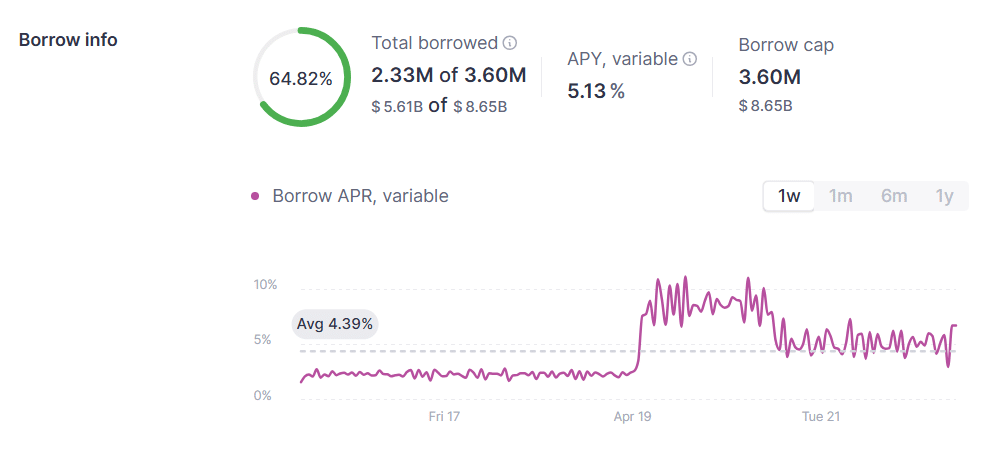
Recently, Aave’s pools of wETH, USDT, and USDC became completely full, temporarily preventing users from withdrawing their funds and leading to a surge in liquidations. As of now, approximately 65% of the wETH in the pool is still borrowed – about $5.61 billion out of a total of $8.65 billion – and borrowing activity has sharply increased in the last few days.
This episode highlighted the increasing dangers associated with liquid restaking tokens. rsETH, in particular, was used on many different platforms and blockchains, leading to complex layers of reuse. When one system experienced a failure, it quickly caused widespread concern.
After a major issue with the protocol, the value of its AAVE token dropped by as much as 26% before recovering slightly. At the same time, fees on the platform increased due to a surge in trading.
Things are getting tricky over at Aave. Their governance and risk teams are now figuring out how to deal with a shortfall of bad debt. The insurance fund won’t cover it all, so it’s looking like either the DAO treasury or those of us holding stkAAVE might have to take a loss. And to make things even more complicated, Kelp DAO has temporarily paused their rsETH contracts while they try to figure out how to handle their part of the problem. It’s a tense situation, and I’m watching closely to see how it all unfolds.
A recent, rapid withdrawal of funds from a major DeFi lending platform highlighted a critical risk: even well-established code can fail if unsupported collateral enters the system. Now that markets are calming around the $15.6–18 billion level for Aave, users are paying closer attention to how secure bridges are and how concentrated collateral has become throughout the DeFi space.
Read More
- 10 Most Powerful Versions of Superman, Ranked
- Gold Rate Forecast
- GBP CNY PREDICTION
- 007 First Light: Release Date, Story, Gameplay, Cast, Editions, and Platforms
- Forza Horizon 6 Car List So Far: Confirmed Highlights, Cover Cars, DLC, and Rewards
- DOGE PREDICTION. DOGE cryptocurrency
- EUR CNY PREDICTION
- Superman’s 7 Best Power-Ups, Ranked
- Fishbowl Is a Charming and Heartfelt Indie You Won’t Want to Miss (Review)
- Forza Horizon 6 PC Issues: Fix Crashes, Stuttering, Steam Errors, and Game Pass Problems
2026-04-22 09:25