Author: Denis Avetisyan
A new analysis explores how subtle connections between quark and lepton behavior can constrain extensions to the Standard Model of particle physics.
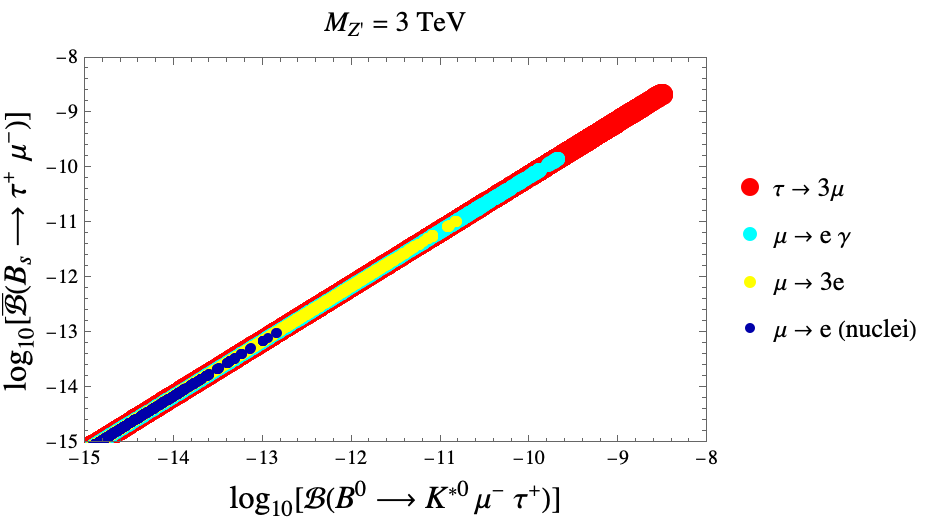
This review investigates the ABCD model, a gauge anomaly-free abelian extension of the Standard Model, and highlights the interplay between flavour-conserving and flavour-violating processes in constraining new physics.
Despite the Standard Model’s success, persistent anomalies motivate exploration beyond its established framework. This paper, ‘Quark-lepton correlations in gauge anomaly free abelian extension of the Standard Model’, investigates a minimal extension incorporating an additional U(1)^\prime gauge symmetry and generation-dependent fermion charges, leading to correlations between quark and lepton sectors. We find that constraints arising from both flavour-conserving and flavour-violating processes mutually limit deviations from Standard Model predictions, offering a nuanced interplay between observable effects. Could this interconnectedness provide a pathway to resolving long-standing flavour puzzles and refining our understanding of fundamental particle interactions?
Unveiling the Anomalies: A Crack in the Standard Model
Despite its extraordinary predictive power, the Standard Model of particle physics struggles to account for certain experimental observations in the realm of flavor physics, collectively termed ‘flavor anomalies’. These anomalies manifest as discrepancies between predicted and measured rates of particle decays, suggesting that the interactions governing these processes are more complex than currently understood. The Standard Model accurately describes the fundamental particles and forces, but fails to fully explain why certain particles mix and decay as they do. This suggests the existence of new particles or forces beyond those incorporated in the model, prompting physicists to explore extensions such as Supersymmetry or models with extra dimensions, seeking a more complete description of the universe and the subtle rules governing the behavior of fundamental particles.
Intriguing discrepancies in how leptons – fundamental particles like electrons, muons, and taus – behave are increasingly suggesting that the Standard Model of particle physics is incomplete. Observations of Lepton Flavour Universality Violation, where leptons don’t interact with forces in the way the Standard Model predicts, coupled with persistent anomalies in the muon’s magnetic moment – a measurement of how it interacts with magnetic fields – present a compelling case for new physics. These aren’t merely statistical fluctuations; rather, they are deviations that, while still needing further confirmation, consistently point toward the existence of undiscovered particles or forces influencing these leptons. The muon’s anomalous magnetic moment, in particular, shows a significant difference from theoretical predictions, potentially indicating interactions with virtual particles not currently accounted for within the Standard Model. These anomalies are driving a surge in experimental and theoretical research, seeking to unravel the mysteries beyond our current understanding of the fundamental building blocks of the universe.
The precision of modern experiments is increasingly revealing tensions with the Standard Model of particle physics, necessitating a reevaluation of established theoretical frameworks. Measurements of particle decays and interactions, particularly those involving leptons, consistently deviate from predictions based solely on known physics. These discrepancies aren’t merely statistical fluctuations; accumulating evidence suggests the existence of new particles or forces influencing these processes. Consequently, physicists are actively developing extensions to the Standard Model, such as Supersymmetry or models with additional dimensions, to accommodate these anomalies and restore consistency between theoretical calculations and observed phenomena. The quest to reconcile experiment and theory is driving innovation in both experimental techniques – seeking even higher precision – and theoretical modeling, potentially ushering in a new era of discovery in flavor physics.
A New Symmetry: Introducing the ABCD Model
The ABCD Model extends the Standard Model by postulating an additional U(1)’ gauge symmetry. This introduces a new force carrier, the Z’ boson, mediating interactions beyond those described by the Standard Model’s SU(3)_C \times SU(2)_L \times U(1)_Y gauge group. Crucially, the model also incorporates right-handed neutrinos, which are singlet under SU(2)_L and carry a non-zero charge under the new U(1)’ symmetry. This addition allows for the existence of Dirac neutrino masses, addressing the Standard Model’s requirement for neutrinos to be massless, and provides a framework for understanding neutrino oscillations and potential lepton flavor violation.
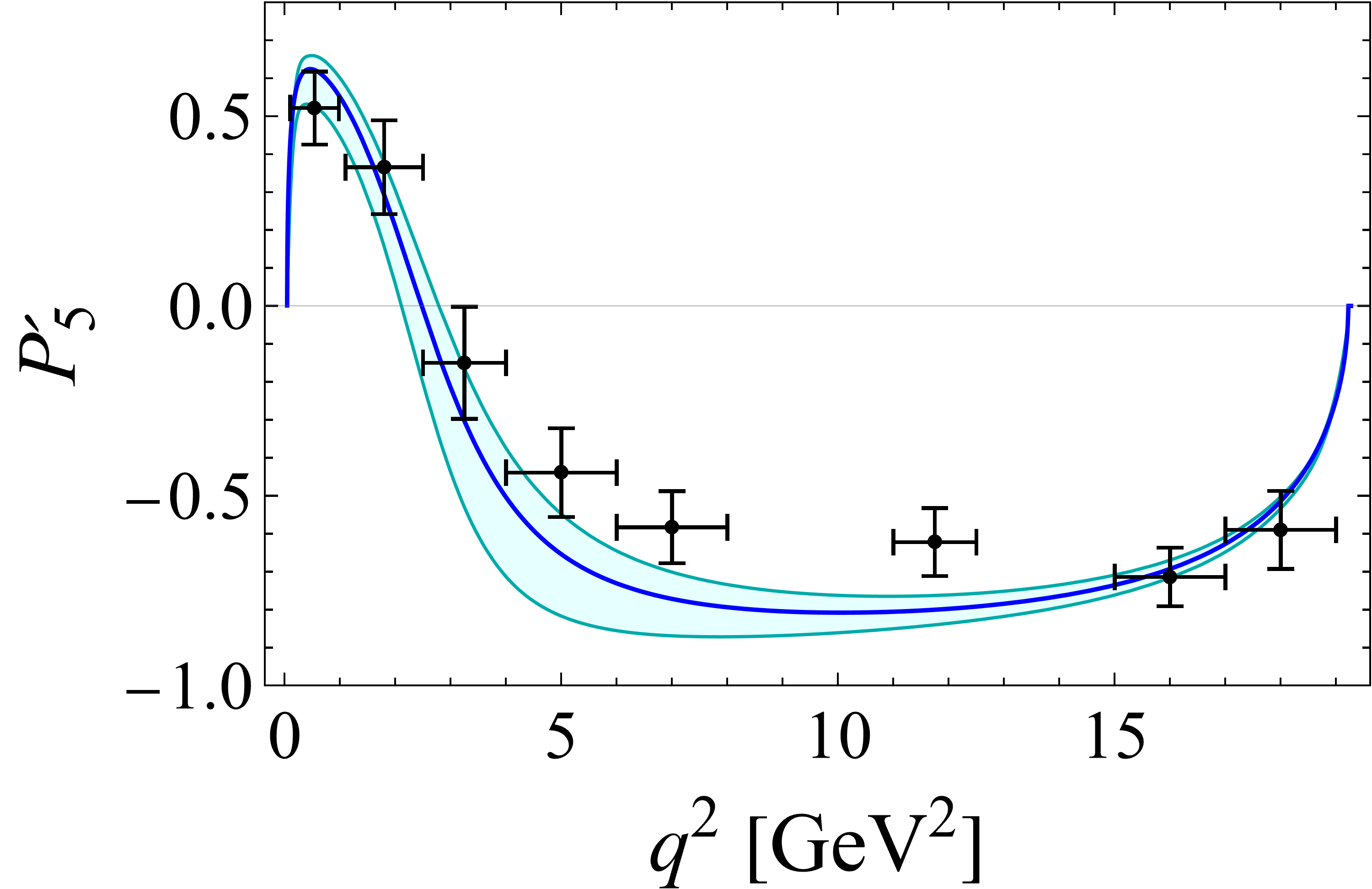
Observed flavor anomalies, specifically discrepancies in the decay rates of leptons like muons and taus, cannot be fully explained within the Standard Model. The ABCD Model addresses these anomalies by introducing new interactions mediated by the additional U(1)’ gauge boson and associated particles. These new interactions contribute to the mixing and decay processes of leptons, modifying predicted rates and potentially aligning theoretical calculations with experimental observations. Specifically, the model predicts deviations in B meson decays, muon anomalous magnetic dipole moment, and rare lepton flavor violating processes, offering a potential explanation for existing experimental hints and providing testable predictions for future high-energy physics experiments.
The ABCD Model predicts the existence of new particles arising from the extended gauge symmetry, specifically a new U(1)’ gauge boson, denoted as Z’, and three right-handed neutrinos. These neutrinos, unlike their Standard Model counterparts, possess a non-zero mass and interact via the new gauge interaction. Furthermore, the model predicts novel interactions between these right-handed neutrinos and Standard Model fermions, mediated by the Z’ boson. These predicted interactions manifest as deviations from Standard Model predictions in processes such as muon decay, neutrino scattering, and potentially, rare meson decays. Consequently, high-energy collider experiments and precision measurements of neutrino properties offer direct avenues to experimentally verify the model’s predictions and constrain its parameter space.
Mapping the Interactions: The Effective Hamiltonian
The ABCD model’s temporal evolution and interaction strengths are mathematically formalized using an Effective Hamiltonian, denoted as H_{eff}. This Hamiltonian incorporates all relevant degrees of freedom and interaction terms, allowing for the perturbative calculation of decay rates and branching fractions for processes involving the model’s constituent particles. Specifically, the H_{eff} facilitates the computation of amplitudes for decays such as \mu \rightarrow e\gamma and B \rightarrow X_s\gamma, providing quantitatively testable predictions for experimental verification. The construction of this Hamiltonian relies on identifying the dominant interaction terms at a given energy scale, effectively simplifying the full theory while retaining sufficient accuracy for phenomenological analysis.
The introduction of a Z’ boson into the ABCD model extends the Standard Model gauge group, providing a mediator for interactions beyond those currently known. This neutral vector boson couples to fermions, potentially inducing new decay channels and contributing to anomalous magnetic moments. The strength of these interactions is determined by the coupling constant g' associated with the Z’ boson, and its mass M_{Z'} dictates the kinematic accessibility of associated decay processes. Experimental searches for deviations from Standard Model predictions in high-energy collider experiments and precision measurements are therefore sensitive to the presence and properties of this Z’ boson, offering a potential pathway to observe physics beyond the Standard Model.
Anomaly cancellation is a critical requirement for the mathematical consistency of quantum field theories, including the ABCD model. Anomalies represent violations of classical symmetries at the quantum level, potentially leading to unphysical predictions like probabilities exceeding unity or loss of gauge invariance. Specifically, the model must satisfy conditions ensuring the vanishing of mixed gravitational, gauge, and chiral anomalies. This is achieved through careful balancing of fermion content and charge assignments; for instance, the number of fermions in specific representations of the relevant gauge groups must adhere to specific constraints, such as \sum_{i} Q_i = 0 , where Q_i represents the charge of the i-th fermion. Failure to satisfy these conditions would render the model inconsistent and invalidate its predictive power.
Testing the Model: Rare Decays as Signposts
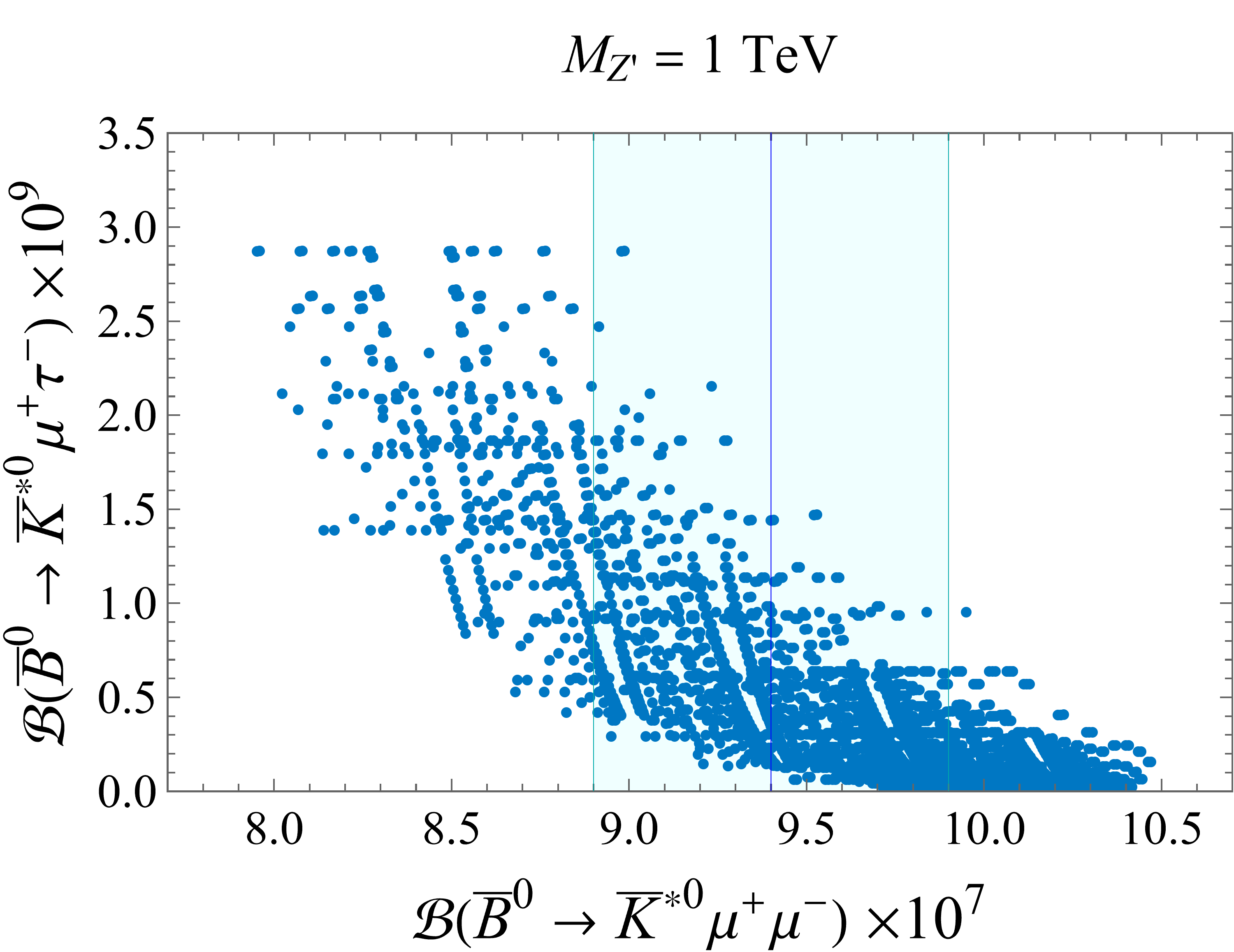
The ABCD model postulates alterations to the standard decay rates of specific particle transformations, notably those involving B_s \rightarrow \ell_1^+ \ell_2^- and B \rightarrow K^* \ell_1^+ \ell_2^-. These predicted modifications aren’t merely theoretical exercises; they represent potential fingerprints of new physics beyond the established Standard Model. By meticulously measuring these decay processes-the way particles break down into others-scientists can rigorously test the model’s predictions. Deviations from expected decay rates would strongly suggest the existence of undiscovered particles or forces, providing crucial evidence for physics beyond what is currently known. The sensitivity of these decay modes makes them powerful tools in the search for subtle effects that could revolutionize understanding of the fundamental building blocks of the universe.
The ABCD model’s viability hinges on the meticulous comparison between its predictions and experimental observations of rare B meson decays. Specifically, highly precise measurements of decay modes like B_s \rightarrow \ell_1^+ \ell_2^- and B \rightarrow K^* \ell_1^+ \ell_2^- serve as critical tests; any deviation between predicted and measured decay rates or branching ratios could signal the presence of new physics beyond the Standard Model. Theoretical calculations, constantly refined to achieve greater accuracy, provide the benchmark against which experimental results are assessed, establishing a rigorous framework for confirmation or refutation of the model’s underlying assumptions. This interplay between experimental precision and theoretical advancement is therefore central to validating, or ultimately discarding, the ABCD model’s proposed explanations for observed anomalies.
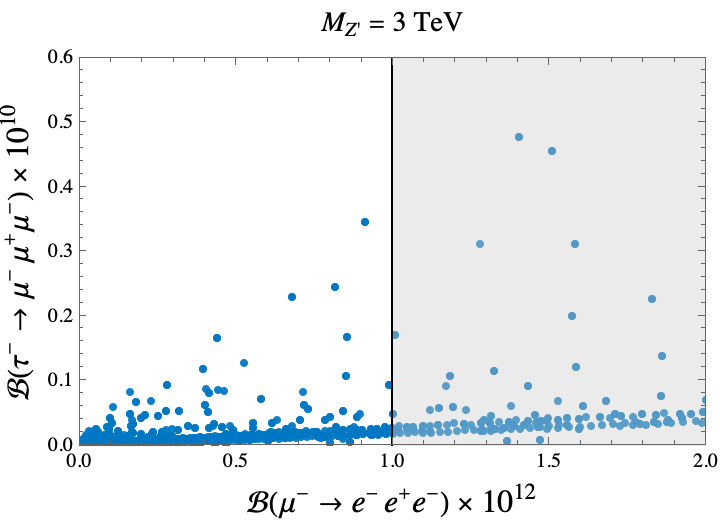
The ABCD model generates specific predictions regarding the rarity of certain particle decays, serving as a crucial testing ground for its validity. Calculations suggest that the decay of B_s mesons into a tau and a muon – B_s \rightarrow \tau^+ \mu^- – should occur with a branching ratio of approximately \mathcal{O}(10^{-9}). However, this prediction isn’t isolated; the model also forecasts exceedingly rare occurrences of muon decay into three electrons – \mu^- \rightarrow e^-e^+e^- – at a rate of around \mathcal{O}(10^{-{11}}), and even more improbable muon-to-electron conversion within atomic nuclei, predicted to occur at about \mathcal{O}(10^{-{13}}). These predictions are heavily constrained by existing experimental limits on charged lepton decays and searches for these rare processes, providing stringent benchmarks for the model’s parameters and offering a pathway to either confirm or refute its underlying physics.
The validity of the ABCD model isn’t solely determined by observing new decay channels, but also by the precise calibration of established parameters against experimental data. Specifically, deviations in ΔM_d (the mass difference of neutral B mesons), ΔM_s (for strange B mesons), and ΔM_K (for neutral kaons) must remain tightly constrained – within 5% and 25% respectively – to align with observed values. Equally crucial is the parameter ϵ_K, representing the indirect CP violation in kaon decay, which must fall within the narrow window of [2.0, 2.5] x 10-3. These stringent requirements serve as a sensitive litmus test; even subtle discrepancies between model predictions and these well-measured quantities would indicate the need for refinement or potentially invalidate the proposed new physics beyond the Standard Model.
Charting the Future: Towards a Complete Flavor Picture
The establishment of the ABCD model’s validity hinges significantly on the continued, dedicated pursuit of novel particle discovery through experimentation. Specifically, searches for particles predicted by the model, such as the Z’ Boson – a hypothetical heavier counterpart to the Z Boson – are paramount. These experimental endeavors, typically conducted at high-energy particle colliders, aim to detect subtle deviations from the Standard Model of particle physics that would signal the existence of these new particles. Confirming the existence of even a single predicted particle would provide strong evidence supporting the ABCD model and its unique explanation of flavor phenomena, while null results would necessitate a refinement or re-evaluation of its core tenets, guiding future theoretical and experimental investigations into the fundamental building blocks of the universe.
The predictive power of any theoretical model, including the ABCD framework, is fundamentally limited by the approximations used in its calculations. Initial predictions often rely on leading-order terms, providing a foundational understanding but lacking the nuance to match experimental precision. Subsequent refinement necessitates incorporating higher-order corrections – intricate calculations accounting for more subtle quantum effects and interactions. These corrections, though computationally demanding, are crucial for reducing theoretical uncertainties and aligning predictions with observed phenomena. By systematically including these higher-order terms, the ABCD model can achieve greater accuracy, allowing for more stringent tests against experimental data and ultimately solidifying – or challenging – its validity as a description of the flavor sector. This iterative process of calculation and comparison is the cornerstone of scientific progress, pushing the boundaries of understanding and revealing the universe’s underlying principles.
A successful implementation of the ABCD model promises to revolutionize the understanding of the flavor sector, a fundamental yet enigmatic component of particle physics. This model doesn’t merely seek to catalog the known particles – quarks and leptons – but aims to explain why these particles exhibit the observed mass and mixing patterns. By accurately describing the interactions governing these flavor dynamics, the ABCD model could illuminate the origins of matter-antimatter asymmetry in the universe, a persistent mystery since the Big Bang. Furthermore, a complete grasp of the flavor sector could reveal connections to other unsolved problems, such as the nature of dark matter and dark energy, potentially unifying seemingly disparate areas of physics under a single, coherent framework. Ultimately, validating and refining the ABCD model represents a crucial step towards a more complete and nuanced picture of the universe’s fundamental constituents and forces.
The pursuit of physics beyond the Standard Model, as exemplified by the ABCD model explored in this research, necessitates a rigorous examination of interconnectedness. Any deviation in one sector-be it quark or lepton-inevitably ripples through the entire framework. This echoes Marie Curie’s sentiment: “Nothing in life is to be feared, it is only to be understood.” The paper demonstrates how constraints from both quark and lepton sectors mutually refine the permissible parameter space, limiting deviations from established physics. Just as a flawed understanding of radioactivity posed dangers, incomplete modelling in particle physics risks theoretical inconsistencies-and potentially, a skewed worldview encoded within the algorithms used to analyze the data. The work subtly suggests that fixing models is, in a sense, fixing our understanding of the universe.
Beyond the Standard Picture
The pursuit of physics beyond the Standard Model often resembles an exercise in constrained imagination. This work, concerning the ABCD model and the interplay between quark and lepton flavour sectors, highlights a familiar pattern: new symmetries, however elegant on paper, find themselves increasingly hemmed in by existing data. The correlations identified between seemingly disparate processes – flavour-conserving and violating – suggest a universe determined to resist radical departures from established norms. It creates the world through algorithms, often unaware, and the model’s sensitivity to both quark and lepton constraints underscores the difficulty of altering fundamental parameters without encountering inconsistencies.
Future exploration must move beyond simply finding the parameter space allowed by current limits. The challenge lies in identifying why this space is so restricted. Are there deeper, yet undiscovered, principles at play, or is this simply a reflection of the statistical improbability of a significantly different universe? The hadronic contributions, persistently problematic in flavour physics, demand continued scrutiny, and the search for lepton flavour violation, while experimentally challenging, remains a crucial avenue for probing these extended models.
Transparency is minimal morality, not optional. The ABCD model, like many beyond-Standard-Model constructions, encodes assumptions about the universe’s underlying structure. Progress demands a rigorous examination of these implicit values, alongside the continued refinement of experimental searches. The true test will not be whether a model fits the data, but whether it offers a genuinely new and compelling explanation for the universe’s observed properties.
Original article: https://arxiv.org/pdf/2601.16001.pdf
Contact the author: https://www.linkedin.com/in/avetisyan/
See also:
- Gold Rate Forecast
- Looks Like SEGA Is Reheating PS5, PS4 Fan Favourite Sonic Frontiers in Definitive Edition
- Dune 3 Gets the Huge Update Fans Have Been Waiting For
- Pluribus Star Rhea Seehorn Weighs In On That First Kiss
- Arknights: Endfield – Everything You Need to Know Before You Jump In
- Kelly Osbourne Slams “Disgusting” Comments on Her Appearance
- 22 actors who were almost James Bond – and why they missed out on playing 007
- Action Comics #1096 is Fun Jumping-On Point for Superman Fans (Review)
- 10 Steamiest Erotic Thriller Movies of the 21st Century
- Antiferromagnetic Oscillators: Unlocking Stable Spin Dynamics
2026-01-24 02:57