Hunting for Dark Matter with Atomic Clocks in Space
![Sensitivity projections for detecting dark matter interactions, achieved through comparisons between space- and ground-based clocks, demonstrate that missions like ACES, those operating on the International Space Station, and the proposed FOCOS mission can probe a range of dark matter masses-extending beyond current bounds established by MICROSCOPE, SNG, and BBN-with sensitivity limited by factors such as atmospheric reflection, satellite shielding, and the breakdown of low-momentum approximations at higher masses, as determined by fractional phase and frequency uncertainties of [latex]\delta t / \Delta t = 7 \times 10^{-{17}}[/latex] and stability parameters of [latex]\sigma_{y}(10^{6})[/latex] and [latex]\sigma_{y}(10^{7})[/latex].](https://arxiv.org/html/2601.16259v1/x6.png)
A new approach proposes leveraging the precision of orbiting quantum clocks to detect the elusive influence of ultralight dark matter on the fabric of spacetime.
A new approach proposes leveraging the precision of orbiting quantum clocks to detect the elusive influence of ultralight dark matter on the fabric of spacetime.
A new analysis of global quantum strategies reveals a clear pivot from basic research to practical applications and economic development.
![The correlation functions of supCAR(2)(2)-III processes demonstrate a transition in behavior based on shape parameters; when [latex]\alpha + 3 \in (3,4][/latex], these processes exhibit non-oscillatory long-range dependence, but as the shape parameter increases beyond this range, oscillations emerge, indicating a shift in the underlying dynamic characteristics.](https://arxiv.org/html/2601.15796v1/x4.png)
This review introduces supCARMA processes-superpositions of continuous-time autoregressive moving average models driven by Lévy processes-and details their theoretical properties.
This review introduces a powerful, category-theoretic approach to differential objects, connections, and bundles, extending classical concepts to broader mathematical settings.
![The system’s free energy, charted as a function of frustration-with cohesive energy held constant at [latex]u = -1[/latex]-reveals a critical threshold where the energy of frustrated matter intersects that of a pure crystalline solid, indicating a transition point governed by the balance between order and disorder within the material.](https://arxiv.org/html/2601.15782v1/x2.png)
This review details a new theoretical approach for characterizing how fluctuations at the mesoscale fundamentally shape the behavior of complex systems and influence phase transitions.
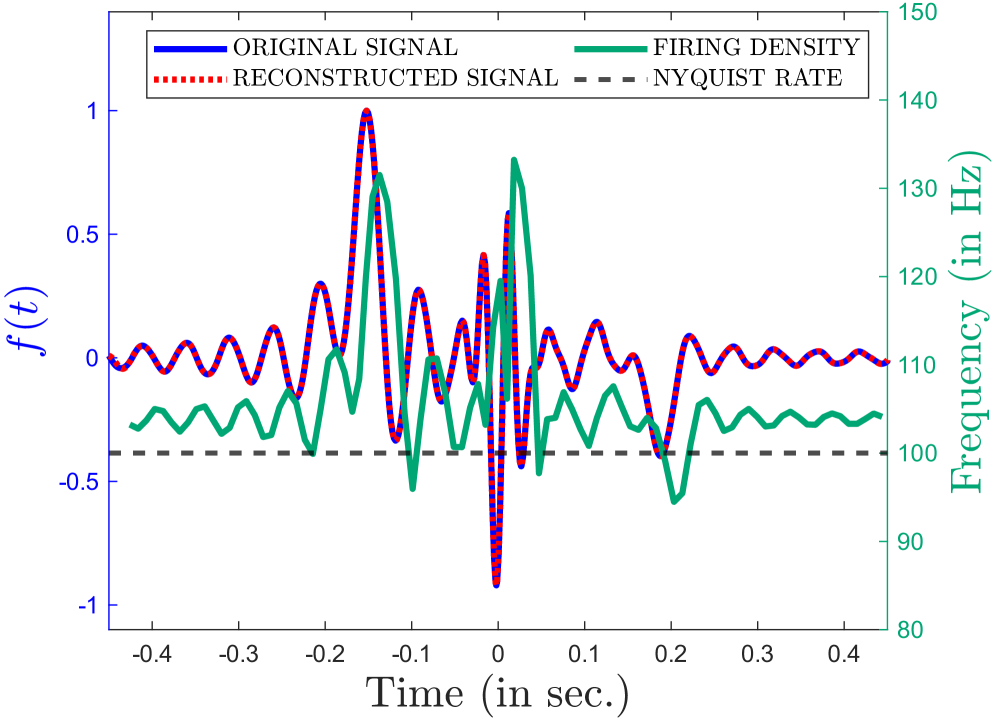
A new framework dynamically adjusts sampling rates based on signal characteristics, potentially overcoming limitations of traditional data acquisition methods.
New research reveals how deforming conformal field theories via a specific operator smoothly connects them to their Carrollian counterparts, unlocking deeper insights into their underlying structure.
A new generation of neutrino experiments, spearheaded by the ESSnuSB+ project, is poised to probe the fundamental properties of these elusive particles and address some of the biggest mysteries in physics.
A new method allows for the unique determination of nonlinear material behavior within a solid system by analyzing measurements taken at its boundaries.
This review delves into the theory of rank-metric codes, a powerful generalization of traditional Hamming codes with applications in diverse areas of coding theory and cryptography.